Alligator Cracking in Asphalt: Cary Property Owner's Guide
- John M
- 1 day ago
- 8 min read

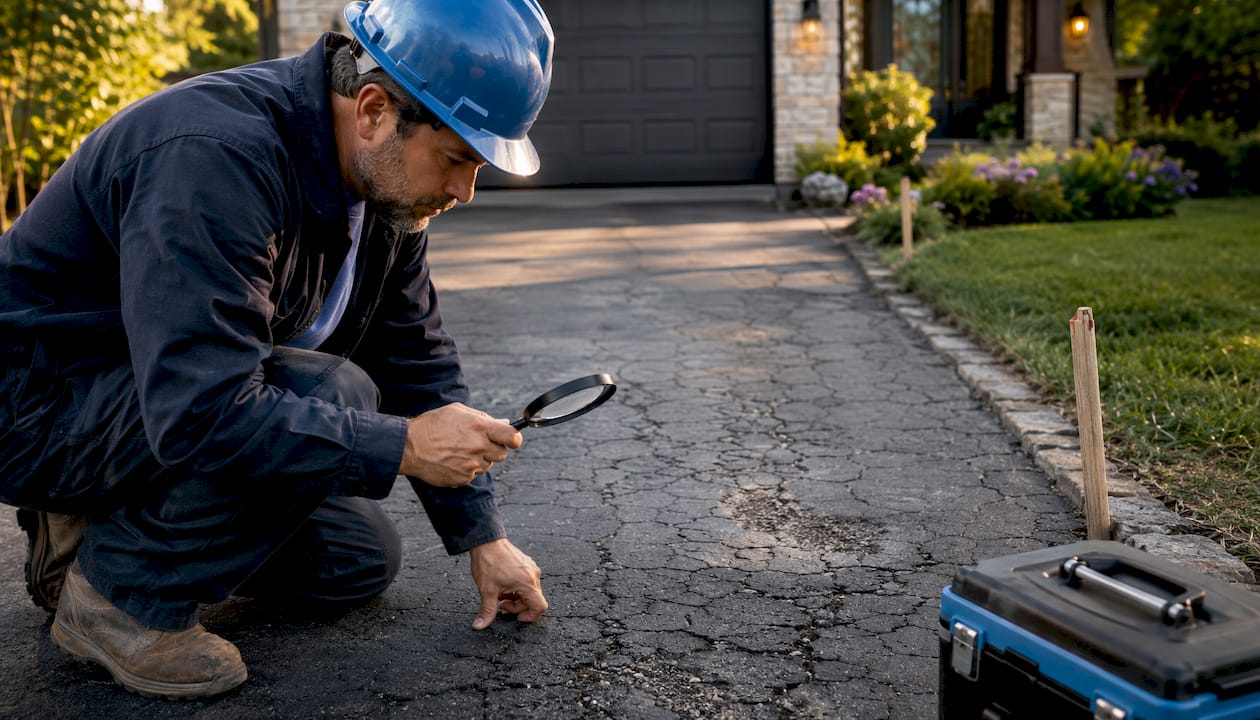
If you see a web of interconnected cracks in your pavement that looks like reptile skin, you are looking at fatigue cracking — the official FHWA classification for what most people call alligator cracking. This is not a cosmetic issue. It signals that the pavement’s structural base is failing under repeated load, and water will accelerate that failure fast.
The immediate action: schedule a professional on-site inspection before the damage spreads to potholes. TrueSeal serves Cary, Apex, Raleigh, and greater Wake County with free on-site assessments for residential and commercial properties.
Low severity: a few interconnected cracks, no spalling, no pumping
Moderate severity: a complete crack network, slight spalling, no rocking pieces
High severity: spalled, rocking pieces under traffic, pumping may be visible — pothole formation is imminent
Pro Tip: High-severity alligator cracking with rocking pieces is a safety and liability hazard. Do not wait for a scheduled maintenance cycle — call a contractor this week.
Need professional asphalt inspection in Cary, Apex, or Raleigh? Explore TrueSeal’s residential services or commercial pavement preservation.
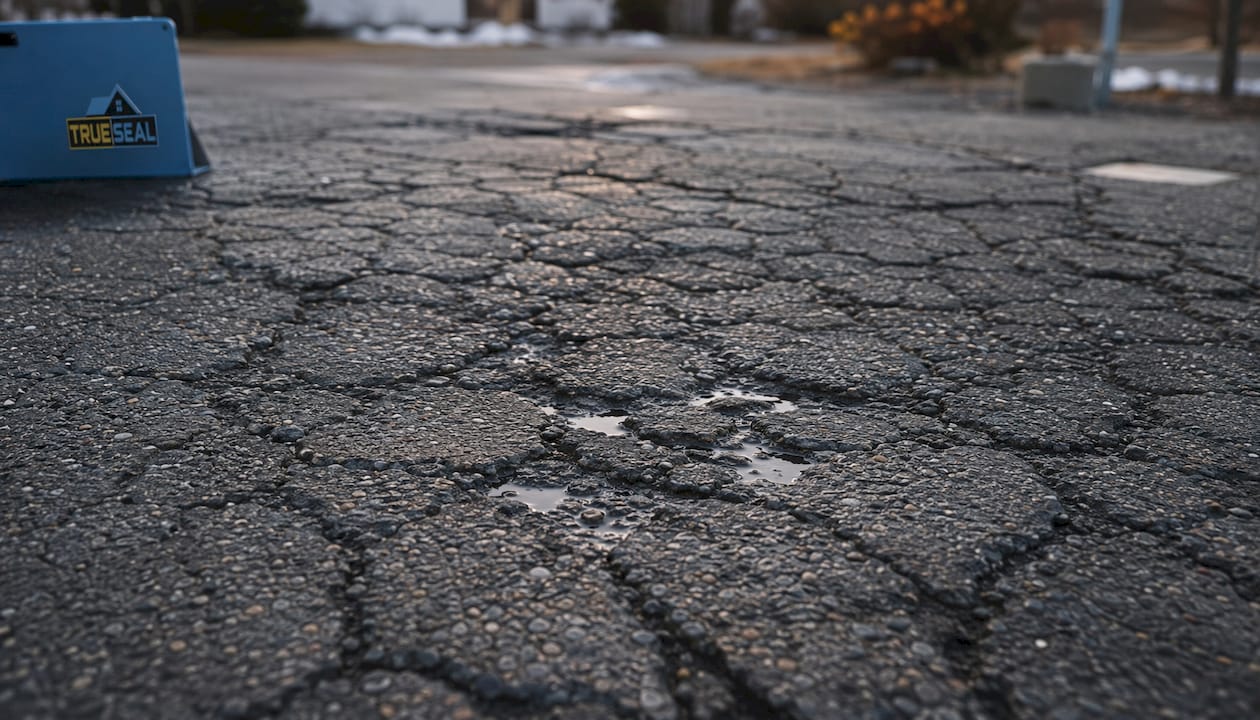
Table of Contents
Which local contractors handle alligator cracking in the Cary area?
Three providers serve the Raleigh–Cary market with relevant experience. Here is a side-by-side look at the signals that matter most when hiring.
Dimension | TrueSeal | Paving Professionals | Paved Assets |
Best for | Residential & commercial preservation, sealcoating, HOA/multifamily | Full-depth new construction & structural repair, residential & commercial | Commercial-only asphalt maintenance & sealcoating |
Services | Sealcoating, crack filling, surface prep, parking lot striping, ADA markings | New paving, full-depth repair, alligator crack repair, concrete, striping | Sealcoating, crack filling, parking lot paving & striping |
Experience & reviews | Local Wake County specialist; free on-site inspection | — | 15+ years in business; insurance confirmed; free quotes |
Service area & scheduling | Cary, Apex, Raleigh, Morrisville, Wake County | Raleigh–Durham and Triangle area | Raleigh and Triangle; off-hours scheduling available |
Free estimate | Yes — free on-site inspection included | Yes | Yes |
Warranty | Workmanship guarantee | Not publicly stated | Not publicly stated |
Price signals | Residential and commercial; project-based | Commercial and residential; project-based | Commercial focus; project-based |
TrueSeal is the recommended first call for preservation-focused property owners in Cary. Request a free site assessment.
Paving Professionals brings deep structural paving experience — a strong fit when full-depth reconstruction or new construction is the likely outcome.
Paved Assets focuses on commercial maintenance with off-hours scheduling, which suits property managers who cannot close a lot during business hours.
How to choose the right contractor and what to ask on-site
Choose a contractor who diagnoses the root cause first. A contractor who walks your lot and immediately recommends sealcoating over moderate alligatoring is not solving your problem.
Checklist for the on-site inspection:
Severity mapping — does the contractor document affected areas by severity level?
Probing and test patches — do they physically probe crack depth and firmness?
Sub-base and compaction evaluation — do they assess whether the base has failed?
Drainage review — do they check for standing water or inadequate slope?
Past maintenance record review — have prior repairs masked deeper failure?
Written warranty terms — are workmanship and materials covered in writing?
Questions to ask every contractor:
Do you perform core probes or test patches before recommending a repair method?
Will you inspect sub-base compaction, not just the surface?
What repair method do you recommend, and why is it appropriate for this severity?
Can you provide local before-and-after photos or references from similar properties?
Red flags to watch for: a contractor who recommends sealcoating as the fix for moderate or high alligatoring, vague verbal warranties with nothing in writing, pressure to accept a same-day discount without a site diagnosis, or no written estimate. NCDOT research highlights that improper layer bonding and drainage failures are recurring causes of premature cracking in North Carolina — any proposal that ignores those factors is incomplete.
What repair options actually fix alligator cracking?
Surface-only repairs are generally temporary for true fatigue cracking because the root cause is sub-base weakness or deflection, not a surface problem. Here is how the options stack up:
Crack filling/sealant: delays water entry on early-stage, isolated cracks. Lifespan: months to 1–2 years. Not a structural fix.
Gator patch/skin patch: covers surface appearance on low-severity areas. Lifespan: 1–3 years. Fails if base is compromised.
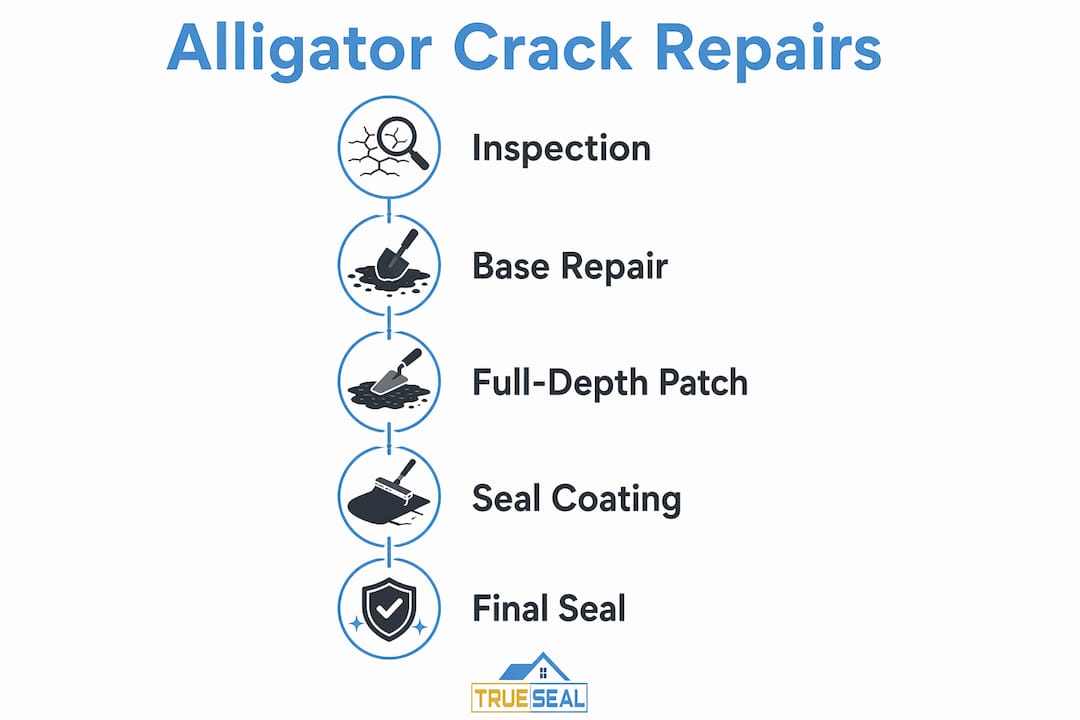
Localized full-depth patch: removes damaged asphalt, excavates and recompacts the base, then places new hot-mix asphalt (HMA). The permanent repair for confined damage. Lifespan: 10–15+ years with proper base prep.
Full-depth reconstruction: removes and rebuilds the entire pavement section, including regrading and drainage correction. Required for widespread failure. Lifespan: 15–25+ years.
Interim chip or scrub seal: temporarily improves surface cohesion and safety but should be budgeted only as a bridge measure until structural repair is scheduled.
Pro Tip: Sealcoating over moderate or high alligatoring can reduce surface friction, look unattractive, and still allow moisture to reach the failing base. It is not a repair — it is a delay that can make the underlying problem worse.
What does alligator crack repair cost, and how long does it take?
Costs vary widely depending on severity, area, and base condition. Small localized patches may run a few hundred to a few thousand dollars. Full-depth reconstruction of a parking lot or long driveway can reach tens of thousands. Early intervention consistently costs less than waiting for failure to spread — a localized deep patch is far cheaper than lot-wide reconstruction.
Key cost drivers:
Size of the affected area
Depth of base failure and regrading required
Drainage corrections needed
Traffic control and site access
Material choice and local labor rates in Wake County
Schedule urgency
Repair type | Typical prep | Repair duration | Return to service |
Minor crack fill | short prep time | often same day | short return time |
Localized full-depth patch | moderate prep time | a few days | return within a few days |
Full-depth reconstruction | longer prep and repair duration | several days to a week or more | a few days to return to service |
For budget planning, consider driveway sealing costs in Raleigh as a baseline for preservation work after structural repairs are complete.
How serious is your alligator cracking? Severity cues at a glance
Use these cues to self-assess before calling a contractor.
Low severity: hairline or a few isolated cracks in the wheel path, no spalling, no water pooling. Plan a budgeted repair within the next few months.
Moderate severity: a complete interconnected network, slight edge spalling, cracks may be sealed from a prior attempt. Schedule a professional inspection within weeks.
High severity: pieces are loose or rock under foot or vehicle traffic, potholes are forming, water pools in the cracked area. Call a contractor immediately — this is a safety hazard.
Water pooling in cracked areas is a particular warning sign. Poor drainage is one of the leading causes of sub-base weakening, and standing water accelerates failure rapidly. From a liability standpoint, high-severity pavement creates pedestrian trip hazards, vehicle damage exposure, and a visible red flag for property inspectors and homebuyers.
How TrueSeal diagnoses causes and prevents recurrence
TrueSeal’s on-site process goes beyond a visual walk-around and includes best practices in backyard patio construction to ensure durable and lasting repairs. The diagnostic approach includes severity mapping of affected areas, physical probing of crack depth and base firmness, drainage assessment, and a repair recommendation that targets root causes rather than surface symptoms. When indicated, core sampling inspects the base condition and layer interfaces before any permanent repair is proposed.
After structural repairs are complete, TrueSeal’s Clean & 7-Year Seal system provides long-term protection against moisture infiltration, UV degradation, and surface oxidation — the environmental factors that accelerate fatigue cracking in North Carolina’s climate. The service area covers Cary, Apex, Raleigh, Morrisville, and greater Wake County.
Need a professional inspection in Cary, Apex, or Raleigh? Explore TrueSeal’s Clean & 7-Year Seal service.
Key Takeaways
Alligator cracking is a structural pavement failure that requires base-level diagnosis and repair — sealcoating over it delays the problem and can accelerate base deterioration.
Point | Details |
It’s structural, not cosmetic | Fatigue cracking signals base failure; surface-only fixes leave the root cause untouched. |
Severity determines urgency | High-severity cracking with rocking pieces or potholes requires an immediate contractor call. |
Full-depth patches last | Localized full-depth repair with proper base prep delivers 10–15+ years of service life. |
Early action saves money | Small localized patches cost far less than full-lot reconstruction when done before failure spreads. |
TrueSeal for local inspections | TrueSeal offers free on-site inspections and workmanship guarantees across Cary, Apex, and Wake County. |
TrueSeal’s view on prevention and long-term pavement value
The pattern we see most often in the Cary and Wake County market is property owners who had a contractor sealcoat over moderate alligatoring two or three times, only to end up with a full reconstruction bill that dwarfs what a timely localized patch would have cost. Prevention and correct structural repair are not competing priorities — they work in sequence. Fix the base, then protect the surface. TrueSeal’s Clean & 7-Year Seal system is designed as the second step in that sequence: it preserves a structurally sound surface against moisture, UV, and weathering so the repair investment lasts. Our commercial services page outlines the full scope for parking lots and managed properties.
Schedule your asphalt inspection in Cary or Raleigh
Alligator cracking that goes unaddressed long enough becomes a reconstruction project. TrueSeal’s free on-site inspection gives you a clear picture of severity, root cause, and the repair path that actually solves the problem — not just the surface.
[
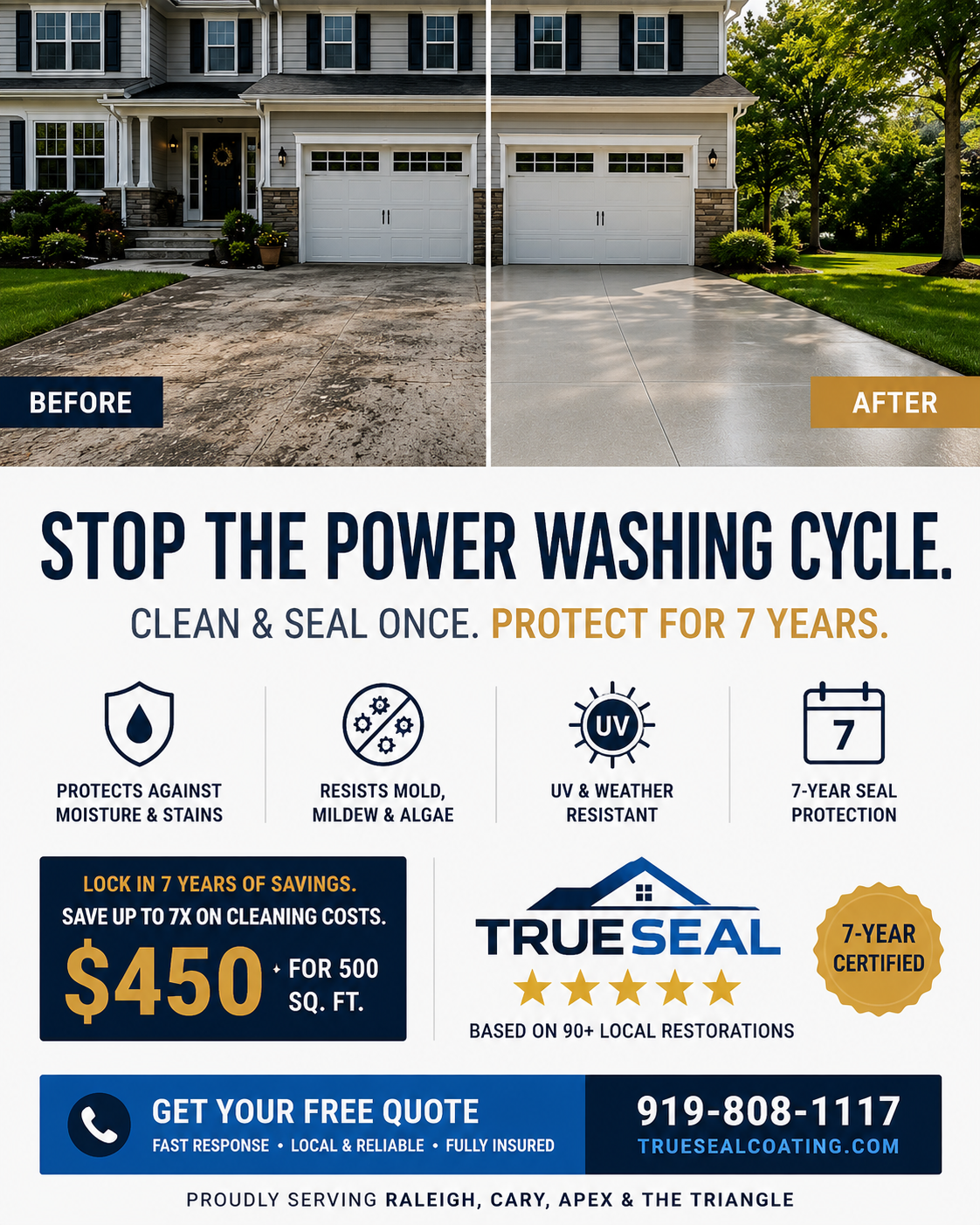
TrueSeal serves residential homeowners, HOAs, property managers, and commercial properties across Cary, Apex, Raleigh, Morrisville, and greater Wake County. Services relevant to fatigue cracking include crack-filling and surface preparation, commercial sealcoating, parking lot striping, and the Clean & 7-Year Seal preservation system as follow-up protection after structural repair.
Schedule your asphalt inspection — request your free quote today.
Sources and further reading
FHWA LTPP Distress Identification Manual — official fatigue cracking classification and severity definitions
ERDC PAVER Road Asphalt Distress Manual — severity level thresholds (low/moderate/high) and urgency guidance
Cheng et al. — Asphalt Pavement Preservation, Repair & Maintenance (SJSU/Transweb) — repair method guidance and limits of surface treatments
NCDOT Research — Pavement Failure Mechanisms — layer bonding and drainage as recurring failure causes in North Carolina
ACPLM — Alligator Asphalt Cracking Repair Guide — permanent repair methods and lifecycle cost perspective
DW Excavation — Alligator Cracks: Causes & Repair — drainage and water infiltration as leading causes
TrueSeal Commercial Services — parking lot maintenance, sealcoating, and ADA striping for Wake County properties
TrueSeal Residential Services — driveway and hardscape preservation for Cary and Raleigh homeowners
Driveway Restoration Companies: 7 Types to Know — guidance on contractor types for property owners comparing repair options
FAQ
Is alligator cracking in asphalt a serious condition?
Yes. Alligator cracking is a structural pavement failure caused by base weakness under repeated traffic loading, and high-severity cases with rocking pieces or water infiltration can progress to potholes quickly.
How do you fix alligator cracking in asphalt?
The only permanent fix is a full-depth patch or reconstruction that removes the damaged asphalt, repairs and recompacts the base, and places new hot-mix asphalt. Surface crack filling and sealcoating are temporary measures that do not address the underlying structural failure.
What causes alligator cracking in pavement?
Repeated traffic loading on a weakened or wet sub-base is the primary cause. Poor drainage, insufficient base compaction, and layer-interface debonding all accelerate the process, particularly in North Carolina’s climate.
What is the best driveway sealer for alligator cracks?
No sealer repairs true alligator cracking. Sealcoating is appropriate only after the base has been structurally repaired. At that point, a professional-grade sealcoating system like TrueSeal’s Clean & 7-Year Seal protects the restored surface from moisture, UV, and weathering.
Recommended
Comments