Skip Acid for Most Driveways: Concrete Driveway Etching for Homeowners

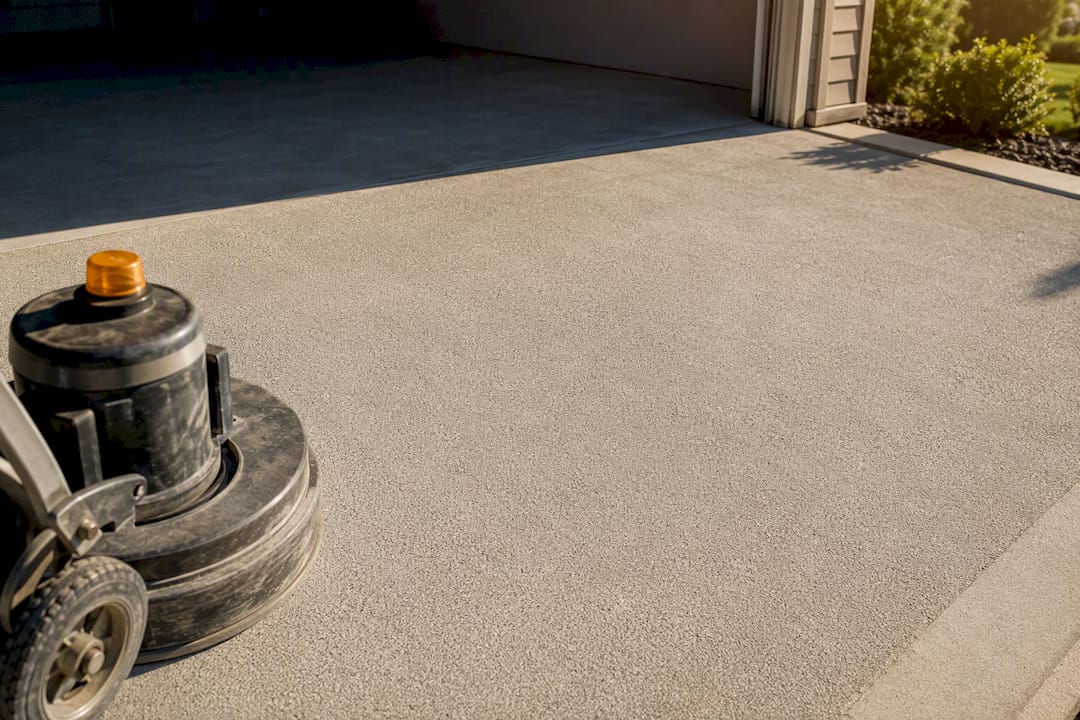
Concrete driveway etching is sometimes the right call, especially for smooth or contaminated surfaces getting a new sealer, but it’s no longer the default recommendation it once was. Most coating manufacturers, including Sherwin-Williams, now favor mechanical profiling over acid for predictable, safer results. If you do etch, plan for careful dilution and neutralization, or skip the guesswork with a TrueSeal remote assessment.
TL;DR:
Mechanical profiling is now preferred over acid etching for concrete driveway preparation due to its predictability and ability to remove contaminants.
Acid etching can cause uneven results, over-roughening, or residual acidity that weakens coating adhesion if not carefully neutralized.
Water testing helps determine if the surface is open enough for sealing; soaked-in water indicates less profiling is needed, while beading suggests a roughening step is necessary.
For heavy coatings or older driveways, mechanical grinding or professional assessment is more reliable than DIY acid methods.
TrueSeal offers remote evaluation to recommend appropriate prep without guesswork, reducing unnecessary acid use and improving long-term coating durability.
Table of Contents
When Is Concrete Etching Necessary for a Driveway?
Etching opens the microscopic pores in a concrete surface and strips away laitance, the weak, powdery film that forms on top as the slab cures. Sealers, stains, and coatings need that texture to grip. Without it, they sit on the surface instead of bonding into it, and they peel or flake within a season or two.
Not every driveway needs this step. You’re a strong candidate for etching or profiling if your driveway shows any of the following:
A trowel-smooth or glossy finish that water beads on instead of soaking into
An old sealer or curing compound still clinging to the surface
Visible oil stains, grease, or a slick film left behind from vehicles
A surface that’s never been sealed but feels hard and glassy underfoot
The quickest way to check is the water test: pour a cup of water on a dry section of concrete. If it beads up and sits on the surface, the pores are closed and some form of profiling is warranted. If it soaks in within a minute or two, your driveway may already be open enough for a fresh coat.
Methods Compared: Acid, Gel, Mechanical, and Eco Alternatives
Homeowners researching how to etch concrete usually land on one of four approaches, and they are not interchangeable in results or risk.
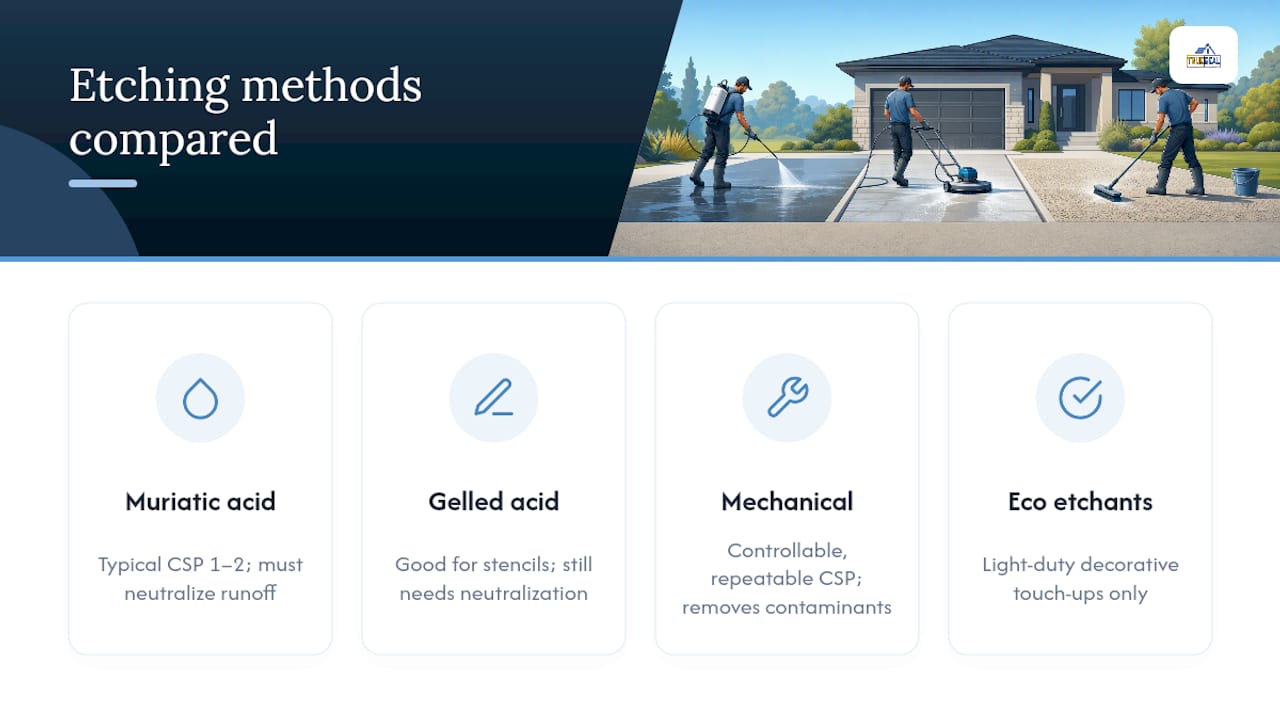
Muriatic (hydrochloric) acid etching is the classic method: diluted acid reacts with the concrete’s alkaline surface to roughen it. The problem is consistency. Acid etching typically produces only a CSP-1 to CSP-2 profile on the International Concrete Repair Institute’s 1 to 9 scale, and that outcome varies with slab age, porosity, and how evenly you apply it. It also can’t remove sealers, curing compounds, or deep contamination, and runoff needs careful neutralization before it reaches a storm drain.
Gelled acid systems work well for decorative or stenciled etching, where you want a clean, localized pattern rather than uniform texture across a whole slab. The gel clings to vertical stencil edges better than liquid acid, but it’s still acid chemistry underneath, so neutralization is non-negotiable.
Mechanical profiling, diamond grinding or shot-blasting, is what most commercial contractors and increasingly residential pros use now. It delivers a controllable, repeatable CSP target and removes contaminants acid can’t touch. Diamond grinders are even available at rental centers for homeowners tackling smaller areas.
Low-acid or eco-formulated etchants exist for light-duty jobs, mostly decorative touch-ups where a full mechanical setup is overkill.
Pro Tip: If your driveway will get a heavy-bodied resinous coating rather than a basic sealer, mechanical profiling almost always outperforms acid, since those coatings need a deeper, more consistent tooth to bond.
If You Do Etch: A Safety-First Homeowner Process
Before any acid touches the slab, clean it thoroughly. Grease, dirt, and old sealer residue block the acid from reacting evenly, which is the single biggest cause of a patchy etch.
Sweep and pressure wash the driveway, then let it dry fully.
Put on rubber gloves, eye protection, and a chemical-resistant apron. Muriatic acid burns skin on contact and its fumes irritate lungs.
Dilute acid into water, never water into acid, following the product label’s ratio exactly.
Test a small, inconspicuous patch first and watch for a light, steady fizz. No reaction usually means the surface is already sealed and needs a stripper instead.
Apply evenly and let it dwell for the time the label specifies, typically a few minutes.
Neutralize with a baking soda and water solution across the entire treated area, not just where it looks dull.
Rinse thoroughly, multiple times, and confirm the runoff isn’t pooling into a storm drain or garden bed.
Check the surface with pH strips before sealing; residual acidity weakens adhesion and can keep reacting under a new coating.
If your driveway is older than 20 years, has visible cracking, or covers more than a couple hundred square feet, that’s your cue to stop and call in mechanical equipment or a specialist instead of scaling up a DIY acid job.
How to Tell If You’ve Etched It Enough
Run the water test again after rinsing and letting the surface dry. Water should soak in within a minute or two rather than sitting in beads, according to guidance from Concrete Captain.
Properly etched concrete also has a distinct feel and look:
It turns lighter and slightly matte, losing any glossy sheen
It feels like 80 to 100 grit sandpaper when you drag a hand across it
The texture is consistent edge to edge, with no smooth or slick patches remaining
Patchy spots that still bead water need a second, lighter pass, not a full redo. If large sections stay smooth despite two attempts, that’s usually a sign of a stubborn sealer or curing compound acid can’t dissolve, and mechanical grinding is the more reliable fix. One separate note: if you’re planning to acid stain the driveway afterward, skip etching first. Etching changes the surface chemistry acid stains rely on, and can actually reduce color uptake.
Common Mistakes From DIY Etching and How to Fix Them
Uneven etch. Usually caused by inconsistent application or a dirty surface underneath. A second light etch on just the smooth patches, after re-cleaning, often resolves it. If unevenness persists after two attempts, mechanical grinding levels the profile without guesswork.
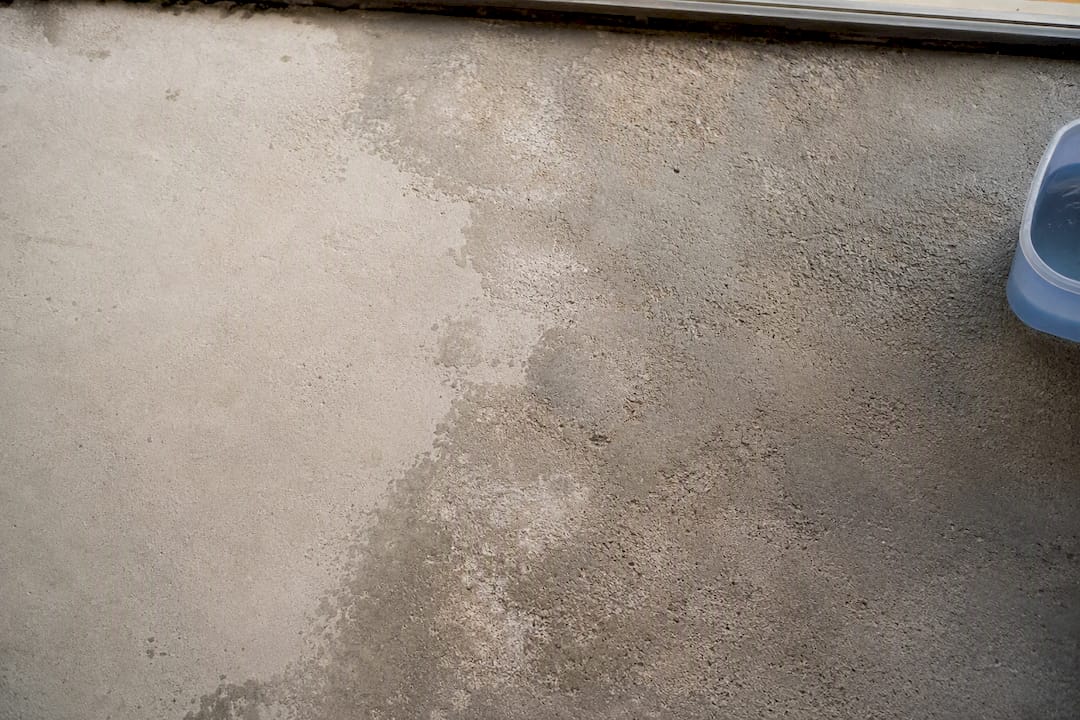
Over-etching. Too much acid or too long a dwell time roughens the surface excessively and can increase porosity, letting water penetrate deeper and potentially corrode embedded rebar or wire mesh over time. Light patching compound can smooth minor over-etching; severe cases need professional grinding to restore a flat surface.
Lingering acid residue. If the surface feels tacky or a sealer won’t cure right, suspect incomplete neutralization. Re-rinse with a baking soda solution and retest pH before applying anything else.
Discoloration or blotching. Often traced to uneven acid concentration. A uniform mechanical profile eliminates this variable entirely on future projects.
Why a Specialist Assessment Often Beats DIY Etching
Homeowner tests like the water check are useful, but they can’t measure moisture vapor trapped below the slab, detect residual curing compounds, or confirm you’ve hit a specific CSP target. Mechanical profiling and moisture testing catch problems etching simply can’t diagnose or fix. TrueSeal’s remote assessment reviews photos and details of your driveway to recommend the right prep method before any chemical or equipment touches the surface, cutting out unnecessary acid use and guesswork.
Our Take: Why We Lean Away From Acid
We don’t recommend acid etching as a first move on most driveways we evaluate. It’s harder to control, harder to verify, and it can quietly work against the durable, water-repellent finish homeowners actually want. Mechanical prep gives us a known surface to build on. When you’re unsure which category your driveway falls into, a remote assessment settles it before you buy a gallon of anything.
— TrueSeal
How TrueSeal Handles Prep, Sealing, and Long-Term Protection
If you’d rather skip the acid, the rubber gloves, and the guesswork entirely, TrueSeal is the specialized alternative to trial-and-error driveway prep across Cary, Raleigh, and Wake County. Instead of grabbing a jug of muriatic acid and hoping for even coverage, you get a controlled, mechanical-first approach: professional cleaning, precise surface profiling, and a water-repellent sealed finish designed to hold up against weather and daily wear.
[
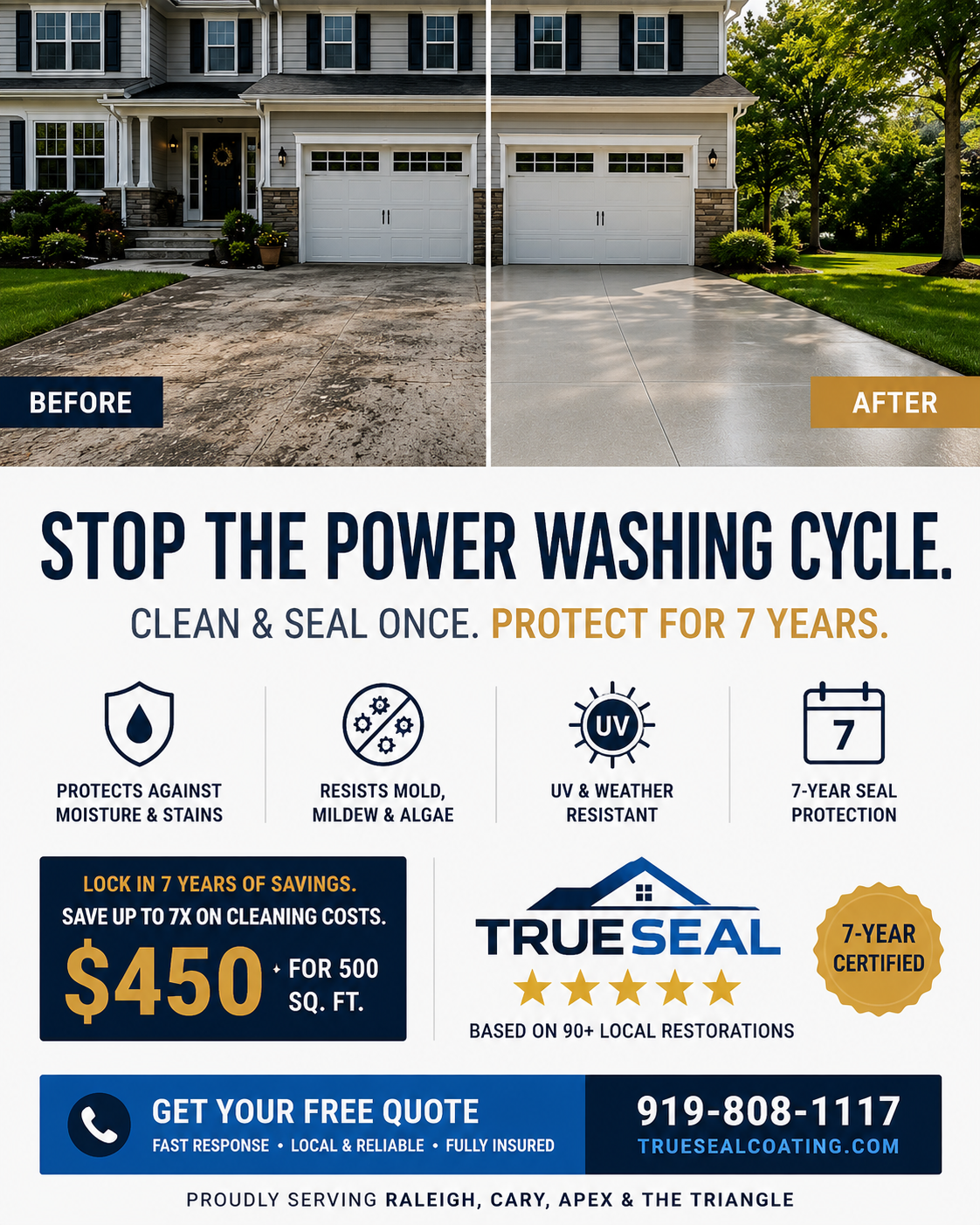
What sets this apart from the standard contractor route is the remote assessment itself. Send photos of your driveway and TrueSeal evaluates the surface digitally, then builds a protection plan without requiring an on-site visit first. That means no waiting around for an estimator and no committing to acid etching before you know if your slab even needs it. For readers weighing whether to DIY or call a specialist, browsing driveway restoration options is a good next step, but if you already know your driveway needs profiling and sealing, start with the concrete and pavement services page and request your remote assessment today.
Sources
For deeper technical detail, see Sherwin-Williams’ guidance on acid etching and ConcreteNetwork’s step-by-step etching process.
FAQ
Is Concrete Etching Necessary?
Only in specific cases, mainly smooth, sealed, or contaminated surfaces preparing for a new coating; many surfaces do better with mechanical profiling instead, which manufacturers now recommend for more consistent results.
What Is the Easiest Way to Etch Concrete?
A gelled acid product applied to a well-cleaned, diluted surface is generally the simplest DIY approach for small or decorative areas, though renting a diamond grinder often gives more reliable results with less risk.
What Does Concrete Look Like After Etching?
Properly etched concrete turns lighter and matte instead of glossy, and it feels roughly like 80 to 100 grit sandpaper underfoot.
How Can I Fix Etched Concrete That Went Wrong?
Uneven or over-etched spots often respond to a light second pass or patching compound, but persistent unevenness or excess porosity usually calls for professional mechanical grinding, which TrueSeal can assess through its remote evaluation process.
Comments