Concrete vs Asphalt Driveway in North Carolina: Which Is Right for You?

Updated: Aug 12
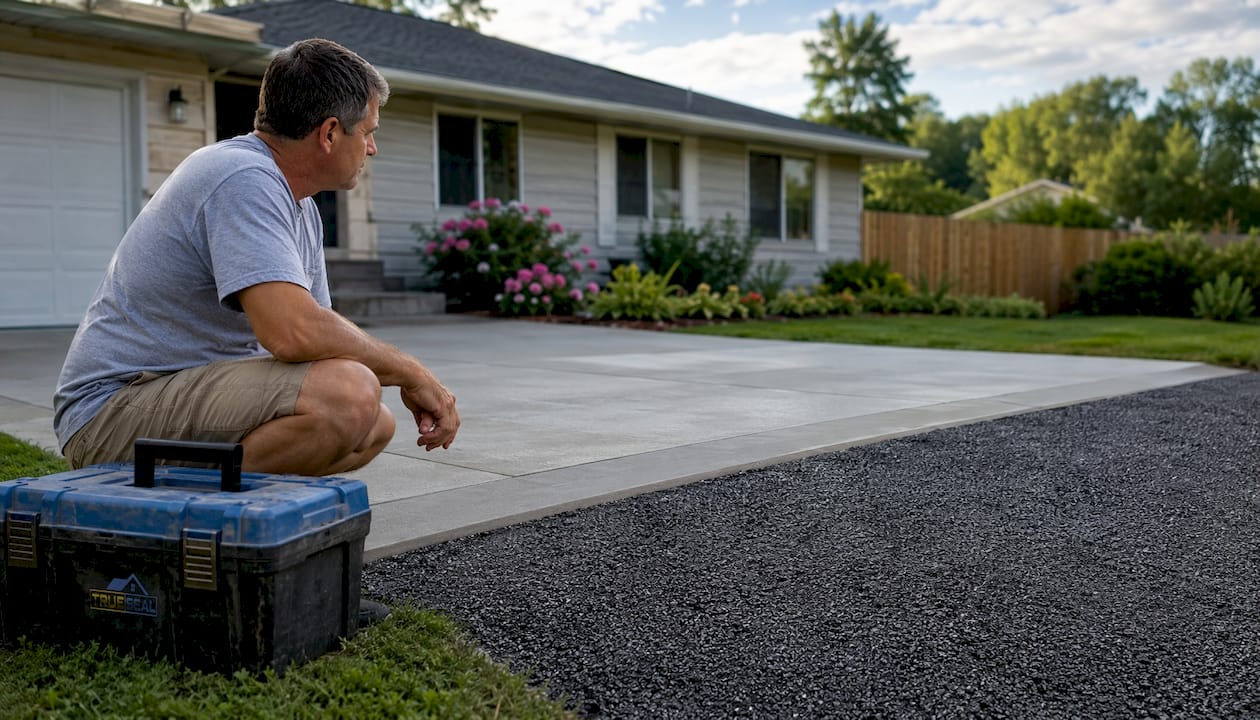
How do concrete and asphalt driveways actually compare?
Concrete wins on lifespan and curb appeal. Asphalt wins on upfront cost and cold-climate performance. For most North Carolina homeowners, the right answer depends on three things: your budget today, how long you plan to stay, and how much maintenance you’re willing to do.
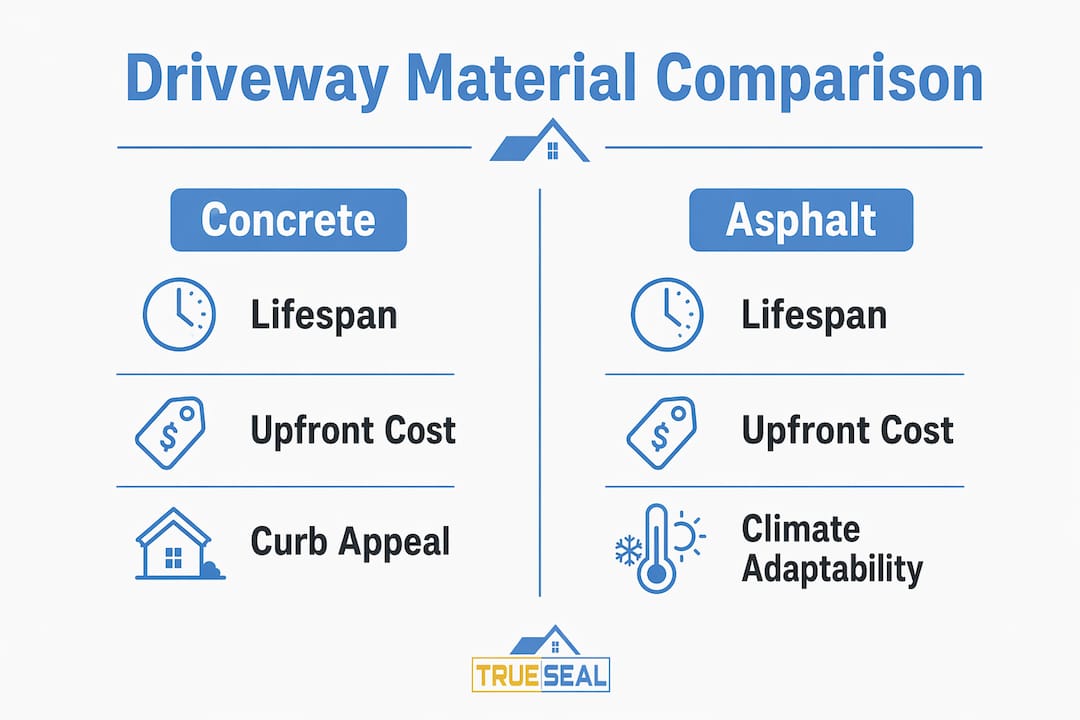
Concrete driveways last 30–50 years; asphalt typically lasts 15–30 years with consistent maintenance. That gap in lifespan is the single biggest factor in the long-term cost equation. Upfront, concrete runs $5–$13 per square foot while asphalt comes in at $3–$7 per square foot, but asphalt’s 30-year total cost frequently exceeds concrete’s once you factor in resealing, resurfacing around year 15–20, and eventual full replacement.
Factor | Concrete | Asphalt |
Lifespan | 30–50 years | 15–30 years |
Installation cost (per sq ft) | $5–$13 | $3–$7 |
Maintenance requirements | Seal immediately after installation, then every 5–10 years | Reseal every 3–5 years |
Climate performance | Excellent in heat; vulnerable to salt | Flexible in freeze-thaw; softens in extreme heat |
Repair costs | Higher; cracks hard to hide | Lower; patches blend well |
Aesthetic options | Stamped, stained, colored, exposed aggregate | Black only; sealcoating refreshes color |
Asphalt driveways are ready for use within a few days after installation, whereas concrete driveways require a longer curing period before vehicle traffic. If you need your driveway back fast, that difference is real.
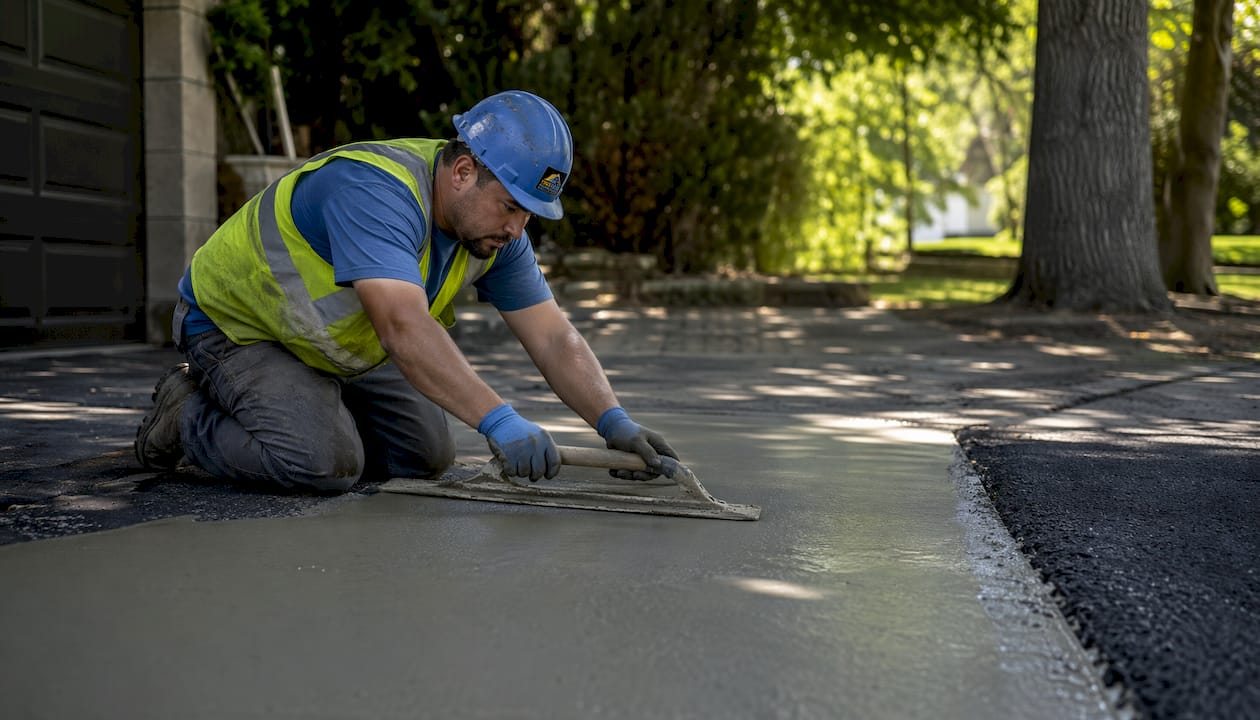
Climate matters more than most homeowners expect. Asphalt’s bitumen binder allows slight flexibility, which helps it absorb freeze-thaw movement without cracking. Concrete is rigid, so when groundwater freezes and expands beneath it, slabs can heave and crack. North Carolina sits in a moderate climate zone, which means both materials perform reasonably well here, but the Triangle’s occasional ice storms and summer heat both factor in.
Regular use of deicing salts can cause surface scaling on concrete over time. Asphalt handles salt far better. If you use rock salt on your driveway in winter, that’s a meaningful strike against concrete unless you seal it properly and switch to sand or calcium magnesium acetate.
Decorative concrete pulls well ahead on curb appeal. Stamped, stained, and colored finishes add perceived property value that plain asphalt simply cannot match. Asphalt is black. You can sealcoat it to refresh the color, but the design range ends there.
Which North Carolina contractors handle concrete and asphalt driveways?
Three reputable local providers serve North Carolina homeowners looking for professional driveway installation and repair.
Contractor | Services | Specialization | Rating | Best For |
Concrete driveways, sidewalks, foundations | Concrete installation with bilingual support | 5★ (30 reviews) | Concrete driveway installation and repair | |
Paving, seal coating, striping, grading, pressure cleaning | Commercial and residential asphalt and concrete | 4.3★ (17 reviews) | Full-service asphalt and concrete repair | |
Asphalt design and installation, seal coating, line striping, concrete | Residential and commercial asphalt preservation | 5★ (6 reviews) | Competitive-priced asphalt and concrete services |
Azul Rv concrete llc, based in Smithfield, NC, brings 25 years of concrete experience to driveways, foundations, and sidewalks. They offer free estimates, accept check and cash, and provide bilingual Spanish and English support, which is a genuine practical advantage for a broader range of homeowners.
NC Pavement & Concrete is a family-owned contractor operating across North Carolina with an integrated service menu: paving, seal coating, parking lot striping, grading, sitework, and pressure cleaning. That combination makes them a strong fit for homeowners who want one contractor to handle the full scope of a driveway project, from grading through finished surface.
H&S Asphalt Concrete Solutions LLC serves Lenoir County and surrounding areas with asphalt design, installation, seal coating, repair, and line striping. They position on competitive pricing and accept quote requests directly through their site.
Pro Tip: Always request quotes from at least two contractors and ask specifically about sub-base preparation. Proper sub-base compaction is the single most important factor in driveway longevity, regardless of whether you choose concrete or asphalt.
How do you choose between concrete and asphalt for your driveway?
The decision comes down to five practical factors.
Budget now vs. budget over time. Asphalt costs less to install but more to maintain. Over 30 years, concrete often costs less in total when you account for resealing cycles, resurfacing, and replacement.
How long you plan to stay. Selling within 10 years? Asphalt’s lower upfront cost may make more sense. Staying 20-plus years? Concrete’s longer lifespan and curb appeal pay off.
Climate and deicing habits. North Carolina’s mild winters favor concrete, but if you use rock salt regularly, seal your concrete immediately after installation and every few years after.
Installation timing. Need the driveway usable within days? Asphalt’s 1–3 day cure time beats concrete’s 7-day minimum.
Aesthetics and resale value. Decorative concrete adds more perceived value than any asphalt finish. If curb appeal matters to you or your future buyer, concrete is the stronger choice.
Drainage and site grading affect longevity more than most homeowners realize. Budget for proper grading before installation. A well-drained sub-base prevents the premature cracking and heaving that shortens both materials’ lives.
On the environmental side, asphalt has one real advantage: it’s nearly 100% recyclable. Concrete production is more energy-intensive, though crushed concrete can be reused as aggregate. Neither material is dramatically greener than the other in practice.
Professional sealing of concrete immediately after installation prevents early spalling and moisture damage. Don’t skip it. For asphalt, that first sealcoat should go down 6–12 months after installation, then every 3–5 years after that.
Protect your driveway with Truesealcoating’s Clean & 7-Year Seal system
Once your driveway is installed, the material you chose only performs as well as the protection you put on it. That’s where Truesealcoating comes in.
Truesealcoating serves residential and commercial properties across Cary, Apex, Raleigh, Morrisville, and greater Wake County, NC. Our Clean & 7-Year Seal system is built specifically for North Carolina conditions: the summer heat, the occasional freeze, and the UV exposure that fades and weakens surfaces year-round. We clean the surface thoroughly, then apply a high-performance penetrating sealer that reduces moisture absorption, resists staining, and simplifies future maintenance for up to seven years.
For commercial properties, Truesealcoating handles asphalt sealcoating, parking lot striping, ADA-compliant markings, and crack-filling across HOAs, retail centers, and multifamily communities. One call covers the full scope.
Schedule your concrete sealing service today. If your driveway, patio, or walkway no longer beads water when it rains, it’s time for professional protection. Request your free quote and we’ll assess your surface and recommend the right treatment.
FAQ
How long does a concrete driveway last compared to asphalt?
Concrete driveways last 30–50 years; asphalt driveways last 15–30 years with regular maintenance. Concrete’s longer lifespan is its strongest financial argument despite higher upfront cost.
Which driveway material is better for North Carolina’s climate?
Both work well in North Carolina’s moderate climate. Concrete handles summer heat better and offers more design options; asphalt performs better if you use deicing salts in winter and need a faster cure time after installation.
How often does asphalt need to be resealed?
Asphalt requires sealcoating every 3–5 years to protect against oxidation and water infiltration. Concrete needs professional sealing immediately after installation, then every 5–10 years.
Does a concrete driveway add more resale value than asphalt?
Yes. Decorative concrete with stamped or colored finishes adds more perceived property value than asphalt. Plain concrete still outperforms asphalt on curb appeal for most buyers.
Can Truesealcoating seal both concrete and asphalt driveways?
Yes. Truesealcoating provides professional cleaning and sealing for concrete driveways, pavers, and hardscapes, as well as commercial asphalt sealcoating across Wake County and the greater Triangle area.
Key Takeaways
Concrete costs more upfront but often results in a lower total cost of ownership over an extended period compared to asphalt, making material choice a long-term financial decision.
Point | Details |
Lifespan gap | Concrete lasts 30–50 years; asphalt lasts 15–30 years with consistent maintenance. |
Upfront cost difference | Asphalt runs $3–$7 per sq ft; concrete runs $5–$13 per sq ft for a standard driveway. |
Climate fit | Asphalt flexes better in freeze-thaw conditions; concrete resists heat and holds up in North Carolina summers. |
Maintenance frequency | Asphalt needs resealing every 3–5 years; concrete needs sealing immediately after installation and then every 5–10 years. |
Truesealcoating | Protects both concrete and asphalt surfaces in Wake County with the Clean & 7-Year Seal system. |
Recommended
Comments