Fire Lane Striping: Compliance Guide for Wake County


Fire lane striping is the process of marking commercial pavement and curbs to designate no-parking zones that keep emergency vehicle access clear and unobstructed. These markings are not optional cosmetic additions. They are legally enforceable tools required by fire codes, and faded or missing markings can delay emergency response, trigger municipal citations, and expose property owners to serious liability. If you manage a commercial property in Wake County, Raleigh, Cary, or anywhere in the Triangle, understanding fire lane requirements is a core part of your compliance responsibilities.
What are the standard fire lane striping requirements?
Fire lane markings follow a combination of International Fire Code standards and local fire marshal rules. The two sources do not always match, which is why knowing both does matter.
The International Fire Code sets the baseline most jurisdictions adapt. Key requirements include:
Minimum pavement width: 20 feet of unobstructed width must remain clear at all times. This accommodates fire apparatus movement and deployment.
Curb and pavement color: Red is the near-universal standard for fire lane curb painting and pavement markings. Red signals a no-parking zone to drivers and enforcement officers alike.
Signage intervals: “FIRE LANE — NO PARKING” signs are typically required every 25–75 feet depending on jurisdiction. Signs must meet reflectivity standards for nighttime visibility.
Overhead clearance: Most codes require a minimum vertical clearance of 13.5 feet for aerial apparatus access routes.
Dead-end lanes: Fire lanes that dead-end require approved turnaround areas such as a cul-de-sac or hammerhead configuration.
Local fire marshals in Wake County and surrounding municipalities may add requirements beyond the baseline. Stencil sizes, exact wording, sign mounting heights, and paint specifications can all vary. No universal paint standard exists across jurisdictions, which means a layout that passes inspection in Cary may need adjustments in Garner or Wake Forest.
Requirement | Typical Standard |
Minimum lane width | 20 feet unobstructed |
Curb and marking color | Red |
Signage spacing | Every 25–75 feet |
Overhead clearance | 13.5 feet minimum |
Dead-end configuration | Approved turnaround required |
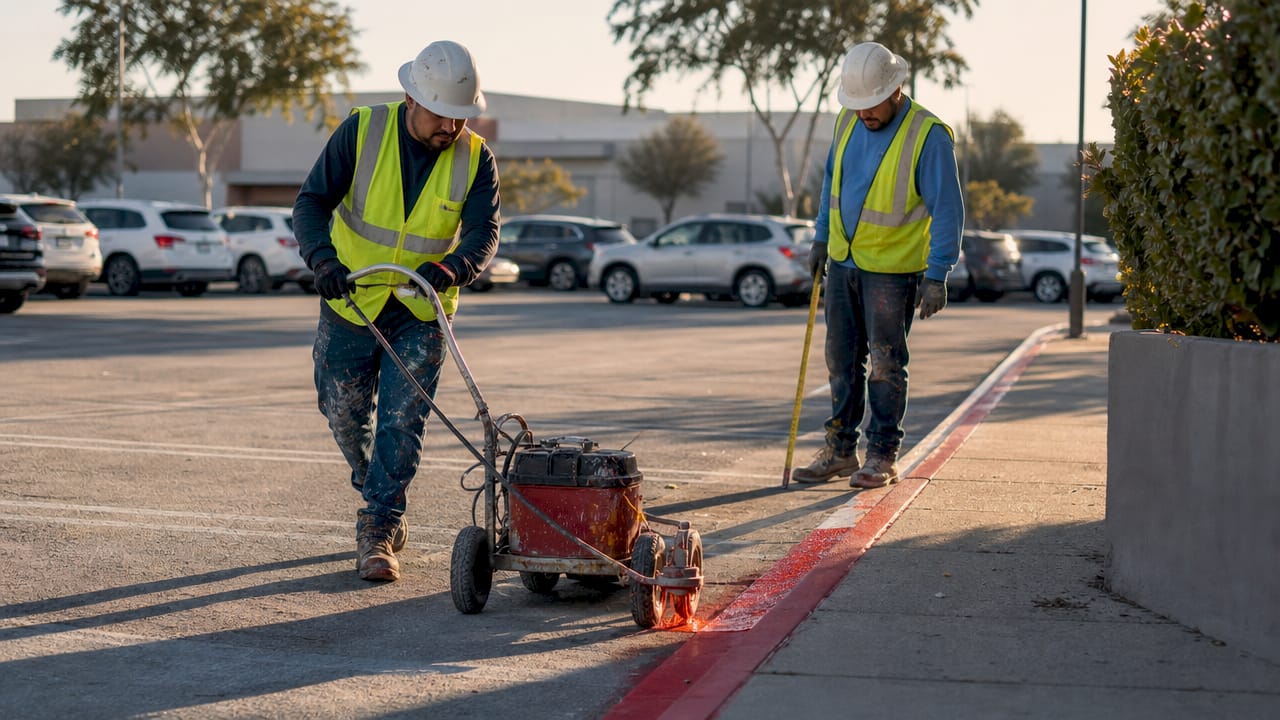
Pro Tip: Before scheduling any fire lane painting project, call your local fire marshal’s office directly. Ask for the current written requirements for your specific municipality. This one step prevents costly repaints.
How to maintain fire lane markings for long-term compliance
Pavement markings fade. Wake County’s summer heat, UV exposure, and wet winters accelerate that process significantly. A fire lane that looked sharp after installation can become unreadable within 18 months without a maintenance plan.
Recommended repainting cycles fall in the 12–18 month range for high-traffic commercial lots. Lower-traffic properties like office parks or multifamily communities may stretch to 24 months, but annual visual inspections are non-negotiable. Walk the fire lanes each spring and after any major resurfacing work.
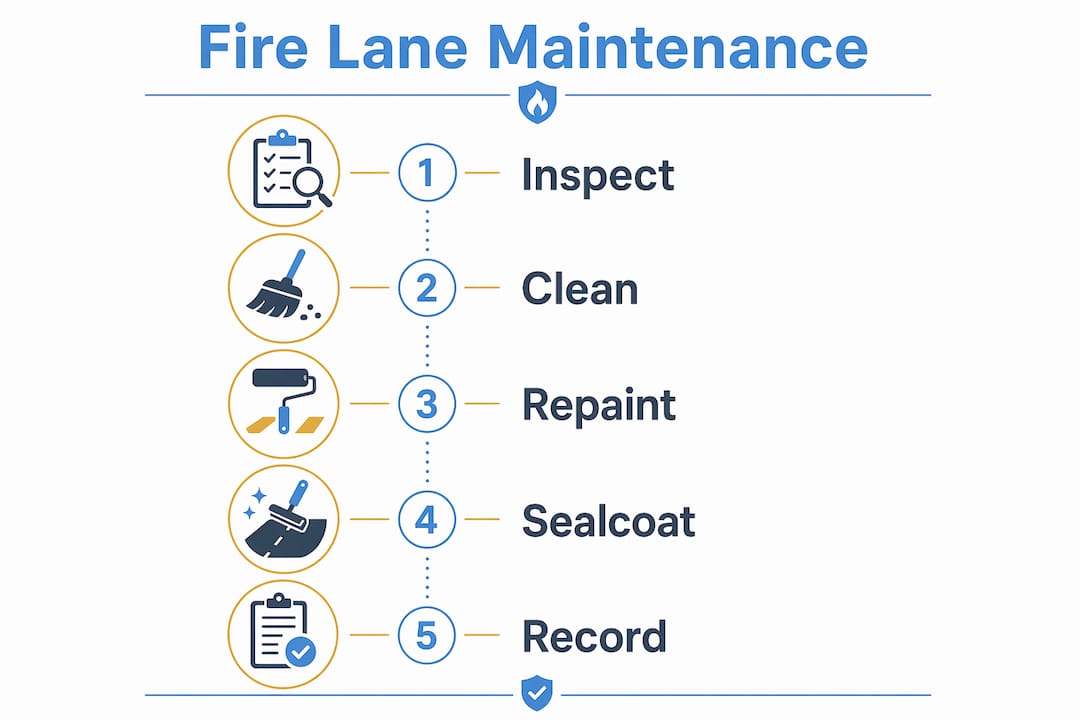
The most cost-effective approach is to integrate fire lane maintenance with sealcoating cycles. Sealcoating covers existing markings completely, which creates a clean surface for fresh, compliant striping. Combining both services in one project reduces mobilization costs and ensures the new markings go down on a properly prepared surface.
Sign condition matters as much as paint condition. Reflective sheeting on “FIRE LANE — NO PARKING” signs degrades over time. Inspect signs for fading, physical damage, and correct mounting height at least once per year. Replace any sign that fails the reflectivity standard before your next fire inspection.
Pro Tip: Schedule fire lane repainting during early morning hours or overnight when lot traffic is lowest. Phased, off-hours striping keeps emergency access open throughout the project and avoids disrupting tenants or customers.
What are best practices for fire lane layout and execution?
The most common mistake property managers make is repainting an existing layout without reviewing whether that layout is still correct. Building entrances shift, traffic patterns change, and new construction alters site geometry. Painting over a non-compliant layout just makes the problem permanent.
A proper site review before any repainting project should address:
Traffic flow changes: New drive aisles, added entrances, or reconfigured parking rows may require fire lane route adjustments.
Loading zone separation: Loading zones require separate striping geometry and must not overlap ADA access aisles. Mixing these zones creates confusion and compliance failures simultaneously.
ADA access paths: Fire lanes and ADA-compliant access routes serve different functions. They should never share the same marked space.
Marking combination: Use curb paint, pavement stencils, and signage together. Relying on only one element reduces clarity and may not satisfy local code.
Jurisdiction verification: Local fire marshals set the final standard on stencil wording, size, and placement. Confirm requirements before applying paint, not after.
Property managers who skip the site review phase often discover the problem during a fire inspection rather than before it. That sequence is far more expensive. A pre-project walkthrough with your striping contractor takes less than an hour and prevents rework.
Pro Tip: Photograph your fire lanes before and after every repainting project. Dated photos create a maintenance record that supports your position if a citation or liability claim arises.
What legal consequences come from faded or improper fire lane markings?
Neglecting fire lane maintenance creates three categories of risk: enforcement, liability, and operational disruption. All three are avoidable with consistent upkeep.
On the enforcement side, fire marshal citations range from $100 to $500 per violation and escalate on repeat offenses. A single inspection with multiple faded or missing markings can generate several citations at once. Repeat violations can affect your occupancy permit status.
Liability exposure is the more serious long-term risk. If a vehicle blocks an unmarked or poorly marked fire lane and emergency responders are delayed, the property owner may face civil claims. Faded striping and missing signage remove the legal basis for towing illegally parked vehicles, which means you lose enforcement authority over your own lot.
“Clear, compliant fire lane markings are the property owner’s first line of defense. They establish legal authority to tow, they guide emergency responders, and they demonstrate due diligence in maintaining a safe property. When markings fade, all three protections erode at once.”
Operational disruption is the third risk. A blocked fire lane during an emergency can delay fire apparatus access by critical minutes. That delay affects outcomes for people on your property. Keeping markings visible is not just a code requirement. It is a direct contribution to the safety of everyone who uses your facility.
Key Takeaways
Compliant fire lane striping requires correct dimensions, red curb markings, properly spaced signage, and regular repainting coordinated with local fire marshal standards.
Point | Details |
Minimum lane width | Maintain at least 20 feet of unobstructed pavement width per International Fire Code standards. |
Color and signage standards | Use red curb paint and post “FIRE LANE — NO PARKING” signs every 25–75 feet. |
Repainting frequency | Repaint every 12–18 months and inspect annually to prevent fading-related citations. |
Combine with sealcoating | Schedule striping with sealcoating projects to reduce costs and ensure markings go on a clean surface. |
Verify local requirements | Confirm stencil size, wording, and sign specs with your local fire marshal before applying paint. |
Why fire lane compliance deserves more attention than it gets
I have seen a lot of commercial lots across Wake County where the fire lane markings are technically present but practically invisible. The red has faded to a pale pink. The stencil lettering is cracked and half-missing. The signs are bent or sun-bleached. The property manager assumes the markings are “good enough” because they were done a few years ago.
That assumption is the most common compliance mistake I encounter. Fire lane striping is a safety system, not a one-time paint job. It requires the same scheduled attention you give to HVAC maintenance or roof inspections. The difference is that a failed HVAC unit is an inconvenience. A blocked fire lane during an active emergency is a life-safety failure.
The properties that handle this well do two things consistently. They tie their striping schedule to their sealcoating cycle so the two projects happen together. And they verify local requirements with the fire marshal before each project, not after. Wake County municipalities do update their standards, and a layout that was compliant three years ago may need adjustments today.
My honest recommendation is to treat every sealcoating project as a mandatory striping review. Walk the lot. Check the signs. Confirm the lane widths. Then repaint with fresh, code-compliant markings. That approach costs less than a single citation and far less than a liability claim.
— John
Truesealcoating’s commercial striping services for Wake County properties
Commercial property owners in Cary, Raleigh, Apex, and greater Wake County trust Truesealcoating for fire lane painting, parking lot striping, and full pavement maintenance. Truesealcoating coordinates with local fire marshal requirements before every project to confirm that markings meet current jurisdiction-specific standards.

Combining commercial sealcoating and striping in a single project keeps your lot compliant, extends pavement life, and reduces the total cost of ownership. Truesealcoating handles the site review, surface preparation, and fresh marking application so you get durable results that hold up through Wake County’s full weather cycle. Contact Truesealcoating to schedule a compliance assessment and get a quote for your property.
FAQ
What is the minimum width for a fire lane?
Fire lanes require a minimum of 20 feet of unobstructed pavement width based on International Fire Code standards. Local jurisdictions may require additional width for aerial apparatus access routes.
What color is used for fire lane curb painting?
Red is the standard color for fire lane curb markings and pavement striping in nearly all U.S. jurisdictions. It signals a no-parking zone to both drivers and enforcement officers.
How often should fire lane markings be repainted?
Most commercial properties need fire lane repainting every 12–18 months. High-traffic lots or properties with significant UV exposure may require more frequent maintenance to keep markings clearly visible.
Can I repaint fire lanes without checking local requirements first?
Repainting without verifying local standards is a common mistake. Local fire marshals set jurisdiction-specific rules on stencil wording, size, and sign placement, and these details vary across Wake County municipalities.
What happens if fire lane markings are faded or missing?
Faded markings remove your legal authority to tow illegally parked vehicles and can result in citations ranging from $100 to $500 per violation. They also increase liability exposure if blocked access contributes to an emergency response delay.
Recommended
Comments