Parking Lot Sealcoating Raleigh, NC: When Commercial Pavement Needs Service

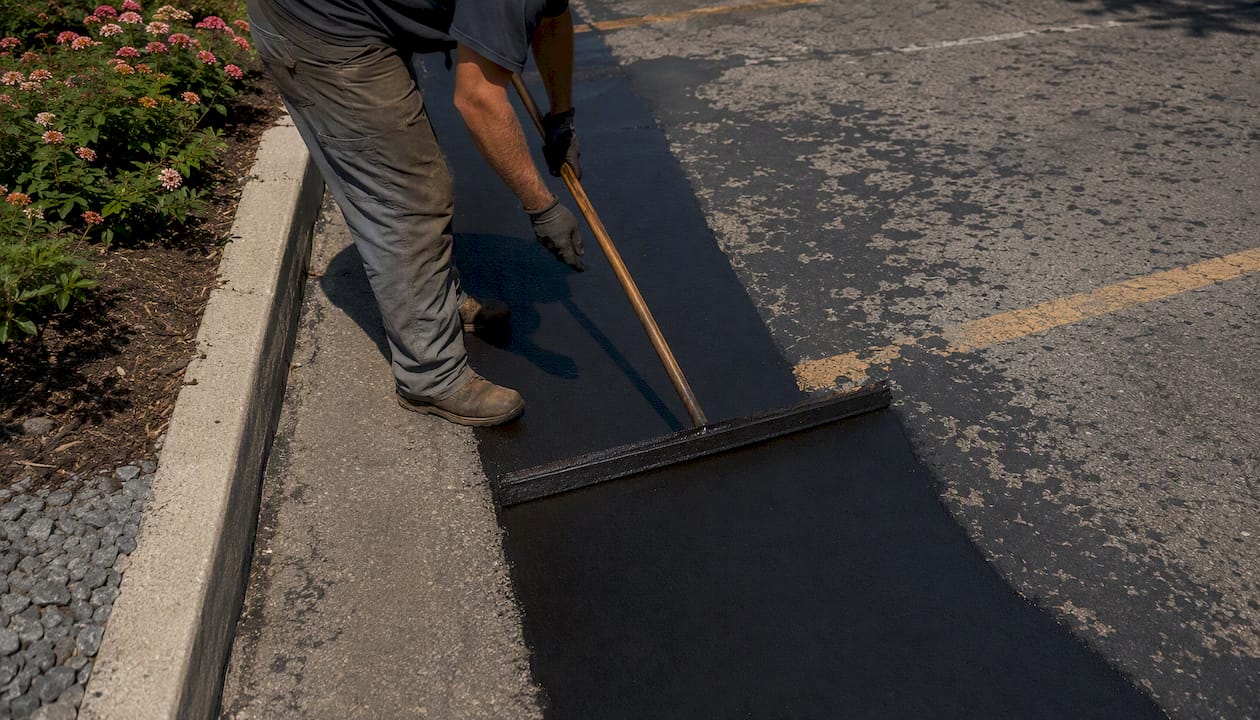
If your parking lot is showing gray, faded asphalt, hairline cracks, or water pooling after rain, it needs professional sealcoating now — before those surface issues become structural ones. Property managers in Raleigh, Cary, and Wake County can request a condition assessment from TrueSeal to confirm whether sealcoating alone is appropriate or whether crack repair and patching need to come first.
Check your lot for these immediate triggers:
Surface graying or fading — asphalt turning light gray instead of deep black
Hairline or spiderweb cracks — fine surface cracking with no base movement
Water pooling or failing to bead — sealer has worn through and water is penetrating
Growing oil and chemical stains — fuel and fluid spills accelerating binder breakdown
Brittle or rough texture — aggregate loosening at the surface (early raveling)
If two or more of these are present, schedule a condition assessment before the next rain season. A professional inspection will confirm whether sealcoating is the right tool or whether localized patching needs to happen first.
Pro Tip: Take photos of your lot on a dry day from multiple angles, including close-ups of cracked areas and any spots where water collects. These images let a contractor assess condition remotely and give you a faster, more accurate quote.
Key Takeaways
Timely sealcoating, applied while pavement is still structurally sound, is the single most cost-effective way to extend commercial lot life and defer major capital expense.
Point | Details |
Act on early warning signs | Gray surface, hairline cracks, or water pooling mean it’s time to schedule a professional assessment. |
Follow a 2–3 year cycle | High-traffic commercial lots need sealcoating every 2–3 years; lower-traffic sites can extend to 4 years. |
New asphalt needs time | Wait 12–18 months after paving before applying the first sealer coat. |
Know when to replace, not seal | Alligator cracking, potholes, and rutting require structural repair — sealcoating over them wastes money. |
TrueSeal handles the full scope | TrueSeal provides condition assessments, crack filling, two-coat sealcoating, and ADA-compliant restriping across Wake County. |
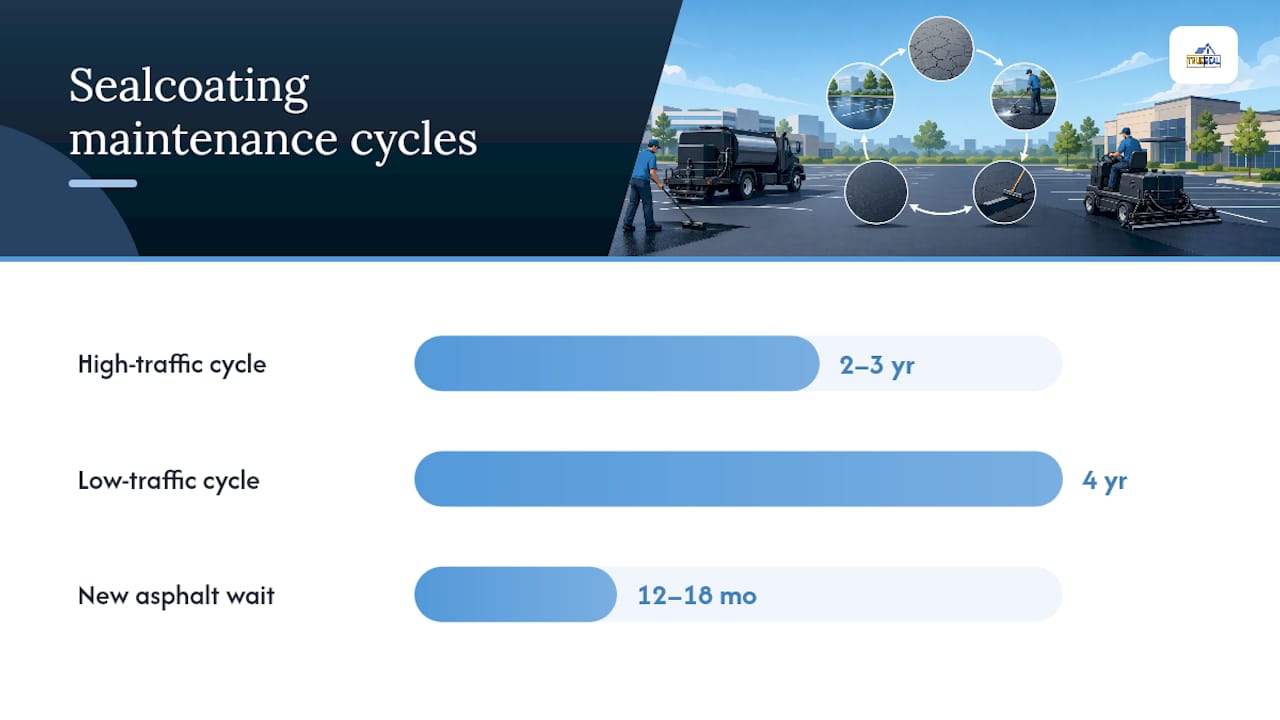
Table of Contents
Why sealcoating protects your commercial pavement investment
Sealcoating is not a cosmetic upgrade. It is a surface preservation treatment that blocks the two forces that destroy asphalt fastest: UV oxidation and water infiltration. Left unprotected, asphalt binder dries out and becomes brittle within a few years of installation. Once that brittleness sets in, surface cracks open, water gets into the base, and what started as a maintenance issue becomes a capital expense.
The concrete benefits for commercial properties include:
Waterproofing — sealer closes surface pores, preventing water from reaching the base course
UV protection — slows oxidation that turns asphalt gray and brittle
Reduced liability — a smooth, clearly striped lot reduces trip-and-fall risk and keeps you on the right side of ADA requirements
Improved curb appeal — a freshly sealed lot signals a well-managed property to tenants and customers
Deferred capital expense — consistent sealcoating pushes mill-and-overlay or reconstruction costs years further into the future
The ROI framing is straightforward. Sealcoating a commercial lot costs a fraction of what a mill-and-overlay runs. Industry practitioner guides indicate that a correctly timed, two-coat professional application can extend pavement service life by several years per treatment cycle. Multiply that across two or three maintenance cycles and you are looking at a decade or more of deferred reconstruction cost.
For property managers overseeing multiple tenants, a well-maintained lot also reduces friction at lease renewal. Tenants notice crumbling pavement. Coordinating sealcoating with ADA-compliant restriping — which TrueSeal handles as part of its commercial service — keeps your lot compliant and your tenants satisfied in a single scheduled visit.
Five clear signs your parking lot needs sealcoating now
Most parking lots send clear signals before they reach the point of structural failure. The challenge is knowing which signs call for immediate action and which allow a few months of planning.
Surface graying and fading is the earliest and most reliable indicator. Fresh asphalt is near-black. When it turns medium or light gray, the binder has oxidized and the surface is no longer protecting itself. This is the ideal window for sealcoating — the pavement is still structurally sound.
Hairline and spiderweb cracks are a step further along. These fine surface cracks have not yet reached the base, but they will channel water downward if left open. A professional will fill these before applying sealer, not cover them with sealer alone.
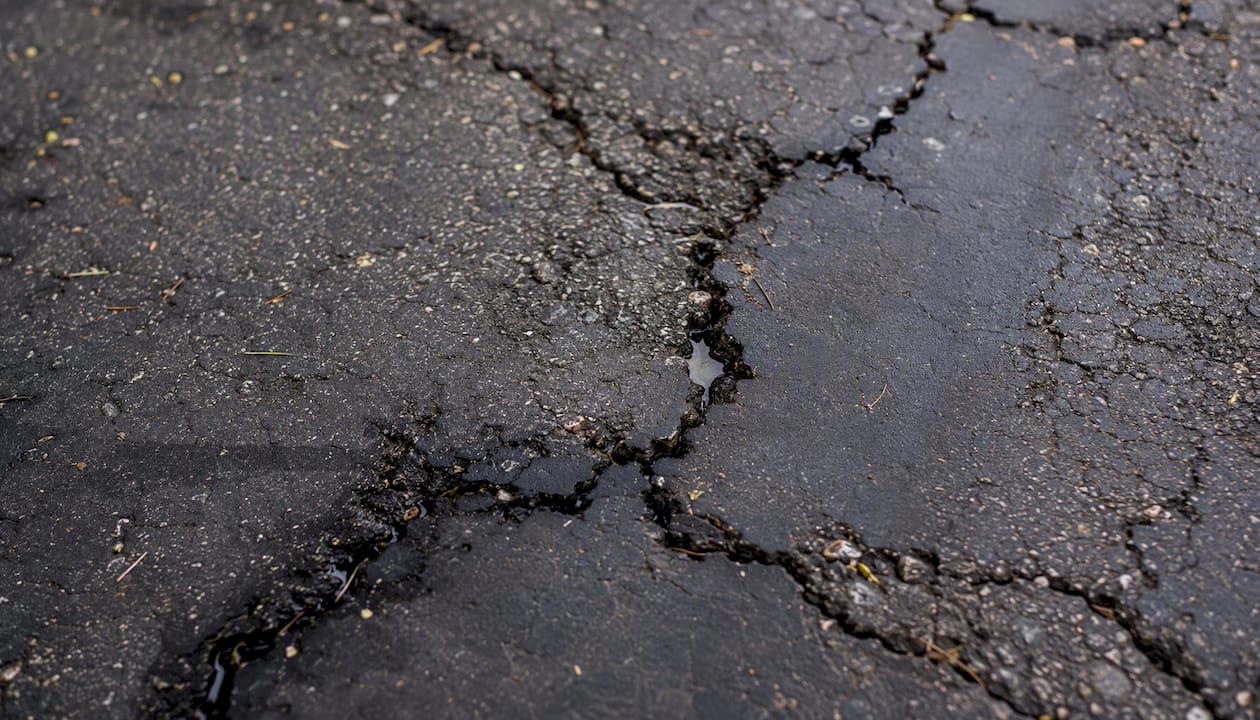
Water pooling or failing to bead tells you the existing sealer coat has worn through entirely. Water sitting on asphalt for hours after rain is actively working its way into the base. Schedule service before freeze-thaw cycles (or heavy summer rains in Wake County) accelerate the damage.
Growing oil and chemical stains are both a symptom and an accelerant. Fuel and hydraulic fluid dissolve asphalt binder. Spots that have grown over the past season mean the surface is absorbing contaminants rather than repelling them.
Brittle texture and early raveling — loose aggregate, a rough surface that catches shoe soles, or small pieces of asphalt breaking free at edges — indicate that binder failure and material loss have begun. Sealcoating can still help here if the base is intact, but a professional inspection is mandatory first.
Pro Tip: Document each sign with a photo and note the location on a simple lot diagram. Contractors can use this to prioritize prep work and give you a more precise scope before the site visit.
One warning: if you see alligator cracking (interconnected cracks forming a pattern like broken glass), deep potholes, or crumbling edges, sealcoating is not the right call. Those are structural failure indicators covered in the next section.
How often should a commercial parking lot be sealcoated?
Frequency depends on three variables: traffic volume, climate exposure, and the condition of the existing surface. Industry guidance consistently points to a 2–4 year cycle for most commercial properties, with the interval tightening for high-traffic sites.
Practical interval guidance by property type:
High-traffic retail, grocery, or medical office lots — every 2 years; heavy vehicle volume and fuel exposure accelerate wear
Mixed-use or mid-traffic office/industrial lots — every 2–3 years; moderate wear with seasonal UV exposure
Lower-traffic HOA, residential-commercial, or storage lots — every 3–4 years; less mechanical stress but still subject to UV and rain
One firm rule: do not recoat more often than every 12–18 months. Applying sealer over a coat that has not fully worn is counterproductive and can cause peeling.
New asphalt requires a waiting period. Fresh asphalt needs 12–18 months to cure fully before the first sealer application. Applying too early traps oils in the binder and prevents proper adhesion. Follow your paving contractor’s specific guidance, but 12 months is the minimum in most conditions.
Statistic: Industry practitioner data shows that commercial lots on a consistent 2–3 year sealcoating schedule maintain structural integrity significantly longer than lots treated reactively — with the preservation window closing rapidly once alligator cracking appears.
Calendar scheduling alone is not enough. Use a condition-based check — walk the lot, look for the five signs above, and compare against your last service date. Academic pavement-maintenance guidance recommends inspection-driven decisions rather than fixed-interval treatments, because climate, traffic, and drainage all affect how fast a surface degrades.
When sealcoating is no longer enough
There is a point where sealcoating stops being a solution and starts being a way to spend money on a surface that needs structural repair. Recognizing that threshold protects your maintenance budget.
Structural failure indicators that rule out sealcoating as the primary treatment:
Alligator cracking — interconnected cracking across large areas signals base failure, not surface wear
Pervasive potholes — multiple potholes across the lot mean the base course has lost integrity
Exposed aggregate and edge loss — significant raveling and crumbling edges indicate advanced material failure
Rutting — wheel-path depressions mean the subbase is deforming under load
Drainage failures — standing water in the same spots after every rain suggests grade or base issues
The practical decision framework works like this: if the pavement scores in the good-to-fair range on a PASER-style condition assessment (surface distress only, base intact), sealcoating is the right preservation tool. Once the assessment reveals base failure, the work required is mill-and-overlay or, in severe cases, full reconstruction. Sealcoating over those conditions produces a short-term cosmetic improvement that typically fails within weeks to months, as pavement distress research confirms.
If your lot shows these signs, request a formal pavement evaluation. A qualified contractor will quantify the repair scope and tell you whether localized patching can restore enough structural integrity for sealcoating to be effective, or whether a capital project is the only path forward. For guidance on alligator cracking specifically, TrueSeal’s resource covers what Cary and Raleigh property owners need to know.
Best season and weather window to schedule sealcoating
Timing a sealcoating project is not just about calendar preference. Environmental conditions determine whether the sealer cures correctly or fails within months.
Planning checkpoints before scheduling:
Air temperature — ambient temp should be at or above 50°F and rising, not falling, during application and for several hours after
Pavement surface temperature — pavement runs significantly hotter than air temperature on sunny days; very hot pavement (above 90°F surface) can affect working time and requires early-morning starts
Rain-free window — no rain for at least 24–48 hours after application; check a 72-hour forecast before confirming a start date
Humidity — high humidity slows curing; avoid scheduling when humidity is forecast above 90% for the application window
For Wake County properties, the practical scheduling window runs from late March through October, with May through September being the most reliable. Early booking is worth the effort — quality commercial contractors fill their summer calendars fast, and waiting until July often means an August or September slot. Spring scheduling also avoids the peak heat that makes mid-summer application on large lots logistically harder.
Pro Tip: For large lots, ask your contractor about phased application — sealing half the lot one day and the other half the next. This keeps customer and tenant access open during the cure window and avoids the business disruption of a full-lot closure.
Coordinate restriping and ADA layout before the project starts. Sealcoating covers existing line markings, so restriping is not optional — it is part of the scope. ADA compliance requirements for accessible spaces, van-accessible stalls, and signage should be confirmed before the striping crew arrives. Understand how rain after sealcoating affects cure time so you can communicate realistic reopening timelines to tenants.
What a professional commercial sealcoating job includes
A professional sealcoating job is not just spraying black material on pavement. The prep work determines whether the sealer lasts three years or three months.
The professional process, step by step:
Condition assessment — the contractor walks the lot, documents distress types and locations, and determines whether the surface qualifies for sealcoating or needs structural repair first
Surface preparation — mechanical sweeping or power washing to remove dirt, debris, and loose material; proper surface prep is non-negotiable for adhesion
Oil-spot priming — fuel and oil stains are treated with a primer before sealer application; skipping this step causes adhesion failure directly over stains
Crack filling — hairline and working cracks are filled with hot- or cold-pour crack filler; cracks must be clean and dry before filling
Localized patching — any areas with deeper damage are patched and allowed to cure before sealcoating proceeds
First coat application — squeegeed into the surface to work material into open pores and ensure adhesion
Second coat application — sprayed for a uniform, consistent finish; two thin coats outperform one heavy coat in both durability and appearance
Cure period — typically 24–48 hours before vehicle traffic; foot traffic usually reopens sooner
Restriping and ADA compliance — all line markings, directional arrows, fire lanes, and ADA-compliant accessible spaces are repainted to current parking lot striping standards
What a professional written estimate should include:
Scope of prep work (crack filling, oil priming, patching)
Materials specified (sealer type and grade)
Number of coats and coverage rate
Cure-time estimate and traffic-control plan
Restriping plan with ADA layout confirmation
Timeline for phased access if the lot cannot close fully
A medium-sized commercial lot (roughly 20,000–40,000 square feet) typically takes one to two days for prep and application, with restriping following after the cure window. Phased scheduling keeps at least part of the lot accessible throughout.
How to choose a commercial sealcoating contractor
The difference between a three-year result and a three-month failure often comes down to contractor selection, not the sealer product itself.
Checklist before signing a contract:
Documented commercial experience (not just residential driveways)
Proof of general liability insurance and workers’ compensation coverage
Written scope of work with materials, coats, coverage rates, and prep items listed
ADA striping capability confirmed
References from similar-sized commercial lots in the area
Questions to ask on the first call:
What sealer product and grade do you use, and why?
How many coats are included, and what is the coverage rate per coat?
What prep work is included — crack filling, oil priming, patching?
What is your cure-time estimate and traffic-control plan?
Do you handle restriping and ADA layout, or is that a separate contractor?
Can you provide references from commercial properties in Wake County or the Raleigh area?
Red flags that should end the conversation:
Quoting a single “thick” coat as equivalent to two standard coats
No written scope — verbal-only agreements
No plan for crack filling or oil-spot priming before application
Refusing to coordinate restriping as part of the project
Cure-time promises under 24 hours for a full commercial lot
Pro Tip: When comparing bids, normalize them by what is included — not price per square foot alone. A bid that includes crack filling, oil priming, two coats, and restriping is a different product than one that covers application only. Comparing the total-scope bids side by side reveals the real cost difference.
Effective property management means owning the maintenance schedule, not reacting to failures. Assigning a specific team member to track sealcoating intervals and contractor bids is the simplest way to keep this task from falling through the cracks.
ROI and lifecycle: why timely sealcoating avoids major capital expense
The financial case for sealcoating rests on one straightforward principle: surface preservation is far cheaper than structural repair. Academic pavement-maintenance guidance frames sealcoating as a condition-based preservation step within a broader pavement management strategy — applied while the pavement still has structural integrity, it extends service life at a fraction of reconstruction cost.
Maintenance Approach | Typical Outcome | Cost Driver |
Timely sealcoating (every 2–3 years) | 3–5 years of added service life per cycle | Sealer material, prep labor, restriping |
Deferred sealcoating (reactive) | Accelerated cracking; base damage within 5–8 years | Patching, partial overlay, emergency repairs |
Mill-and-overlay (after neglect) | Full surface restoration; resets pavement life | Milling, new asphalt, full restripe |
Full reconstruction | Complete base and surface replacement | Excavation, base rebuild, new asphalt |
Statistic: Industry practitioner data indicates that a correctly timed two-coat professional application extends pavement service life by 3–5 years per treatment cycle — making consistent sealcoating one of the highest-ROI line items in a commercial property maintenance budget.
The window matters. PASER-style condition scoring helps identify the optimal preservation point: sealcoating delivers its highest return when applied to pavement that is still structurally sound but showing early oxidation. Once base failure begins, the cost curve shifts sharply toward capital expenditure, and no amount of sealer changes that trajectory.
A contractor’s perspective on what actually goes wrong
The most common mistake property managers make is scheduling sealcoating by calendar rather than by condition. A lot that was sealed three years ago may look fine on the surface but be past its ideal treatment window — or it may still have adequate sealer and not need another coat yet. Walking the lot with the five-sign checklist above takes fifteen minutes and tells you more than any fixed schedule.
The second most common mistake is accepting a bid that skips prep. Oil priming and crack filling are not optional add-ons — they are what make the sealer last. A contractor who quotes a low price by omitting prep is selling you a cosmetic treatment that will fail in one season.
For Wake County properties, the scheduling reality is that spring slots fill quickly. Raleigh and Cary commercial contractors are often booked through June by March. If your lot needs service this year, request your assessment now and get on the schedule before the summer rush.
TrueSeal commercial sealcoating for Raleigh, Cary, and Wake County
TrueSeal’s commercial sealcoating service covers the full scope that commercial property managers need: condition assessment, crack filling, oil-spot priming, two-coat sealer application, cure-time guidance, and ADA-compliant restriping — all coordinated in a single written scope with a clear project timeline.
TrueSeal serves commercial properties across Raleigh, Cary, Apex, Garner, and Wake County. Every engagement starts with a condition assessment — either on-site or through TrueSeal’s remote digital review process — so you know exactly what your lot needs before any work begins. No guesswork, no surprise add-ons.
When you hire TrueSeal, you receive a written scope of work, a timeline with cure-time guidance, and a restriping plan that accounts for ADA layout. Request your commercial pavement assessment today and get your lot on the schedule before the season fills.
Sources
FAQ
How often should a commercial parking lot be sealcoated?
Most commercial lots need sealcoating every few years, with shorter intervals for high-traffic properties and longer intervals for lower-traffic sites. Condition-based inspection should guide the decision rather than a fixed calendar alone.
How much does it cost to sealcoat a parking lot per square foot?
Sealcoating costs vary by region, lot size, prep requirements, and number of coats included. TrueSeal provides written quotes after a condition assessment — contact TrueSeal for a scope-based estimate specific to your Wake County property.
Is sealcoating a parking lot a capital expense or a maintenance expense?
Routine sealcoating is generally treated as a maintenance expense because it preserves existing pavement rather than replacing it. Consult your accountant for the treatment that applies to your specific situation and property classification.
Why doesn’t sealcoating fix alligator cracking or potholes?
Sealcoating is a surface preservation treatment, not a structural repair. Alligator cracking and potholes indicate base failure that sealer cannot address. Applying sealer over these conditions produces only a short-term cosmetic result before the underlying damage reappears.
When is the best time of year to sealcoat a parking lot in Wake County?
Late March through October is the practical window in the Raleigh and Cary area, with May through September offering the most reliable conditions. Book early — quality commercial contractors in Wake County fill their summer schedules by spring.
Comments