Paver Sealing Cost in North Carolina: 2026 Price Guide

Updated: Aug 13
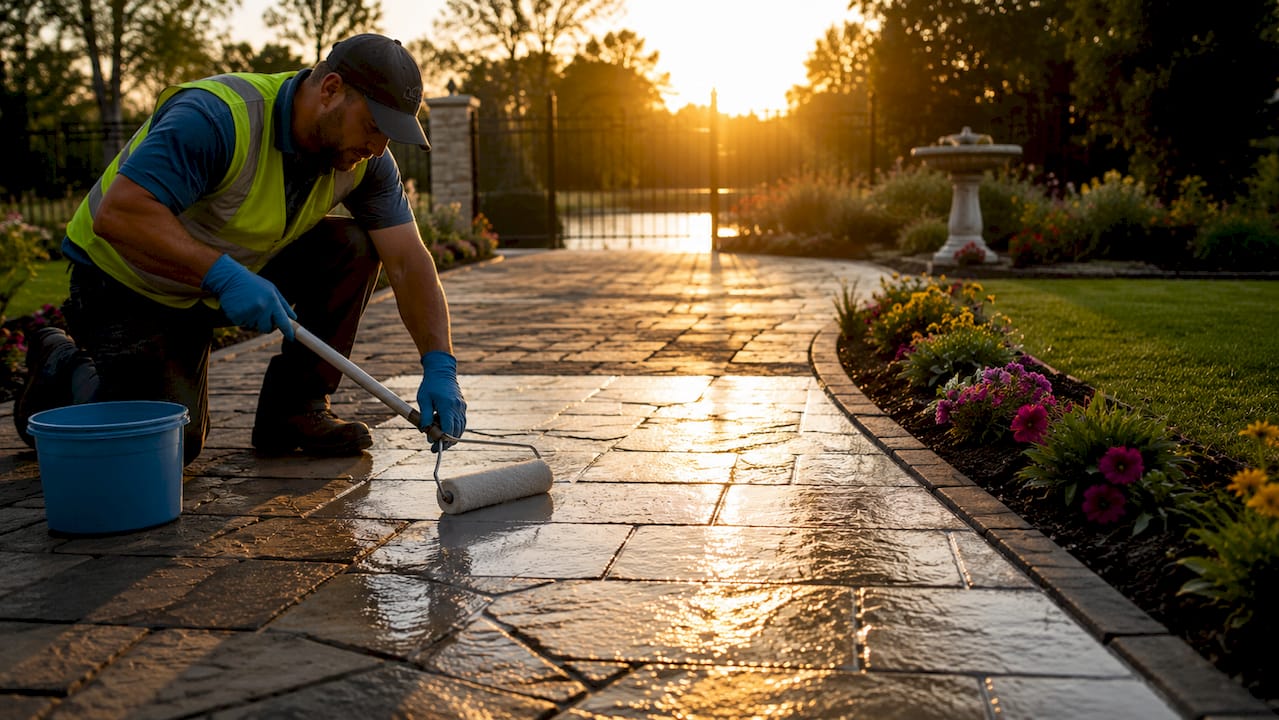
Paver sealing cost is defined as the total price to clean, prep, and apply a protective coating to brick, concrete, or stone paver surfaces. Professional paver sealing runs $0.50 to $3.00 per square foot in 2026, with full projects ranging from $200 to $2,500 depending on size, surface condition, and prep requirements. That wide range exists because sealing is not a single service. It is a multi-step process that includes cleaning, joint sand stabilization, and one or more coats of sealer. Homeowners and property managers in Wake County who understand what drives the price are far better positioned to evaluate quotes and avoid costly mistakes.
What determines the cost to seal pavers?
Square footage is the starting point for any paver sealing price estimate, but it is rarely the only factor. A 300-square-foot patio in good condition costs far less to seal than a 300-square-foot patio with failing old sealer, weed growth, and efflorescence staining. Knowing the key variables helps you anticipate where your project falls in the price range.
The main cost drivers include:
Surface size. Small areas under 200 sq ft typically cost $100–$400. Medium projects from 200–500 sq ft run $400–$1,000. Large projects over 500 sq ft start at $1,000 and climb from there.
Surface condition. A clean, well-maintained surface needs basic sealing at $0.50–$1.00 per sq ft. A restoration job requiring old sealer removal runs $1.50–$3.50+ per sq ft. Removing failed sealer alone adds $1.50–$2.25 per sq ft to the total.
Sealer type and number of coats. A single-coat solvent-based product costs less upfront but wears faster. Multi-coat, UV-resistant systems cost more and last significantly longer.
Joint sand stabilization. Polymeric sand replacement adds $0.10–$0.30 per sq ft to the project. Skipping it leads to sinking or shifting pavers, which creates far more expensive repairs later.
Natural stone surfaces. Travertine, slate, and similar materials require specialty sealers that add roughly $0.50 per sq ft compared to standard concrete pavers.
Minimum service charges. Most professional contractors set a minimum charge of $150–$250 regardless of project size. This means a small 50-square-foot landing may cost more per square foot than a large driveway.
Access challenges, irrigation overspray, and heavy vegetation near the surface also affect prep time and final price. A contractor who visits your property before quoting will catch these details. One who quotes over the phone without seeing the surface often misses them entirely.
Professional paver sealing vs. DIY: which actually costs less?
The DIY route looks cheaper on paper. DIY sealing materials cost $0.30–$0.50 per square foot, which is well below professional rates. The real cost shows up when something goes wrong.
Improper DIY application is the most common and expensive mistake homeowners make. Applying sealer to a surface that was not fully cleaned, or sealing over old failing product, causes the new coat to turn milky, peel, or trap moisture underneath. Fixing that failure requires chemical stripping and a full reseal. That remediation process can cost nearly double the original professional price.
The steps that separate a professional job from a DIY attempt to include:
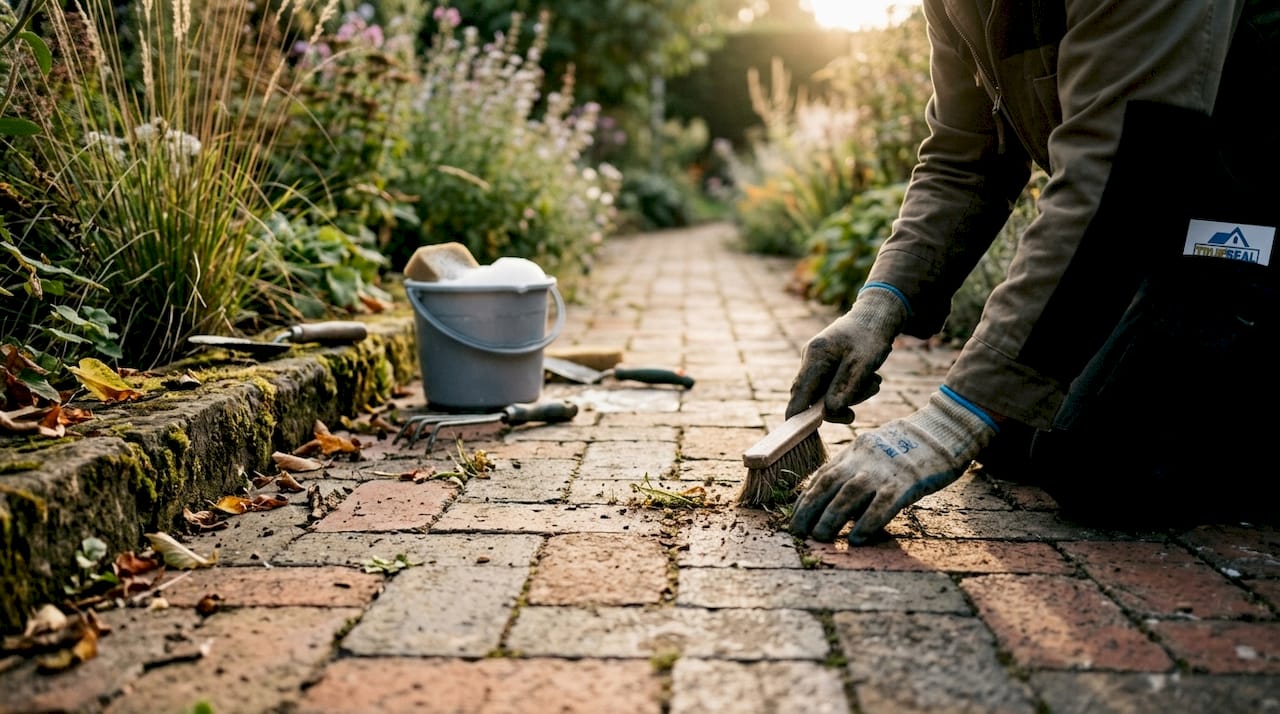
Pressure washing and surface cleaning. Professionals use commercial-grade equipment to remove algae, mildew, and embedded dirt before any sealer is applied. Learn more about proper prep sequencing before starting any sealing project.
Chemical stripping of old sealer. If the existing sealer is failing, it must come off completely. Sealing over failing product causes rapid new sealer failure. This step is labor-intensive and is almost always skipped in low-cost or DIY jobs.
Joint sand replacement. Professionals refill joints with polymeric sand before sealing to lock the surface together. DIY kits rarely include this step.
Multi-coat sealer application. A quality job uses two or more coats of a UV-resistant sealer applied with professional spray equipment for even coverage.
Pro Tip: Before hiring any contractor, ask specifically how many coats they apply and whether joint sand replacement is included. A quote that omits either item is not a complete service.
How long does paver sealing last, and what does resealing cost over time?
Sealing is not permanent. Concrete pavers need resealing every 2–4 years, while natural stone pavers typically hold up for 3–5 years between applications. The difference comes down to porosity and surface texture.
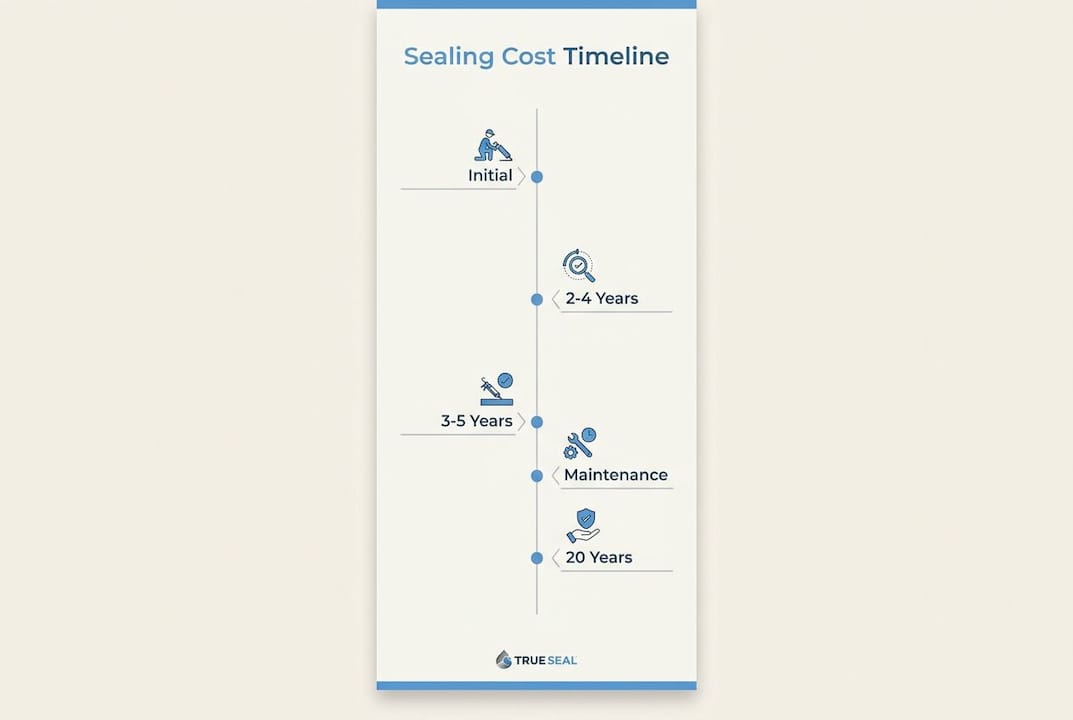
Over a 20-year period, sealing maintenance on a 300-square-foot patio can add $2,400–$7,200 to your total ownership cost. That number sounds significant until you compare it to the cost of replacing sunken, cracked, or stained pavers that were never protected. Sealing is preventative maintenance, not just a cosmetic upgrade.
Surface type | Reseal interval | Avg. cost per cycle (300 sq ft) | 20-year estimate |
Concrete pavers | Every 2–4 years | $150–$600 | $750–$6,000 |
Natural stone pavers | Every 3–5 years | $225–$900 | $900–$6,000 |
Restoration (with stripping) | As needed | $450–$1,050+ | Varies |
North Carolina’s climate adds a layer of urgency to this schedule. The Triangle area sees hot, humid summers, heavy spring rain, and occasional freeze-thaw cycles in winter. All three conditions accelerate sealer wear. Homeowners in Cary, Apex, and Raleigh who wait too long between reseal cycles often find themselves paying for a full restoration instead of routine maintenance.
Traffic volume matters too. A paver driveway used daily by two vehicles wears sealer faster than a backyard patio with light foot traffic. High-traffic surfaces should be inspected annually and resealed at the shorter end of the recommended interval.
How to get an accurate paver sealing cost estimate
A phone quote is not an accurate quote. Contractors who assess site-specific factors in person avoid mid-project price surprises for both parties. A responsible contractor will walk your property, check the condition of existing sealer, look for efflorescence or staining, and note any access challenges before naming a price.
When requesting quotes, ask these specific questions:
How many coats of sealer does the price include?
What brand or type of sealer will you use, and is it UV-resistant?
Does the quote include joint sand replacement?
Will you chemically strip old sealer if it is failing?
What is your minimum service charge?
Quality professional quotes specify the number of coats, the sealer product, and the prep steps included. A quote that simply says “seal pavers, $X” without those details is a red flag. Low-ball quotes almost always cut corners on prep or use single-coat products that fail within a year.
Pro Tip: Send photos of your paver surface to contractors before the site visit. It helps them identify potential issues like failing sealer or heavy staining before they arrive, which leads to a more accurate first quote.
Factors that raise your quote include poor access (gated areas, narrow passages), heavy vegetation or tree roots near the surface, irrigation heads that spray onto the pavers, and significant efflorescence buildup. Factors that lower it include a clean, well-maintained surface, easy vehicle access, and a large square footage that spreads the fixed labor cost over more area.
Common misconceptions about paver sealing value
The biggest misconception is that sealing is purely cosmetic. Homeowners who think of it as “making pavers look shiny” often delay it until the surface is already damaged. Sealing locks in joint sand, blocks UV fading, and prevents moisture from penetrating the surface. Those are structural benefits, not cosmetic ones.
The second misconception is that a lower quote saves money. A quote that omits prep work, uses a single coat of low-grade sealer, or skips joint sand replacement will fail faster. You pay again sooner, and you may pay extra for stripping the failed product before the next application. The true cost of a cheap job is almost always higher than the cost of a quality job done once.
DIY sealing falls into the same trap. The materials are inexpensive, but the margin for error is small. A homeowner who applies sealer to a surface with even minor contamination or moisture will see failure within months. The cost to strip and redo that surface often exceeds what a professional would have charged from the start.
Proper sealing extends paver life, reduces staining, and protects property value. For homeowners in Wake County who have invested in paver driveways, patios, or walkways, skipping or cutting corners on sealing is one of the most expensive decisions they can make.
Key Takeaways
Professional paver sealing costs $0.50–$3.00 per square foot, and the prep work, sealer quality, and resealing schedule determine the true long-term cost far more than the initial quote.
Point | Details |
Cost range by project size | Small projects run $100–$400; large projects exceed $1,000 based on square footage and condition. |
Prep work drives price | Restoration with old sealer removal adds $1.50–$2.25 per sq ft on top of base sealing costs. |
DIY risks are real | Failed DIY applications require chemical stripping and resealing, often costing more than professional service. |
Resealing is recurring | Concrete pavers need resealing every 2–4 years; natural stone every 3–5 years. |
Get a site-specific quote | In-person inspections catch access issues, failing sealer, and staining that phone quotes miss entirely. |
What we’ve learned from years of sealing pavers in Wake County
We see the same pattern every season. A homeowner gets a low quote, the job skips prep, and within 12–18 months the sealer is peeling or turning white. They call us to fix it, and the remediation costs more than a proper job would have from the start. It is one of the most predictable and preventable problems in this business.
The homeowners who get the best long-term value are the ones who treat sealing as a maintenance schedule, not a one-time fix. They reseal on time, they ask the right questions before hiring, and they do not chase the lowest number on a quote sheet. A $400 job that lasts two years costs more over a decade than an $800 job that lasts five.
We also see homeowners in Cary and Apex who wait until their pavers are visibly faded, stained, or have loose joints before calling. At that point, the job requires full restoration rather than routine maintenance. The cost difference between routine sealing and restoration work is significant. Staying on schedule is always cheaper.
If your pavers are more than three years past their last seal, or if water no longer beads on the surface, schedule an inspection before the damage compounds. The earlier you act, the simpler and less expensive the solution.
— TrueSeal
Schedule your paver sealing service in Wake County
Truesealcoating serves homeowners and property managers throughout Cary, Apex, Raleigh, Morrisville, and greater Wake County with professional paver cleaning, joint sand stabilization, and multi-coat sealing. Our signature Clean & 7-Year Seal system is built for North Carolina’s climate and designed to protect your surface for years, not months.
Whether you manage a residential patio, a paver driveway, or a commercial hardscape, we provide site-specific quotes based on an actual inspection, not a phone estimate. Our residential sealing services cover concrete and natural stone pavers with full prep included. Property managers can explore our commercial surface protection options for HOAs, multifamily communities, and retail properties. Request your free quote today and get a surface assessment from a team that does the job right the first time.
FAQ
How much does paver sealing cost per square foot?
Professional paver sealing costs $0.50–$3.00 per square foot depending on surface condition, prep requirements, and sealer type. Restoration jobs requiring old sealer removal fall at the higher end of that range.
How often do pavers need to be resealed?
Concrete pavers need resealing every 2–4 years, and natural stone pavers every 3–5 years. High-traffic surfaces and those exposed to heavy weather should be inspected annually.
Is DIY paver sealing worth it?
DIY materials cost less upfront, but improper application frequently leads to peeling or milky sealer that requires chemical stripping and a full redo. That remediation often costs more than professional service would have.
What is included in a professional paver sealing service?
A complete professional service includes pressure washing, chemical stripping of old sealer if needed, polymeric joint sand replacement, and two or more coats of UV-resistant sealer. Quotes that omit prep steps or joint sand are not complete services.
Does sealing pavers actually protect them or just improve appearance?
Sealing provides structural protection by locking in joint sand, blocking moisture penetration, and preventing UV fading. It is preventative maintenance that extends paver life and reduces the need for costly structural repairs.
Recommended
Comments