Restore Faded Pavers in Wake County, NC: Hire a Pro to Clean, Re-Sand & Seal

Updated: Aug 12
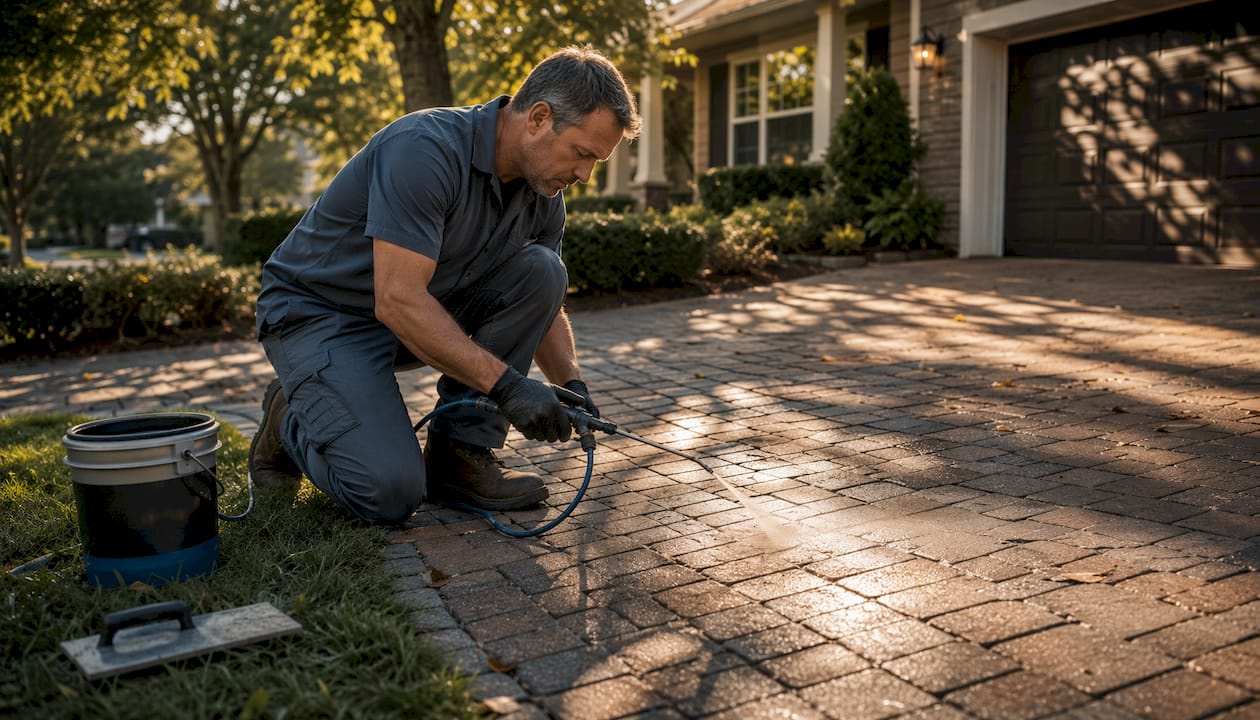
The most effective way to restore faded pavers is to hire a professional paver restoration service to deep-clean the surface, replace eroded joint sand with polymeric sand, and apply a color-enhancing or penetrating sealer. That three-step sequence stops further fading, stabilizes the joints, and brings back the color tone that UV exposure and weather have stripped away. For most Wake County homeowners, the professional route delivers results that a weekend DIY project simply cannot match.
When to call a pro right away:
Joints are eroded, cracked, or missing sand entirely
Pavers are sunken, rocking, or have drainage problems
Color paste is visibly worn down to bare aggregate
Oil, rust, or efflorescence stains are present
The surface covers a large driveway or commercial area
When limited DIY is reasonable:
Light surface grime on a small, structurally sound patio
Joints are intact and pavers sit level
Fading is mild and no stains are present
Need professional paver sealing in Cary, Apex, or Raleigh? Explore TrueSeal’s Clean & 7-Year Seal service.
Table of Contents
Which local providers can restore faded pavers in Wake County?
The table below covers the six local and regional providers you are most likely to encounter alongside TrueSeal when requesting quotes in Wake County.
Provider | Services included | Certifications / affiliations | Cost model | Warranty / maintenance | Sealer type offered |
TrueSeal | Cleaning, polymeric sand, re-leveling, sealing | Not publicly listed | Project-based; free estimate | Clean & 7-Year Seal system | Penetrating and color-enhancing |
National Sealing Co | Paver sealing, travertine, stamped concrete | Not publicly listed | Not publicly listed | Not publicly listed | Proprietary stone-enhancement coatings |
Paver Makeover | Brick paver cleaning & sealing, pressure/soft washing | Experience with Belgard, Pavestone | Not publicly listed | Not publicly listed | Not publicly listed |
Paver Restore | Cleaning, re-leveling, polymeric sand, sealing | Not publicly listed | Promotional credits available | Not publicly listed | Not publicly listed |
D’Carmo Interlocking Pavers | Installation and restoration | ICPI-certified; manufacturer-authorized | Not publicly listed | Not publicly listed | Not publicly listed |
Paver Restoration | Paver restoration (Wake County listing) | Not publicly listed | Not publicly listed | Not publicly listed | Not publicly listed |
Trust signals to confirm before you book any contractor:
Before-and-after project photos from comparable jobs
Proof of insurance and contractor licensing
ICPI certification or manufacturer-authorized applicator status
Named sealer brand and type (not just “professional-grade”)
Written warranty or maintenance plan with clear scope
TrueSeal’s Clean & 7-Year Seal system is one of the few local offerings with a named, multi-year protection commitment built into the service.
What does a professional paver restoration job actually include?
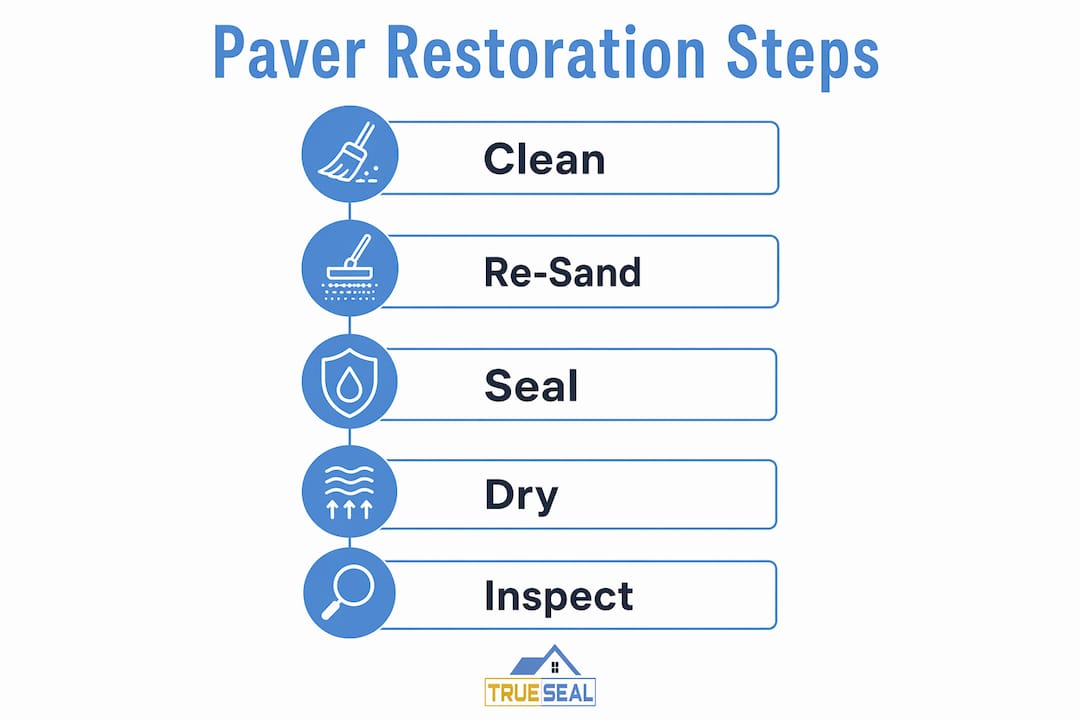
A thorough restoration follows a specific sequence. Skipping any step reduces how long the results last.
Inspection. The crew assesses joint depth, paver stability, drainage, and stain types before touching the surface.
Deep cleaning and stain removal. Controlled pressure washing removes dirt, algae, and mildew. Degreasers treat oil spots; efflorescence removers address chalky mineral deposits. See TrueSeal’s guide on efflorescence on pavers for what that white residue actually is.
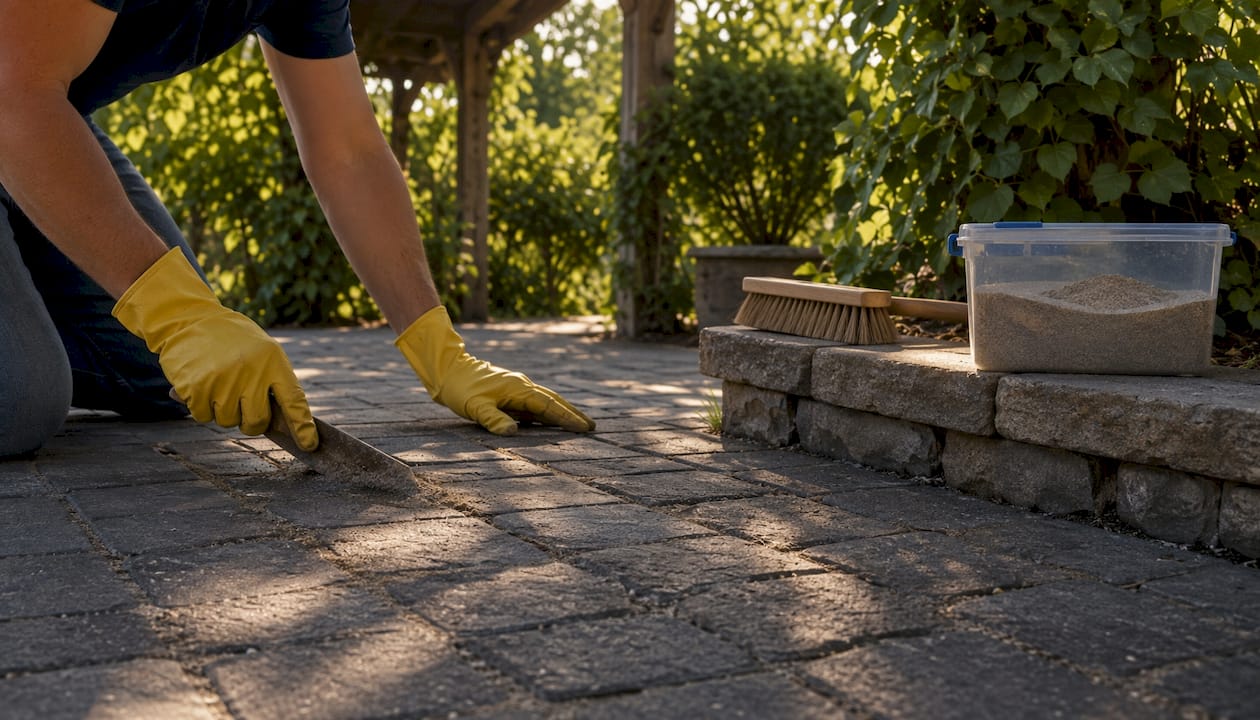
Joint sand removal and polymeric sand replacement. Eroded joint material is cleared to at least 1.5–2 inches before polymeric sand is packed in. The surface must be completely dry before activation to prevent premature bonding and staining.
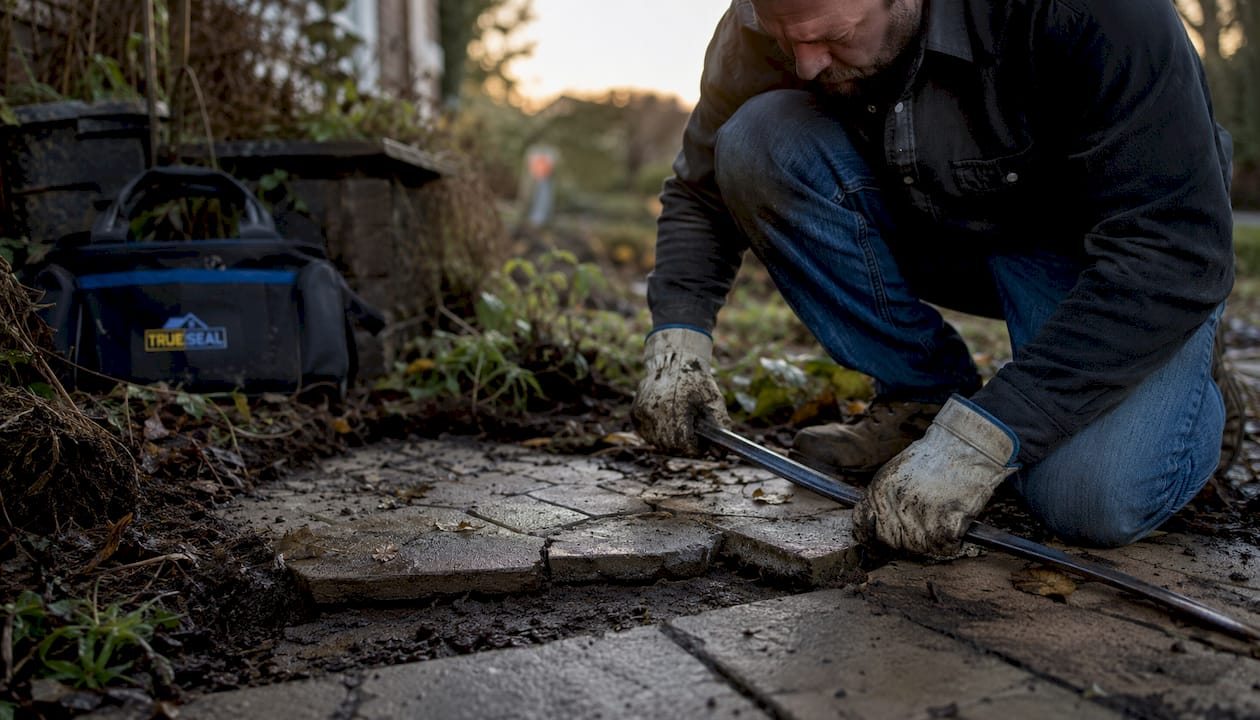
Re-leveling or replacing damaged pavers. Sunken pavers are lifted, the base sand is adjusted and compacted, and the stones are reset flush. Cracked pavers are replaced outright.
Sealer selection and application. The crew chooses between a penetrating sealer (invisible protection, natural look) or a color-enhancing sealer (deepens tone, wet-look finish) based on the paver type and homeowner preference.
Final compaction and cleanup. A plate compactor seats the polymeric sand, excess material is swept off, and the area is left clean.
Service scope checklist to confirm on your estimate:
Is stain pre-treatment included or billed separately?
Does the quote cover re-leveling, or only cleaning and sealing?
Which sealer brand and formulation will be used?
What are the post-application traffic restrictions?
Pro Tip: Professional crews monitor ambient temperature and humidity during sealing. Most sealers require surface temperatures between 50°F and 90°F and low humidity for proper cure. A contractor who ignores weather conditions is a red flag.
How do you choose a paver restoration contractor?
Questions to ask every contractor:
Are you licensed and insured in North Carolina?
What sealer brand and type will you use, and why?
Which polymeric sand product do you use?
Can you show photos of similar projects in Wake County?
What does site prep and cleanup include?
What is your weather contingency plan?
Is the warranty written, and what does it cover?
Red flags to watch for:
Quote covers pressure washing only, with no sand or sealer
No written scope of work
Vague or verbal-only warranty
Unwillingness to name the sealer or sand brand
Price far below other quotes with no explanation
Typical cost ranges
Pricing varies by square footage, stain severity, whether re-leveling is needed, and sealer type. The ranges below reflect general market conditions; always request a site-specific estimate.
Service level | What’s included | Typical price driver |
Basic clean & seal | Pressure wash + sealer only | Square footage |
Standard restoration | Clean + polymeric sand + seal | Joint condition, sand depth |
Full restoration | Clean + re-level + sand + seal | Number of sunken pavers, stain type |
Commercial / large area | All above + striping or lot work | Total area, access, sealer volume |
Timeline expectations: Most residential jobs run several days, including cleaning, drying, sanding, and sealing steps. The surface requires adequate drying time before sealing, and traffic restrictions apply during curing.
When does DIY work, and when should you hire a pro?
Decision checklist:
DIY is reasonable if the patio is small, joints are intact, pavers sit level, and fading is mild surface grime.
Call a pro if joints are eroded, pavers are sunken or rocking, stains are oil or rust-based, or the area is a driveway or large commercial surface.
For homeowners who decide to tackle a light refresh themselves, follow this sequence:
Clear furniture and sweep loose debris from the surface and joints.
Pre-treat stains: degreaser for oil, efflorescence remover for white deposits, mold cleaner for organic growth.
Wash with low pressure, staying below 1,500 PSI and keeping the nozzle 8–18 inches from the surface. Aggressive pressure strips the colored cement paste and exposes dull aggregate, making fading worse.
Allow 24–48 hours of full drying before touching joints or sealer.
Top off joint sand (non-polymeric for a temporary fix; polymeric for a lasting one).
Apply a consumer-grade color-enhancing sealer only if the surface is structurally sound and fully dry.
Stop and call a professional if you find sunken pavers, cracked stones, or stains that don’t respond to standard cleaners.
Why do pavers fade, and what can restoration actually fix?
Paver color lives in the surface layer of hardened cement paste, which is tinted with pigments during manufacturing. Over time, UV exposure, freeze-thaw cycles, foot and vehicle friction, and improper cleaning all wear that paste away. Once the paste is gone, the underlying aggregate is exposed, and no sealer can recreate it.
“The colored cement paste is the color of the brick paver. Once that paste is gone, the color is gone. Aggressive cleaning or high-pressure washing can remove that paste and make the pavers look worse.” — Tim Carter, Ask the Builder
What a professional sealer can do:
Deepen and enhance the color that remains
Add water repellency and stain resistance
Slow future UV degradation
Give the surface a uniform, finished appearance
What it cannot do:
Recreate cement paste that has physically worn away
Make 15-year-old pavers look brand new
Permanently reverse deep abrasion or structural damage
The water-bead test
Pour a small amount of water on your pavers. If it beads on the surface, the sealer is still working. If it soaks straight in, the sealer has failed and the surface is unprotected. That’s the moment to schedule a professional assessment.
If your pavers are absorbing water, it’s time to act. Request your free quote from TrueSeal today.
What should you do before calling for an estimate?
Preparing a few photos before your call saves time and helps the contractor give you an accurate quote.
Photos to take:
Wide shot of the full patio, walkway, or driveway
Close-ups of the most faded areas
Joint gaps or areas where sand is missing
Any sunken, cracked, or rocking pavers
Low spots where water pools after rain
Practical next steps:
If joints are failing or color paste is visibly eroded, schedule a professional restoration. DIY cleaning alone won’t fix structural issues.
If the surface is lightly soiled but otherwise sound, a mild detergent wash is a reasonable first step before deciding on sealing.
After the water-bead test, if water soaks in, contact a local paver sealing company for an on-site assessment.
Pro Tip: Send your photos by text or email when you call for a quote. Most contractors can give a ballpark estimate and flag structural concerns before the site visit, saving everyone time.
Key Takeaways
Professional paver restoration (clean, re-sand with polymeric sand, and seal) is the most reliable way to revive faded pavers and protect them for years.
Point | Details |
Hire a pro for structural issues | Sunken pavers, eroded joints, and deep stains require professional tools and materials. |
Use the water-bead test | If water soaks in rather than beads, the sealer has failed and maintenance is overdue. |
Polymeric sand is non-negotiable | Joints cleared to 1.5–2 inches and refilled with polymeric sand restore stability and prevent weed growth. |
Sealers enhance, not recreate | Color-enhancing sealers deepen existing tone but cannot replace cement paste that has worn away. |
TrueSeal’s Clean & 7-Year Seal | TrueSeal serves Cary, Apex, Raleigh, and Wake County with a named multi-year protection system. |
What we’ve learned from restoring pavers across Wake County
Most homeowners come to us after trying a pressure wash that made the fading look worse, not better. That’s the most common mistake we see, and it’s entirely understandable. The instinct to blast away the dullness is natural. But paver color is fragile. It lives in a thin cement paste layer, and once that’s gone, no product brings it back completely.
What we recommend is a measured approach: assess the surface honestly, clean it at the right pressure, replace the joint sand properly, and choose the sealer that fits the paver type and the homeowner’s goals. The Clean & 7-Year Seal system TrueSeal uses is built around that sequence, with the environmental controls and material quality that make the results last.
Your pavers deserve more than a pressure wash
Faded pavers across Cary, Apex, Raleigh, and Wake County share one thing in common: they look worse after a pressure-wash-only treatment and dramatically better after a proper clean, re-sand, and seal. TrueSeal’s Clean & 7-Year Seal system is built specifically for North Carolina’s UV load, humidity, and freeze-thaw cycles. The service covers deep cleaning, polymeric sand joint restoration, and professional sealer application, with a seven-year protection commitment.
[
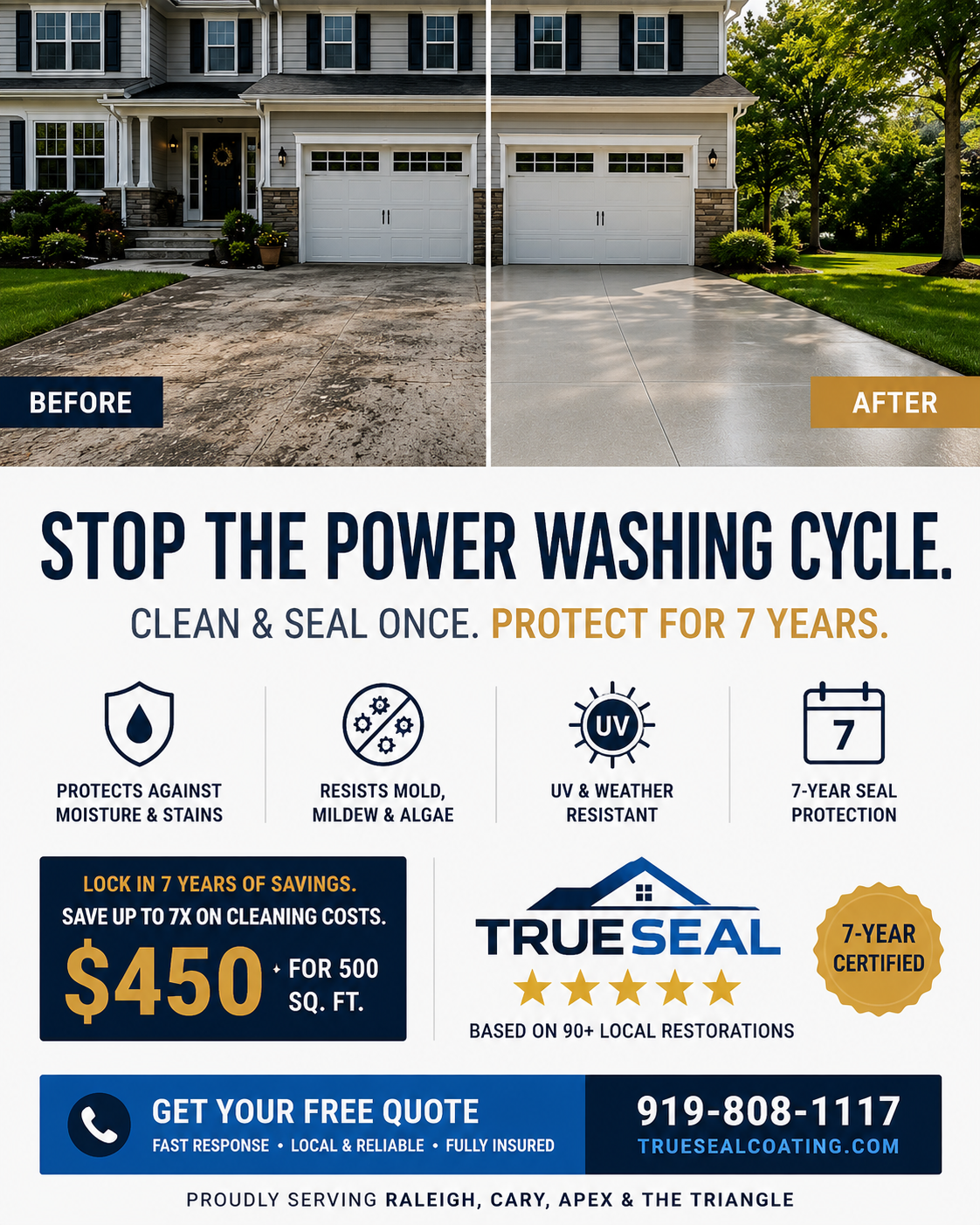
If your driveway, patio, walkway, or pavers no longer bead water, it’s time for professional protection. Schedule your paver cleaning and sealing service or request your free quote today. TrueSeal serves residential and commercial properties throughout Wake County.
Useful sources
Tim Carter, Ask the Builder — Brick Pavers Fading: explains the colored cement paste mechanism and the risks of high-pressure washing.
Techniseal — Restoring and Rejuvenating Paved Surfaces: technical guidance on polymeric sand depth, dryness requirements, and environmental controls.
Grounded In Concrete — Is It Necessary to Seal Concrete Pavers?: explains the water-bead test and sealer maintenance timing.
Paver Seal Doctor — Ultimate Guide to Paver Restoration and Sealing: covers core restoration steps, sealer lifespan of 2–5 years, and maintenance cadence.
TrueSeal Coating — Paver Cleaning & Sealing: TrueSeal’s service page for Wake County homeowners.
FAQ
How do you make faded pavers look new again?
Deep-clean the surface, replace eroded joint sand with polymeric sand, and apply a color-enhancing sealer. Professional restoration delivers the most consistent results, especially when joints are failing or stains are present.
Is there a dye or product that permanently restores paver color?
Color-enhancing sealers deepen the existing tone and improve appearance, but they cannot recreate colored cement paste that has physically worn away. No dye permanently reverses abrasion.
Can you put new pavers on top of old ones?
Laying new pavers over old ones is not a standard restoration method. It raises the surface height, disrupts drainage, and can cause instability. Replacing individual damaged pavers and re-leveling sunken ones is the correct approach.
How often do sealed pavers need maintenance?
Most professional paver sealers last 2–5 years depending on UV exposure, traffic, and sealer type. Run the water-bead test annually to know when resealing is due.
Recommended
Comments