Cut Maintenance 5–10 Years: Apex Driveway Sealing with Remote Photo Review

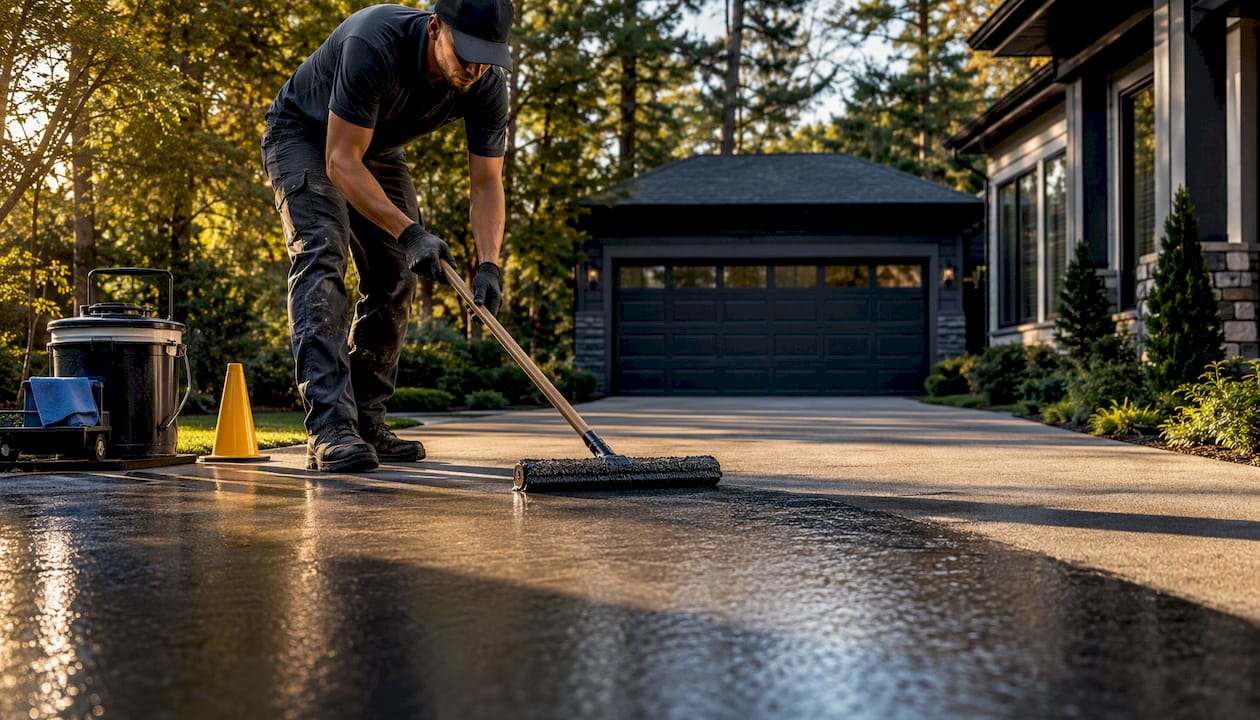
Yes, sealing is worth it for most aging, porous, stained, or heavily used driveways in Apex. The right sealer lowers water absorption, keeps stains from setting into the surface, and preserves the concrete’s appearance longer between deep cleanings. That said, the payoff depends on matching the sealer to the concrete’s condition and having it applied by someone who preps the surface properly first.
Table of Contents
How Sealers Protect Concrete: Penetrating vs Film-Forming
Concrete looks solid, but it’s full of microscopic pores that pull in water like a sponge pulls in a spill. Sealers work by either plugging those pores from the inside or by capping the surface with a protective layer on top. Which one your driveway needs depends on how it’s used and what look you’re after.
Penetrating sealers soak into the concrete and react chemically inside the pore structure. They don’t sit on top as a visible coating, so the surface still looks and feels like bare concrete. Because the concrete can still release trapped moisture from below, these sealers are considered breathable, and they tend to hold up longer without peeling.
Film-forming sealers create a topical layer on the surface, which is where the “wet look” or color-enhancing shine comes from. That layer is impermeable, meaning it blocks moisture from moving through it in either direction. That’s great for looks, but it also means any moisture trapped underneath has nowhere to go, which is one reason topical products are more prone to visible failure over time.
The two also age differently:
Penetrating sealers typically last 5 to 10 years and fade out gradually, so there’s no dramatic failure point.
Film-forming sealers tend to show wear as a visible event: peeling, yellowing, or flaking rather than a slow fade.
No sealer is a universal fix. The ASCC’s sealer selection guidance is blunt about this: choosing the right product for the substrate and use-case is what determines whether the job holds up. That’s a decision best made after someone actually evaluates the concrete’s porosity and condition, not by grabbing whatever’s on the shelf.
Concrete Driveway Sealing Benefits Homeowners Will Notice
The case for sealing isn’t theoretical. Homeowners typically notice these differences within the first year:
Less water soaking in. A sealed surface sheds rain and irrigation overspray instead of absorbing it, which limits the internal moisture that drives staining and surface breakdown.
Easier stain cleanup. Oil drips, tire marks, and organic buildup from leaves or pollen wipe off a sealed surface far more easily than they lift off bare, porous concrete.
Preserved curb appeal. Sealing slows the dulling and discoloration that comes with years of sun and weather exposure, and topical systems can add a color-enhancing finish if that’s a goal.
Longer stretches between deep maintenance. A properly sealed driveway generally needs less aggressive cleaning and attention over time than an unsealed one exposed to the same wear.
A cleaner-looking surface overall, since dirt and organic growth have less to grip onto in the first place.
Traction is worth a direct callout. Glossy film-forming sealers look great but can make a surface noticeably slicker when wet, especially on slight slopes, which many Apex driveways have. Penetrating sealers don’t change the surface texture, so they don’t carry that same risk.
Pro Tip: If you’re set on a glossy, color-enhanced look for a driveway with any slope or shade cover, ask about anti-skid additives blended into the sealer before it’s applied. It’s a small addition that solves a real safety issue.
Which Sealer Type Usually Fits an Apex Driveway
For a straight vehicle driveway, a penetrating sealer is usually the more practical default. Here’s why:
It’s invisible, so it won’t change how your driveway looks or feels underfoot.
It preserves natural traction, which matters for a surface tires and feet use daily.
It’s breathable, letting residual moisture escape rather than trapping it under a film.
It typically requires less frequent reapplication than many topical products, based on ConcreteNetwork’s comparison of sealer lifespans.
A film-forming topical sealer makes more sense when the goal is appearance rather than pure protection. Stamped or colored decorative concrete, for example, often benefits from a topical system that enhances the color and adds sheen. The trade-off is more upkeep and a shorter window before it needs attention again.
Within either category, water-based and solvent-based formulas behave differently. Solvent-based products often penetrate more aggressively and can shift the concrete’s color slightly, while water-based versions tend to have less odor and easier cleanup during application. Neither is universally “better,” it depends on the substrate and the result you want.
The selection principle is simple even if the chemistry isn’t: match the sealer to the concrete’s porosity and your actual use of the space, and get a second opinion before buying. A stamped concrete sealing guide is worth a look if your driveway has decorative elements, since those surfaces have different needs than a plain slab.
Downsides, Risks, and Common Failure Modes to Avoid
Sealing isn’t risk-free, and most of the horror stories homeowners hear trace back to the same handful of mistakes.
Peeling and milky haze. This almost always comes from sealing over a surface that wasn’t fully clean or fully dry, or from using a product mismatched to the concrete’s porosity.
Hot-tire pickup, where a car’s tires literally lift small patches of sealer off the surface on a hot day. It’s a classic sign of a film-forming product applied too thick or too soon.
Slipperiness. Glossy topical sealers without an anti-skid additive can turn a wet driveway into a genuinely slick surface.
Sealers aren’t a repair. They protect the surface you have; they don’t fix cracks, structural issues, or stains that have already soaked deep into the slab.
Timing and dryness aren’t minor details, they’re the difference between a job that lasts and one that fails within months. Industry guidance consistently points to poor prep as the leading cause of sealer failure, which is exactly why a professional’s prep process matters more than the sealer brand itself.
Pro Tip: If a driveway “sealing job” only involved a quick rinse and a same-day application, that’s a red flag. Proper prep takes real drying time, not a couple of hours.
When to Seal and How Professionals Prepare a Driveway
Timing drives outcomes here more than almost any other factor. Get the window wrong, and even a good sealer underperforms.
Let new concrete cure fully. Most guidance points to waiting around 28 days before sealing new concrete with many topical products, giving the slab time to release excess internal moisture first.
Check the temperature window. Sealers generally need to be applied within a moderate temperature range, not during a cold snap or a scorching afternoon, to cure correctly.
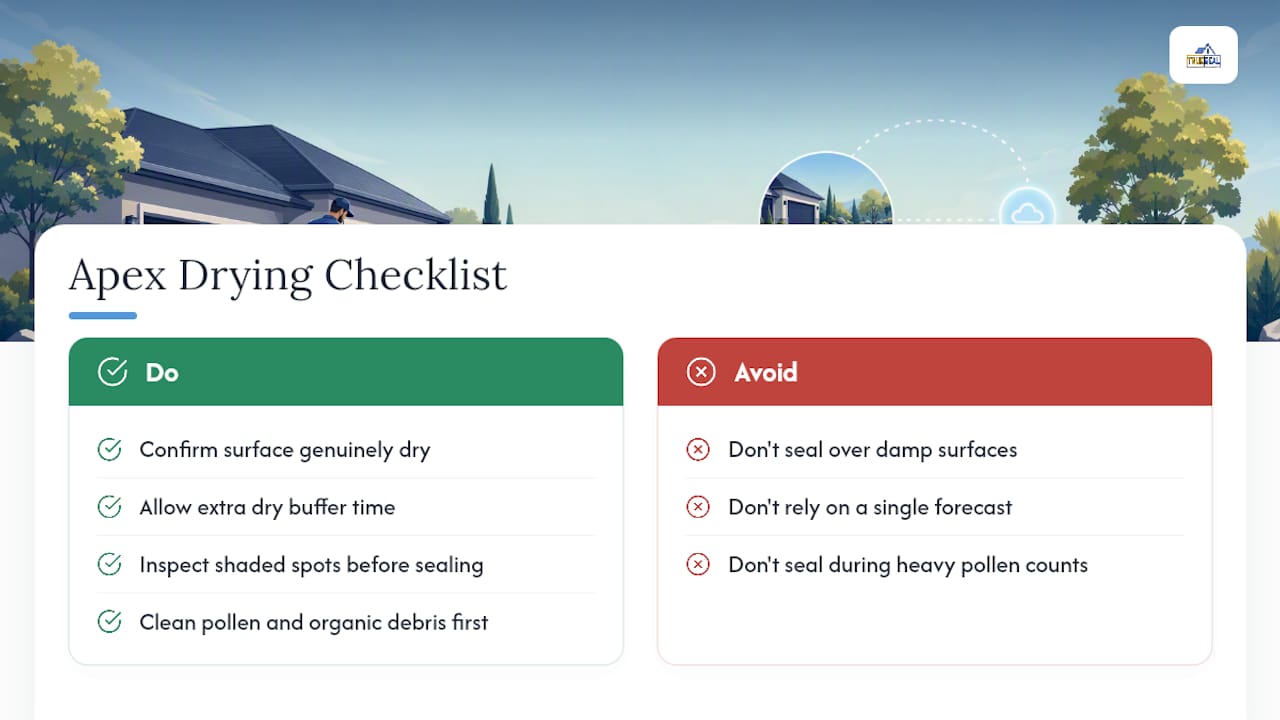
Build in extra buffer for humidity. Apex’s humid stretches and morning dew mean the forecasted rain chance isn’t the only thing that matters, ambient moisture in the air and on the surface counts too.
Deep clean first, then let it dry completely. Organic buildup, dirt, and old residue all block a sealer from bonding properly. This is where cleaning earns its role as prep, not as the finished job.
Allow a full drying window before sealing, often 24 to 72 hours after a deep clean depending on conditions, before the sealer goes down.
Reapplication follows the same logic as sealer type: penetrating products often hold up for 5 to 10 years, while film-forming products generally need attention sooner given the visible way they wear. Either way, cleaning your driveway is not the same as protecting it, a point covered in more detail in this piece on why pressure washing alone isn’t enough for long-term surface care.
Is Sealing Worth the Cost? How to Think About Value
The value case for sealing comes down to what it saves you from doing later, not just what it adds now.
Fewer deep-clean cycles needed to keep the surface looking presentable.
Fewer permanent-looking stains from oil, leaves, or general organic buildup.
A longer functional life for the surface before it looks visibly worn.
Whether sealing makes sense for your driveway depends on a few honest factors: how old and porous the concrete already is, how much traffic it sees, and how much maintenance effort you’re willing to put in without it. A driveway that’s already showing dullness, absorbing water visibly, or holding onto old stains is a strong candidate.
On the other end, a newer driveway with good drainage and light use might not need sealing immediately. In that case, an assessment is more useful than guessing, since the actual condition of the concrete, not its age alone, determines the timing.
DIY vs Hiring a Professional: When to Call a Pro
Small, straightforward, well-prepped driveways with no major staining or porosity issues are reasonable candidates for a careful DIY job using consumer-grade products. If your driveway is in that shape, you can likely manage it yourself with patience and the right weather window.
Hiring a professional makes more sense once the situation gets more complicated:
Stains have set in deep rather than sitting on the surface.
Porosity looks uneven across the slab, meaning different sections may need different treatment.
You want a reliable outcome without spending a weekend testing products and hoping for the best.
What a professional adds isn’t just labor, it’s judgment. That includes selecting a sealer that actually matches your concrete’s condition, cleaning thoroughly enough to give that sealer something to bond to, and controlling for the cure and dry windows that DIY jobs often rush. TrueSeal’s remote assessment process is built around getting that judgment right before anyone shows up, using photos to evaluate the surface and plan the right approach instead of guessing on-site.
Local Climate Considerations Affecting Sealing Performance in Apex
Apex sits in a humid climate zone, and that humidity matters more to sealing outcomes than most homeowners expect. It’s not about extreme weather, it’s about moisture lingering longer than the forecast suggests.
Morning dew and general ambient humidity can leave a driveway surface damp even on days with zero rain in the forecast. Sealing over that hidden moisture is one of the more common ways a job underperforms, since the sealer needs a genuinely dry surface to bond correctly. Shaded areas of a driveway, like a spot under a tree canopy or next to a garage wall, tend to hold onto that dampness longer than the rest of the slab, which is why experienced installers build extra buffer into the dry window rather than relying on a single forecast check.
Seasonal humidity swings also affect timing choices more than temperature alone. A dry, mild stretch in spring or fall often gives a better application window than a hot, sticky midsummer afternoon, even though summer feels like the obvious sealing season. Heavy pollen seasons add another practical wrinkle, since organic buildup on the surface needs to be cleaned off thoroughly before sealing, not sealed over.
None of this means Apex’s climate is unusually harsh on concrete. It just means the dry window matters more here than it would in a drier region, and that’s exactly the kind of local detail a professional assessment accounts for.
Environmental Impact and Safety Considerations of Driveway Sealers
Sealers vary in their environmental footprint, and that’s worth knowing before you pick one. Solvent-based products generally carry stronger odors during application and release more volatile compounds into the air as they cure, compared to water-based formulas. Water-based sealers have become a common choice for homeowners who want lower odor and easier cleanup without giving up meaningful protection.
Application safety matters too. Wet sealer, especially glossy film-forming types, is slippery underfoot until fully cured, so keeping people and pets off the surface during the cure window isn’t just a cosmetic concern. Ventilation matters during application for solvent-based products, particularly if any part of the driveway sits close to windows or air intakes.
None of this should scare you off sealing altogether. It just means the product choice isn’t only about looks and lifespan, it’s also about what you’re comfortable having applied around your home and family. A professional who asks about your preferences here, rather than defaulting to whatever’s cheapest, is doing the job right.
Maintenance Tips Post-Sealing to Maximize Lifespan
A sealed driveway isn’t maintenance-free, it’s lower-maintenance. Keeping it that way takes a few simple habits.
Sweep off leaves, pollen, and debris regularly rather than letting organic material sit and break down on the surface. Rinse the driveway periodically with plain water to keep dirt from grinding in over time, since sealed surfaces resist absorption but still need the surface debris cleared off. Wipe up oil drips or spills promptly rather than letting them sit, even a sealed surface benefits from quick attention.
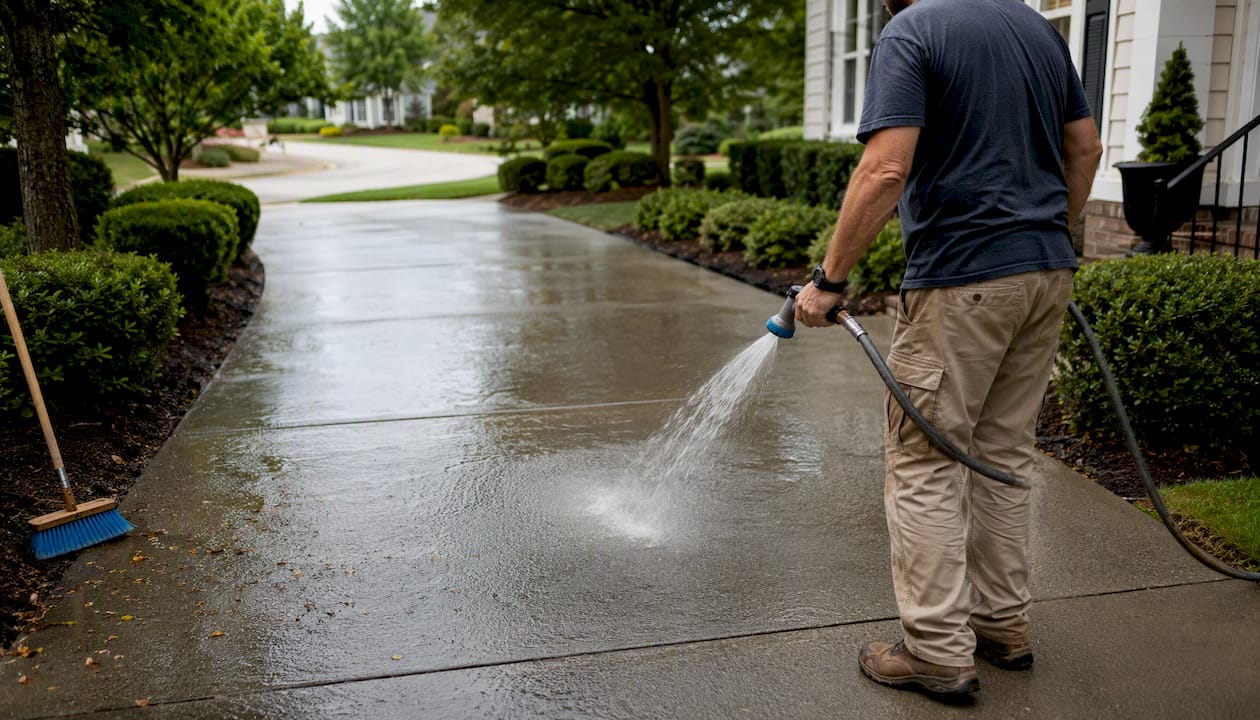
Avoid harsh chemical cleaners or aggressive pressure washing settings on a freshly sealed driveway, since overly aggressive cleaning can wear down the sealer faster than normal use would. Keep an eye out for early signs of wear, dulling in high-traffic zones or a section that’s absorbing water again, since catching that early makes a reseal simpler than waiting for visible failure. Following the sealer’s expected lifespan rather than guessing also helps, penetrating products generally give you years of runway, while topical systems ask for more frequent attention.
Common Mistakes to Avoid During Sealing in the Apex Area
The most common mistake in this region isn’t a product choice, it’s timing. Sealing on a day that looks dry but follows a humid night, without accounting for lingering moisture in shaded spots, sets up early failure before the sealer even has a chance to perform.
A second common mistake is treating a rinse-off as adequate prep. Organic buildup, pollen film, and light staining need real cleaning attention, not a quick hose-down, before a sealer goes on. Skipping that step is one of the fastest ways to end up with the peeling or hazing issues covered earlier.
Homeowners also sometimes pick a sealer based on looks alone, choosing a glossy topical product without weighing the traction trade-off or the shorter reapplication cycle that comes with it. And some rush the reapplication schedule entirely, either resealing too soon on a driveway that didn’t need it yet, or waiting years past when a topical product had already started failing. Matching the timeline to the actual sealer type, and to Apex’s specific humidity pattern, solves most of these problems before they start.
TrueSeal’s Take: Prep First, Protection Second
Sealing gets marketed as a one-step upgrade, and that’s misleading. The real work happens before any product touches the concrete. We built our remote assessment process around that reality, using photos to evaluate porosity, staining, and surface condition so we can match the right protection to your driveway without guessing on-site.
Cleaning is preparation, not protection. A driveway that’s been pressure washed still needs a sealer to actually resist water absorption and staining going forward, the wash just gets it ready for that step. Confusing the two is how homeowners end up disappointed a year later when the “clean” driveway looks dull again.
We also don’t oversell what sealing does. It gives you water repellency, preserved appearance, and easier upkeep. It doesn’t make a driveway maintenance-free forever, and it isn’t a substitute for addressing structural issues. Setting that expectation honestly upfront is what separates a durable result from a callback six months later.
— TrueSeal
How TrueSeal Helps Apex Homeowners Protect Their Driveways
There is an alternative to guessing your way through a driveway sealing decision: assessing the actual condition of your concrete before recommending anything, instead of pushing a one-size-fits-all product.
[
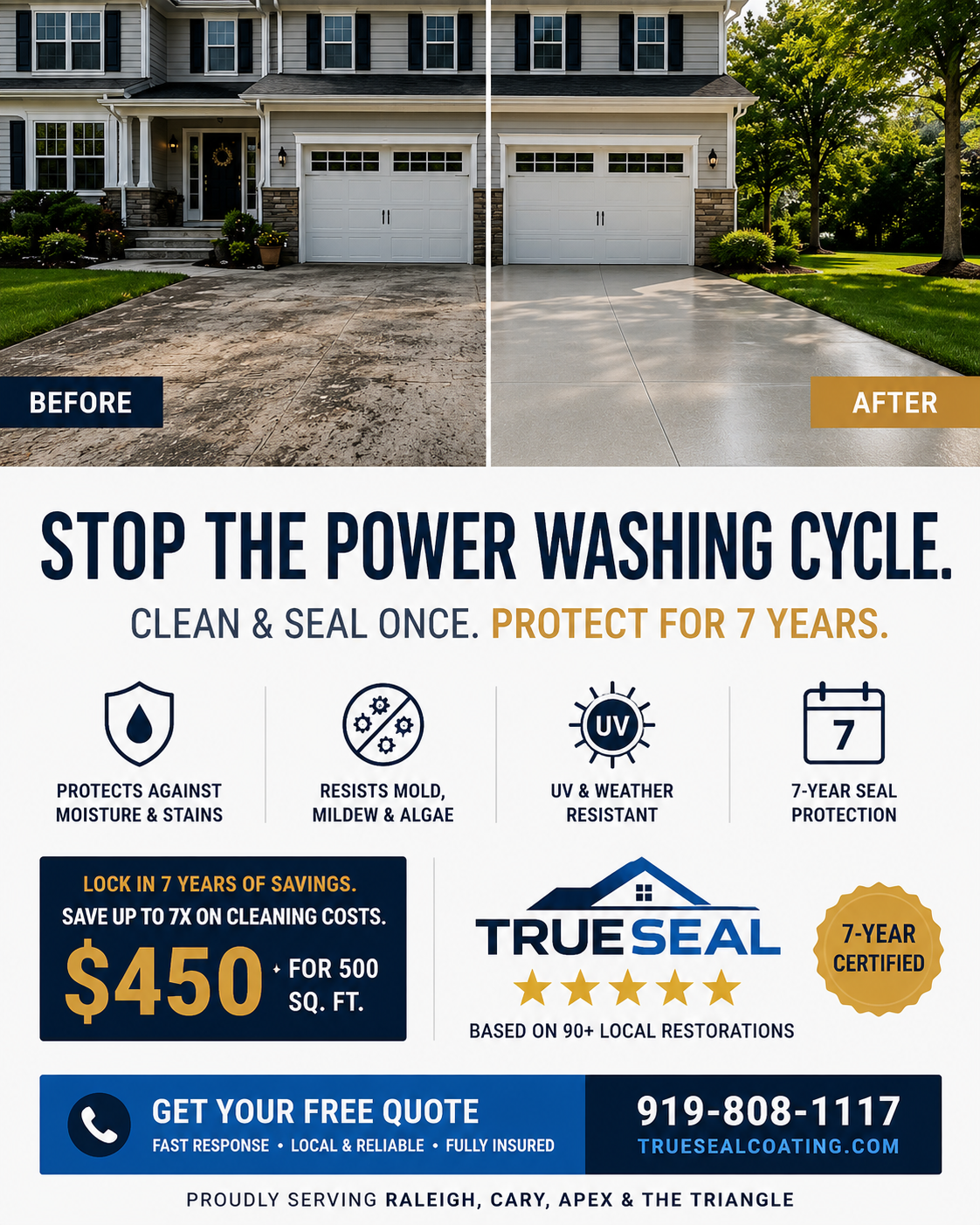
Services cover the full path from a worn, porous driveway to a protected one: cleaning as preparation, penetrating sealing for long-term water resistance, and topical color restoration when appearance is the goal. Starting with a remote photo-based assessment helps build a plan around the driveway’s actual porosity and staining, not a generic recommendation given sight unseen.
If you’re ready to find out what your driveway actually needs, send us a few clear photos of the surface, including any stained or heavily used sections, and we’ll build a tailored protection plan from there. Start by exploring our concrete and pavement services or check out the residential services overview to see how the process fits your home.
Sources
FAQ
Does Sealing a Concrete Driveway Really Help?
Yes, for most aging or porous driveways. Sealing reduces water absorption, limits staining, and helps preserve appearance longer than cleaning alone.
What Are the Downsides of Using Concrete Sealer?
The biggest risks are peeling, hazing, or hot-tire pickup from poor surface prep, plus increased slipperiness with glossy topical sealers unless an anti-skid additive is used. Sealers also don’t repair structural issues or lift deep-set stains.
What Time of Year Is Best to Seal Concrete?
A dry, mild stretch with moderate temperatures works best, since sealers need a fully dry surface and a stable temperature window to cure properly. In Apex, extra buffer for morning dew and humidity matters as much as picking a season.
How Long Should New Concrete Cure Before Sealing?
Many topical sealers call for about 28 days of curing time before application, giving the slab time to release excess internal moisture.
How Often Does a Driveway Need to Be Resealed?
Penetrating sealers typically last 5 to 10 years, while film-forming topical sealers generally need reapplication sooner since wear shows up visibly rather than gradually.
Comments