Stop Paying Twice: Stamped Concrete Sealing in Cary, NC

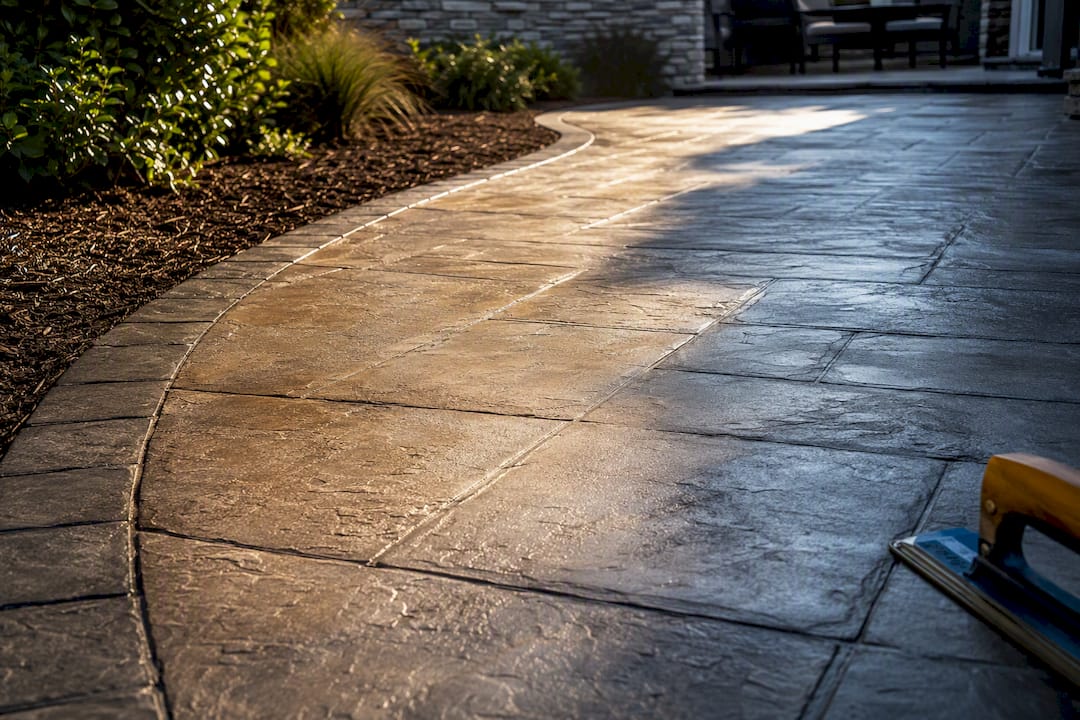
If your stamped patio, walkway, or pool deck has lost its color, gone chalky, or started peeling, resealing alone will not fix it. A professional restoration paired with a system-matched sealer restores color, gloss, and moisture protection, but surface preparation is what decides whether it lasts. See fading, hazing, or flaking? That is your signal to get a professional assessment before the damage spreads.
Table of Contents
What Causes Stamped Concrete to Fade, Peel, or Look Worn?
Stamped concrete rarely fails all at once. It usually shows one of a handful of predictable symptoms, and each one points to a different cause.
Faded or sun-bleached color with the antiquing or accent tones washed out, common on south-facing patios and pool decks that get direct sun for most of the day.
White, cloudy, or chalky film across the surface, which usually signals sealer blush or moisture trapped beneath the coating.
Peeling or flaking sealer in patches, often starting at high-traffic zones or slab edges where the film bonded poorly to begin with.
Loss of gloss and protective sheen, paired with spots that absorb water, oil, or leaf tannins instead of shedding them.
Any one of these means the existing protective layer has broken down. Once that layer stops repelling water, the concrete underneath starts absorbing it, and that is where staining and long-term deterioration begin.
Rejuvenation, Recolor, or Full Reseal: Which Restoration Fits?
Not every faded patio needs the same fix. Professionals typically choose from three approaches, and the right one depends on how much of the original finish is still intact.
Acrylic rejuvenation. When the existing film-forming sealer is still bonded but has dulled or faded, a compatible rejuvenating topcoat can restore color depth and gloss without removing what is already there.
Opaque recoloring or color refresh. For surfaces with severe, uneven fading where the original antiquing has broken down unevenly, an opaque or semi-transparent refresh evens out the tone before the new sealer goes on.
Film removal before resealing. When sealer has peeled, gone milky, or trapped moisture underneath, the failed film usually needs to come off or be conditioned first because new sealer applied over failing film almost never bonds correctly.
Restoration in this context is cosmetic and protective work: refreshing color, gloss, and the water-repellent barrier. It is not a substitute for structural repair. If you are seeing actual cracking, heaving, or settlement, that is a separate conversation from resealing.
Which Sealer Type Actually Protects Your Patio or Walkway?
The sealer TrueSeal recommends depends on how the surface is used and what look you want, since industry guidance describes distinct sealer categories with different tradeoffs. No single sealer type is right for every driveway, patio, or pool deck.
Topical (film-forming) sealers enhance color and add a wet-look sheen, which is why they are common on decorative patios and pool decks. They also require the most careful maintenance since the film itself can peel or wear.
Penetrating sealers soak into the concrete and repel water without changing the surface look or adding gloss. They tend to hold up well on higher-traffic commercial walkways where a shiny finish is not the priority.
Hybrid sealers split the difference, offering some sheen with better breathability than a heavy film-forming product, though compatibility with what is already on the slab matters just as much here.
Matching the new sealer to whatever is already on the concrete is not optional. Applying an incompatible product over old residue is a common reason resealing jobs fail within a season, which is why testing compatibility in a small area first is standard practice before committing to a full application.
How Should Stamped Concrete Be Cleaned and Sealed the Right Way?
Preparation decides whether a reseal lasts one season or several. Skip this step, or rush it, and the new coating fails no matter how good the product is.
Power washing at adequate pressure removes old sealer residue, dirt, and, on newer installations, leftover release powder from the stamping process. Industry best practices point to roughly 3,500 psi as a workable benchmark for opening the surface enough for the new sealer to bond.
The slab needs to be fully dry, not just surface dry, before sealer goes down. Most guidance calls for 12 to 24 hours of drying time after washing, longer if humidity is high or the concrete still feels cool to the touch.
Spray-and-back-roll application is the preferred method for textured, stamped surfaces because it pushes sealer into the low points of the pattern instead of letting it pool, which is a common problem with roller-only or dip application.
Timing matters. Applying sealer in direct sun or on a rising slab temperature causes it to flash off too fast and cure unevenly. Falling temperatures in the late afternoon or a shaded window in the schedule give the product time to level out properly.
Pro Tip: If you can still see old sealer flaking off in sheets after washing, that patch needs attention before a new coat goes on anywhere near it. Sealing over a failing film just traps the problem under a fresh layer.
How Often Should You Reseal, and How Do You Know It’s Time?
There is no fixed calendar date for resealing stamped concrete. Industry guidance leans toward annual inspection with resealing as needed, and actual intervals often fall somewhere between one and three years depending on the product used, foot and vehicle traffic, and how much direct sun the surface takes.
Run the water-bead test. Pour a small amount of water on the surface. If it beads up, the sealer is still doing its job. If it soaks in and darkens the concrete, protection has already declined.
Watch for visual cues. Fading, chalky patches, peeling edges, roughened texture, and stains that soak in instead of wiping off all point to a sealer that has run its course.
Factor in your exposure. Pool decks and south-facing patios in full Cary sun wear through sealer faster than shaded walkways, and temperature swings alone can cut a sealer’s effective lifespan by as much as 30%.
Skip chemical deicers. In a rare hard freeze, use sand for traction instead, since deicing chemicals accelerate both sealer breakdown and damage to the concrete underneath.
How TrueSeal Handles Stamped Concrete Restoration in Cary
TrueSeal focuses specifically on restoring and protecting decorative concrete across patios, pool decks, and walkways in the Cary and Wake County area, rather than treating every job as a generic pressure-wash. That means matching the sealer to what is already on your slab and giving surface prep the attention it needs, since a mismatched or rushed application is the most common reason a reseal fails early.
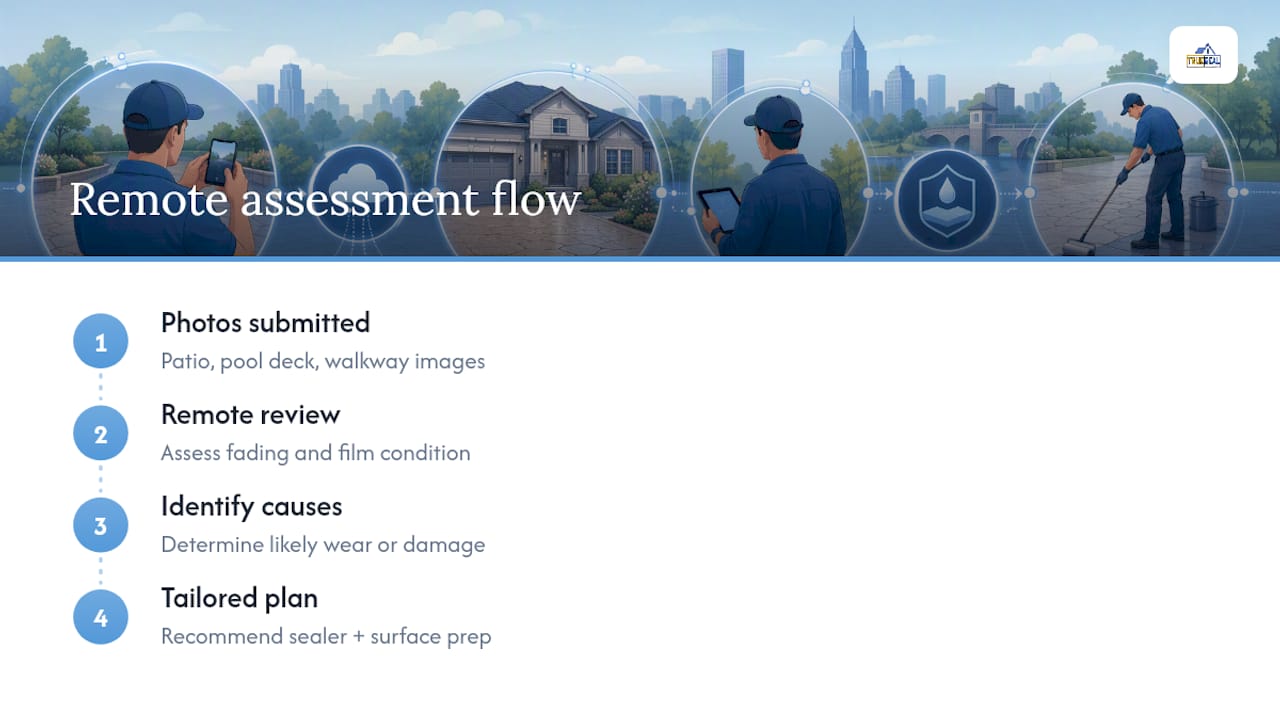
TrueSeal’s remote assessment process is built around getting that recommendation right before anyone steps on your property. Photos of your patio or walkway let TrueSeal evaluate fading, film condition, and likely causes, then propose a restoration and sealing approach suited to that specific surface, instead of a one-size answer applied to every driveway on the block.
When Does Stamped Concrete Actually Need a Professional?
Routine rinsing and light cleaning are fine to handle yourself. Once you see peeling film, chalky haze, or color loss across large sections, that is a professional job. Getting the sealer system matched correctly and the surface properly prepped up front avoids paying twice for the same patio. Expect the scope to stay focused on color refresh and resealing, not a full slab replacement, unless something structural is actually going on underneath.
— TrueSeal
Ready to Refresh Your Patio or Walkway?
TrueSeal is the specialized alternative to calling a general pressure-washing outfit for a job that actually needs restoration expertise. Instead of guessing at a sealer or slapping a new coat over a failing one, TrueSeal builds a plan around your specific slab, from color refresh to a compatible, water-repellent protective finish.
[
For homeowners and property managers across Cary, Raleigh, and Wake County, that starts with a tailored remote assessment built from photos of the actual problem areas: faded zones, peeling patches, or chalky sections. It’s a faster path to an accurate recommendation than waiting on a generic in-person walk-through for a straightforward diagnosis. From there, TrueSeal’s concrete and pavement restoration services cover the surface prep, sealer matching, and application work your patio, pool deck, or walkway actually needs. If your stamped concrete has lost its color or its protection, request a quote and send over a few photos to get started.
Where This Guidance Comes From
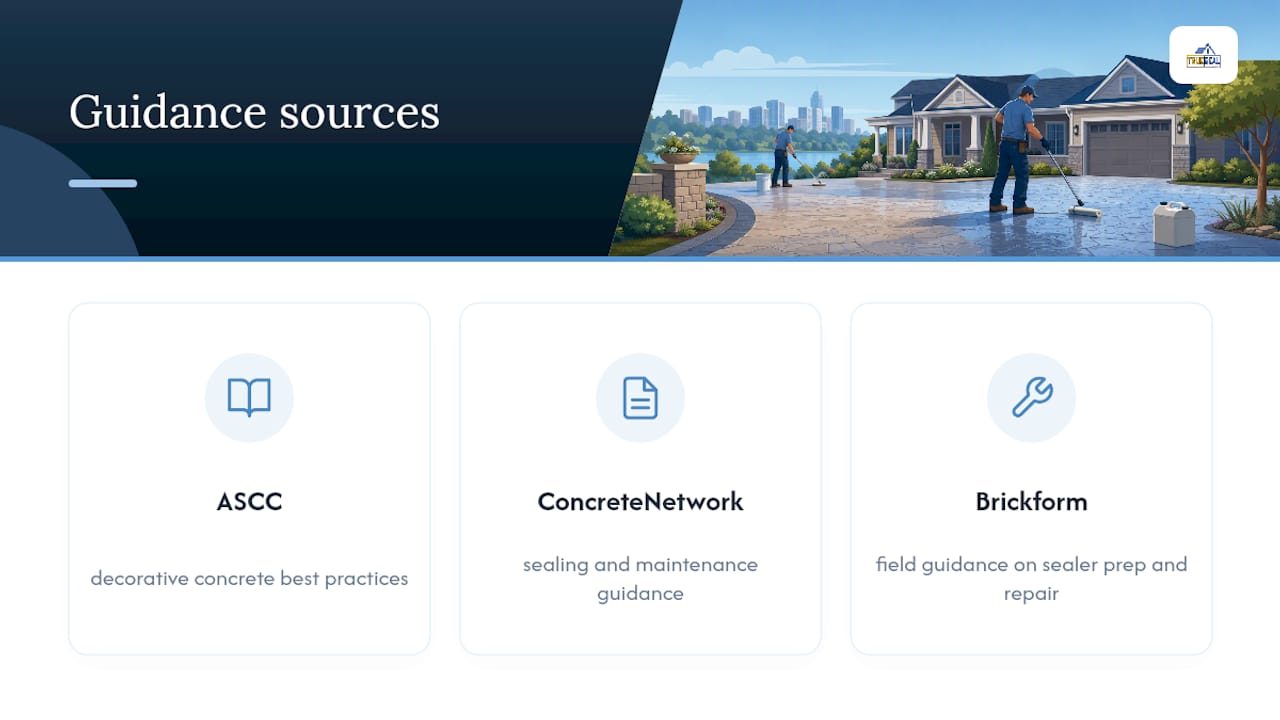
Recommendations here draw on ASCC’s decorative concrete best practices, ConcreteNetwork’s sealing and maintenance guidance, and Brickform’s field guidance on sealer prep and repair.
Sources
FAQ
Does stamped concrete need to be resealed?
Yes. Sealer wears down from sun, foot traffic, and weather exposure, and unsealed or under-sealed concrete can absorb significantly more water, which leads to staining and accelerated color loss.
What is the best sealer to put on stamped concrete?
There is no single best option. Topical sealers boost color and gloss but need more upkeep, penetrating sealers protect without changing the look, and the right choice depends on the surface’s traffic and sun exposure, plus what sealer is already on the slab.
How long does sealer last on stamped concrete?
Most sealers hold up for roughly one to three years, depending on the product, sun exposure, and traffic, and industry guidance recommends annual inspection rather than a fixed schedule.
What is the downside of stamped concrete?
Its decorative finish depends entirely on sealer condition. Once the protective film fades, chalks, or peels, the surface loses both its color depth and its resistance to water and staining until it gets a proper restoration and reseal.
Comments