Concrete Oil Stain Removal: A Raleigh, NC Homeowner's Practical Guide

Updated: Aug 12
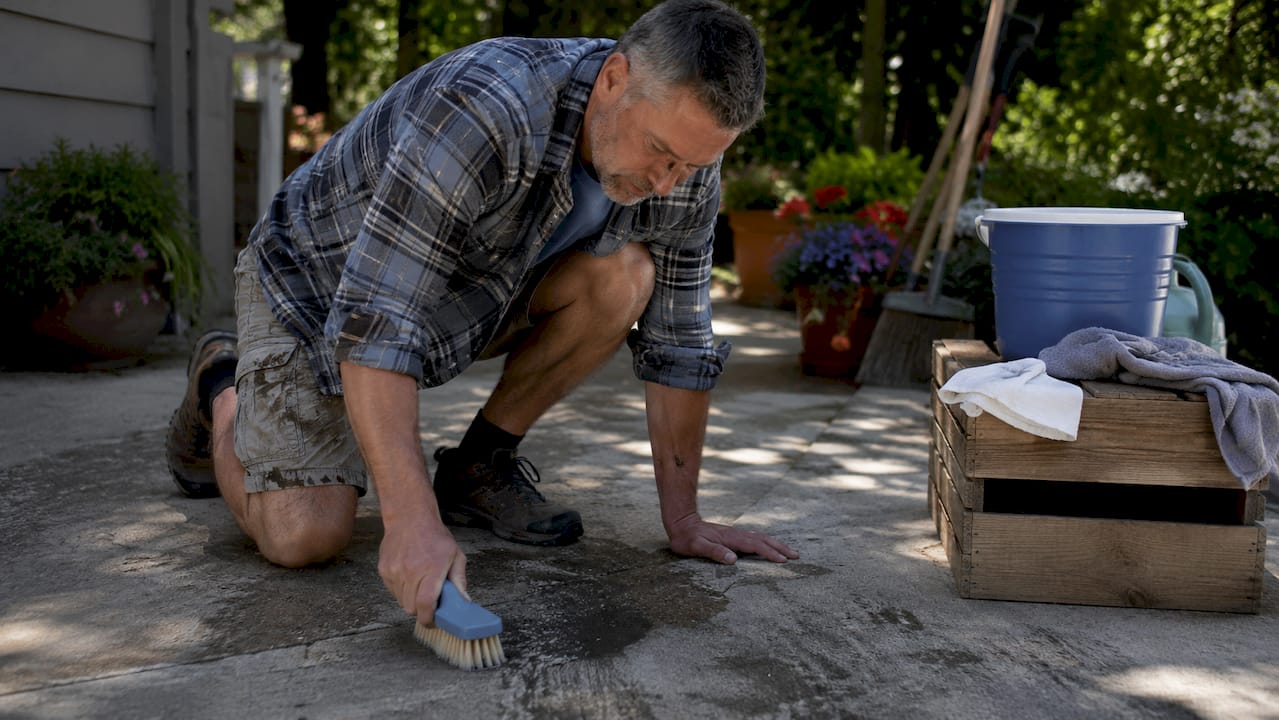
Concrete oil stain removal is the process of extracting petroleum-based residues from porous concrete surfaces to restore appearance and prevent long-term structural damage. Oil penetrates concrete quickly because concrete is naturally porous, and the longer a stain sits, the deeper it binds into the surface. Homeowners and property managers in Raleigh, Cary, and the greater Wake County area deal with this regularly, from garage floors to driveways to commercial parking areas. Acting fast, using the right materials, and disposing of waste properly are the three factors that determine whether you get a clean surface or a permanent reminder of a bad spill.
What tools and materials do you need for concrete oil stain removal?
Having the right supplies before you start makes the difference between a clean result and a wasted afternoon. Oil stain removal requires two categories of materials: absorbents for fresh spills and cleaning agents for lifting residue.
Absorbents pull oil out of the concrete before it sets. The best options include:
Baking soda and cornstarch (fine powders with high micro-pore contact, ideal for fresh spills)
Clay-based cat litter (larger granules, less effective than fine powders but widely available)
Sawdust (useful for large spills where coverage matters more than precision)
Cleaning agents break down oil chemically after absorption. Stock these before you start:
Heavy-duty dish soap (effective on light, fresh stains)
Commercial degreasers (alkaline-based formulas work best on petroleum products)
Poultice powders such as TSP (trisodium phosphate) or powdered laundry detergent mixed with a solvent
Tools you will need include a stiff-bristle nylon brush, plastic wrap (for sealing poultice applications), a plastic scraper, chemical-resistant gloves, and sealed disposal bags for contaminated absorbents.
Material | Best Use | Notes |
Baking soda or cornstarch | Fresh spills | Fine texture maximizes surface contact |
Clay-based cat litter | Large fresh spills | Coarser, less absorption efficiency |
TSP poultice | Set-in stains | Mix with solvent to peanut-butter consistency |
Commercial degreaser | All stain ages | Alkaline formula breaks petroleum bonds |
Nylon stiff brush | Scrubbing residue | Avoid wire brushes that damage surface |
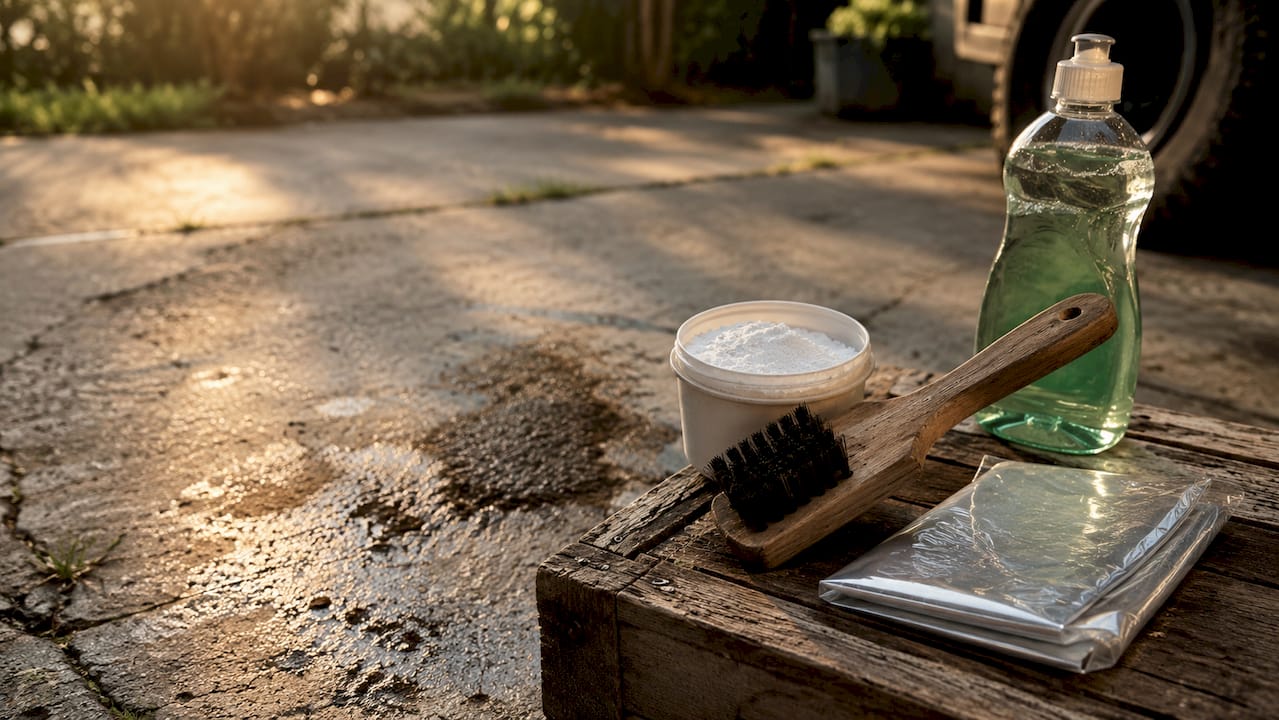
Pro Tip: Never use wire brushes or metal scrapers on concrete. Aggressive tools strip the surface layer, making future stains penetrate even faster.
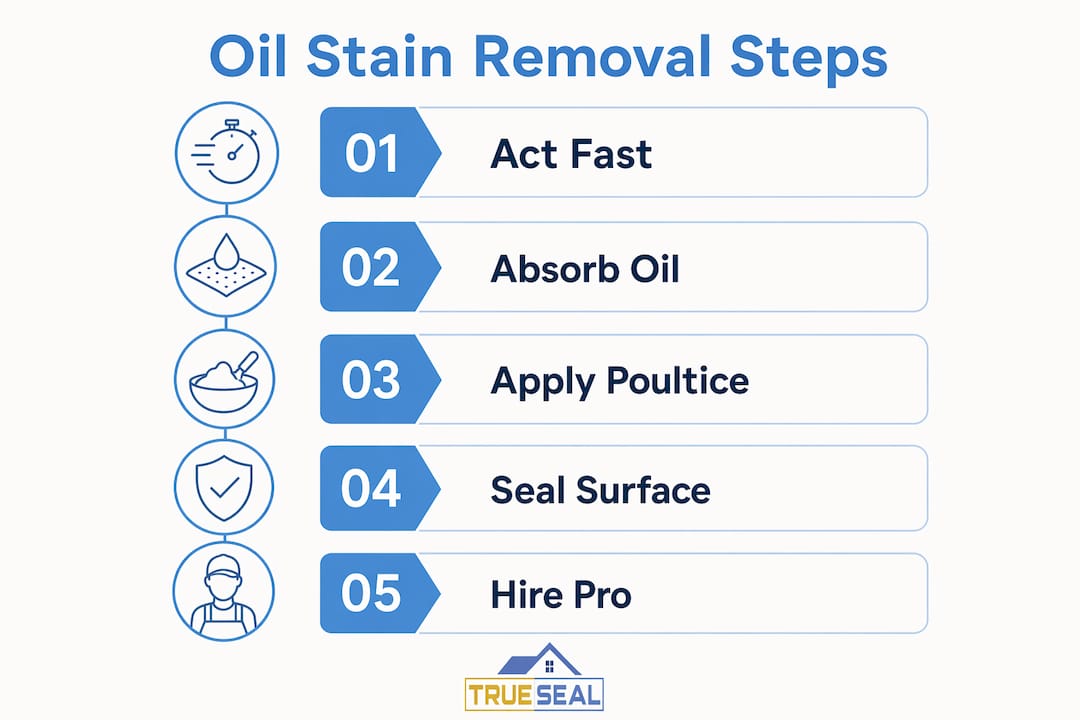
How do you treat a fresh oil spill on concrete before it sets?
Speed is the single most important factor with fresh spills. Oil begins penetrating concrete within minutes, so your first move determines how much work you face later.
Follow these steps in order:
Blot, do not scrub. Use a rag or paper towels to lift as much surface oil as possible. Scrubbing fresh oil pushes it deeper into the pores rather than removing it.
Apply a fine absorbent powder. Cover the stain generously with baking soda or cornstarch. Fine powders outperform clay-based cat litter because their smaller granules make better contact with the concrete’s micro-pores.
Grind the powder in. Use the sole of your shoe to press and work the powder into the stain. Grinding the absorbent in increases surface area contact and pulls more oil out of the pores.
Wait at least 24 hours. Letting the absorbent sit for a full day maximizes how much oil it extracts. Sweeping it up too early cuts your results significantly.
Apply dish soap or a degreaser. Squirt heavy-duty dish soap directly onto the remaining stain. Work it in with a nylon brush using circular motions.
Rinse carefully. Use a garden hose on a low setting. Do not let oily runoff flow into storm drains. Oil-soaked waste must be disposed of at a designated hazardous waste facility, not rinsed into the street or yard.
Pro Tip: If you do not have baking soda on hand, pour a small amount of dish soap directly onto the fresh spill and let it sit for five minutes before blotting. It will not replace a full absorbent treatment, but it slows penetration while you gather supplies.
The goal at this stage is not perfection. You are trying to remove as much oil as possible before it bonds with the concrete. Even a partial removal now means far less work later.
How do you remove older or set-in oil stains from concrete?
Set-in stains require a different approach than fresh spills. Oil that has cured through a full season bonds deeply with the concrete matrix, and surface cleaning alone will not reach it. The right method here is a poultice treatment combined with a commercial degreaser.
What is a poultice and how does it work?
A poultice is a thick paste applied over a stain that draws oil upward through capillary action as it dries. You mix an absorbent powder (TSP, powdered laundry detergent, or diatomaceous earth) with a solvent or degreaser until you reach a consistency similar to peanut butter. Poultice paste at this consistency enables the capillary action needed to pull oil out of deep pores.
Step-by-step poultice application
Clean the surface first. Remove loose debris and rinse the area. A clean surface lets the poultice work without interference.
Mix your poultice. Combine TSP or powdered detergent with a petroleum solvent or commercial degreaser. Aim for a thick, spreadable paste.
Apply a generous layer. Spread the paste at least a quarter-inch thick over the entire stain, extending slightly beyond its edges.
Cover with plastic wrap. Seal the edges with tape. This slows drying and forces the poultice to pull oil upward rather than simply drying out on the surface.
Cure for at least 24 hours. Removing the poultice too soon reduces its effectiveness. For deep stains, 48 hours produces better results.
Scrape and rinse. Remove the dried paste with a plastic scraper. Rinse with water and assess the result.
Repeat the process two or three times for deeply embedded stains. Specialized poultice-style removers applied as thick gels with a 5–12 hour cure can remove 80–95% of several-month-old oil stains. That is a strong result, but it also means some residue may remain.
Pro Tip: For stains older than six months, set your expectation at significant fading rather than full removal. Older stains that have cured through a summer season bind deeply, and total invisible removal is unlikely even with professional treatment.
Avoid using muriatic acid or highly aggressive chemical strippers on residential concrete. These products can etch the surface and strip the protective top layer, which makes the concrete more porous and more vulnerable to future staining.
When should you hire a professional for oil stain removal?
Some stains are beyond what DIY methods can fully address. Knowing when to call a professional saves you time, money, and the risk of damaging your concrete.
Signs you need professional help:
The stain covers more than a few square feet
The oil has been sitting for more than three to six months
Multiple DIY attempts have not produced visible improvement
The concrete surface is already showing signs of etching or wear
You are managing a commercial property with multiple stained areas
Professional cleaning uses a combination of heat and chemistry that DIY methods cannot replicate. Hot-water pressure washing at 200°F combined with commercial-grade degreasers effectively breaks down petroleum bonds and deep-cleans concrete pores. Cold water alone cannot do this because oil is hydrophobic and simply repels water without the heat and chemical combination.
Cleaning Method | Effective On | Limitation |
DIY absorbent treatment | Fresh spills | Limited depth penetration |
Poultice application | Stains up to several months old | Requires multiple applications |
Professional hot-water wash | All stain ages | Requires professional equipment |
Bioremediation cleaners | Light to moderate stains | Slower acting, best for maintenance |
Professionals also manage environmental compliance. Oil-soaked runoff is illegal to discharge into storm drains under current stormwater regulations. Professional crews use containment systems and proper waste disposal, which protects you from liability.
Bioremediation cleaners that use enzyme or bacteria-based formulas convert oil into water and CO2 biologically. These are safer than chemical detergents and work well as a follow-up treatment after professional cleaning.
How do you prevent future oil stains on your driveway or concrete surface?
Prevention is far easier than removal. A properly sealed concrete surface resists oil penetration and makes cleanup dramatically faster when spills do happen.
Concrete sealer types and how they work:
Penetrating sealers (silane or siloxane-based) soak into the concrete and repel liquids at the pore level. They do not change the surface appearance and last several years.
Topical sealers (acrylic or epoxy-based) form a protective film on the surface. They provide strong stain resistance and can enhance the concrete’s color and sheen.
Maintenance steps to protect sealed concrete:
Clean spills immediately, even on sealed surfaces
Rinse driveways and garage floors monthly to remove surface contaminants
Avoid harsh chemical cleaners that degrade sealer over time
Reapply sealer on the schedule recommended for your sealer type
The water bead test tells you when resealing is due. Pour a small amount of water on the concrete surface. If it beads up and rolls off, the sealer is still working. If the water soaks in and darkens the surface, the sealer has worn down and the concrete is exposed.
Pro Tip: If your concrete is absorbing water, it is also absorbing oil, fuel, and other contaminants. Resealing after a thorough cleaning is the most cost-effective way to protect your surface long-term. Learn more about how long concrete sealer lasts and when to schedule your next application.
For Raleigh-Durham homeowners, North Carolina’s hot summers accelerate sealer breakdown. Scheduling a cleaning and resealing every few years keeps your concrete protected through the heat, UV exposure, and heavy rain the region delivers.
Key Takeaways
Effective concrete oil stain removal depends on acting fast, using the right absorbents and degreasers, applying poultice treatments for set-in stains, and sealing the surface to prevent future damage.
Point | Details |
Act immediately on fresh spills | Blot and apply fine absorbent powder within minutes to stop oil from penetrating deep. |
Use poultice for set-in stains | Mix TSP or detergent to peanut-butter consistency and cure for at least 24 hours. |
Set realistic expectations | Older stains will fade significantly but may not disappear completely, even with professional treatment. |
Dispose of waste properly | Oil-soaked absorbents must go to a hazardous waste facility, not into storm drains. |
Seal concrete after cleaning | A penetrating or topical sealer prevents future oil from bonding with the concrete surface. |
What we have learned from years of treating concrete oil stains
Homeowners consistently underestimate two things: how fast oil penetrates concrete, and how much damage aggressive cleaning causes. We have seen driveways in Cary and Apex where the original stain was manageable, but the homeowner used a wire brush and muriatic acid and turned a surface stain into a permanently roughened, porous section that stains again within weeks of cleaning. The cure made the problem worse.
The other pattern we see regularly is the expectation of a perfect, invisible result on a stain that has been baking into the concrete since last summer. Fading visual contrast is the realistic goal for old stains, not complete removal. Setting that expectation upfront saves frustration and helps you make smarter decisions about when to call a professional versus when to keep working the problem yourself.
What actually works is a calm, methodical approach: absorb what you can immediately, treat the residue with the right chemistry, and protect the surface afterward. The homeowners who get the best results are the ones who treat a spill within the first hour and then seal the concrete before the next one happens. That combination keeps driveways looking clean year after year without heroic effort.
Environmental responsibility matters here too. Rinsing oily water into the street or yard is not just an environmental issue. It is a legal one under current stormwater regulations. Proper disposal of contaminated absorbents is a non-negotiable part of the process.
— TrueSeal
Professional concrete cleaning and sealing in Raleigh-Durham
If your driveway, garage floor, or commercial parking area has oil stains that DIY methods have not resolved, or if your concrete is absorbing water instead of beading it off, Truesealcoating can help.

Truesealcoating serves homeowners and property managers throughout Cary, Apex, Raleigh, Morrisville, and greater Wake County with professional concrete cleaning and long-term surface protection. Our residential concrete sealing and commercial surface protection services are built around North Carolina’s climate conditions, giving your concrete the protection it needs to resist staining, moisture, and UV damage year after year. Our Clean & 7-Year Seal system restores curb appeal and reduces the maintenance burden that comes with untreated concrete.
Request your free quote today and get a professional surface assessment from a team that treats your property like a long-term investment.
FAQ
How do you remove oil stains from concrete quickly?
Blot the fresh spill immediately, then cover it with baking soda or cornstarch and grind the powder in with your shoe. Let it sit for 24 hours, sweep it up, and scrub the residue with a commercial degreaser and a stiff nylon brush.
What is the best driveway oil stain remover for set-in stains?
A poultice made from TSP or powdered laundry detergent mixed with a petroleum solvent to a peanut-butter consistency is the most effective option. Applied thick and left to cure for 24–48 hours, it draws oil upward through capillary action.
Can old oil stains be fully removed from concrete?
Full removal is unlikely for stains that have cured through a full season. Professional treatment can fade the stain significantly and reduce its visual contrast, but some discoloration typically remains in deeply penetrated concrete.
Is it safe to rinse oil stain cleaning waste into the street?
No. Oil-soaked absorbents and oily rinse water must be contained and disposed of at a designated hazardous waste facility. Discharging oily runoff into storm drains violates current stormwater regulations.
How do you prevent oil stains on a concrete driveway?
Apply a penetrating or topical concrete sealer after cleaning. Sealed concrete resists oil absorption and makes spills far easier to clean. Use the water bead test to check whether your sealer is still active, and reseal when water soaks in rather than beading off.
Recommended



Comments