Roof Replacement Raleigh, NC : Restore Before You Replace.

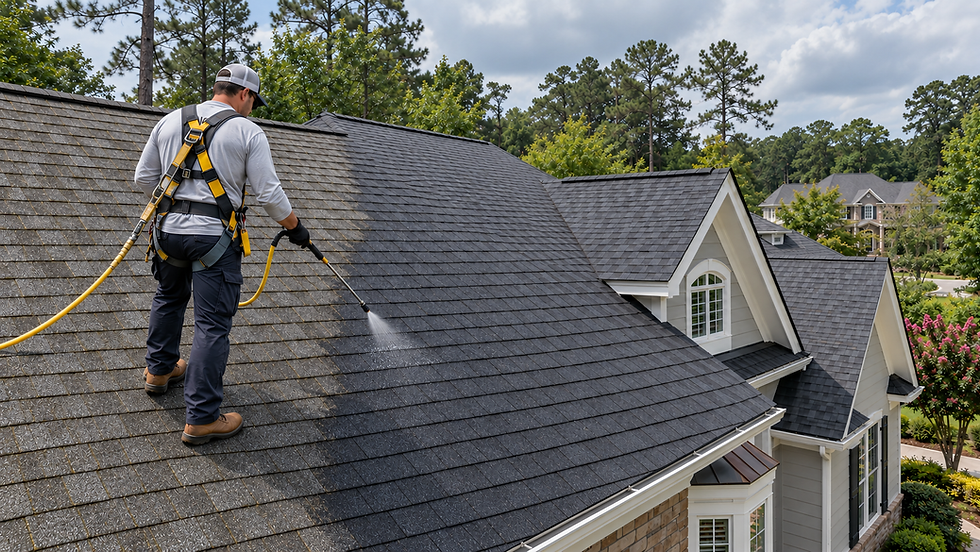
Considering Roof Replacement in Raleigh, NC? Your Roof May Still Be Restorable.
If you are searching for roof replacement in Raleigh, NC, you probably did not wake up excited to buy an entirely new roof.
Something pushed the issue forward. An insurance inspection may have flagged the roof. A renewal notice may be approaching. A contractor may have told you that the shingles look old. Black streaks, algae, fading or granule loss may have changed the appearance of the home. Or perhaps you started gathering replacement estimates and realized how large the expense could become.
The usual assumption is simple:
An old-looking roof must need replacement.
Sometimes that conclusion is correct. A roof with active leaks, missing shingles, failed flashing, widespread cracking, deteriorated decking or serious storm damage may genuinely need repair or replacement.
But appearance and structural failure are not the same thing.
An asphalt shingle roof can look significantly older because of algae, organic growth, embedded contamination, uneven weathering and years of exposure to Raleigh's heat, humidity and rainfall. If the roofing system remains structurally serviceable, professional cleaning and protective sealing may provide another option before committing to a complete tear-off.
TrueSeal provides roof cleaning and protective sealing in Raleigh, Cary and Wake County for eligible asphalt shingle roofs that still have useful life remaining. The goal is not to disguise a failed roof. It is to preserve a viable one.
Before You Replace the Roof, Identify the Actual Problem
“The roof looks old” is an observation, not a complete diagnosis.
From the street, several very different conditions can produce the same tired appearance:
Black algae streaks
Moss or lichen growth
Pollen and organic debris
Uneven discoloration
Surface oxidation
Normal weathering
Localized granule loss
Heat and ultraviolet exposure
Moisture retention under tree cover
Actual physical deterioration
The first nine conditions do not automatically prove that the roof has failed. The last one may require repair or replacement, depending on its severity.
That distinction matters because the correct solution depends on what is actually wrong. Cleaning can address contamination. Protective sealing can help preserve an eligible roofing surface. Repairs can correct certain localized failures. Replacement becomes appropriate when the roofing system no longer has enough integrity to preserve responsibly.
A homeowner should not assume restoration will work for every roof. But the homeowner also should not assume that every weathered roof must immediately be discarded.
What a Raleigh Roof Replacement Actually Involves
A roof replacement is not simply a visual upgrade. It is a major construction project that typically includes removing existing roofing materials, inspecting the deck, replacing damaged wood where necessary, installing underlayment and flashing components, and completing a new roofing system.
The final price can vary substantially based on:
Roof size and total roofing squares
Pitch and accessibility
Number of stories
Number of existing roofing layers
Decking condition
Valleys, dormers and architectural complexity
Chimneys, skylights and penetrations
Flashing and ventilation requirements
Shingle grade and manufacturer
Tear-off and disposal costs
Permit or code-related requirements
Labor and scheduling conditions
Replacement is absolutely worth doing when the existing system has reached the end of its usable life. Water intrusion, deteriorated decking and widespread material failure do not become less expensive by ignoring them.
But replacing a roof prematurely also has a cost. The homeowner pays for a full tear-off, new materials and installation while discarding shingles that may still have serviceable life remaining.
That is why the most useful question is not simply, “How old is the roof?”
The better question is:
“What condition is the roof in right now, and does it still have enough integrity to preserve?”
Roof Restoration Versus Roof Replacement
Roof replacement and roof restoration solve different problems.
Roof replacement
Replacement removes the existing roofing material and installs a new system. It is generally the correct route when the roof has structural or material failures that preservation cannot correct.
Common replacement indicators can include:
Persistent or widespread leaks
Soft, rotten or deteriorated decking
Large areas of missing shingles
Severe curling, cracking or brittleness
Widespread loss of the protective granule layer
Failed flashing throughout the roof
Extensive wind or hail damage
Multiple failing repairs
Roofing materials that have reached the end of usable service life
Roof restoration
Restoration preserves the roofing system already in place. It is intended for an aging but serviceable roof that may be visibly weathered, stained or losing resilience at the surface without having structurally failed.
TrueSeal's process combines controlled roof cleaning with a compatible protective treatment designed to:
Remove algae and organic staining
Improve overall roof appearance
Help lock down remaining shingle granules
Improve surface water repellency
Reduce continued ultraviolet exposure
Deepen and refresh weathered shingle color
Preserve remaining service life
Potentially delay replacement when replacement is not yet necessary
For a qualifying asphalt shingle roof, the system is designed to add up to seven years of useful service life. Actual performance depends on the roof's existing condition, age, material quality, ventilation, environmental exposure, application and continued maintenance.
Restoration does not make an old roof new. It can, however, make responsible use of the service life the roof still has.
Why Asphalt Shingle Granules Matter
Architectural asphalt shingles are surfaced with mineral granules. Those granules contribute to color and appearance, but they also help shield the asphalt material beneath them from sunlight and weather exposure.
Some granule loss occurs naturally as shingles age. The critical issue is the degree and distribution of that loss.
A few granules in a gutter do not automatically mean the roof is failing. Newly installed shingles can shed loose granules, and older roofs gradually lose material through weathering. But widespread bare areas, obvious exposed asphalt or heavy ongoing loss can indicate that the shingles are moving beyond the point where preservation makes sense.
TrueSeal's protective treatment is intended to help secure the granules that remain on a qualifying roof. This is the “granule-locking” component of the value proposition. It does not replace missing granules or rebuild a deteriorated shingle. The objective is to stabilize and protect the viable surface that is still present.
That is another reason evaluation comes first. A roof with enough granule coverage and material integrity may benefit from preservation. A roof with extensive bare asphalt may already be too far gone.
What UV Exposure Does to an Aging Roof
Raleigh roofs receive prolonged sunlight and high seasonal heat. Ultraviolet exposure contributes to the gradual aging of asphalt-based roofing materials, while daily heating and cooling cycles repeatedly expand and contract the roof surface.
As shingles weather, they may become drier, less flexible and more vulnerable to continued surface deterioration. South- and west-facing slopes can sometimes show more visible aging because they receive stronger or longer sunlight exposure.
A compatible protective roof treatment is designed to reduce direct UV exposure at the surface. That does not stop time or reverse structural deterioration. It helps protect an eligible roof from one of the conditions that continues aging it.
This is where timing matters. Preservation is most useful before the roof has crossed into widespread failure. Waiting until shingles are cracked, severely curled or substantially bare removes much of the opportunity that restoration is designed to provide.
Water Repellency Is Not the Same as Leak Repair
The phrase “water repellency” can easily be misunderstood.
A protective treatment can help an eligible shingle surface shed water and reduce unnecessary moisture absorption. That is different from repairing a leaking roof.
Leaks can originate from:
Failed or improperly installed flashing
Damaged pipe boots
Open penetrations
Missing or lifted shingles
Valley failures
Deteriorated decking
Installation defects
Storm damage
Water entering elsewhere and traveling before becoming visible
Applying a surface treatment does not correct those construction failures. If a roof is leaking, the cause should be found and repaired by a qualified roofing contractor before a preservation treatment is considered.
TrueSeal is not positioning roof sealing as a shortcut around necessary roofing work. The service is designed for roofs that remain structurally serviceable and watertight but need cleaning, surface protection and preservation.
Why Roof Cleaning Alone May Be Incomplete
Professional soft washing can make a dramatic difference in appearance.
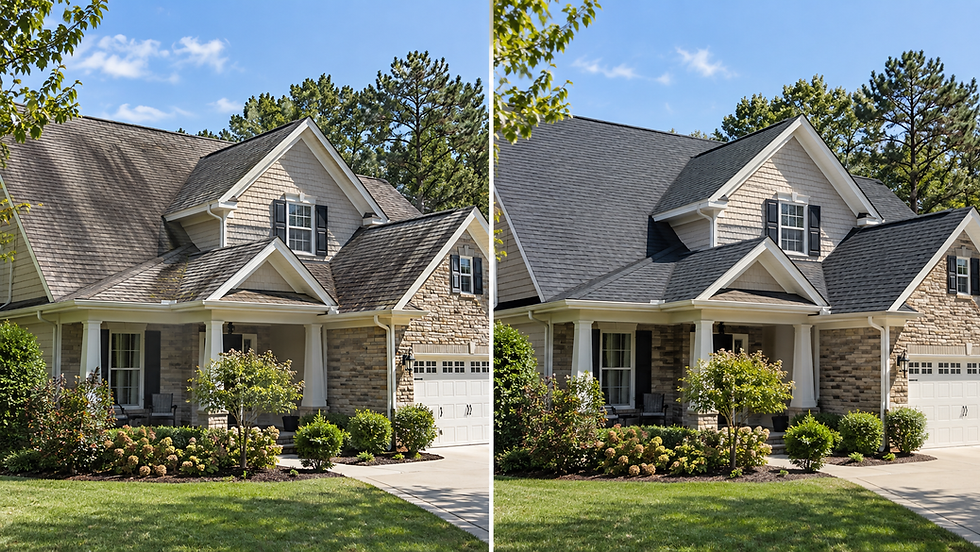
Black streaks fade. Organic growth breaks down. Years of contamination are removed. A roof that looked close to replacement may suddenly appear substantially newer.
That visual transformation is valuable, but cleaning and preservation are not identical.
Cleaning primarily removes what has accumulated on the roof. It does not automatically provide ongoing UV protection, granule retention or improved water repellency after the surface has been cleaned.
TrueSeal continues the process with a compatible protective seal application for qualifying roofing systems. The objective is to protect the restored surface instead of stopping after the cosmetic improvement.
That is the idea behind the TrueSeal approach:
Don't just clean it. TrueSeal it.
A temporary wash can improve curb appeal. A complete clean-and-seal system is intended to improve appearance and help preserve the existing roofing material.
The TrueSeal Roof Restoration Process
Every roof is different, but the process follows a deliberate sequence.
1. Initial roof evaluation
TrueSeal begins by reviewing the visible condition of the roofing system. The purpose is to identify whether the roof appears to be a reasonable preservation candidate or whether obvious damage makes restoration inappropriate.
The evaluation considers visible staining, organic growth, granule coverage, shingle condition, roof geometry, surrounding landscaping and any apparent areas of concern.
This is not a structural certification, insurance approval or substitute for a roofing inspection. It is a service-fit evaluation: does this roof appear suitable for TrueSeal's cleaning and protective treatment?
2. Property preparation
Plants, siding, gutters and nearby exterior surfaces are considered before treatment begins. Landscaping and surrounding materials must be protected during the cleaning process.
3. Low-pressure soft washing
TrueSeal applies a roof-appropriate soft-wash treatment to break down black algae, moss, mildew and organic staining without relying on aggressive high pressure.
Asphalt shingles should not be treated like concrete. High-pressure washing can loosen granules, damage shingle surfaces and force water into places it does not belong.
4. Controlled rinsing and drying
The roof is allowed to rinse and dry according to its material, condition and the protective system being applied. Proper preparation and drying are essential because the treatment must be compatible with the surface beneath it.
5. Protective seal application
The protective treatment is applied to the clean, eligible roof. The finished surface should show richer, deeper color and a refreshed appearance without looking like thick paint, plastic or a high-gloss coating.
The treatment is intended to support granule retention, UV protection and water repellency while preserving the roof's remaining service life.
6. Final review
The finished roof and surrounding property are reviewed for uniform coverage, appearance and clean completion.
What Makes a Roof a Good Restoration Candidate?
A roof may be worth evaluating for restoration when:
The shingles remain generally flat and intact
The roof has no known active leaks
Granule coverage remains adequate across most of the surface
Aging is visible but not severe
Black streaks or algae are affecting appearance
The roof looks dry, faded or weathered
Organic buildup is making the roof appear older
The homeowner wants to delay replacement responsibly
The property is being prepared for sale
Curb appeal has declined before the roof has structurally failed
Age by itself does not qualify or disqualify a roof. Two roofs installed in the same year can age very differently depending on shingle quality, sun exposure, tree cover, attic ventilation, installation and maintenance. The question is whether enough useful material remains to justify protecting it.
When Restoration Is Not the Right Answer
There are situations where TrueSeal will not pretend restoration is the solution. Roof cleaning and sealing are not designed to repair:
Active leaks
Rotten or soft decking
Missing shingles
Severe curling or cracking
Widespread shingle brittleness
Major hail or wind damage
Failed flashing
Improper installation
Extensive bare asphalt
Structural problems
Roofing systems that have reached the end of usable life
If those conditions are present, a qualified roofing contractor should inspect the property and recommend the appropriate repair or replacement. That limitation is not a weakness in the service. It is what makes the recommendation credible.
Restoration only creates value when the roof being preserved still has real service life. Selling a coating for a failed roof would waste the homeowner's money and delay necessary work.
How Much Can Restoration Save Compared With Replacement?
The exact comparison depends on the roof.
A full replacement price reflects labor, tear-off, disposal, materials, access, roof complexity and any underlying repairs. A restoration price reflects roof size, pitch, contamination, preparation requirements, treatment coverage and site conditions.
Because restoration works with the existing roof instead of removing it, the project involves a fundamentally different scope. There is no full tear-off, no complete new shingle system and far less material entering the waste stream.
For a qualifying roof, the financial value is not merely that restoration costs less than replacement. The deeper value is that it may allow the homeowner to use more of the roof they have already paid for.
Adding up to seven years of service life can provide time to:
Plan and budget for an eventual replacement
Avoid an unplanned major expense
Coordinate replacement with other property improvements
Improve curb appeal before selling
Preserve cash for more urgent repairs
Reassess the roof after a defined service interval
Restoration should not be selected only because it is cheaper. It should be selected because the roof is still viable and preservation makes sense.
What If an Insurance Company Flagged the Roof?
Insurance concerns deserve careful handling because the homeowner may be working under a deadline.
An insurer may review the roof's age, visible condition, maintenance or other underwriting factors. Requirements vary between insurance companies, policies and individual properties.
TrueSeal cannot determine whether an insurance carrier will accept a restored roof. Cleaning and sealing do not guarantee renewal, continued coverage or reversal of a non-renewal decision.
If you received written notice, ask the insurer or agent:
What specific roof condition was flagged?
Was the concern based on age, photographs, visible staining or verified damage?
Is complete replacement explicitly required?
Will the carrier consider additional condition documentation?
Is a repair acceptable if a specific defect is corrected?
Would cleaning or restoration be relevant to the cited concern?
What documentation must be submitted, and by what deadline?
Get the answer from the company making the insurance decision before purchasing an alternative service.
If the carrier explicitly requires replacement, a cleaning or sealing treatment should not be represented as guaranteed to satisfy that requirement. If the concern is primarily appearance, organic growth or maintenance of an otherwise serviceable roof, a professional evaluation may still be useful—but the insurer remains the final authority on coverage.
Why Raleigh Roofs Become Streaked and Weathered
Roofs across Raleigh and Wake County experience a combination of heat, humidity, heavy rainfall, pollen, tree cover and organic debris.
Dark roof streaks are commonly associated with algae growth. Shaded areas may stay damp longer, while overhanging trees can contribute debris and create conditions that support moss or lichen. Roof slopes can weather unevenly based on their direction and exposure.
These conditions can create a roof that looks much older from the street than it appears after proper cleaning.
The correct cleaning method matters. Aggressive pressure may remove staining quickly, but it can also disturb the protective granule surface. TrueSeal uses controlled soft washing designed for roofing materials rather than treating shingles like pavement.
After cleaning exposes the roof's true condition, the homeowner has better information. The roof may show that it is still a reasonable preservation candidate—or cleaning may reveal deterioration that confirms repair or replacement is the better path.
Either outcome is more useful than making a major decision based only on black streaks viewed from the driveway.
Roof Restoration in Raleigh, Cary and Wake County
TrueSeal serves homeowners throughout Raleigh, Cary, Apex, Morrisville, Holly Springs, Garner, Wake Forest and surrounding Wake County communities. The same preservation principles apply across the Triangle, but every roof must be considered individually. A heavily shaded Raleigh roof may have significant organic growth. A Cary roof with greater sun exposure may show more fading and surface weathering. A Wake Forest property surrounded by trees may accumulate debris and moisture differently from a roof in a newer open subdivision.
Location helps explain exposure. Condition determines the recommendation.
Homeowners west of Raleigh can also review our guide to roof restoration in Cary, NC, which focuses more closely on the clean-and-seal process and the characteristics of a good restoration candidate.
Get a Roof Evaluation Before Assuming Replacement Is Your Only Option
Some Raleigh roofs need replacement. Others merely look like they do.
If the roof is leaking, structurally compromised or visibly failing, contact a qualified roofing contractor. Do not use a preservation treatment to postpone necessary work.
But if the roof remains serviceable and the primary concerns are black streaks, algae, discoloration, fading, weathering or an aging appearance, TrueSeal can evaluate whether professional cleaning and protective sealing may be appropriate.
For qualifying asphalt shingle roofs, the process is designed to:
Restore a cleaner, more uniform appearance
Help secure remaining granules
Improve surface water repellency
Reduce continued UV exposure
Deepen weathered shingle color
Add up to seven years of useful service life
Delay premature replacement when the roof remains viable
Send photos of the roof and explain what prompted the concern. TrueSeal will determine whether the property appears suitable for the preservation service. If the roof clearly needs structural repair or replacement, we will not pretend sealing is the answer.
Request a roof restoration evaluation in Raleigh or learn more about TrueSeal roof cleaning and protective sealing.
Don't just clean it. TrueSeal it.
Frequently Asked Questions
Can an old asphalt shingle roof be restored instead of replaced?
Potentially. The roof must remain structurally serviceable, adequately covered with granules and free from conditions such as active leaks, rotten decking or widespread shingle failure. Age alone does not determine eligibility.
How many years can roof restoration add?
TrueSeal's cleaning and protective sealing system is designed to add up to seven years of service life on a qualifying roof. Actual performance depends on the roof's existing condition, materials, ventilation, exposure, application and maintenance.
Does roof sealing fix leaks?
No. Protective roof sealing is not structural leak repair. Leaks, damaged flashing, missing shingles and deteriorated decking must be evaluated and repaired by a qualified roofing contractor.
Will roof restoration satisfy my insurance company?
There is no universal answer. Insurance underwriting requirements vary, and restoration does not guarantee renewal or continued coverage. Ask the insurer exactly what condition was flagged and whether replacement is explicitly required before purchasing another solution.
Is roof restoration the same as roof cleaning?
No. Cleaning removes algae, moss and organic staining. TrueSeal's restoration process continues with a compatible protective treatment intended to support granule retention, UV protection and water repellency.
Does TrueSeal pressure-wash asphalt shingles?
No. TrueSeal uses a controlled low-pressure soft-wash process appropriate for roofing materials. Aggressive pressure can loosen granules and damage shingles.
How do I know whether my roof needs replacement?
Active leaks, deteriorated decking, widespread missing or badly damaged shingles, extensive granule loss and severe material failure are strong reasons to consult a roofing contractor. A roof that is primarily stained or weathered but remains intact may be worth evaluating for restoration.
What areas does TrueSeal serve?
TrueSeal provides roof cleaning and protective sealing in Raleigh, Cary, Apex, Morrisville, Holly Springs, Garner, Wake Forest and surrounding Wake County communities. We also serve HOA's, and Builders across all of NC.

Comments