Paver Sealing in Durham, NC : Restore, Stabilize and Protect Your Hardscape.


Pavers are built to handle years of foot traffic, vehicles, rain and sun, but they are not maintenance-free. Over time, the surface can fade, joints can lose sand, weeds can appear, and the entire installation can begin to look older than the home around it.
Professional paver sealing in Durham, NC is designed to address the full system not simply make the surface shiny for a few months.
TrueSeal restores paver driveways, patios, walkways, pool surrounds and outdoor living spaces through a coordinated process of deep cleaning, joint evaluation, sand restoration and professional sealing. The goal is to bring back a cleaner, richer and more uniform appearance while helping the surface resist water, staining, fading and continued joint deterioration.
The same principle guides every TrueSeal service: preserve good material before neglect turns into replacement. That applies to pavers, concrete driveways, patios, walkways and even eligible asphalt roof shingles.
If your Durham pavers are faded, stained, growing weeds or losing joint sand, the answer usually is not another quick wash. The surface needs to be evaluated as a complete hardscape system.
Explore TrueSeal paver cleaning and sealing or request a residential photo assessment to get a project-specific starting point.
Paver Sealing Is More Than Applying a Coating
Sealer is the final visible step, but it cannot compensate for poor preparation.
If dirt, algae, efflorescence, old residue or trapped moisture remains beneath the product, the result may look uneven, turn cloudy or fail prematurely. If joints are empty, spraying over them will not restore the support that has washed away. If the wrong finish is chosen, the completed project can look too glossy, too dark or inconsistent with the home.
A durable paver restoration project must account for:
The type and condition of the pavers
Existing coatings or sealer residue
Organic growth and embedded staining
Joint depth and remaining sand
Drainage and low areas
Shade, tree cover and drying time
Vehicle traffic versus foot traffic
The desired natural, enhanced, matte or satin appearance
Product compatibility with the surface
That is why TrueSeal approaches paver sealing as a restoration process rather than a single application. Cleaning, joint preparation, drying and sealer selection work together. Skipping one stage puts every stage after it at risk.
Why Durham Pavers Become Faded, Dirty and Unstable
Durham hardscapes experience a demanding combination of sun, humidity, seasonal rain, pollen, tree debris and clay-rich soil. A paver surface near mature trees may stay damp longer and collect organic material in the joints. An open driveway may receive stronger UV exposure and repeated vehicle traffic. A shaded patio may develop algae while the sunny half fades.
These conditions do not affect every property equally. A South Durham driveway with full afternoon sun may need a different protection strategy from a shaded patio near Hope Valley or Woodcroft. The material, exposure and use of the space matter more than a one-size-fits-all product claim.
Common signs that a Durham paver surface is ready for professional attention include:
Faded or washed-out color
Dark algae or organic staining
Red clay tracked across the surface
Moss or weeds in the joints
Sand collecting along the edges after rain
Hollow or visibly low joints
White mineral haze or efflorescence
Tire marks, food stains or leaf tannins
Uneven remnants of an older sealer
Water absorbing quickly instead of shedding from the surface
Some of these conditions are cosmetic. Others indicate that the joints or protective system are wearing down. A proper assessment separates what can be cleaned, what should be restored and what may require repair before sealing.
The TrueSeal Paver Cleaning and Sealing Process
Every project is adjusted to the property, but a professional Durham paver restoration generally follows a deliberate sequence.
1. Photo assessment and surface review
The process can begin with clear photographs of the full area, close-ups of the joints and examples of any staining or failed coating. This allows TrueSeal to identify the likely material, approximate project scope and visible problem areas before scheduling.
An on-site review verifies the surface condition, access, drainage, previous coatings and finish goals. The objective is to build the right restoration plan—not force every project into the same package.
2. Deep cleaning and contamination removal
Pavers must be thoroughly cleaned before they are sealed. The cleaning stage targets dirt, algae, moss, pollen, clay, leaf staining and other contamination that would otherwise remain visible beneath the finish.
Pressure alone is not the strategy. Cleaning chemistry, controlled mechanical force and careful rinsing must work together. Excessive pressure can disturb joints, damage softer materials or create visible wand marks. Insufficient cleaning leaves embedded contamination behind.
The correct balance is aggressive enough to prepare the surface but controlled enough to preserve it.
3. Existing sealer and failure evaluation
Previously sealed pavers require additional attention. A worn but compatible coating may allow a maintenance application after proper preparation. A cloudy, peeling or incompatible coating may need corrective work before a new product can be applied.
Applying fresh sealer over a failed layer does not erase the failure. It can lock in the uneven appearance and make future restoration more difficult. TrueSeal evaluates what is already on the surface before selecting the next step.
4. Joint-sand restoration
Joint sand is part of the installation, not an optional cosmetic detail. It fills the spaces between pavers, supports interlock and helps reduce movement and joint erosion.
After cleaning, the joints are inspected for depth and consistency. Where sand has been lost, clean compatible joint material is installed and worked into the spaces. The appropriate sand and stabilization approach depend on joint width, paver type, drainage, prior materials and the sealer system being used.
TrueSeal does not assume that the same joint product belongs on every patio or driveway. The objective is a clean, stable joint system that works with the existing hardscape.
5. Drying and moisture verification
One of the easiest ways to ruin an otherwise well-prepared paver project is to seal moisture beneath the surface.
Pavers and joints must be allowed to dry according to the product, weather and site conditions. Shaded areas, dense materials and humid weather can extend the required window. A surface that looks dry from several feet away may still hold moisture within the joints.
TrueSeal schedules the application around actual site conditions rather than rushing the final step to finish in one visit.
6. Professional sealer application
Once the surface is clean, stable and sufficiently dry, the selected sealer is applied at a controlled coverage rate. The product should protect the surface and support the intended appearance without puddling, whitening or creating a thick artificial layer.
Depending on the material and homeowner's goal, the finish may preserve a natural dry look or deepen the existing color with a refined matte-to-satin appearance.
7. Cure guidance and final review
The completed area needs time before it returns to normal use. Foot-traffic and vehicle-traffic windows depend on the specific product, temperature, humidity and exposure.
TrueSeal provides project-specific cure guidance so the new finish is not disturbed before it has developed adequate strength.
Natural Look, Color Enhancement, Matte or Satin?
The best sealer is not automatically the glossiest one.
Some Durham homeowners want their pavers to look cleaner and better protected while remaining close to their original dry appearance. Others want the existing reds, browns, charcoal tones or blended colors to look deeper and more defined. Both can be valid goals.
Natural-look protection
A natural-look system minimizes color change and sheen. It is a strong choice when the pavers already coordinate well with the house or when the homeowner wants protection without a visibly coated appearance.
This approach works especially well for understated patios, natural stone, borders and properties where a glossy finish would compete with the architecture.
Enhanced matte or satin finish
An enhancing sealer deepens the colors already present in the paver. It can revive a surface that appears pale, chalky or sun-faded and create a more finished visual connection between the hardscape, roof, brick and exterior trim.
Matte or restrained satin finishes can provide richness without making the pavers look wet or plastic. On the right property, that deeper tone can make an outdoor living area feel intentional rather than weathered.
Why sample expectations matter
Color enhancement varies by material. A product that creates a subtle change on one paver may look significantly darker on another. Existing sealer, porosity, surface texture and age all influence the result.
The finish should be selected for the actual surface—not from a generic photograph of someone else's patio.
Paver Driveways Require a Different Strategy
A paver driveway carries loads that a backyard patio does not.
Vehicle weight, turning tires, brake dust, oil, road residue and concentrated traffic place additional stress on both the surface and the joints. The edges and transition to the street also experience runoff and sand loss. If the driveway has empty joints or loose perimeter pavers, appearance is only part of the problem.
Professional driveway paver sealing in Durham should prioritize:
Deep removal of tire and traffic residue
Consistent joint refill across vehicle paths
Sealer suited to higher wear
Controlled application without slick overbuilding
Clear cure time before vehicle use
Attention to the street transition and drainage path
A driveway can still receive a natural or color-enhanced finish, but durability and traction must remain central to product selection.
TrueSeal also restores and protects standard concrete driveways and pavement. The material determines the system: pavers need joint attention and compatible paver sealer, while concrete generally benefits from a breathable penetrating treatment or a surface-specific restoration coating.
Paver Patios and Outdoor Living Areas
Patios usually have a different set of priorities. Food, drink, grills, planters, furniture and shaded moisture can leave stains that do not appear on a driveway. Homeowners also tend to view patios at close range, making joint consistency and finish quality especially important.
A properly restored patio should feel clean and cohesive without losing the texture that makes pavers attractive. The project may include:
Organic and food-stain treatment
Removal of moss or algae in shaded sections
Joint cleanup and sand replacement
Natural or color-enhancing protection
Careful work around walls, steps and landscaping
A cure plan that accounts for furniture and foot traffic
For covered patios, moisture movement deserves particular attention. The surface may receive less direct rain but also less sunlight and airflow. Product choice and drying verification remain essential.
The same approach applies to paver walkways, courtyards, fire-pit areas and pool surrounds, with adjustments for the material, traffic and slip concerns of each space.
What Paver Sealing Can—and Cannot—Do
Good paver sealing improves performance and appearance, but it is not a substitute for every repair.
On an appropriate surface, cleaning, sand restoration and sealing can:
Restore a cleaner and more uniform appearance
Deepen faded color when an enhancing finish is selected
Help the surface repel water and everyday staining
Reduce continued UV-related fading
Support joint-sand retention
Make routine cleaning easier
Reduce the conditions that encourage weeds and organic growth
Protect the homeowner's existing hardscape investment
Sealing cannot permanently correct a failing base, major settlement, severe drainage problems or broken pavers. If sections rock, sink or hold standing water because the underlying installation has moved, those areas may require leveling or repair before the surface is sealed.
It also cannot guarantee that a weed will never appear again. Windblown seeds can germinate in debris on top of even well-maintained joints. The goal is to create a cleaner, more stable and easier-to-maintain system—not make unrealistic promises about an exterior surface.
The Most Common Causes of Paver-Sealer Failure
Most failed projects do not begin with a mysterious product defect. They begin with a preparation, compatibility or application problem.
Sealing over contamination
Dirt, algae and residue do not disappear beneath clear sealer. They become part of the finished appearance and can interfere with adhesion.
Trapping moisture
Moisture can contribute to whitening, cloudiness or inconsistent curing. Joint depth, shade and humidity must be considered—not just whether the top feels dry.
Using the wrong product
Clay brick, concrete pavers and natural stone do not always accept the same chemistry or finish. Existing coatings add another compatibility variable.
Applying too much material
More sealer is not automatically more protection. Over application can create puddling, excessive sheen, slow curing, tackiness or a surface film that does not breathe as intended.
Ignoring the joints
Fresh-looking pavers with hollow, uneven joints are an incomplete restoration. The joint system needs to be evaluated after cleaning and before sealing.
Rushing the return to service
Walking, replacing furniture or parking vehicles too soon can mark a finish before it has cured. Cure guidance is part of the service, not an afterthought.
When Should Durham Pavers Be Resealed?
There is no universal calendar date that fits every project. A covered patio with light foot traffic may weather much more slowly than a full-sun driveway used every day.
It may be time for an evaluation when:
Water darkens and absorbs into the pavers quickly
Color has become noticeably flat or uneven
Stains are becoming harder to remove
Joint sand is washing out
Weeds or moss are increasing
A previous finish has worn away in traffic lanes
The surface was recently cleaned but still looks unfinished
You do not know what product was previously applied
The best time to maintain a sealed surface is before the previous system has completely failed. Maintenance on a compatible, stable finish is usually more straightforward than stripping or correcting a neglected coating.
If the pavers have never been sealed, the first step is not choosing a product online. It is identifying the material, current condition and desired result.
Paver Restoration Versus Paver Replacement
Weathered pavers do not always need to be removed.
If the installation remains reasonably level and the individual units are intact, a full restoration can dramatically change the appearance without discarding the existing hardscape. Cleaning reveals the actual color. Joint work reestablishes definition and support. Sealer protects the renewed surface.
Replacement may be more appropriate when the layout no longer functions, the base has failed extensively, drainage is fundamentally wrong or large areas are broken beyond practical repair.
Between those two extremes, localized correction may be enough. A few low sections can sometimes be addressed separately while the larger surface is cleaned and protected.
TrueSeal's role is to identify whether preservation makes sense. The service creates the most value when the existing pavers still have useful life and a coordinated restoration can recover it.
How Much Does Paver Sealing Cost in Durham?
The price depends on the work required before the sealer is applied. Square footage matters, but it is only one part of the scope.
Important pricing factors include:
Total surface area
Driveway, patio, walkway or mixed use
Paver material and porosity
Staining and organic growth
Existing sealer condition
Joint depth and sand requirements
Access to water and the work area
Borders, steps, walls and architectural complexity
Finish and product selected
Repairs or corrective preparation
A clean, previously maintained patio is not the same project as a heavily stained driveway with empty joints and a failed coating. A responsible quote reflects the actual restoration plan.
TrueSeal's photo-assessment process makes the first step simple. Send wide photographs, joint close-ups and the approximate dimensions. In many cases, that is enough to establish an initial scope before an on-site visit.
One Preservation Company for the Property's Major Exterior Surfaces
Pavers rarely exist in isolation. A property may have a paver patio connected to a concrete walkway, a concrete or asphalt driveway, masonry borders and an aging shingle roof overhead.
TrueSeal's broader value is the ability to evaluate those surfaces through the same preservation-first lens.
Paver driveways, patios and walkways
TrueSeal deep-cleans pavers, restores depleted joints and applies natural-look or color-enhancing protection selected for the material and use of the space.
Concrete driveways, patios and sidewalks
Concrete requires a different protection system from interlocking pavers. TrueSeal cleans embedded contamination and applies a compatible penetrating or restoration sealer designed for the condition of the slab. Stamped and decorative concrete can also be evaluated for resealing and visual renewal.
Asphalt and commercial pavement
For appropriate residential and commercial surfaces, TrueSeal provides pavement maintenance, sealcoating and line-striping solutions focused on a clean, professional finish and continued protection.
Eligible asphalt and tile roof shingles
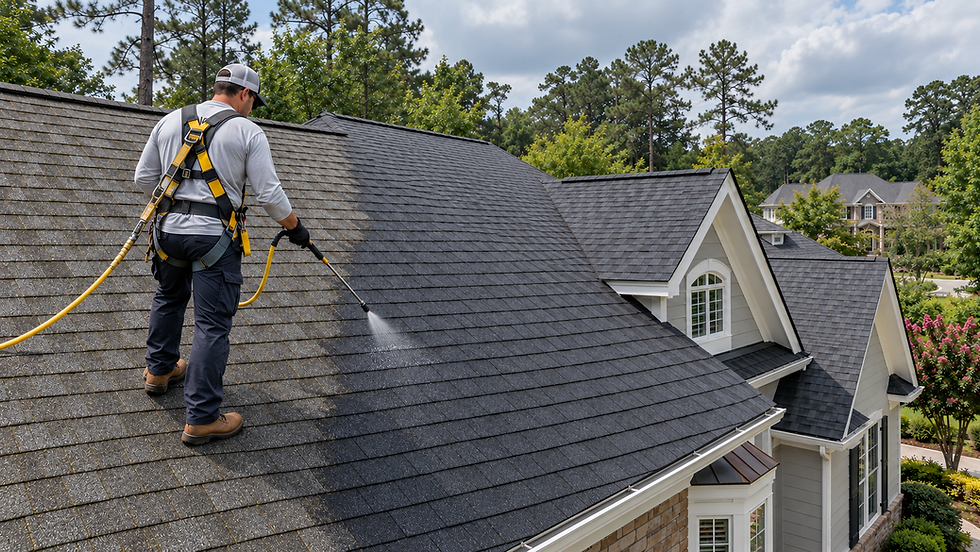
The same concept extends above the hardscape. An asphalt roof may look significantly older because of algae, fading and surface weathering while still retaining useful service life. TrueSeal's roof cleaning and protective sealing service is designed for eligible shingles, combining controlled cleaning with protection intended to support granule retention, UV resistance, water repellency and a richer visual appearance.
Roof sealing is not leak repair and is not appropriate for a structurally failed roof. Like paver restoration, it is valuable when the existing material remains serviceable and worth preserving.
This complete scope makes TrueSeal more than a wash-and-go contractor. The business is structured around cleaning, restoring and protecting the exterior surfaces homeowners have already paid for.
Why Durham Homeowners Choose a Preservation-First Approach
Exterior replacement is expensive and disruptive. It also is not always necessary.
A paver patio can look neglected because the joints are empty and the surface is covered in organic buildup. A concrete driveway can appear permanently stained when it needs deep preparation and breathable protection. A roof can look close to replacement because of algae and fading while the shingles remain serviceable.
The preservation-first question is straightforward:
Does this material still have enough integrity to restore and protect?
When the answer is yes, professional restoration can improve curb appeal, extend useful service and delay the much larger cost of replacement. When the answer is no, coating over the failure does not create value.
That honest distinction is central to the TrueSeal model.
Request Paver Sealing in Durham, NC
If your paver driveway, patio, walkway or outdoor living area has become faded, stained or unstable at the joints, TrueSeal can evaluate whether it is a strong restoration candidate.
The complete service can include:
Material and condition assessment
Deep cleaning and organic-growth treatment
Existing-sealer evaluation
Joint cleanup and sand restoration
Moisture-aware scheduling
Natural-look or enhanced protection
Clear cure and maintenance guidance
TrueSeal serves Durham and surrounding Triangle communities with professional surface restoration for pavers, concrete, driveways, patios, pavement and eligible asphalt shingle roofs.
Start by sending clear photos and approximate dimensions. We will review the surface, identify the likely scope and help determine the right next step.
Request a Durham paver-sealing assessment or review the complete TrueSeal paver restoration service.
Don't just clean it. TrueSeal it.
Frequently Asked Questions
What is included in professional paver sealing?
A complete service may include surface evaluation, deep cleaning, treatment of organic staining, inspection of any previous coating, joint-sand restoration, adequate drying and application of a compatible professional sealer. The exact scope depends on the paver material and condition.
Do pavers need new sand before sealing?
Not every joint must be emptied automatically, but depleted, hollow or inconsistent joints should be restored before sealing. The appropriate sand and stabilization method depend on joint width, drainage, paver type and the sealer system.
Will sealing make my pavers look wet or glossy?
Only if that type of finish is selected. Natural-look products minimize color change, while enhancing products deepen existing tones. TrueSeal generally favors refined natural, matte or satin results rather than an excessively glossy or plastic appearance.
Can TrueSeal seal a paver driveway as well as a patio?
Yes. Paver driveways, patios, walkways and outdoor living areas can all be evaluated. Driveways require additional attention to vehicle traffic, tire residue, joint stability, traction and cure time before parking.
Can pavers be sealed immediately after cleaning?
The surface and joints must be sufficiently dry for the selected product. Humidity, shade, joint depth and material porosity affect drying time. Sealing too soon can trap moisture and damage the finished appearance.
Does paver sealing prevent every weed?
No exterior system can guarantee that weeds will never appear. Cleaning, restored joints and professional sealing can greatly reduce the conditions that encourage growth and make routine maintenance easier, but windblown seeds can still germinate in surface debris.
Can failed or cloudy paver sealer be fixed?
Often, but the correction depends on the product and cause of failure. Moisture, overapplication and incompatible coatings require different solutions. A failed layer should be evaluated before more sealer is added.
Does TrueSeal also seal concrete?
Yes. TrueSeal provides cleaning and protective sealing for concrete driveways, patios and walkways, including surface-specific options for stamped and decorative concrete. Concrete and pavers use different preparation and protection systems.
Does TrueSeal provide roof sealing in Durham?
TrueSeal evaluates eligible asphalt shingle roofs for controlled cleaning and protective sealing. The treatment is intended for structurally serviceable roofing and is designed to support remaining granules, water repellency, UV protection and visual restoration. It is not a substitute for structural roof repair.
What areas does TrueSeal serve?
TrueSeal serves Durham and communities across the Triangle, including Cary, Raleigh, Apex, Morrisville and surrounding areas. Project availability depends on location, scope and scheduling.


Comments