Sealcoating in Raleigh, NC After Moss and Algae Removal


Yes, seal your asphalt or concrete once moss and algae removal is complete and the surface has been verified clean and fully dry. Sealing locks out moisture, UV exposure, and regrowth, but only when it goes down on a properly prepped surface. Request a remote assessment from TrueSeal to confirm your property is ready before scheduling by following this roof maintenance guide that offers practical inspection and maintenance advice.
TL;DR:
Surface must be completely dry and free of active moss or algae regrowth before sealing to prevent early failure.
Proper sealing relies on verified growth inhibitors and surfaces that are inspected and prepared thoroughly before application.
Delaying sealing during cool, damp, or rainy weather improves long-term durability and reduces the risk of coating failure.
A qualified contractor should document the inspection, use appropriate sealant products, and confirm surface dryness with moisture checks beforehand.
Remote assessments streamline the process, ensuring your property is ready for sealing without unnecessary site visits or guesswork.
Table of Contents
What To Confirm Before You Approve Roof Sealing in Raleigh After Moss and Algae Removal
Before you sign off on any sealcoating job, walk the property (or review your contractor’s photos) against a short readiness list. Skipping this step is how driveways and parking lots end up with peeling sealant six months later.
Here’s what to verify:
The surface looks visibly clean, with no dark streaking, green tint, or slick patches remaining.
There’s no active regrowth, meaning no fresh moss shoots or algae film reappearing near shaded edges or drainage lines.
The pavement is fully dry, not just surface dry, since trapped moisture under a fresh coat is a common cause of failure.
Cracks, potholes, and raveled edges have been identified and scoped for repair before sealing begins.
Drainage and grading issues are flagged, since standing water anywhere on the surface will keep undermining a new seal coat.
Ask your contractor two direct questions: do they apply an organic growth inhibitor as part of the process, and how do they measure surface dryness before application? A vague answer to either one is worth pausing over.
Pro Tip: Take dated photos of the cleaned surface before sealing starts. If regrowth or peeling shows up later, you’ll have a clear before-and-after record for any follow-up conversation with your contractor.
If you’d rather skip the guesswork, TrueSeal’s remote assessment reviews your property and confirms readiness without requiring an initial site visit.
Why Does Sealing Timing Matter After Moss and Algae Removal?
Moisture is the enemy of every sealcoat job, and the science backs that up plainly. Dynamic mechanical analysis testing on asphalt mixtures found that water immersion reduces the material’s complex modulus and weakens the bond between asphalt binder and aggregate, which is exactly the kind of breakdown that shows up later as moisture susceptibility in asphalt pavements. In plain terms: water trapped in or under the surface degrades the very structure a sealcoat is supposed to protect.
That’s why sealing over a damp surface, or one where biological residue hasn’t fully cleared, tends to fail in predictable ways. Contractors call it bubbling, peeling, or soft spots, and all three trace back to the same root cause: something was still trapped underneath when the coating cured.
Favorable curing conditions, meaning low moisture and stable temperatures at the time of application, measurably improve long-term durability and reduce ravelling once a coating has fully cured, according to laboratory testing on micro-surfacing durability.
The takeaway: the material science doesn’t reward rushing. A sealcoat applied on a surface that’s clean, dry, and stable will outperform one applied under time pressure, even if the products used are nearly identical.
There’s also a biological angle property managers often miss. Power washing alone frequently fails to remove microscopic algae or moss spores from porous asphalt and concrete. Without a verified growth inhibitor, those spores can reestablish themselves underneath a brand-new coating, essentially trapping the problem instead of solving it. That’s why the removal step and the sealing step need to be treated as one connected process, not two separate jobs handled by whoever’s available first.
What Happens During a Professional Post-Cleaning Workflow?
A contractor who treats sealing as an afterthought to pressure washing is skipping steps that matter. Here’s the sequence a thorough job actually follows:
Inspection. The crew identifies the surface material (asphalt or concrete), reviews existing damage, and checks drainage patterns and shaded zones where moisture tends to linger longest.
Growth-inhibitor application. A verified organic growth remover is applied and given proper dwell time. Product literature for treatments like Cyclone Clean Organic Growth Remover describes dwell times of five to ten minutes before rinsing, whether applied by hand or through a pressure-wash-compatible method.
Prep work. Crack filling, loose aggregate removal, and edge repairs happen before any sealant touches the surface.
Material selection. Asphalt and concrete call for different sealant properties, including breathability and polymer modifiers that improve UV resistance and flexibility, especially on high-traffic or sun-exposed commercial lots.
Application and quality control. Coverage, thickness, and traffic control are managed carefully, with a final check before the surface reopens.
Striping, when applicable. Parking lots and commercial lots often need lane lines and ADA-compliant markings reapplied after sealing.
What separates a durable result from a quick fix usually comes down to steps two and four:
Was an actual growth inhibitor used, or just water pressure?
Was the sealant matched to the surface material, or was it a one-size-fits-all product?
Pro Tip: Ask to see the inspection report before work begins. A contractor who documents drainage issues and material type upfront is far more likely to catch problems that would otherwise surface months later.
This is where TrueSeal’s approach diverges from a standard pressure-washing outfit. The remote assessment process evaluates your property digitally and builds a tailored protection plan, then follows through with durable, water-repellent finishes rather than a single rinse-and-go visit.

When Is the Right Time To Seal in Raleigh’s Climate?
Raleigh’s humidity and shaded tree canopy make timing more complicated than it looks on a calendar. Sealing during cool, damp stretches, or right before rain, is one of the most common reasons coatings fail to bond properly.
A few conditions worth checking before any crew shows up:
Ambient temperature should sit in a moderate range with no rain forecast for at least 24 hours after application.
Shaded areas near tree lines or building overhangs dry more slowly and often need extra time or a moisture check before sealing.
Poor drainage areas, where water pools after rain, need grading attention first, since standing water invites regrowth and undermines cure time.
A contractor should be willing to reschedule if conditions shift, rather than sealing on a fixed date regardless of weather.
Regional guidance from other damp climates echoes this exact concern, recommending that crews monitor weather windows closely and delay sealing when conditions aren’t favorable rather than push through on schedule. The same logic applies directly to Raleigh’s humid summers and shaded residential streets.
Laboratory testing backs this up with hard data: micro-surfacing coatings cure with fewer defects and greater long-term strength when moisture loss happens quickly after application, rather than being interrupted by rain or lingering dampness.
How Do You Choose the Right Contractor for the Job?
Not every crew that offers to “wash and seal” your lot is set up to do both parts correctly. A few questions separate a qualified contractor from one who’s guessing:
How do you confirm the surface is dry enough to seal, and what tool or method do you use?
Do you apply a growth inhibitor, or just pressure wash and move straight to sealant?
What sealant do you use for asphalt versus concrete, and why?
Can you handle crack filling and minor repairs as part of the same project?
Do you document the job with before-and-after photos?
What ongoing maintenance options do you offer after the initial seal?
Watch for red flags along the way:
A contractor willing to seal over a surface that’s still damp or shows algae staining.
Vague or evasive answers about which materials they use.
No photo documentation of the inspection or completed work.
No written scope of work before the job starts.
Trust signals worth asking for include local project photos from Raleigh or Wake County, a documented list of materials used, and a remote-assessment walkthrough that shows you exactly what’s planned before a crew arrives on-site.
Why a Specialist Protective Coating Beats a One-Off Pressure Wash

Pressure washing resets the look of a driveway or parking lot, but it doesn’t protect anything. Moss and algae will come back on an unsealed surface, often within a season, because the pores that let biological growth take hold in the first place are still wide open. A durable protective coating closes that door, reducing regrowth while shielding the surface from UV breakdown and water intrusion at the same time.
What sets TrueSeal apart is treating cleaning and sealing as one connected job, not two separate transactions. The remote assessment process removes the friction of scheduling an initial site visit, letting busy property managers get a tailored protection plan started digitally. For HOAs juggling multiple properties, that efficiency matters as much as the coating itself.
— TrueSeal
Get a Remote Assessment for Your Raleigh Property
Moss and algae removal only solves half the problem. Without a durable protective finish behind it, the same growth patterns and surface wear come right back. TrueSeal’s concrete and pavement sealing services are built specifically for driveways, walkways, and commercial parking lots across Cary, Raleigh, and Wake County, using water-repellent finishes designed to hold up against North Carolina’s humidity and UV exposure.
[
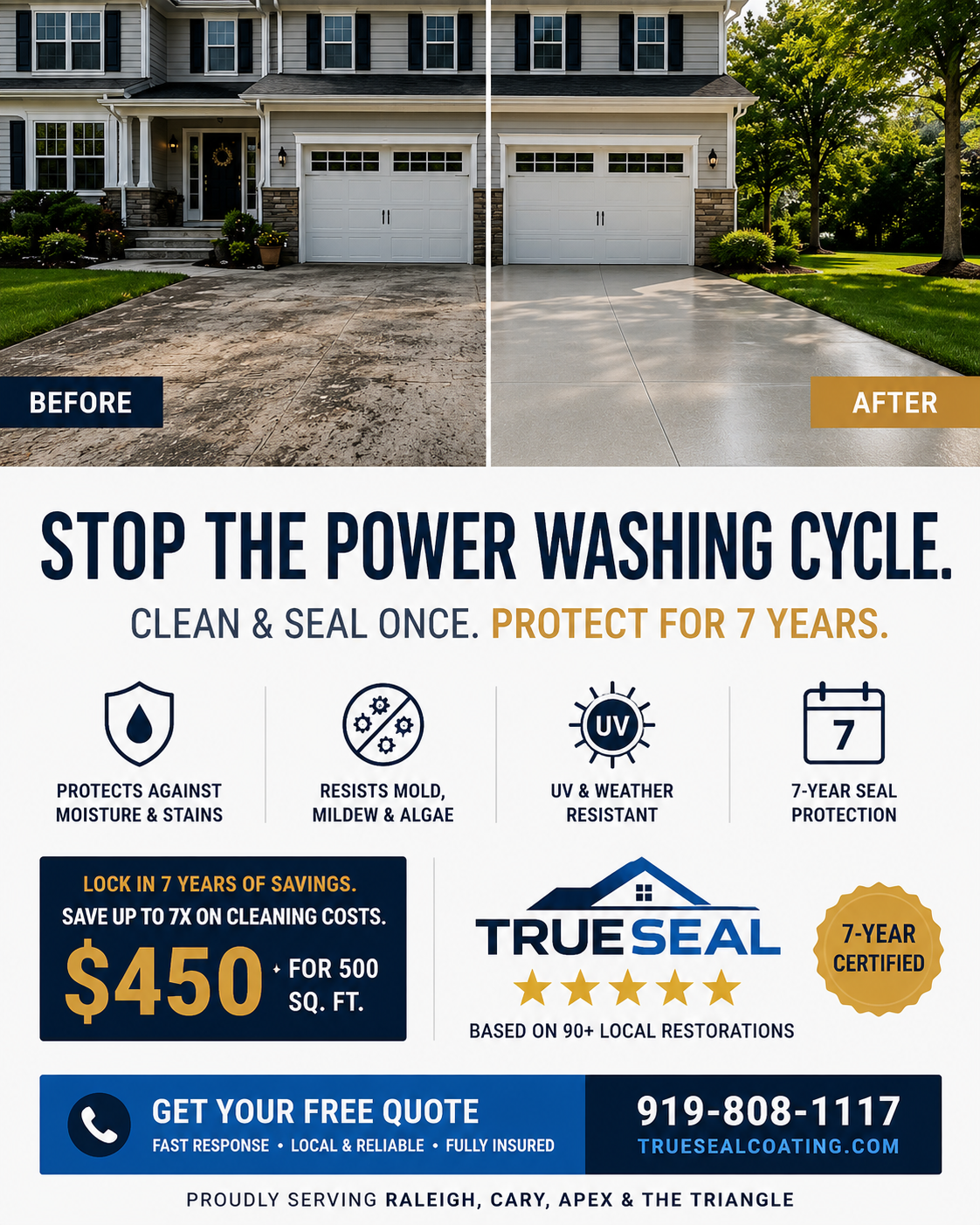
The remote assessment process means you don’t need to coordinate an on-site visit just to get a scoped plan. Send property details and photos, and TrueSeal builds a tailored protection plan around your surface, your traffic load, and your drainage conditions. For commercial lots that also need crack filling or ADA-compliant striping, that scope gets folded into the same plan rather than treated as a separate call.
If your property just went through moss or algae removal, request your remote assessment now and find out exactly what a properly sealed, protected surface looks like for your Raleigh property.
Sources
FAQ
Do I Need To Seal Asphalt Right After Cleaning It?
Only once the surface is fully dry and shows no signs of active regrowth. Sealing over a damp or still-active surface is one of the most common causes of early peeling.
How Long Does Asphalt or Concrete Need To Dry Before Sealing?
Drying time depends on weather, shade, and drainage rather than a fixed number of hours, which is why a contractor should verify dryness directly with a moisture check rather than guessing from the calendar.
Does TrueSeal Offer Crack Filling and Striping Along With Sealcoating?
Yes, TrueSeal handles crack filling and ADA-compliant parking lot striping as part of its commercial pavement services when a project calls for it.
What Makes TrueSeal Different From a Standard Pressure-Washing Service?
TrueSeal pairs a remote assessment with durable, water-repellent protective finishes, rather than offering a single wash-and-leave visit that doesn’t guard against regrowth or UV damage.
Can Moss or Algae Come Back After Sealing?
Regrowth is far less likely when a verified growth inhibitor is applied before sealing, since pressure washing alone often fails to remove the microscopic spores that let moss and algae return.


Comments