Concrete Patio Cleaning and Sealing in Cary, NC: What Homeowners Should Know
- John M
- 5 days ago
- 11 min read

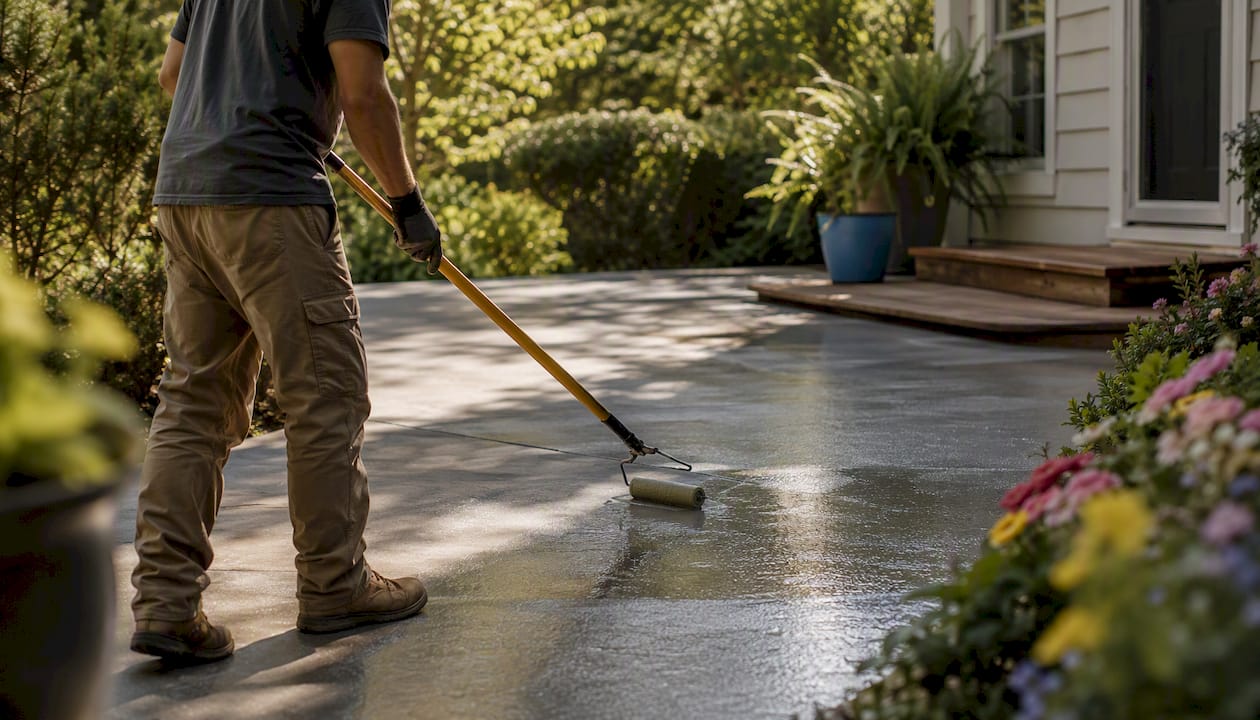
If your patio has lost its color, stains won’t lift, or water no longer beads on the surface, it’s time to call a professional. Concrete patio cleaning and sealing in Cary protects the surface from water intrusion, UV fading, and stains that only get harder to remove with time. TrueSeal recommends a professional evaluation once you notice these warning signs, since a properly timed reseal costs far less than repairing damage that’s already set in.
TrueSeal applies sealer within the manufacturer-recommended window of 50°F to 90°F, and most patios in Cary need resealing every 2 to 5 years depending on foot traffic and sun exposure.
Protects patio color from UV fading
Stops stains from soaking into porous concrete
Simplifies routine cleaning and maintenance
Available through on-site or remote digital assessment across Cary and Wake County
Pro Tip: Snap a few photos of your patio in full sun and full shade before you request a quote. It helps a contractor gauge wear patterns without needing an extra site visit.
Ready to find out where your patio stands? Request a free quote and get a straight answer on whether you need a maintenance coat or a full restoration.
Key Takeaways
Professional cleaning and sealing protects concrete and paver patios from water, UV, and stain damage, and most Cary patios need resealing every 2 to 5 years.
Point | Details |
Watch for warning signs | Water no longer beading, fading color, and cloudy sealer mean it’s time for an evaluation. |
Timing matters | Apply sealer when temperatures sit between 50°F and 90°F, avoiding hot summer afternoons. |
Prep drives results | Full drying time and proper cleaning prevent bubbling, cloudiness, and peeling later. |
Choose sealer by use case | Acrylic sealers boost color; penetrating sealers keep a natural look and last longer. |
TrueSeal offers remote quotes | TrueSeal evaluates Cary and Wake County patios via photos, speeding up the quote process. |
Table of Contents
How To Tell If Your Patio Needs Professional Cleaning and Sealing
Your patio is telling you something before it looks obviously bad. Water that no longer beads and instead soaks straight into the surface is the clearest early sign that the sealer has worn through. Fading color, stains that won’t lift with a hose, and a cloudy or peeling sealer film are the next red flags.
Water absorbs instantly instead of beading on the surface
Color looks chalky, faded, or blotchy compared to when it was installed
Grease, rust, or leaf stains have set into the concrete
Sealer looks milky, bubbled, or is flaking off in sheets
Paver joints show sand loss, weeds, or moss between the stones
Peeling or flaking sealer usually means the old coating has failed and needs to be stripped before a new one goes on, not just cleaned and recoated. Moss, algae, and eroded polymeric sand on pavers typically call for professional-grade cleaning equipment and sand replacement, which is a different job than a simple maintenance seal.
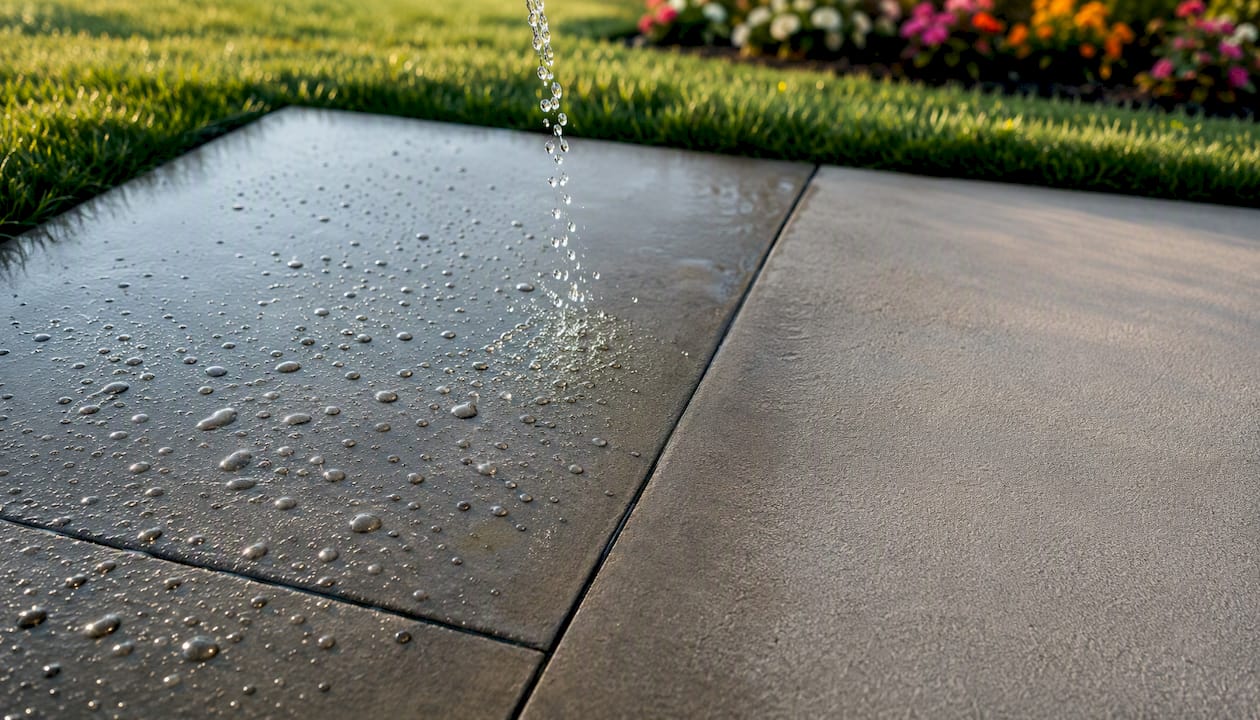
Pro Tip: Try the water test yourself. Pour a small cup of water on the patio. If it soaks in within a minute instead of forming beads, your sealer is likely due for renewal.
What Happens During a Professional Cleaning and Sealing Job
A reliable contractor follows a consistent sequence, whether the job is a small courtyard patio or a large commercial pool deck. Here’s the general flow TrueSeal and most reputable crews use:
Inspection and assessment — either on-site or through TrueSeal’s remote digital evaluation, checking for cracks, stains, sealer condition, and joint issues.
Pre-cleaning — degreasing and spot-treating oil, rust, or organic stains before the main wash.
Cleaning — pressure washing with a fan tip for concrete, or a gentler soft wash for more delicate paver finishes.
Joint repair — replacing polymeric sand and repairing minor cracks on paver or concrete surfaces.
Surface prep — stripping failed sealer or profiling the surface so the new coat bonds properly.
Drying window — allowing the surface to dry fully, since sealing over damp concrete causes clouding.
Sealer application — usually two thin coats rather than one heavy coat, which reduces puddling and trapped moisture.
Final inspection — walk-through, care instructions, and confirmation the surface is ready for use.
A typical single patio takes one day to clean and one to three additional days to seal, factoring in dry and cure times. Most sealers need 24 to 48 hours before foot traffic resumes, and longer before furniture or grills go back on the surface.
Pro Tip: Move potted plants and patio furniture off the surface before your scheduled appointment. It saves time on job day and keeps the crew from working around obstacles.
Which Sealer Type Is Right for Your Patio?
The sealer chemistry your patio needs depends on the finish you want and how much traffic the surface handles. Acrylic sealers, available in water- and solvent-based formulas, sit on top of the concrete as a thin film. They enhance color, add a UV-resistant sheen, and come in matte, satin, or gloss finishes. Penetrating or impregnating sealers soak into the pores of the concrete instead of forming a surface film, which means they don’t peel and they preserve a more natural look, though they don’t boost color the way acrylics do.
Feature | Acrylic Sealer | Penetrating Sealer |
Finish look | Matte, satin, or gloss “wet look” | Natural, unchanged appearance |
Color enhancement | Strong, deepens existing color | Minimal to none |
Slip resistance | Requires anti-skid additive on smooth surfaces | Naturally maintains original texture |
Typical service life | 2 to 3 years on high-traffic patios | 3 to 5 years, less prone to wear film |
Application | Two thin coats, spray and back-roll | Single or double application, soaks in |
Acrylic sealers suit decorative and stamped patios where color pop matters most
Penetrating sealers work well on natural-finish patios and areas with heavy sun exposure
Anti-skid additives can be mixed into either type for pool decks or sloped patios
Pro Tip: Never apply a solvent-based acrylic over an old water-based coating without stripping first. The two chemistries don’t bond, and you’ll end up with a cloudy, peeling mess within a season.
How Contractors Prepare a Concrete Patio Before Sealing
Surface prep determines whether a sealer bonds properly or fails within months. The process generally follows a set order:
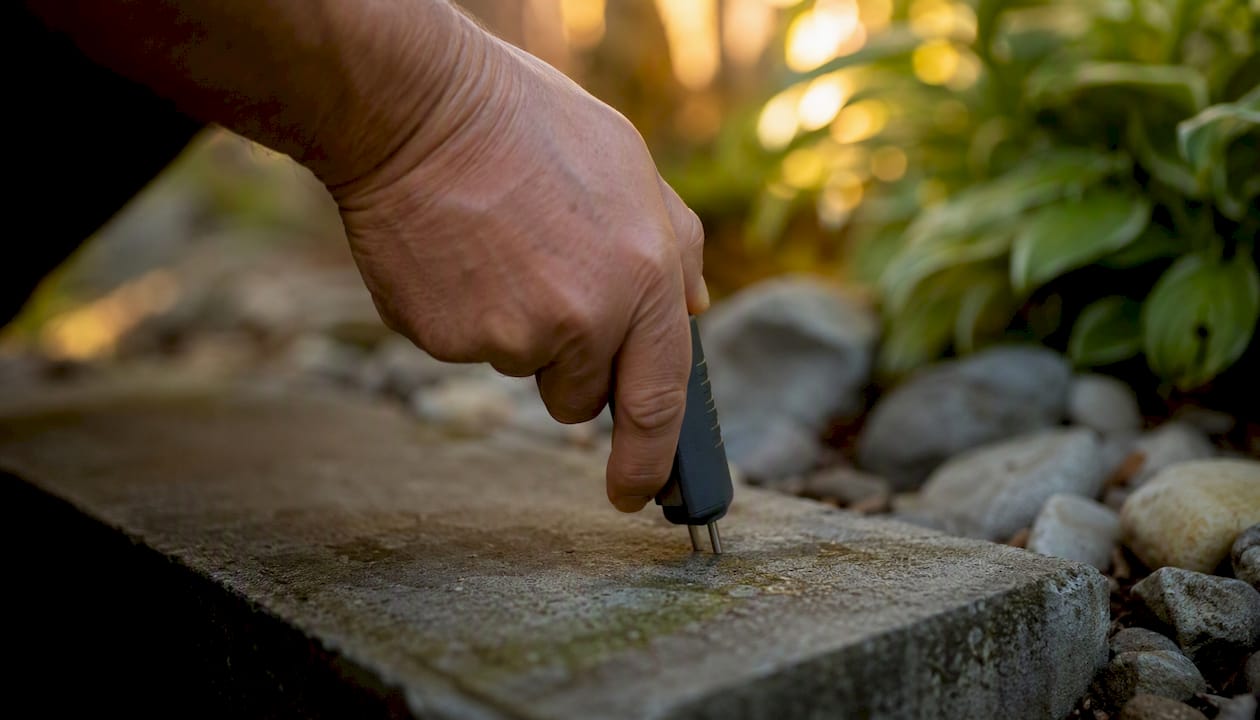
Sweep loose debris and check for old sealer using a scratch or acid test.
Degrease any oil or rust spots with a targeted cleaner before the main wash.
Pressure wash or soft wash the full surface, keeping the nozzle at least a foot away on concrete to avoid etching.
Patch cracks and replace deteriorated polymeric sand on paver joints.
Allow full drying time before any sealer touches the surface.
Sealing over damp concrete or in extreme afternoon heat is one of the most common causes of bubbling, cloudiness, and delamination. A surface that looks dry on top can still hold moisture underneath, especially after a recent rain.
Concrete needs to read fully dry, not just surface dry, before a contractor applies anything. If your patio has visible salt residue from winter deicers, that also needs to be addressed before sealing, since trapped salt deposits interfere with adhesion.
Pro Tip: If your contractor skips the moisture check and jumps straight to sealing on a humid morning, ask why. It’s a legitimate question, not a rude one.
When Should You Seal a Patio in Cary’s Climate?
Timing matters as much as the sealer itself. Manufacturers recommend keeping air and surface temperatures between 50°F and 90°F during application, which rules out both frosty mornings and blazing July afternoons. In Wake County, that generally points to spring and fall as the sweet spot, with early morning or early evening application during summer to dodge peak heat.
Timing Factor | Recommendation |
Best months in Cary | Spring (April, May) and fall (September, October) |
Summer application | Early morning or early evening only |
Cure time before foot traffic | 24 to 48 hours |
Typical reseal interval | Every 2 to 5 years |
Faster wear factors | Heavy foot traffic, fire pits, deicing salt |
North Carolina summers can push surface temperatures well above the safe application range by midday, causing the sealer to flash off too fast and leave a weak, blotchy film. The water-beading test remains the simplest way to check whether your existing seal still has life left in it.
Pro Tip: Schedule your reseal after a stretch of at least two dry days. Residual moisture in the slab is the number one cause of a hazy finish.
How TrueSeal Evaluates Your Patio Before Quoting the Job
TrueSeal’s remote digital assessment lets you get a tailored protection plan without waiting for a site visit to get scheduled. Send photos of stained areas, close-up shots of paver joints or cracks, and a wide shot showing sun versus shade exposure, and TrueSeal can identify most issues remotely, flagging anything that genuinely needs an in-person look.
Water-repellent finishes that extend the life of the surface
Paver-specific polymeric sand replacement and joint repair
Color enhancement options for faded or dull concrete
Final inspection before the crew leaves the site
Pro Tip: Take your photos in natural daylight rather than with flash. Shadows and glare from a flash can hide the exact stains or wear patterns a contractor needs to see.
What You Provide | Why It Matters |
Stain close-ups | Determines whether spot treatment or full strip is needed |
Joint and crack photos | Flags paver sand loss or slab damage |
Sun/shade exposure shot | Affects sealer choice and expected service life |
Request a free remote or on-site quote and get a plan built around your patio’s actual condition, not a generic estimate.
What To Expect on Job Day From a Reliable Contractor
A trustworthy crew arrives within a stated window, protects nearby plants and furniture, and walks you through the timeline before starting equipment. You should see clear communication about how long the cleaning phase will take, when sealing begins, and when the area will be safe to use again.
Confirm the contractor is licensed and insured before signing anything
Ask to see reviews, references, or before-and-after photos of past work
Get the scope of work and any warranty language in writing
Request a free remote or on-site quote before committing
Ask specific questions before hiring: what sealer chemistry will be used, how many coats, expected cure time, and whether an anti-skid additive is included for slip resistance. A contractor who answers these clearly and can explain why a penetrating sealer suits your patio over an acrylic one, or vice versa, generally knows the material. One common source of confusion is compatibility: ask whether the new sealer works over anything currently on the surface, since mismatched chemistries are a leading cause of cloudy or peeling finishes within the first year.
Pro Tip: Ask what happens if it rains the day after sealing. A contractor with a clear answer has done this enough times to have a plan.
Typical Cost Range and Factors Affecting Pricing
Pricing for concrete patio cleaning and sealing in Cary depends on square footage, surface condition, and the type of sealer chosen. A small patio that only needs a light cleaning and maintenance coat costs less than a large paver patio requiring joint repair, polymeric sand replacement, and full sealer stripping.
Several factors move the price up or down. Square footage is the baseline, but surface material matters too: plain broom-finish concrete is generally less labor-intensive than stamped or decorative concrete, which often needs color-matching and more careful application. Paver patios add cost when joints need new sand or when individual stones have shifted and need resetting before sealing.
The condition of the existing sealer also factors in heavily. A patio that only needs a fresh maintenance coat costs less than one where the old sealer has failed and needs to be stripped completely before anything new goes down. Stain severity plays a role as well. Set-in rust, grease, or organic staining often requires extra treatment time beyond a standard wash.
Sealer choice affects the final number too. Acrylic sealers with anti-skid additives or gloss finishes can run differently than a straightforward penetrating sealer, and multi-coat applications take more labor time than a single pass. Because every patio is different, TrueSeal provides pricing through a remote or on-site assessment rather than a flat rate, so you get a number based on your actual patio instead of a generic square-footage estimate.
Warranty and Service Guarantees To Ask About
Warranty terms vary from contractor to contractor, so ask directly about what’s covered before signing anything. A clear scope of work should spell out exactly what sealer product will be used, how many coats are included, and what the timeline looks like for completion.
Reasonable questions to ask include whether the warranty covers premature peeling or cloudiness, how long that coverage lasts, and what conditions might void it, such as improper drainage or deicing salt use in winter. A contractor who puts this in writing, rather than a verbal promise, gives you something to point back to if an issue comes up down the line.
Ask, too, about what happens if weather interferes shortly after application. A rainstorm within the first day of curing can affect the finish, and a straightforward answer about how that’s handled tells you a lot about how the company operates. Since warranty terms differ by contractor and by project scope, confirm the specifics directly with whoever provides your quote rather than assuming a standard industry guarantee applies across the board.
Additional Services Worth Asking About
Cleaning and sealing often opens the door to related work that improves both the look and lifespan of your outdoor space. Joint repair and polymeric sand replacement are common add-ons for paver patios, since sand naturally erodes from rain, freeze-thaw cycles, and weed growth over a few years. Refreshing it during a sealing job costs less than scheduling a separate visit later.
Stain removal is another frequent upsell, particularly for driveways and patios that share space with grills, fire pits, or parked vehicles. Deep-set rust or oil stains sometimes need targeted chemical treatment beyond the standard wash, and it’s worth asking upfront whether that’s included in your quote or billed separately.
Decorative finishes represent a bigger opportunity for homeowners looking to do more than just protect what’s already there. Color enhancement can revive a faded stamped concrete patio to look close to its original installation color, and TrueSeal’s hardscape services extend into broader paver and decorative concrete work if you’re considering an upgrade alongside your sealing project. If your patio connects to a driveway or walkway, ask about bundling those into the same job. It’s often more efficient than scheduling separate appointments for adjoining surfaces.
A Local Contractor’s Take on Cary Patios
Wake County’s mix of humid summers, sudden thunderstorms, and the occasional ice event puts real stress on outdoor concrete. We see the same pattern every season: patios that get sealed on schedule keep their color and resist stains, while the ones that get ignored end up needing full restoration instead of a simple maintenance coat. If your patio hasn’t been evaluated in a couple of years, request a remote assessment before the next stretch of harsh weather sets in.
Get Your Cary Patio Evaluated by TrueSeal
TrueSeal is the practical alternative to guessing whether your patio needs a full restoration or just a maintenance coat. Instead of scheduling a site visit and waiting days for an answer, send photos through TrueSeal’s remote digital assessment and get a tailored plan for your patio, driveway, or walkway without the back-and-forth.
[
TrueSeal covers Cary, Raleigh, and the rest of Wake County with a full range of surface protection services, including:
Concrete cleaning and long-term sealing for patios, driveways, and walkways
Paver cleaning, polymeric sand replacement, and joint restoration
Stamped concrete restoration and color enhancement
Whether you manage a single-family home or oversee common areas for an HOA, a free quote request is the fastest way to find out what your patio actually needs. Reach out today and get a plan built around your property, not a generic price sheet.
Sources
FAQ
Is It Worth It To Seal a Concrete Patio?
Yes. Sealing protects against UV fading, stains, and water intrusion, and it makes routine cleaning far easier since dirt and grease can’t soak into the surface.
What Is the Best Way To Clean a Concrete Patio?
Sweep away debris, then use a mild detergent or degreaser followed by careful pressure washing with a fan tip held at least a foot from the surface to avoid etching.
How Often Should You Reseal a Stamped Concrete Patio?
Most stamped concrete patios need resealing every 2 to 5 years, depending on foot traffic, sun exposure, and how well the previous coat was applied.
What Is the Best Way To Clean Concrete Before Sealing?
Remove all debris, degrease stained spots, pressure wash or soft wash the full surface, then allow it to dry completely, since sealing over damp concrete causes clouding and poor adhesion.
Can TrueSeal Quote a Patio Without an On-Site Visit?
Yes. TrueSeal’s remote digital assessment lets you submit photos of your patio’s condition and receive a tailored plan without scheduling an in-person visit first.
Comments