Parking Lot Restriping in Raleigh for Faded or Unclear Lines
- John M
- 4 days ago
- 9 min read


TrueSeal can restripe a faded, uneven, or noncompliant parking lot in Raleigh, and pressure wash the surface first so the new paint actually holds. If your lot’s ADA markings have gone grey, your stalls no longer line up, or you just had sealcoating done, request an on-site or remote quote now rather than after the next inspection or complaint.
Two things make waiting the expensive choice. The 2010 ADA Standards set exact dimensions for accessible spaces and access aisles, and Raleigh’s own UDO maintenance rules require nonresidential property owners to keep pavement markings clear and unobstructed. Neither cares how busy your tenants keep you.
Get a quote now if you notice any of these:
ADA symbols or access-aisle stripes have faded to grey
You recently sealcoated and the lot is bare underneath
Stall lines are uneven, doubled, or missing at turns
Drivers or pedestrians seem confused about where to go
Key Takeaways
Faded or noncompliant parking lines create both a safety risk and a code violation under Raleigh’s UDO, and fixing them starts with cleaning, correct measurement, and the right material for your traffic pattern.
Point | Details |
Act on visible warning signs | Grey ADA markings, uneven stalls, or recent sealcoating are all reasons to request a quote now. |
Know the ADA numbers | Access aisles need 60 inches minimum and slopes cannot exceed 1:48, measured from the centerline. |
Sequence the work correctly | Cleaning and repairs come first, sealcoat must cure fully before paint goes down. |
Match material to traffic | Thermoplastic costs more upfront but often lowers long-term cost in high-wear lanes. |
TrueSeal covers the full job | TrueSeal combines pressure washing, ADA-aware striping, and post-job sealing for Raleigh, Cary, Apex, and Garner properties. |
Table of Contents
Parking Lot Restriping in Raleigh: What’s Actually Included
A real restriping job is more than a paint truck showing up. Before you compare bids, know what should be on every proposal.
Core scope:
Surface cleaning and pressure washing to strip dirt, oil film, and loose debris
Layout and measurement (not eyeballing where the old lines used to be)
Standard stall lines, ADA spaces, and van-accessible access aisles
Directional arrows, crosswalks, and fire lane markings
Custom stencils (handicap symbols, “No Parking,” loading zone text) and signage coordination
Common add-ons: thermoplastic markings for high-wear lanes, paint banding, minor surface patching, and sealcoating either before or after the stripe job depending on the lot’s condition.
Sequencing matters more than most managers expect. Cleaning and any pavement repairs have to happen before layout work starts, and if sealcoating is part of the plan, the coating needs to cure fully before paint goes down.
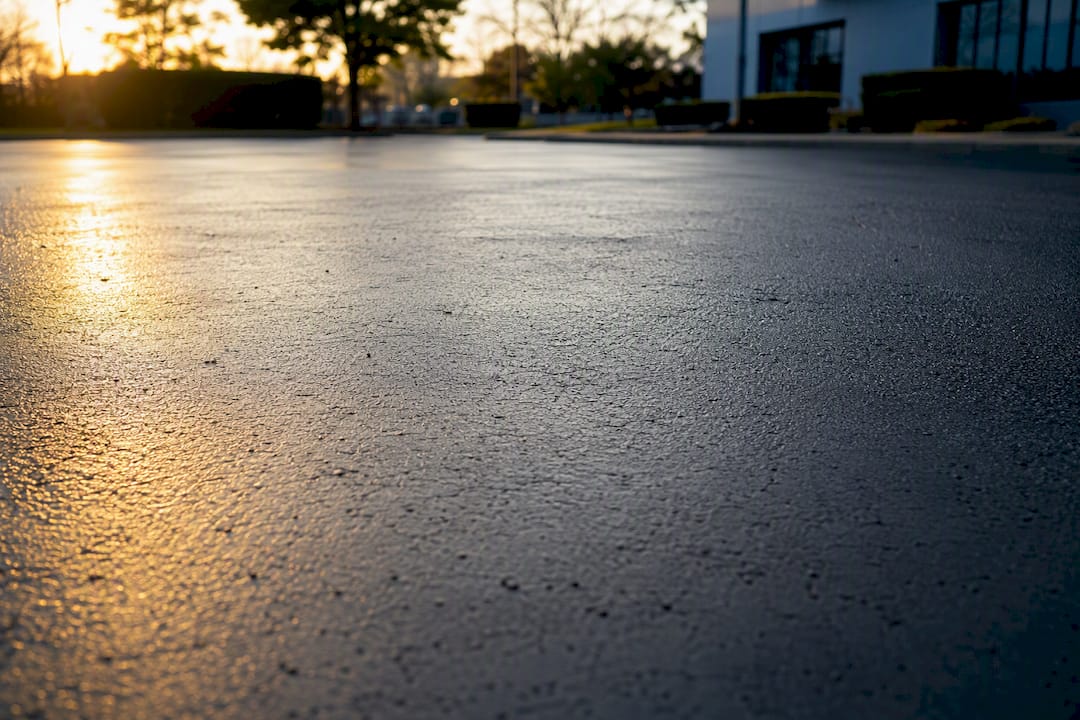
Pro Tip: Painting over sealcoat that hasn’t cured causes oil to bleed up through the new lines, leaving a blotchy, discolored stripe within weeks. Confirm the cure window with your contractor before scheduling paint day.
Why Restriping Can’t Wait
Clear markings do real safety work. The National Safety Council points to poor pavement markings as a direct driver of confusion and conflict in parking areas, where pedestrians and moving vehicles share tight space with almost no separation.
There’s a compliance angle too. Faded ADA markings aren’t just an aesthetic problem; they’re a documented violation under Raleigh’s own maintenance code, and a single complaint can trigger a corrective-action order or worse, a private lawsuit. Weigh that against the cost of a routine restripe and the math is not close.
Curb appeal matters here as well. A lot with grey, patchy lines tells customers and tenants that maintenance is an afterthought, even when everything else on the property is well kept.
Act now if you see:
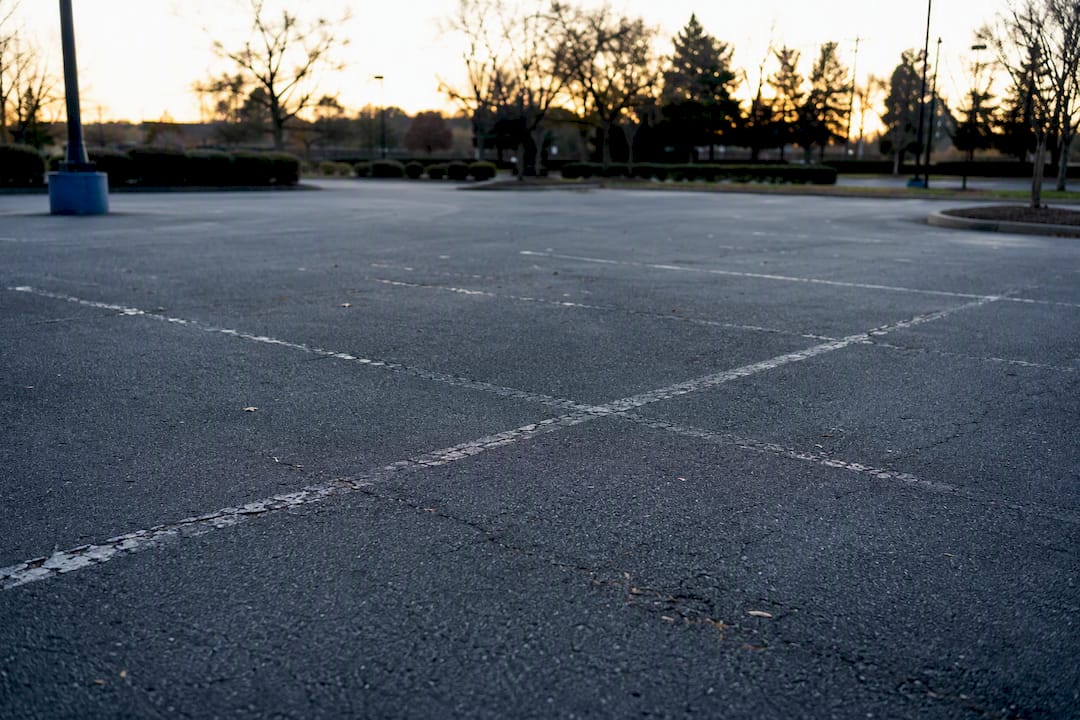
Grey lines where they used to be white or yellow
Gaps or missing stripes at high-traffic turns
Faded fire lane text or directional arrows
What ADA and Raleigh’s UDO Require Before You Stripe
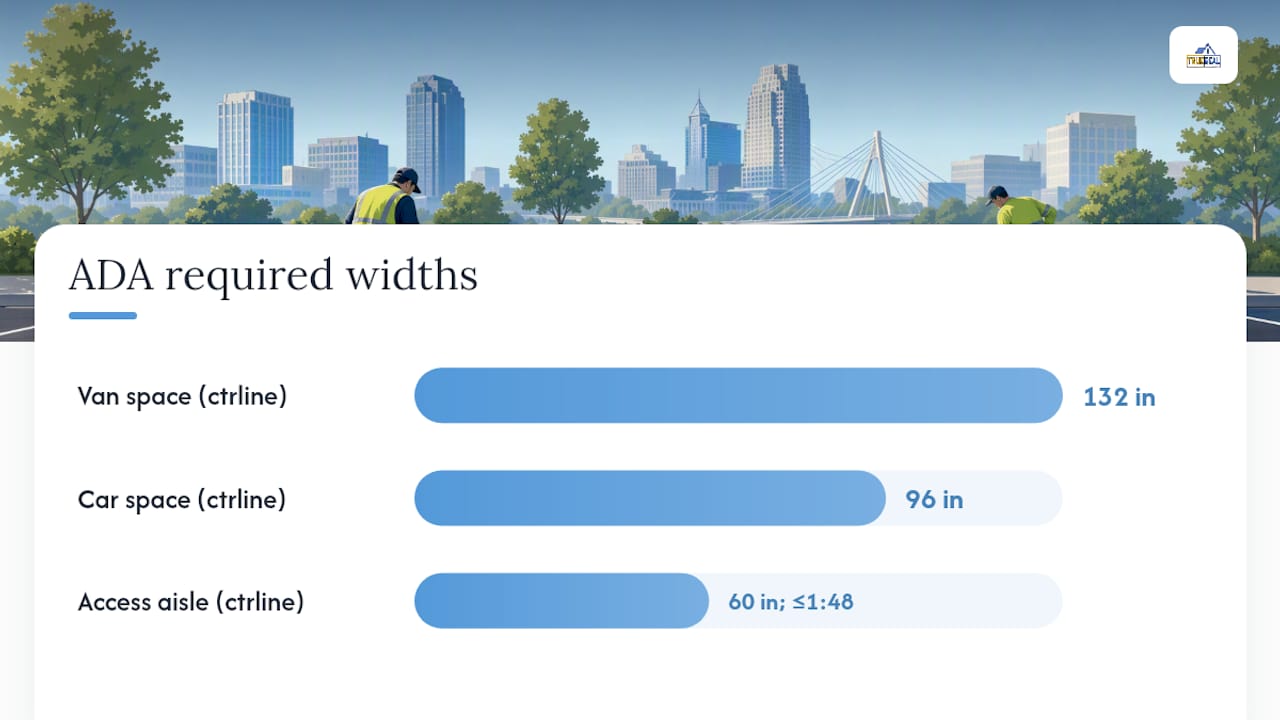
Compliance isn’t optional guesswork, and the numbers are specific. Under the ADA Standards, car spaces must measure at least 96 inches wide, van spaces need 132 inches (or 96 inches paired with a 96 inch aisle), and every access aisle must be at least 60 inches wide with a slope no steeper than 1:48. At least one in six accessible spaces has to be van-accessible. North Carolina’s adopted code, based on ICC A117.1, confirms all these widths get measured from the centerline of the markings, not the paint edges.
Locally, Raleigh’s UDO maintenance standards put the burden squarely on the property owner to keep markings visible and unobstructed. The city can require corrective work on unsafe or noncompliant lots, and the access aisle counts as part of the accessible space itself under North Carolina law. Stripe it wrong and you’ve created the same liability as an undersized stall.
Before work starts, collect this evidence:
Current count of accessible spaces versus your total space count
Measured widths of existing van and car accessible stalls
Access aisle widths and slope readings
Photos and heights of existing accessible signage
Notes on any recent sealcoating or surface repairs
Pro Tip: Bring last year’s striping layout to your first contractor call, if you have it. A quick before-and-after comparison often reveals drift in stall counts that nobody noticed happening year over year.
Choosing the Right Paint or Thermoplastic
Standard waterborne acrylic traffic paint is the workhorse for most Raleigh commercial lots. It’s affordable, dries fast, and holds up reasonably well when applied over a clean, properly cured surface. Acetone-modified traffic paints cure faster in cooler weather and adhere better on older, slightly porous asphalt, though they cost more per gallon.
Thermoplastic is the heavy-duty option. It’s melted onto the pavement rather than sprayed, and it typically outlasts standard paint by several years in high-traffic lanes, crosswalks, and fire lane markings. The tradeoff is upfront cost and a more involved installation process.
What actually shortens a stripe’s life:
Heavy daily traffic and repeated tire scrubbing at turns
Direct sun exposure, which breaks down pigment over time
Shopping cart and foot traffic in retail lots
Sealcoating applied without a full restripe afterward
A workable decision rule: if the lane sees constant turning traffic or serves as a fire lane, thermoplastic usually pays for itself in avoided repaint cycles. For standard stalls in a lower-traffic lot, quality acrylic paint over a properly pressure-washed surface is usually the more sensible spend.
How the Restriping Process Actually Works
Most jobs follow the same sequence, whether it’s a Cary retail center or a Garner office park:
Inspection and measurement — confirm current stall counts, ADA compliance, and layout against code
Surface cleaning — pressure washing removes oil film, debris, and loose material so paint bonds properly
Repairs — crack fill or patching on any deteriorated asphalt sections
Layout and stenciling — chalk lines and templates mark exact stripe and symbol positions
Application — paint or thermoplastic goes down according to the layout
Curing and reopening — lanes stay closed until the material sets enough for traffic
A typical commercial lot in Wake County takes one to three days depending on size, with spring and early summer offering the most reliable weather window for curing. Cold, wet conditions slow drying and can affect adhesion.
For active properties, coordination matters as much as the paint itself. Overnight work, phased lane closures, and a simple notice posted at entrances keep tenants and customers from getting stuck mid-lot on painting day.
What Drives the Cost of a Restriping Job
Quotes vary lot to lot because the variables genuinely differ. The main drivers:
Total lot size and number of stalls to be marked
Material choice: standard paint versus thermoplastic
Surface repairs needed before striping can begin
Accessibility signage that needs replacing or adding
Mobilization and travel distance within Wake County
Any required traffic control or after-hours work
Ballpark pricing without seeing the lot in person isn’t reliable, and any contractor quoting a firm number sight unseen should raise a flag. What tends to hold true: a higher material cost upfront, like thermoplastic in high-wear lanes, often reduces total spend over several years because you’re not repainting the same lane every 12 months.
If your lot has faded ADA markings or recently had sealcoating applied, that’s the signal to schedule an on-site quote rather than guess at a budget number.
How to Vet a Restriping Contractor
Ask these questions on the first call, before you get a price:
Are you licensed and insured to work in Wake County?
Can you show sample photos of ADA-compliant layouts you’ve completed?
What materials do you use, and why for this type of lot?
How do you sequence striping with sealcoating and repairs?
Is there a warranty on the work, and who’s my point of contact?
Red flags to walk away from:
A quote given without anyone visiting the site
A price well below competitors with no mention of surface inspection
No familiarity with ADA dimensions or Raleigh’s UDO
No references or completed-project photos available
No mention of cleaning or pressure washing in the scope of work
Pro Tip: Ask specifically how they plan to coordinate striping around any sealcoating work. A contractor who can’t answer that clearly probably hasn’t managed the sequencing before, and that’s exactly where bleeding and adhesion failures happen.
Why Property Managers Choose TrueSeal for Restriping and Cleaning
TrueSeal handles the full sequence most Raleigh lots actually need: pressure washing to strip grime and oil, surface repairs where the asphalt calls for it, ADA-aware striping, and a post-job seal that protects the investment.
Pressure washing and concrete or asphalt cleaning before any paint goes down
ADA-compliant stall, aisle, and signage layout referencing current ADA parking requirements
Paint or thermoplastic application matched to your lot’s traffic pattern
Optional sealcoating to protect the surface after striping is complete
TrueSeal serves Raleigh, Cary, Apex, and Garner with a free on-site or remote assessment, and every project gets a dedicated coordinator so you’re not chasing updates. For technical reference before your call, our striping standards guide breaks down measurement rules in plain terms.
Pro Tip: If your building has van-accessible spaces near a slope, ask your coordinator to verify the 1:48 grade limit while they’re on-site measuring stalls. It’s a common miss on older lots.
What the Data Actually Tells Raleigh Property Managers
Most restriping advice online treats compliance and cosmetics as separate problems. They aren’t. A lot with grey ADA symbols isn’t just due for a touch-up. It’s sitting on an active violation of Raleigh’s own maintenance code, and the fix costs a fraction of what a complaint or corrective-action order would.
The bigger blind spot is sequencing. Property managers often book sealcoating and striping as two unrelated projects, scheduled by whichever vendor calls back first. That’s backward. Paint applied over uncured sealcoat bleeds, and a lot striped without checking recent surface work often needs redoing within a year. The order matters more than either service on its own.
Here’s what should actually drive the decision: check your ADA markings first, because that’s the compliance exposure. Then check when the lot was last sealcoated, because that determines your paint timeline. Everything else, thermoplastic versus paint, layout preferences, is a budget conversation that comes after those two questions are answered.
Get a Restriping and Cleaning Quote From TrueSeal
There are national striping companies and regional paving crews that will restripe your lot. What most of them won’t do is clean the surface properly first and protect it after. TrueSeal treats cleaning and sealing as part of the same job as striping, not a separate line item you have to hunt down a second contractor for.
That matters if you’re a Raleigh or Wake County property manager juggling multiple vendors already. One coordinator handles pressure washing, ADA-compliant layout, and post-job sealing, so you’re not stitching together three separate schedules and three separate invoices. Whether your lot needs a full ADA correction or just a routine repaint before sealcoating, TrueSeal’s process starts with an on-site or remote assessment tailored to your property’s actual condition, not a generic per-stall estimate.
If your parking area has faded lines, recent sealcoating, or accessible spaces that haven’t been checked against current ADA dimensions, request your quote today and get a project timeline before your next tenant walkthrough.
Sources
FAQ
What is the going rate for striping a parking lot?
Cost depends on lot size, stall count, material choice, and whether surface repairs are needed, so an accurate number only comes from an on-site or remote quote rather than a flat per-stall estimate.
What are the regulations for parking lot striping in Raleigh?
Accessible spaces must follow ADA dimensions (96 inch car spaces, 132 inch van spaces, 60 inch aisles, slopes no steeper than 1:48), and Raleigh’s UDO requires owners to keep all markings clear and unobstructed.
What are common striping mistakes?
The most frequent errors are painting over uncured sealcoat, which causes bleeding, and striping access aisles at the wrong width, since North Carolina law treats the aisle as part of the accessible space itself.
How much does it cost to resurface a parking lot with asphalt?
Resurfacing cost depends heavily on square footage, current pavement condition, and the extent of repairs needed, which is why a full assessment matters more than a generic per-square-foot figure.
How often should a Raleigh parking lot be restriped?
Most commercial lots need a full restripe every 12 to 24 months depending on traffic volume, material used, and whether sealcoating was applied in between.
Comments