Parking Lot Sealcoating in Raleigh, NC: For Aging, Oxidized Asphalt.
- John M
- 4 days ago
- 7 min read

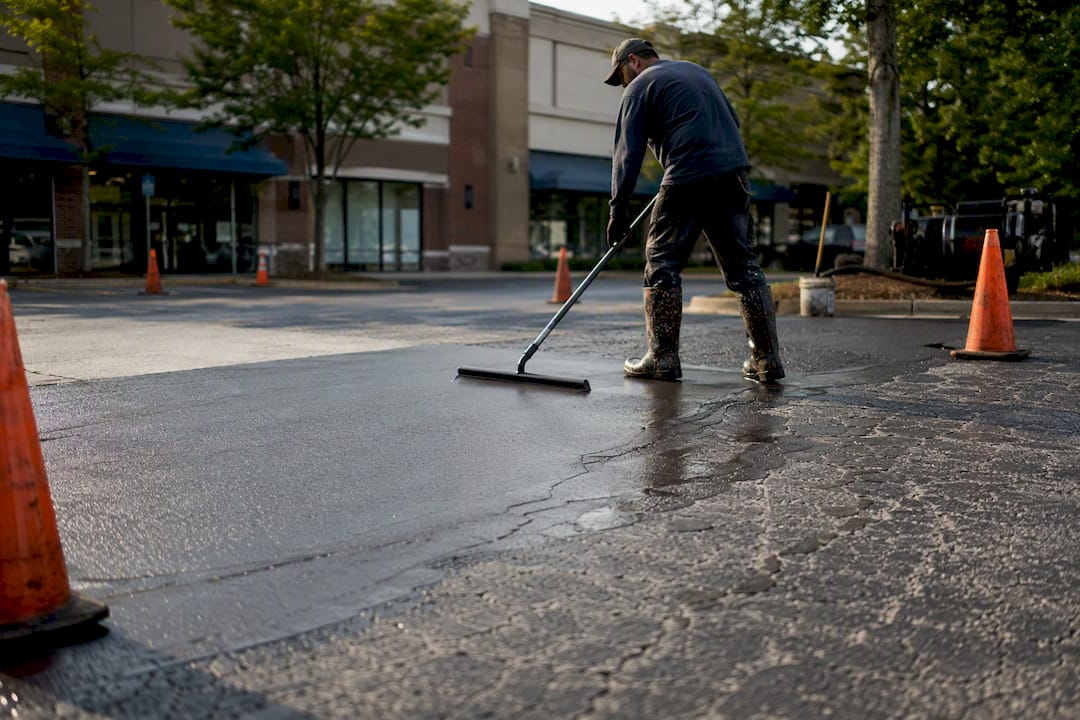
If your parking lot has turned gray and chalky, sealcoating is the right move, but only after cracks and oil spots get fixed first. Skip the prep and even a good sealer fails within a season. For most oxidized lots across Wake County that are still structurally sound, professional sealcoating with proper preparation is exactly what stops the damage before it turns into a repaving bill.
Here’s what that looks like in practice:
Blocks moisture from reaching the base layer
Slows UV oxidation that turns asphalt gray and brittle
Resists oil and gas stains from daily traffic
Restores that deep black finish clients notice on arrival
Delays resurfacing by years, not months
A two-coat professional application typically runs $0.17 to $0.30 per square foot and can add 5 to 7 years to your pavement’s life per application, provided it’s done correctly.
TrueSeal offers free on-site or remote assessments for commercial properties across Raleigh, Cary, Apex, and Garner. Call or request a quote online and we’ll tell you honestly whether your lot needs sealcoating, patching, or something bigger.
Key Takeaways
Professional sealcoating with thorough prep work restores oxidized asphalt and can delay costly resurfacing by three to five years per application.
Point | Details |
Verdict for oxidized lots | Sealcoat now if the base is sound; a two-coat job blocks UV and moisture damage. |
Prep drives results | Power washing, oil priming, and crack sealing determine whether the sealer actually lasts. |
Two coats beat one | Thin, layered coats cure evenly; a single heavy coat tracks and fails early. |
Know when to resurface instead | Alligator cracking, deep rutting, or standing water mean sealcoating won’t fix the real problem. |
Request a free assessment | TrueSeal offers on-site or remote quotes across Wake County, including Raleigh, Cary, Apex, and Garner. |
Table of Contents
What Does Professional Parking Lot Sealcoating Include?
A real sealcoating job is a sequence of steps, not a single spray-and-go pass. Here’s the full scope a Wake County contractor should walk you through before quoting a price:
Power washing to strip loose debris, dirt, and surface grime
Oil-spot priming on stained areas so the sealer actually bonds
Crack sealing to keep water out of the base before it undermines the surface
Patching for potholes and isolated failures
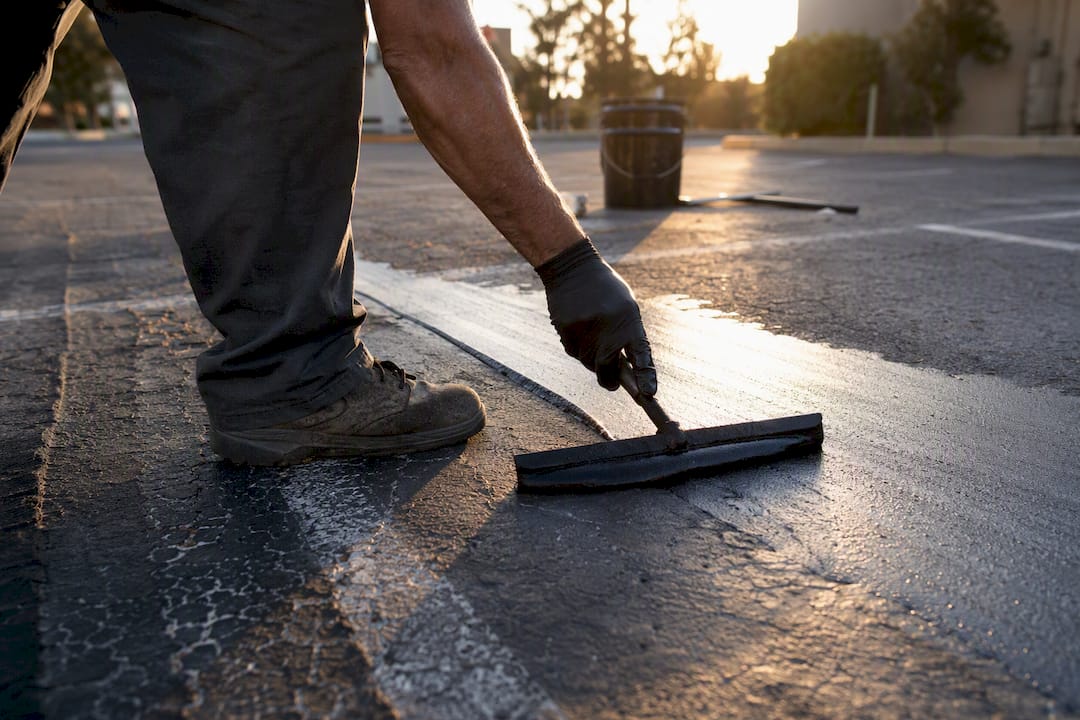
Two-coat sealcoat application, spray or squeegee depending on the lot
Sand additive mixed into the sealer for skid resistance
Re-striping, including ADA-compliant markings and fire-lane paint if your property needs it
What sealcoating won’t do is fix a structural problem. It’s a surface preservation treatment that blocks UV and water intrusion. It does not rebuild a base that’s already failed. If your lot has widespread alligator cracking, that’s a different conversation entirely, one worth having before you spend money on a coating that won’t hold.
Wake County properties also tend to need scheduling flexibility since retail and office lots can’t just close for a day without a plan. A contractor who understands local traffic patterns will stage the work in sections so you’re never fully shut down.
How Is Asphalt Prepared, Sealed, and Cured?
Here’s the sequence a competent crew follows, in order:
Inspection and condition scoring using a PASER-style scale to confirm the lot is a sealcoating candidate, not a resurfacing job
Power washing the entire surface to remove dirt, vegetation, and loose material
Oil-spot priming on every stain so the sealer can actually adhere
Crack sealing with hot rubberized filler
Patching any potholes or isolated failures
First coat, worked into the pores, often with a squeegee for penetration
Second coat, sprayed on for a uniform, even finish
Sand blended into the sealer mix for traction
Drying and curing, typically 24 to 48 hours before reopening to traffic
Re-striping once the sealer has fully cured
Weather controls the schedule more than anything else. Most contractors follow a version of the 50/50/50 rule: air temperature at least 50°F and rising, humidity low, and pavement temperature below the upper threshold that would cause the sealer to wash off or cure unevenly. In a Wake County summer, that often means crews start work at dawn, before pavement temperatures climb too high for a clean cure.
Pro Tip: Two thin coats beat one thick coat every time. A single heavy application tracks under tires and cures unevenly, while two thin layers bond properly and wear evenly across the whole lot. Ask any contractor how many coats they’re applying before you sign anything, because prep and application technique account for most of whether a sealcoat job lasts.
Will Sealcoating Actually Fix My Parking Lot?
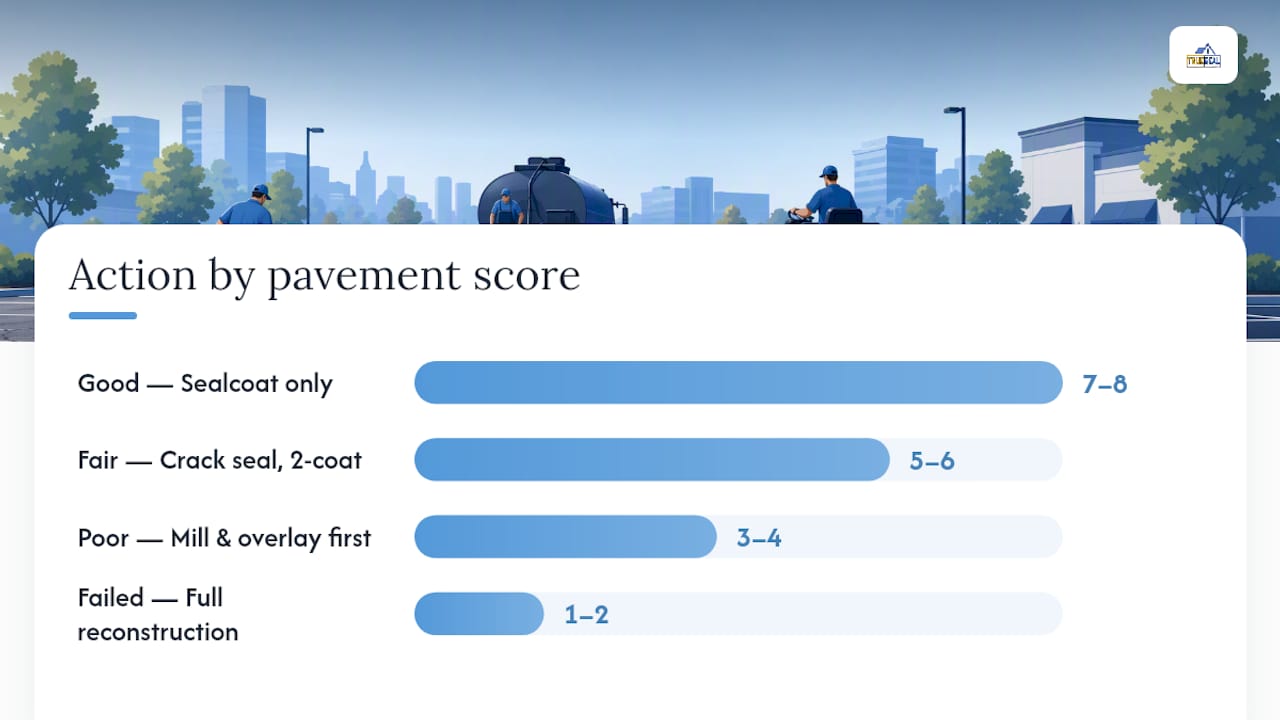
That depends entirely on what condition your asphalt is in underneath the oxidation. Here’s a rough guide based on pavement condition scoring:
Good (7 to 8): This is the ideal window. Sealcoat now, before oxidation accelerates.
Fair (5 to 6): Crack sealing plus a two-coat sealcoat will typically restore performance and appearance.
Poor (3 to 4): You likely need a mill-and-overlay before sealcoating makes sense.
Failed (1 to 2): Full reconstruction is the only real fix. Sealcoating here is a waste of money.
Watch for signs that mean sealcoating alone won’t cut it: alligator cracking, rutting deep enough to hold water, standing water after rain that points to drainage failure, or potholes wider than a few inches. Those point to base problems, not surface aging.
Most Wake County commercial lots benefit from sealcoating every three to five years, paired with annual crack sealing. Combining targeted repairs with a scheduled sealcoat is usually the cheapest way to push a full resurfacing job out by several more years.
What Does Sealcoating Cost and How Long Does It Take?
Pricing varies by lot size, condition, and how much prep work is needed before the sealer goes down. A professional two-coat application generally falls in the $0.17 to $0.30 per square foot range, meaning a small lot might run a few hundred dollars while a large retail or office complex runs into four figures.
Cost drivers worth knowing before you request a quote:
Lot size and layout complexity (islands, curbs, drive aisles all add labor)
Prep work: oil priming, crack sealing priced per linear foot, and patching
re-striping costs
Seasonal demand, since spring and fall book up fast in this region
Typical timeline:
Inspection and written estimate: same week in most cases
On-site work: one day for smaller lots, staged over multiple days for large commercial properties
Drying and cure time: 24 to 48 hours before vehicle traffic returns
Re-striping: done after full cure, often the next morning
Large properties benefit from zone-based scheduling so half the lot stays open for customers or tenants while the other half cures.
How Do You Vet a Sealcoating Contractor?
Before you sign, ask these questions and watch how directly they’re answered:
Are you insured, and can you provide a certificate?
Can I see before-and-after photos from Wake County jobs?
Do you have references from properties similar to mine?
What’s your warranty or workmanship guarantee?
Will I get a written scope with a timeline before work starts?
Red flags that should make you walk away:
A vague estimate with no line items for prep work
Promises of “one coat, done” with no explanation of why
No mention of pressure washing or oil priming in the scope
A price that’s dramatically lower than every other bid, with no explanation
No local references you can actually call
Your contract should spell out mobilization, weather contingency plans, cure time before reopening, re-striping details, acceptance criteria for the finished work, and a clear payment schedule. If a contractor won’t put these in writing, that tells you something.
A Local Contractor’s View on Oxidized Asphalt
TrueSeal has worked on driveways, patios, and commercial pavement across Raleigh, Cary, Apex, and Garner long enough to know that oxidized asphalt almost always looks worse than it is, structurally. Most of what we see is surface damage that responds well to proper prep and a two-coat seal. Our approach starts with an honest read on the lot’s real condition, not a sales pitch, and you can see how we handle related concrete and pavement work on our service pages.
Get a Free Parking Lot Sealcoating Quote in Wake County
TrueSeal handles commercial sealcoating, pressure washing, crack repair, and striping for properties across Raleigh, Cary, Apex, Garner, and the rest of Wake County. If your lot is oxidized but the base is still sound, we can typically restore it without the cost of a full resurfacing project.
What sets our process apart is the remote assessment option. Send us photos or a walkthrough video, and we’ll give you a tailored scope and price without scheduling an on-site visit first, which speeds up estimates for busy property managers. We back our work with a workmanship guarantee and can bundle sealcoating with re-striping and concrete cleaning in one project, saving you from coordinating multiple contractors. Every quote comes with real before-and-after photos from jobs in your area.
Ready to see where your lot stands? Visit our commercial services page to request a free quote, or call to schedule an assessment. We respond quickly to commercial requests and can often get a crew scheduled within the same season, not months out.
Sources
FAQ
How much does it cost to seal coat an asphalt parking lot?
A professional two-coat application typically runs $0.17 to $0.30 per square foot, depending on lot size, prep needs, and striping requirements.
What is the best type of asphalt sealer for parking lots?
Most commercial contractors recommend a two-coat system using a spray-and-squeegee combination, since thin, even coats bond and wear better than one thick application.
Is it okay to put new asphalt over old asphalt?
That depends on the base condition. Sealcoating works over existing asphalt when the surface is oxidized but structurally sound; deep rutting or alligator cracking usually requires milling or replacement instead.
How much does it cost to seal a driveway of a similar size?
Driveway sealing pricing follows the same square-footage logic as commercial lots, though smaller residential jobs often carry a minimum service fee. TrueSeal can provide an exact figure after a free assessment of your Raleigh or Wake County property.
How often should a commercial parking lot be sealcoated?
Most commercial properties need sealcoating every three to five years, paired with annual crack sealing to catch small problems before they spread.
Comments