Concrete Sealing Benefits: What Every Raleigh, NC Homeowner Should Know

Updated: Aug 12
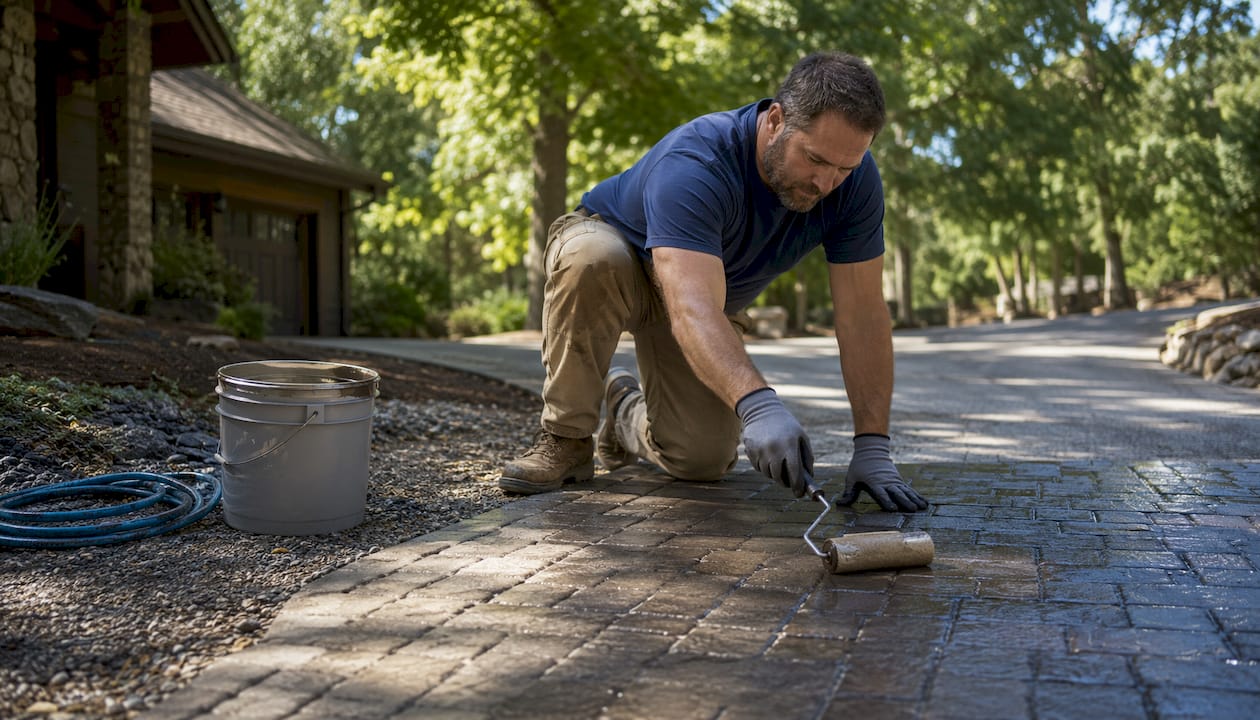
Sealing exposed concrete is worth the cost for most homeowners and property managers — especially on driveways, patios, walkways, pool surrounds, and pavers where weather, traffic, and staining are constant threats. The concrete sealing benefits are clearest when protecting longevity and curb appeal matters, though the value depends on choosing the right sealer type, accounting for local climate conditions like Wake County’s freeze-thaw cycles, and completing proper surface prep before application.
Need professional concrete sealing in Cary, Apex, or Raleigh? Explore our Clean & 7-Year Seal service.
Table of Contents
How concrete sealers actually protect your surface
Sealers work through two distinct mechanisms, and understanding the difference helps you choose the right product.
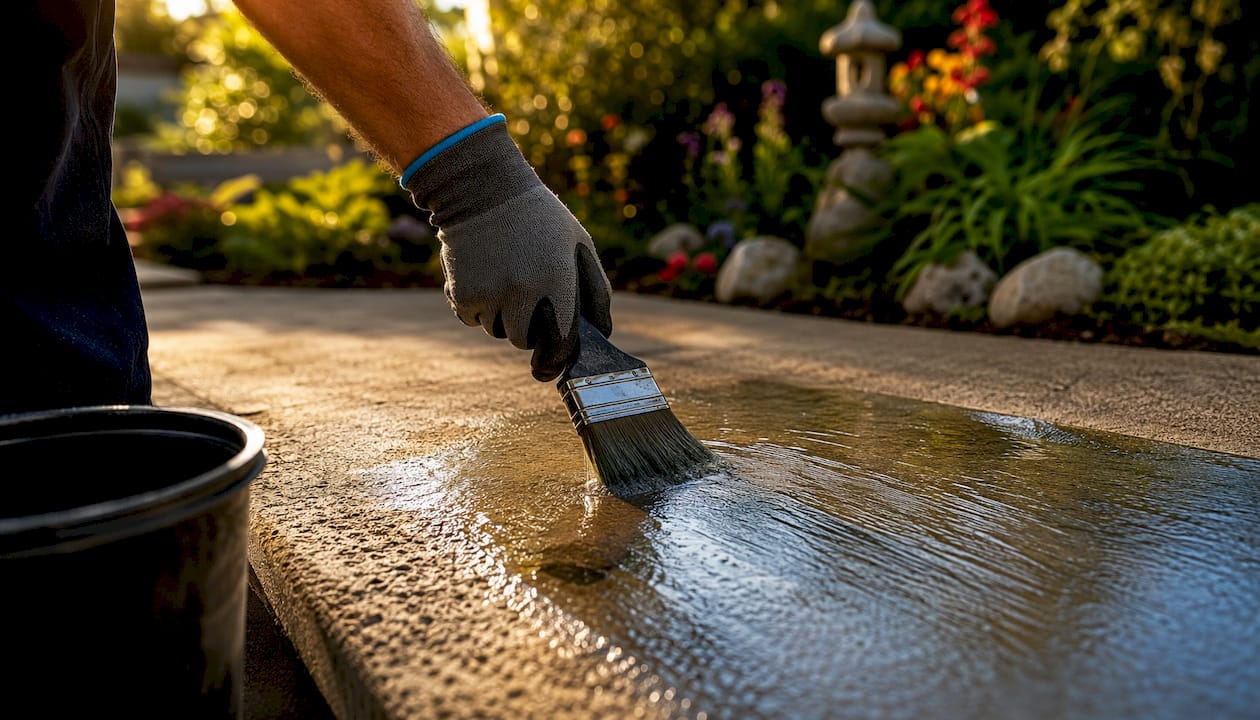
Penetrating sealers (silane, siloxane, and silane/siloxane blends) soak into the concrete matrix and react chemically to form a hydrophobic barrier within the pores. The surface appearance stays virtually unchanged — no film, no gloss. Because there is no coating on top, penetrating sealers cannot peel or delaminate, and they allow moisture vapor to escape, which is critical for exterior surfaces in humid climates.
Film-forming sealers (acrylics, epoxies, polyurethanes, polyaspartics) cure on top of the concrete and create a sacrificial wear layer. They block penetration effectively and can dramatically change sheen and color. The trade-off: they sit on the surface, so they are vulnerable to UV damage, hot tire pickup, and moisture trapped underneath.
Feature | Penetrating (silane/siloxane) | Film-forming (acrylic/epoxy) |
Appearance | Invisible, natural, matte | Gloss, semi-gloss, or wet look |
Breathability | High — vapor escapes freely | Low — can trap moisture |
Exterior durability varies; penetrating sealers generally last multiple years, while film-forming types require more frequent reapplication depending on the product. |
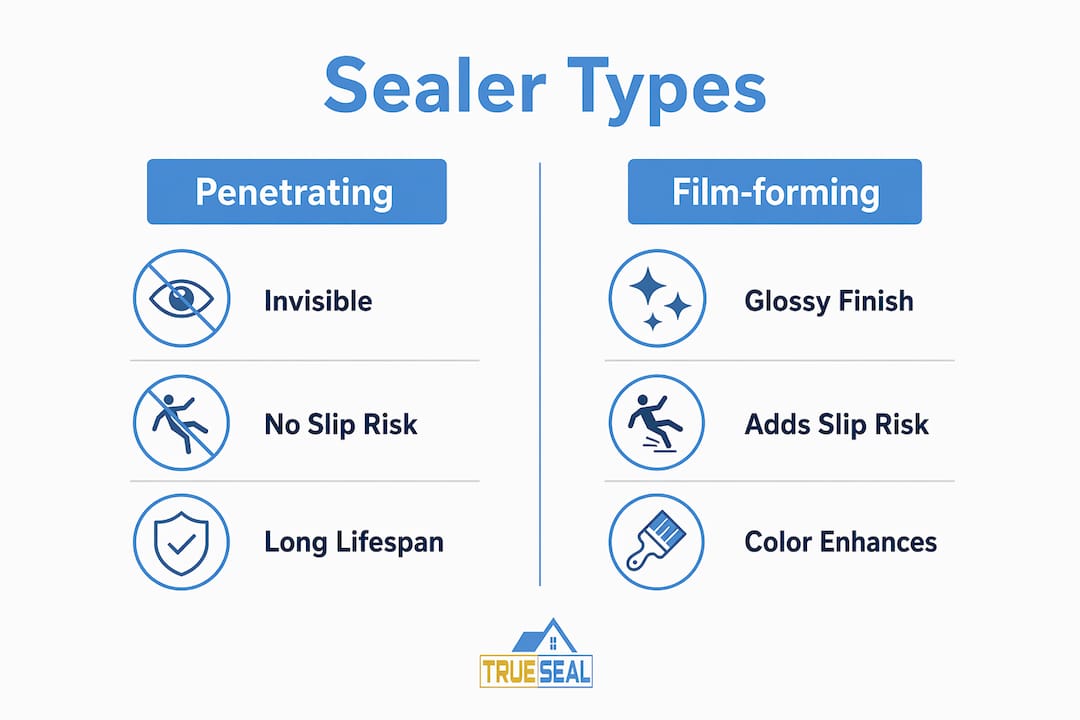
| Slip resistance | Unchanged — no added risk | Requires anti-slip additive when wet | | Reapplication | Clean and reapply; no stripping | May require stripping if peeling occurs |
The specific concrete sealing benefits worth knowing
ASCC guidance identifies the core protective and aesthetic gains from sealing:
Durability: Sealing slows freeze-thaw damage, spalling, and surface abrasion. In North Carolina’s humid subtropical climate, moisture infiltration is the primary driver of early concrete failure.
Stain resistance: Oil, grease, and chemical spills wipe off sealed concrete. On unsealed surfaces, those same contaminants soak into the pores permanently.
Water and chloride reduction: A sealed surface blocks road salt and de-icing chemicals from penetrating — the main cause of spalling in cold-weather months.
UV protection and color enhancement: Film-forming sealers with UV absorbers slow fading on decorative or stained concrete, preserving curb appeal for years longer.
Dust control: Interior garages and basements benefit from reduced surface dusting and salt bloom (efflorescence) when a densifier or penetrating sealer is applied.
Long-term value: Sealed driveways last 15–20 years or more with regular maintenance; unsealed ones often need significant repairs or replacement by year 10.
Pro Tip: Gloss does not equal protection. Many shiny film-forming sealers require more frequent maintenance, can trap moisture on exterior surfaces, and increase slip risk when wet. Choose by performance first.
Which sealer type fits your surface and climate?
Choosing the wrong sealer is one of the most common and costly mistakes homeowners make. Here is how the main categories break down.
Penetrating sealers are the right choice for most exterior horizontal surfaces — driveways, patios, pool decks, and walkways. A high-solids silane/siloxane formulation repels water and salt, allows the concrete to breathe, and typically lasts 7–15 years without stripping. For Wake County’s freeze-thaw cycles, this category is the safer exterior choice.
Film-forming sealers earn their place on decorative stamped concrete, stained patios, and garage floors where color enhancement or chemical resistance matters more than breathability. Acrylics are among the affordable options and typically require periodic reapplication within a few years. Epoxies and polyurethanes offer stronger abrasion and chemical resistance but are not UV-stable outdoors without a polyurethane or polyaspartic topcoat. For decorative surfaces, a stamped concrete sealing guide can help you match the right product to the finish.
Specialty options include lithium siliconate densifiers for polished concrete floors (they harden the surface and eliminate dusting) and high-build polyaspartics for commercial floors that need fast cure times and heavy-duty wear resistance.
Sealer type | Best use | Typical lifespan |
Silane/siloxane penetrating | Exterior driveways, patios, walkways | Multiple years |
Acrylic film-forming | Decorative/stamped concrete, pool decks | typically a few years |
Epoxy/polyurethane | Garage floors, commercial interiors | several years |
Polyaspartic | Commercial floors, fast-turnaround projects | several years |
Pro Tip: For paver patios and walkways, paver-specific sealing requires polymeric sand re-installation before sealing — skipping this step leads to joint erosion and weed growth regardless of sealer quality.
Downsides and risks of sealing (and how to avoid them)
Sealing done wrong creates problems that are more expensive to fix than the original unsealed surface. The most common risks:
Slip hazard: High-gloss film-forming sealers on wet surfaces can be dangerously slippery. Add an anti-slip aggregate to the final coat on any horizontal exterior surface, or choose a matte or satin finish.
Trapped moisture and spalling: Film-forming sealers applied to exterior surfaces that see freeze-thaw cycles can trap moisture and cause catastrophic spalling. Use breathable penetrating sealers on all exterior concrete in climates with cold winters.
Delamination from incompatible products: Reapplying a different sealer chemistry over an existing coating that was not stripped or neutralized often causes peeling. A professional assessment of the existing sealer type is required before any recoat.
Maintenance burden: Acrylics require periodic reapplication within a few years. If you choose a film-former for an exterior surface, build that reseal schedule into your maintenance budget.
Skipping the compatibility check before resealing is the single most common cause of sealer failure we see on residential driveways. Homeowners apply a new product over an old one, and within a season, the coating peels. Stripping first costs more upfront but far less than redoing the job.
When to seal concrete: timing, cure windows, and North Carolina seasons
Getting the timing right protects your investment before the sealer is even applied.
Confirm temperature: Most sealers require air and surface temperatures between 50°F and 90°F during application and for several hours after. Applying below 50°F risks improper curing.
Check for rain: Allow at least 24–48 hours of dry weather before and after application. Moisture on the surface or in the forecast is the most common cause of sealer failure on new jobs.
Wait on new concrete: New pours typically need a minimum of 28 days to cure before sealing, though some penetrating sealers specify longer wait times. Always confirm with the product data sheet.
Choose the right season in Wake County: Late spring (April–May) and early fall (September–October) offer the most reliable temperature and humidity windows. Avoid July and August when humidity is highest and afternoon temperatures regularly exceed 90°F. Avoid December through February when freeze-thaw risk is highest.
Verify surface dryness: Even if it has not rained recently, concrete can hold subsurface moisture. A plastic sheet taped to the surface overnight will show condensation if moisture is present.
Pro Tip: In North Carolina’s humid subtropical climate, morning application is preferable to afternoon. Surfaces heat up quickly in direct sun, which can cause solvent-based sealers to bubble during application.
Is sealing concrete worth the cost?
The financial case for sealing is straightforward: sealing costs $0.50–$2.00 per square foot, while repairing or replacing damaged concrete runs $4–$15 per square foot or more. On a typical 500-square-foot driveway, professional sealing costs roughly $250–$1,000. Replacing that same driveway can cost $3,000–$8,000 or more.
Cost scenario | Estimated range (500 sq ft) |
Professional sealing | $250–$1,000 |
Full driveway replacement | $3,000–$8,000+ |
Viewing sealing as preventive maintenance rather than an optional upgrade is what changes the ROI calculation. A sealed driveway resealed every 2–5 years costs a fraction of what deferred maintenance eventually demands. For local cost context, see driveway sealing costs in Raleigh.
Factors that raise the cost: deep stains requiring chemical treatment, existing sealer that needs stripping, crack repairs before sealing, and high-traffic commercial surfaces requiring premium coatings.
How to tell if your concrete needs sealing right now
Run this quick diagnostic before calling anyone.
Clean the surface first. Surface contaminants give false results. Rinse or pressure wash the area and let it dry completely.
Perform the water-bead test. Pour a small amount of water onto the concrete in several spots. If it beads up and rolls off, the existing sealer is still active. If water soaks in or darkens the surface, protection has failed.
Look for visual signs: faded or chalky color, white salt deposits (efflorescence), dark absorption spots, surface dusting, or small pitting and spalling areas.
Check for cracks. Hairline cracks under 1/16 inch are normal. Cracks wider than 1/4 inch, especially growing ones, indicate water has already infiltrated beneath the slab.
If water soaks in or you see spalling, it is time to act. Sealing at this stage slows further deterioration, but cracks and spalling need patching first.
Ready to schedule? If your concrete failed the water-bead test, request a free quote from TrueSeal and get a surface assessment before the next rain season.
DIY vs. hiring a pro: when TrueSeal makes the difference
Small recoat jobs on clean, dry, film-forming surfaces are reasonable DIY projects for a careful homeowner. A 200-square-foot patio with a compatible acrylic sealer, no existing damage, and good weather conditions is manageable with a roller and a weekend afternoon.
Call a professional when:
The surface has deep stains, existing sealer of unknown type, or visible spalling
The job involves a full driveway, commercial lot, or decorative stamped concrete
You want a long-life system with a documented warranty
Prep requirements include pressure washing, crack repair, or chemical stripping
TrueSeal’s Clean & 7-Year Seal system is built for exactly these situations. It covers Cary, Apex, Raleigh, Morrisville, Holly Springs, and greater Wake County, and it pairs professional-grade surface preparation with high-performance sealers matched to North Carolina’s climate.
Pro Tip: Moisture management starts at the surface but extends into the home. If you are dealing with moisture intrusion around your foundation or slab edges, understanding how insulation controls moisture can help you address the full picture.
What a quality professional sealing job actually looks like
A professional job is not just applying sealer. The prep work is what separates a durable result from a job that fails within a season.
Pressure washing and stain removal: The surface must be clean of oil, mildew, algae, and loose material before any sealer is applied. Skipping this step is the fastest way to seal in contamination and cause adhesion failure.
Crack and patch repairs: Cracks wider than hairline and any spalled areas need patching and curing before sealing. Sealer does not bridge structural damage.
Compatibility check: A contractor should identify the existing sealer type and determine whether stripping or chemical prep is needed to avoid delamination.
Moisture testing: Especially for interior slabs and garages, moisture vapor emission must be checked before applying any film-forming product.
Documented cure and return-to-traffic windows: A quality contractor tells you exactly when foot traffic and vehicle traffic can resume.
Pro Tip: Ask any contractor for a written prep checklist and the specific product names they plan to use. A contractor who cannot name the product has not thought through the compatibility question.
Key Takeaways
Sealing is the most cost-effective maintenance step for any exterior concrete surface, and the water-bead test tells you in two minutes whether yours still has protection.
Point | Details |
Sealing is worth it | Sealing costs $0.50–$2.00 per sq ft; repairs or replacement run $4–$15 per sq ft or more. |
Run the water-bead test | Clean the surface first, then pour water on it — absorption means protection has failed. |
Match sealer to surface | Penetrating silane/siloxane for exteriors; film-forming acrylics or epoxies for decorative/garage floors. |
Reseal on schedule | Most residential concrete benefits from resealing every 2–5 years; penetrating sealers can last 7–15 years. |
TrueSeal’s Clean & 7-Year Seal | TrueSeal’s system pairs professional prep with long-life sealers matched to Wake County conditions. |
Our perspective on what homeowners get wrong
The most common mistake we see is choosing a sealer based on how it looks in the bucket rather than what the surface actually needs. A high-gloss acrylic might look impressive on a driveway, but in Wake County’s climate — with summer humidity, occasional hard freezes, and heavy rain — that same product can trap moisture, peel within two seasons, and leave the surface in worse shape than before.
The second mistake is skipping prep. A sealer applied over a dirty, contaminated, or incompatible surface will fail. Every time. The prep is not the boring part of the job — it is the job. When prep is done right and the correct sealer is matched to the surface, the results hold for years and the maintenance cost drops significantly.
Prioritize breathability and compatibility for any exterior surface. For decorative work, match the sealer to the finish goal and plan for the reapplication schedule that product requires. Proper surface preparation and the right system produce long-term savings that far outweigh the upfront cost of doing it correctly.
Schedule your concrete sealing service with TrueSeal
[
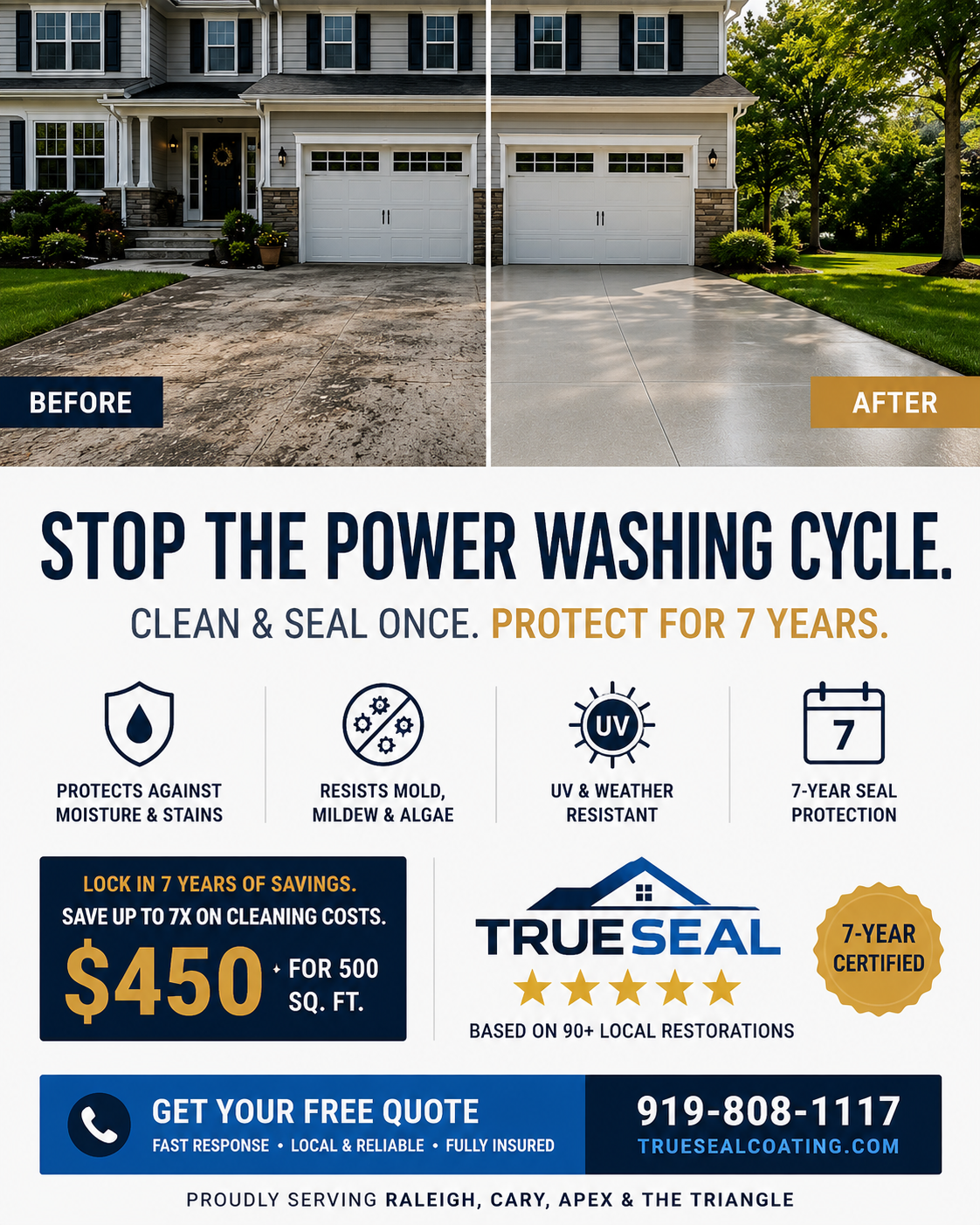
If your driveway, patio, walkway, or pavers no longer bead water, it is time for professional protection. TrueSeal’s Clean & 7-Year Seal system is designed specifically for North Carolina conditions — high humidity, freeze-thaw cycles, and the UV exposure that fades and weakens concrete faster than most homeowners expect. We serve Cary, Apex, Raleigh, Morrisville, Holly Springs, Fuquay-Varina, Wake Forest, Garner, and greater Wake County. Every residential job includes professional surface prep, product compatibility assessment, and precise application with minimal overspray. Commercial property managers and HOAs can learn more about commercial surface protection for parking lots, pavement systems, and multifamily communities.
Schedule Your Concrete Sealing Service — Request Your Free Quote Today.
Useful sources for homeowners who want to dig deeper
ASCC Comprehensive Sealer Selection & Application Guide — industry-standard guidance on sealer selection, performance criteria, and reseal intervals
Prosoco: Types of Concrete Sealers — contractor-focused breakdown of sealer performance and common application mistakes
Concrete Sealers Types & Applications Guide (YHOCA) — practical field guidance on sealer compatibility, prep requirements, and product selection
When to Seal Your Driveway: Signs It’s Time — homeowner-facing guide to diagnostics, timing, and cost framing
How Long Does Concrete Sealer Last: A Homeowner’s Guide — TrueSeal’s local guide to sealer lifespan and reseal schedules for Wake County conditions
Patio Sealing Options: A Homeowner’s 2026 Guide — detailed overview of sealer options for patios and decorative surfaces
FAQ
What are the main benefits of sealing concrete?
Sealing reduces water and chloride penetration, slows freeze-thaw damage and spalling, resists oil and stain absorption, and can enhance color on decorative surfaces. ASCC guidance also cites dust inhibition and reduced efflorescence as key benefits for interior and garage slabs.
What are the downsides of using concrete sealer?
High-gloss film-forming sealers increase slip risk on wet surfaces and can trap moisture on exterior concrete, leading to peeling or spalling in freeze-thaw climates. Applying the wrong sealer type, or layering an incompatible product over an existing coating without stripping, causes delamination.
What time of year is best to seal concrete in North Carolina?
Late spring (April–May) and early fall (September–October) offer the most reliable conditions in Wake County — temperatures between 50°F and 90°F, lower humidity, and a dry forecast window. Avoid mid-summer heat and winter months when freeze-thaw risk is highest.
Is sealing concrete worth the cost?
Yes, for most exterior surfaces. Sealing costs $0.50–$2.00 per square foot, while concrete repairs or replacement run $4–$15 per square foot or more — making regular sealing 5–10 times cheaper than fixing deferred damage.
Recommended


Comments