Concrete Sealing Near Me: When to DIY vs Call a Pro

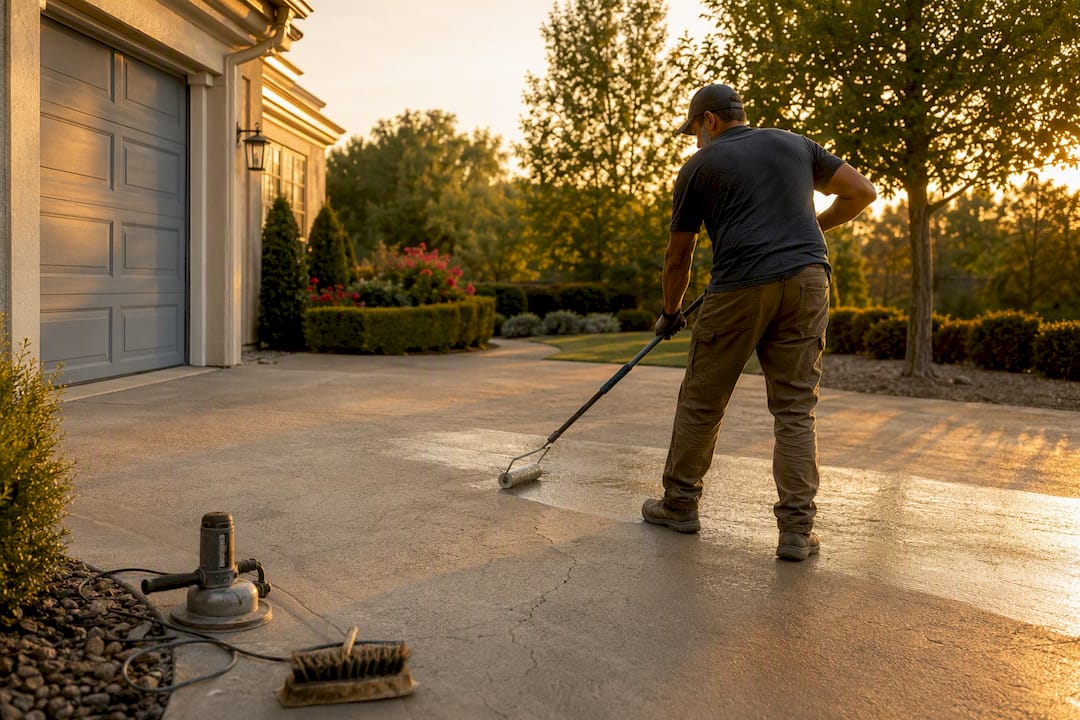
For most homeowners and property managers, hiring a local professional is the safer bet for protecting concrete. TrueSeal offers remote assessments and tailored sealing plans across Cary, Raleigh, and Wake County, so you get a real recommendation before anyone shows up with equipment.
DIY makes sense for a small, low-traffic patio or a simple walkway with no decorative finish. It stops making sense fast once you’re dealing with:
A property-managed or HOA-maintained community with shared liability
A large driveway or commercial walkway with heavy foot or vehicle traffic
Decorative, stamped, or colored concrete where the wrong sealer ruins the finish
Pro Tip: If you’re not sure which category your property falls into, send a few photos through TrueSeal’s remote assessment. You’ll get a real answer instead of a guess, and you can request a quote directly through the concrete and pavement services page.
Key Takeaways
Concrete sealing protects against water absorption, freeze-thaw damage, and staining, but only when the surface is properly prepped before the sealer goes on.
Point | Details |
Prep decides longevity | Mechanical grinding and cleaning matter more than the sealer brand for how long the finish lasts. |
Match sealer to surface | Penetrating, acrylic, and epoxy/polyurethane sealers each suit different surfaces and traffic levels. |
Timing depends on weather | Seal only after the minimum cure period, in dry conditions above roughly 50°F. |
DIY fits small, simple jobs | Save DIY for low-traffic patios; hire out for decorative, commercial, or large surfaces. |
TrueSeal offers remote planning | TrueSeal’s remote assessment builds a tailored prep and sealer plan for Cary, Raleigh, and Wake County properties. |
Table of Contents
What Concrete Sealing Does and Why It Matters
Sealing works by closing off the pores in concrete so water, salt, and oil can’t soak in and cause damage from the inside out. Sealing reduces water absorption and helps protect surfaces from freeze-thaw damage and staining, which is the main reason concrete sealing near me searches spike every spring and fall.
That protection translates into fewer repairs and a longer service life for the surface. A driveway that absorbs water in cold months risks cracking in the following freeze-thaw season due to moisture trapped inside. For commercial facility managers, sealing functions as preventive maintenance that’s a lot cheaper than replacing a cracked or spalled slab.
Surfaces that commonly get sealed include:
Residential driveways, patios, and walkways
Decorative and stamped concrete
Garage floors
Commercial walkways, entryways, and loading areas
Pool decks and pavers
Beyond durability, sealing also restores color and sheen that fade under UV exposure. Some sealers add a wet look or subtle gloss that noticeably improves curb appeal without changing the surface itself.
What Are the Different Types of Concrete Sealers?
The sealer family you choose determines how the surface looks, how it wears, and how much upkeep it needs. There are distinct sealer families with real tradeoffs for gloss, breathability, and durability, so it’s worth understanding the categories before you talk to a contractor.
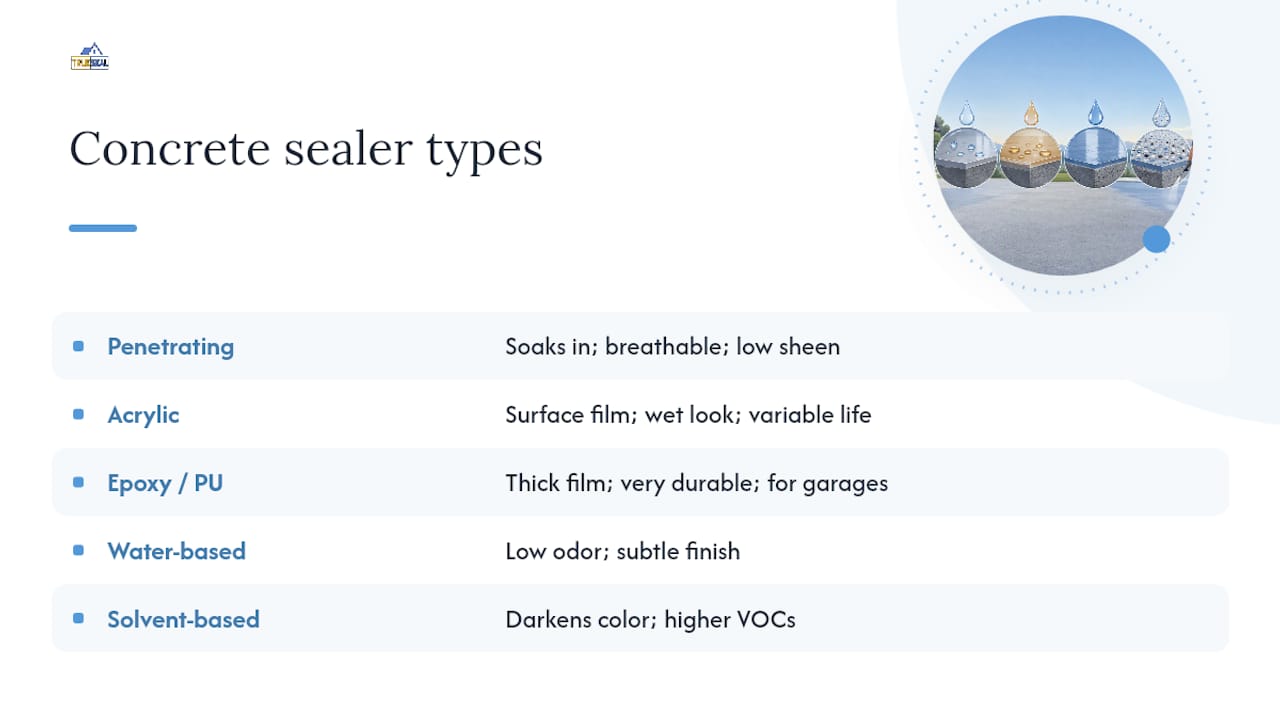
Penetrating sealers (silane, siloxane, or silane/siloxane blends) soak into the concrete rather than sitting on top. They protect against moisture while letting the slab still “breathe,” which matters in climates with real freeze-thaw swings. They don’t change the surface look much, which makes them a solid pick for driveways where you want protection without a glossy finish.
Acrylic sealers form a thin film on the surface and are the most common choice for a wet look or added sheen. They come in different gloss levels, and a slip-resistant additive is worth asking about for pool decks or sloped walkways. Big-box acrylics are a mid-tier product; professional-grade acrylics from concrete supply retailers tend to last longer.
Epoxy and polyurethane coatings are thicker, more durable systems typically used on garage floors and heavy-duty commercial surfaces that see constant traffic or chemical exposure. They cost more and require more careful surface prep, but they hold up under conditions a standard acrylic can’t.
Water-based vs. solvent-based comes down to look and application. Solvent-based products often darken concrete more and enhance color, but carry higher VOCs and a stronger odor during application. Water-based sealers are easier to clean up and lower odor, with a more subtle finish. Our breakdown of sealer types covers how each performs over time.
When Is the Best Time to Seal Concrete?
Timing greatly influences sealing success. New concrete requires a sufficient curing period before sealing to prevent trapped moisture that can cause surface defects like haze or peeling.
Once the concrete has cured, the application window depends on weather. Ideal conditions are temperatures reliably above roughly 50°F, with dry weather during the cure period that follows application. In Wake County, that generally means spring and fall are the safest windows, since summer humidity and winter cold both work against a clean cure.
How often you need to reseal depends on factors like traffic volume, sealer type, and current surface condition, rather than a fixed schedule.
Our timing guide walks through these factors in more depth, and our guide to sealer lifespan breaks down what actually shortens or extends a reseal cycle.
Is It Worth Sealing Concrete Yourself?
DIY works fine for a small patio slab with no decorative finish and light use. It’s a reasonable weekend project when the stakes of getting it wrong are low.
Where DIY tends to go sideways:
Trapped moisture. Applying sealer over a surface that isn’t fully dry or fully cured seals moisture in rather than keeping it out, which can cause cloudiness or peeling months later.
Uneven gloss. Rolling or spraying acrylic sealer unevenly leaves streaky, patchy sheen that’s obvious once the sun hits it.
Adhesion failure. Skipping proper prep means the sealer never bonds correctly, and it starts flaking or wearing unevenly within a season.
DIY sealing can save on labor but often requires significant time and attention to avoid errors that affect adhesion and appearance., and larger or decorative projects specifically benefit from professional-grade prep and application. That’s the gap TrueSeal fills. Instead of guessing at product and technique, a remote assessment gets you a tailored plan: send photos and basic measurements, and TrueSeal’s team identifies the surface condition, recommends the right sealer family, and flags any prep work needed before a crew ever arrives.
Pro Tip: If a driveway or patio has visible dark staining or a musty smell in shaded corners, mention it when you request your assessment. It could be early black mold on concrete rather than just dirt, and that changes the prep plan.
For anyone weighing a bigger DIY project against hiring out, the same logic that applies to door replacement applies here: the tools and material cost are only part of the equation once you factor in the risk of redoing the job.
How TrueSeal Approaches Concrete Sealing Differently
TrueSeal built its process around a simple observation: most concrete sealing near me searches happen because someone wants a straight answer, not a sales visit. The remote assessment exists to give that answer before any truck rolls out.
Here’s how it works. You send photos of the surface, its rough dimensions, and a short description of the wear you’re seeing, whether that’s dulling, staining, cracking, or visible mold in shaded spots. TrueSeal reviews that information and builds a protection plan specific to that surface, including which sealer family fits the concrete’s age, exposure, and use.
That plan starts with prep, not product. Mechanical grinding and thorough cleaning are often the difference between a sealer that bonds and lasts, and one that fails within a season. Pressure washing alone resets the surface look, but it doesn’t open the pores the way grinding does, and it doesn’t remove the thin weak layer of cement paste (laitance) that sits on top of new or worn concrete. TrueSeal treats grinding and cleaning as the foundation, not an optional upsell.
That focus on prep is also what separates a durable, water-repellent finish from a coat of sealer that looks good for one summer. TrueSeal’s work across Cary, Raleigh, and Wake County covers residential driveways and patios as well as commercial walkways and pavement, and every job starts from the same principle: protection comes from what happens to the surface before the sealer ever gets applied.
Specific highlights of the approach:
Remote assessment replaces an in-person estimate visit for most residential jobs
Surface prep (grinding, cleaning) is treated as a required step, not an add-on
Sealer selection is matched to the surface type and exposure, not a one-size-fits-all product
Service area covers Cary, Apex, Raleigh, and greater Wake County
Why Surface Prep Makes or Breaks the Job
Surface preparation is the single biggest factor in whether a sealer holds up, and it’s also the step most DIY jobs shortcut. Proper prep, usually mechanical grinding paired with thorough cleaning, is often the deciding factor between a sealer that lasts and one that fails.
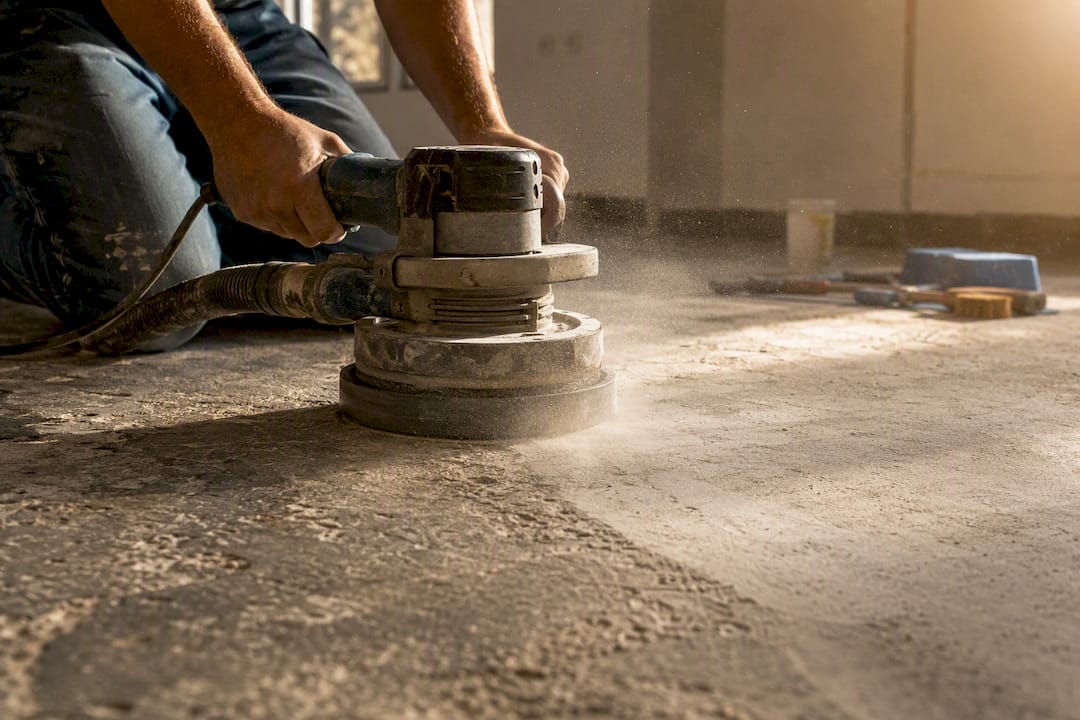
Concrete that hasn’t been prepped still has laitance on the surface, a thin, weak layer of cement and fine particles that rises during the pour. Sealer applied over that layer bonds to the laitance, not the concrete underneath, so it can flake or peel even if the application itself was done correctly. Grinding removes that layer and opens the concrete’s pores, giving the sealer something solid to grip.
Common prep methods include:
Mechanical grinding to remove laitance and open surface pores
Pressure washing or chemical cleaning to strip dirt, oil, and mildew before sealing
Crack and spall repair so the sealer isn’t applied over damage that will keep spreading
Etching (for some acrylic applications) as a lighter-duty alternative to grinding
For commercial and warehouse settings, some contractors pair mechanical grinding with sealing in a single system, sometimes called grind and seal, which reduces dust and gives a clean, low-sheen finish at a lower cost than full polishing. It’s a useful example of how far proper prep methods have come beyond a simple rinse and roll-on coat.
How Do You Find a Trustworthy Local Concrete Sealing Contractor?
Start with reviews, but read past the star rating. A five-star average built on a handful of reviews tells you less than a four-and-a-half-star average built on dozens, especially if you can find comments that mention prep work, follow-up, or how long the finish held up.
Look for these signals when comparing concrete sealing companies:
Specific service focus. A contractor who specializes in surface restoration and sealing usually has more depth in this one area than a general handyman or landscaping outfit that offers it as a side service.
Clear process before commitment. Reputable providers explain what they’ll assess and how, whether that’s an in-person walk-through or a remote assessment based on photos and measurements.
Local project history. Ask what kinds of surfaces they’ve worked on nearby: residential driveways, HOA common areas, commercial walkways.
Willingness to explain product choice. A contractor who can tell you why they recommend a penetrating sealer over an acrylic for your specific surface knows the material, not just the application.
Certifications vary by state and aren’t standardized the way they are in some trades, so treat them as a bonus, not a requirement. What matters more is whether the company can show you real examples of past work and answer specific questions about your surface without hedging.
What Should You Ask a Concrete Sealing Contractor Before Hiring?
A short list of direct questions filters out contractors who are guessing from ones who actually know the material. Ask each candidate:
What surface prep will you do before sealing, and why? If the answer is just “pressure wash,” that’s a signal they’re skipping the step that matters most for adhesion.
Which sealer family do you recommend for my surface, and why that? A contractor who can explain the tradeoff between penetrating and film-forming sealers for your specific driveway or patio understands the material.
How do you handle existing staining, cracking, or discoloration? Ask specifically about how they’d approach removing mold from concrete in shaded or damp areas if that’s relevant to your property.
What does your assessment process look like? Some companies require an in-person visit for every quote; others, like TrueSeal, can evaluate photos and measurements remotely and return a tailored plan.
What happens if weather delays the job? A contractor who has a plan for weather delays, rather than pushing ahead in the wrong conditions, is more likely to protect your surface than their own schedule.
These questions work whether you’re a homeowner comparing residential concrete sealing services or a property manager vetting a provider for a shared community space.
How Long Does a Professional Concrete Sealing Job Take?
The process generally moves through four stages, though the exact pace depends on surface size and condition. First comes the assessment: for TrueSeal, that’s typically photos and measurements submitted remotely, which speeds up the front end considerably compared to waiting on an in-person estimate visit.
Next is scheduling, which depends on weather windows more than anything else. Since sealing needs dry conditions and a temperature range that supports proper cure, a contractor may schedule around a forecasted dry stretch rather than the first open date on the calendar.
The job day itself covers prep and application: cleaning, grinding where needed, repairing any cracks or spalling, then applying the sealer in the recommended number of coats. Larger commercial surfaces or heavily worn driveways naturally take longer at this stage than a small, already-clean patio.
Finally, there’s cure time after application, during which the surface needs to stay dry and largely untouched by traffic. This is the stage most homeowners underestimate, since the sealer can look and feel dry on the surface well before it’s fully cured underneath.
Because weather and surface condition both swing the timeline, a contractor who gives you a realistic range rather than a single fixed date is being straight with you.
What Determines the Total Cost of Concrete Sealing?
The final cost of a concrete sealing job comes down to a handful of variables rather than a flat number, and understanding them helps you evaluate a quote instead of just comparing bottom lines.
Surface size and condition is the starting point. A larger surface takes more material and labor, and a surface with existing cracks, staining, or heavy laitance buildup needs more prep work before sealing can even begin.
Sealer type affects cost too. Penetrating sealers, acrylics, and epoxy or polyurethane systems all come at different price points, and professional-grade products from concrete supply retailers typically cost more upfront than consumer-grade options but last longer between recoats.
Prep requirements can add to the total if the surface needs grinding, crack repair, or mold and stain remediation before sealing. This is where a lot of surprise costs come from on other jobs, since a quote that skips prep entirely often looks cheaper but doesn’t hold up.
Access and site conditions matter for commercial jobs especially. A parking lot or walkway that needs to stay partially open during work, or a property with limited vehicle access, can affect labor time.
A contractor who walks you through which of these factors apply to your specific job, rather than quoting a single number with no breakdown, is giving you information you can actually evaluate.
What Are the Red Flags When Choosing a Concrete Sealing Service?
A few warning signs show up consistently among concrete sealing companies that cut corners:
No mention of surface prep at all. If a quote or sales conversation jumps straight from “we’ll pressure wash it” to “then we’ll seal it,” ask directly what happens to laitance and existing damage.
Vague or evasive answers about sealer type. A contractor who can’t name which sealer family they’re using, or why, likely isn’t matching the product to your surface.
Pressure to book immediately. Reputable providers can explain their process without pushing same-day commitment, especially for a job that depends on the right weather window.
No way to see past work. Whether it’s photos, local project history, or references, a contractor with no evidence of completed jobs nearby is a harder bet.
Unusually low quotes with no explanation. A price far below others in the area, with no clarity on what’s included, often means shortcuts on prep or a lower-grade sealer than you’d expect.
Trust your read on the conversation. A contractor who’s confident explaining their process usually knows the material well enough to back it up.
Why Most Concrete Sealing Advice Skips the Part That Matters
Most concrete sealing content online focuses on product comparisons: which sealer looks glossier, which one costs less per gallon. That’s not wrong, but it skips the part that actually determines whether a job lasts: surface prep.
The conventional advice treats sealing like a coat of paint, something you apply and walk away from. That framing sells DIY kits and one-size-fits-all contractor visits, but it’s why so many sealing jobs look great for one season and disappointing by the next. The sealer isn’t the problem in most of those cases. The surface underneath it was never properly prepped to accept it.
If there’s one thing worth prioritizing before anything else, it’s this: ask about prep before you ask about product. A contractor who leads with grinding, cleaning, and repair before ever mentioning which sealer they’ll use is thinking about the job the way a facility manager thinks about a commercial slab, as a long-term asset, not a cosmetic fix. That’s the standard TrueSeal builds every remote assessment around, and it’s the standard worth holding any local provider to.
— TrueSeal
Request a Remote Assessment From TrueSeal
TrueSeal is the specialized alternative to a generic contractor an in-person visit: instead of waiting on someone’s schedule for an in-person estimate, you send photos and measurements and get a tailored protection plan back, without guessing which sealer fits your surface.
[
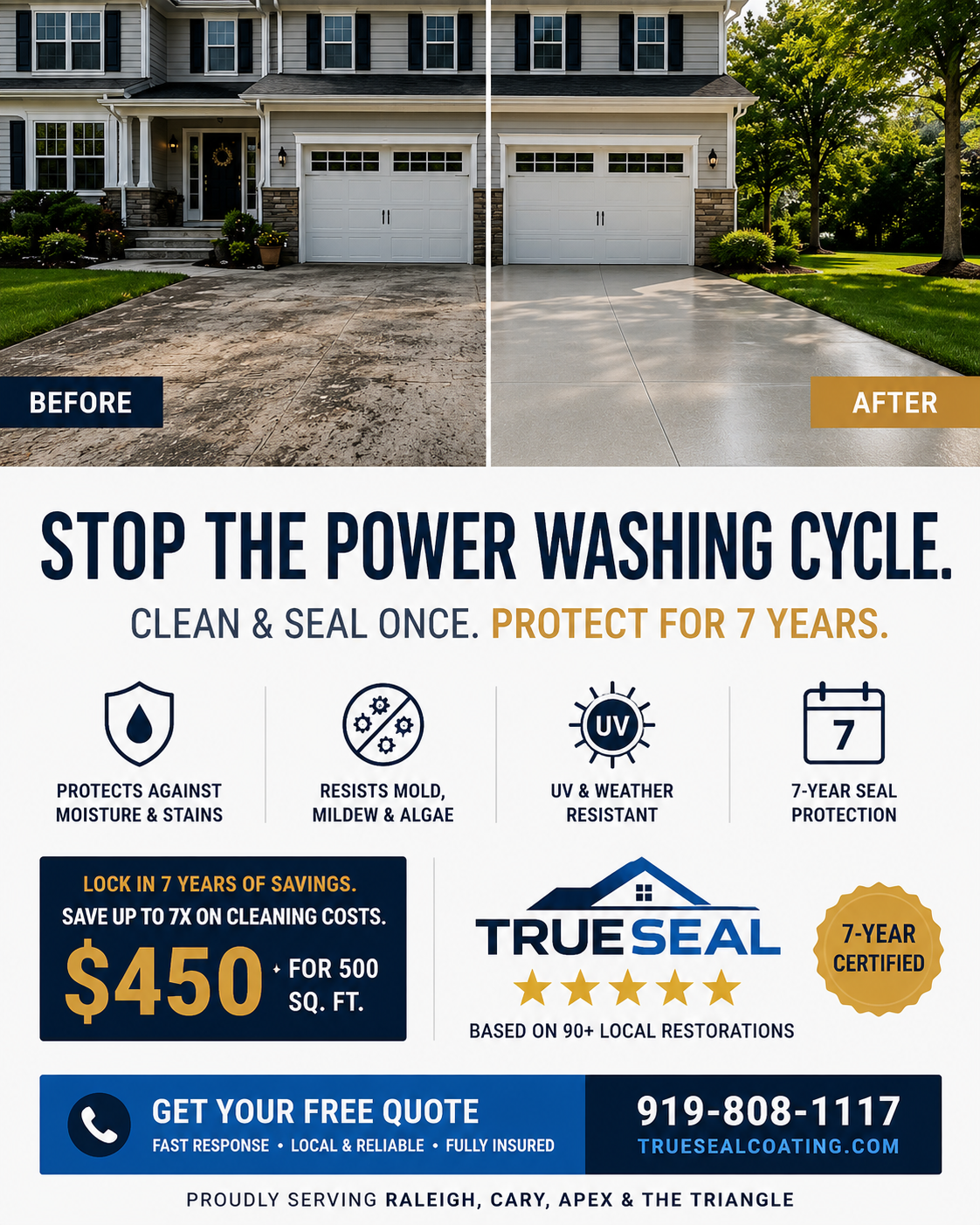
Requesting an assessment is simple. Share a few photos of the driveway, patio, or commercial surface you’re considering, along with rough dimensions and any visible issues like staining or cracking. In return, TrueSeal’s team identifies the right sealer family for that surface, flags any prep work needed before application, and outlines a plan specific to your property rather than a generic package.
Local crews across Cary, Raleigh, and Wake County handle the work once the plan is set, and the same team stays available for follow-up questions after the job wraps. Whether you’re protecting a single residential driveway or maintaining a shared commercial walkway for a property you manage, the process starts the same way: request your remote assessment through TrueSeal’s concrete and pavement page and get a real plan back, not a guess.
Sources
FAQ
How much does it cost to seal concrete?
Cost depends on surface size, condition, sealer type, and how much prep work is needed, so it’s best discussed directly with a local provider rather than estimated generically.
What time of year is best to seal concrete?
Spring and fall generally offer the most reliable window, since sealing needs temperatures consistently above roughly 50°F and dry weather during the cure period.
Is concrete sealing worth it?
Yes for most surfaces. It reduces water absorption, limits freeze-thaw and staining damage, and helps property owners avoid far costlier repairs down the line.
Can you seal concrete yourself?
Small, low-traffic surfaces like a simple patio are reasonable DIY projects, but larger, decorative, or commercial surfaces benefit from professional prep and application, which is where a provider like TrueSeal fits.


Comments