Raleigh Homeowners: Photo Quote for Exposed Aggregate Sealing


Yes, sealing exposed aggregate is usually the right call. It protects the finish, cuts down on staining, deepens the color of the stone, and extends the surface’s service life, a point backed by both ConcreteNetwork’s sealing guidance and the ASCC sealer selection guide. The catch is that the job has to be done at the right time, with the right product, on a surface that’s actually dry. Get that part wrong and sealing causes more problems than it solves.
TL;DR:
Proper timing is crucial, requiring the concrete to be fully cured and moisture tested before sealing; sealing too early traps water and causes problems.
Solvent-based acrylics suit high-traffic or sun-exposed surfaces due to their durability and stain resistance, while penetrating sealers are better for areas needing breathability and slip resistance.
Resealing every three to five years is recommended, with water-beading tests guiding when the surface needs reapplication, especially after harsh weather or spills.
A correct sealing process involves thorough cleaning, complete drying, careful product application, and adherence to manufacturer instructions to avoid issues like moisture blushing or uneven gloss.
DIY sealing often fails due to poor prep or timing; professional assessments, such as remote photo reviews, can ensure a tailored, effective sealing plan.
Table of Contents
What Are the Benefits of Sealing Exposed Aggregate?
Exposed aggregate looks tough because it is tough. But that stone-and-mortar surface still has a porous cement paste holding it together, and water is what eventually breaks that paste down. Sealing closes off that vulnerability instead of just masking it.
Film-forming acrylic sealers create a protective layer that helps guard against spalling, dusting, freeze-thaw damage, staining, and abrasion, while also deepening the natural color of the aggregate, according to ConcreteNetwork. That’s the whole case in one sentence: less structural damage, less staining, better looks. Here’s how that plays out on a real Raleigh driveway or patio:
Less freeze-thaw cracking. Water that soaks into unsealed concrete expands when it freezes, and Raleigh gets enough cold snaps each winter to make this a real risk over several seasons.
Fewer stains that actually stick. Oil drips, tree sap, red clay runoff. A sealed surface lets you wipe most of it away instead of watching it set into the pores.
Richer color, wet-look or matte. Sealing brings out the natural tone of the stone. Some homeowners want the glossy “wet” look; others prefer a matte finish that hides tire marks better.
Less dusting and crumbling at the surface. Unsealed concrete sheds fine particles over time as the top layer wears. Sealing slows that breakdown.
There’s a trade-off worth knowing about before you pick a finish: higher-gloss sealers look sharper wet or after rain, but they can also get slicker underfoot than a matte or low-sheen product. For a pool deck or a walkway that gets a lot of foot traffic in wet shoes, that trade-off matters more than it does on a driveway.
Pro Tip: Test whether a surface actually needs resealing with a simple water-beading check. Pour a small cup of water on the concrete. If it beads up and sits on the surface, the seal is still working. If it soaks in within a minute or two, the surface is due for attention.

The real payoff shows up over years, not days. A driveway that never gets sealed tends to show pitting, discoloration, and crumbling edges well before a comparable sealed surface does, simply because it’s been absorbing water and freeze cycles the whole time instead of shedding them.
Which Sealer Type Is Best for Exposed Aggregate?
Not every sealer belongs on every surface, and this is where a lot of DIY jobs go sideways. The choice comes down to two questions: how glossy do you want it, and how much traffic and sun will it take?
Solvent-based acrylics tend to deliver a longer-lasting wet-look finish and stronger resistance to stains on exterior surfaces, while water-based acrylics have lower odor, easier cleanup, and often need reapplication sooner, according to sealer selection guidance from Metropolitan Materials. Neither is universally “better.” It depends on the surface and how you use it.
There’s also a structural choice underneath the gloss question:
Film-forming acrylics sit on top of the surface, sealing pores and enhancing color, which is the standard choice for driveways, patios, and walkways where appearance matters as much as protection.
Penetrating silane or siloxane sealers soak into the concrete instead of coating it. They protect against water intrusion without changing the surface look much, and they let the concrete breathe, which matters in areas prone to moisture buildup underneath.
For high-traffic driveways, professionals often lean toward solvent-based acrylics because of their adhesion and gloss retention. For pool decks or any area where slip resistance is a priority, a lower-gloss penetrating system, or an acrylic with an anti-slip additive mixed in, is the safer route.
When comparing products, prioritize a few specific attributes over marketing language: non-yellowing formulas, UV stability so the finish doesn’t degrade under direct sun, recoatability without stripping the old layer first, and genuine stain repellency rather than just a shine. Manufacturer examples formulated specifically for exposed aggregate, such as Brickform Gem-Seal and Aggreseal Supreme, each carry their own temperature and dry-time requirements, so read the label before you buy, not after.
Pro Tip: Always test a sealer on a small, inconspicuous patch first. Let it dry fully and check the color and sheen in daylight before committing to the whole surface. What looks right on the can can look very different on your specific aggregate mix.
When Is the Right Time to Seal Exposed Aggregate?
Timing wrecks more sealing jobs than bad products do. New concrete needs to cure fully before it ever sees a sealer, and even established surfaces need the right weather window.
Let new concrete cure first. Industry best practice generally calls for a minimum curing period, often around a month, before sealing new pours, since sealing too early can trap moisture that never fully escapes.
Run the plastic-sheet moisture test. Tape a small square of clear plastic to the surface and leave it for about an hour. If moisture beads up underneath, the surface is too damp to seal, according to moisture-testing guidance from Pecora. Run this test in several spots, including low areas, shaded corners, and near edges, since moisture rarely sits evenly across a whole slab.
Pick a mild, dry stretch. Aim for moderate temperatures, avoid rain, fog, or high wind in the forecast for at least a day before and after application.
Plan around Raleigh’s seasons. Spring and fall generally offer the steadiest conditions locally. Peak summer humidity and sudden winter cold both complicate cure times, which is worth factoring into when you schedule a Raleigh sealing job.
What Does a Proper Sealing Job Actually Look Like?
If you’re hiring this out, or considering doing it yourself, this is the sequence a job should follow. Skipping steps here is the single biggest reason sealing jobs fail early.
Inspect the surface first. Walk the whole area looking for cracks, loose or popped-out aggregate, and any remnants of a previous coating that’s peeling or flaking. Sealing over a failing old coat just locks the problem in.
Clean thoroughly. Oil stains need a degreaser, not just water. Efflorescence, that chalky white mineral residue, needs to be scrubbed off separately. Pressure washing alone often isn’t enough to prep a surface for sealing, since it removes surface grime but doesn’t address embedded oils or old coating residue.
Use the right pressure-wash settings. Low-to-medium PSI with a follow-up neutralizing rinse removes mortar residue without loosening the aggregate itself. Overly aggressive washing or abrasive blasting can knock stones loose, according to StoneStyling’s cleaning guidance.
Let it dry completely. This usually takes a full day or two depending on humidity. Rushing this step is where most blushing problems start.
Retest for moisture. Run the plastic-sheet test again right before sealing, even if the surface looks dry. Looks are deceiving with concrete.
Choose your application method. A pump sprayer gives even coverage over large areas like driveways and parking pads with less physical effort. A short-nap roller gives more control on smaller patios or where you need to work sealer into deeper aggregate texture. Both work; the choice depends on surface size and texture.
Apply in thin, even coats. A combined approach, cleaning plus a test patch plus two thin coats, produces more consistent results than one heavy application, according to ConcreteDecor’s application guidance. Follow the manufacturer’s spread rate and avoid overlap marks from sprayer or roller passes.
Respect recoat and dry-to-traffic windows. Most sealers need a defined window between coats and a longer window before foot or vehicle traffic resumes. This varies by product, so the manufacturer’s label is the final word, not a general rule of thumb.
Check the finished work. A properly sealed surface should show uniform sheen across the whole area, good adhesion with no lifting at the edges, no cloudy blushing, and no visible roller or spray lines.
Pro Tip: If you see uneven gloss patches a day after sealing, that’s usually a sign of inconsistent coverage, not a bad product. It’s one of the easiest things to catch early and the hardest to fix once a second coat goes down over it.
What Can Go Wrong When Sealing Exposed Aggregate?
Most sealing failures trace back to one of a handful of predictable mistakes, and nearly all of them are preventable with the right prep.
Moisture blushing. Sealing over damp concrete traps moisture underneath, producing a milky, hazy look. This is a common failure even on surfaces that seemed properly prepped, and it almost always ties back to skipping the moisture test.
Yellowing over time. Cheaper or UV-unstable formulas can yellow under direct sun exposure, especially on south-facing patios that get full-day light.
A slippery finish. High-gloss sealers look great but can turn dangerous on pool decks or steps if slip resistance wasn’t part of the product choice.
Sealing over contaminants. Oil residue, old failing coatings, or efflorescence left in place will cause adhesion problems and premature peeling, regardless of how good the sealer is.
Knowing when to call a pro. If a previous DIY seal job is already failing, or the surface has structural cracking beyond cosmetic wear, that’s the point to bring in someone with experience diagnosing the surface, not just applying product to it.
How Often Should You Reseal Exposed Aggregate?
Exposed aggregate is a genuinely low-maintenance surface, but “low-maintenance” doesn’t mean “no maintenance.” Most decorative exposed aggregate needs resealing roughly every three to five years, though heavy vehicle traffic, constant sun exposure, deicing salt use in winter, and oil spills can all shorten that window considerably.
The water-beading test covered earlier is the simplest way to know where you stand. If water still beads and sits on the surface, you’ve got time. If it soaks in fast, don’t wait for visible damage before scheduling a reseal.
A few habits keep the surface in better shape between sealings:
Sweep or rinse off debris regularly rather than letting leaves and organic matter sit.
Address oil or grease spots quickly with a degreaser rather than letting them set in.
Keep a simple record of the date you last sealed and which product was used, so the next reseal (yours or a pro’s) starts from known information instead of guesswork.
Exposed aggregate surfaces are rugged by nature, but that ruggedness still benefits from periodic sealing to fend off moisture intrusion, staining, and wear over the long run.
How TrueSeal Approaches Exposed Aggregate Sealing
Most sealing quotes start with someone driving out, walking the property, and guessing at square footage before they’ve even opened a bucket. TrueSeal starts differently. Our remote assessment process lets you send photos of your driveway, patio, or walkway and receive a tailored protection plan without waiting on a site visit, which cuts out a lot of the back-and-forth scheduling that slows this work down.
We also focus on water-repellent performance, not just surface shine. A finish that looks good on day one but doesn’t actually shed water is a cosmetic fix, not a protective one. TrueSeal’s approach treats the seal as infrastructure for the surface, not just a coat of gloss, which is what actually extends the life of the concrete underneath.
Every job includes a workmanship check before it is considered finished, with availability afterward if something doesn’t look right.
— TrueSeal
Get an Exposed Aggregate Sealing Quote for Your Raleigh Property
This service offers a practical alternative to guessing your way through a DIY sealing job or gambling on a contractor who shows up without ever really assessing your surface first. By sending photos of your driveway, patio, or walkway, you can get a plan built around the actual aggregate, sun exposure, and traffic patterns, not a generic estimate.
[
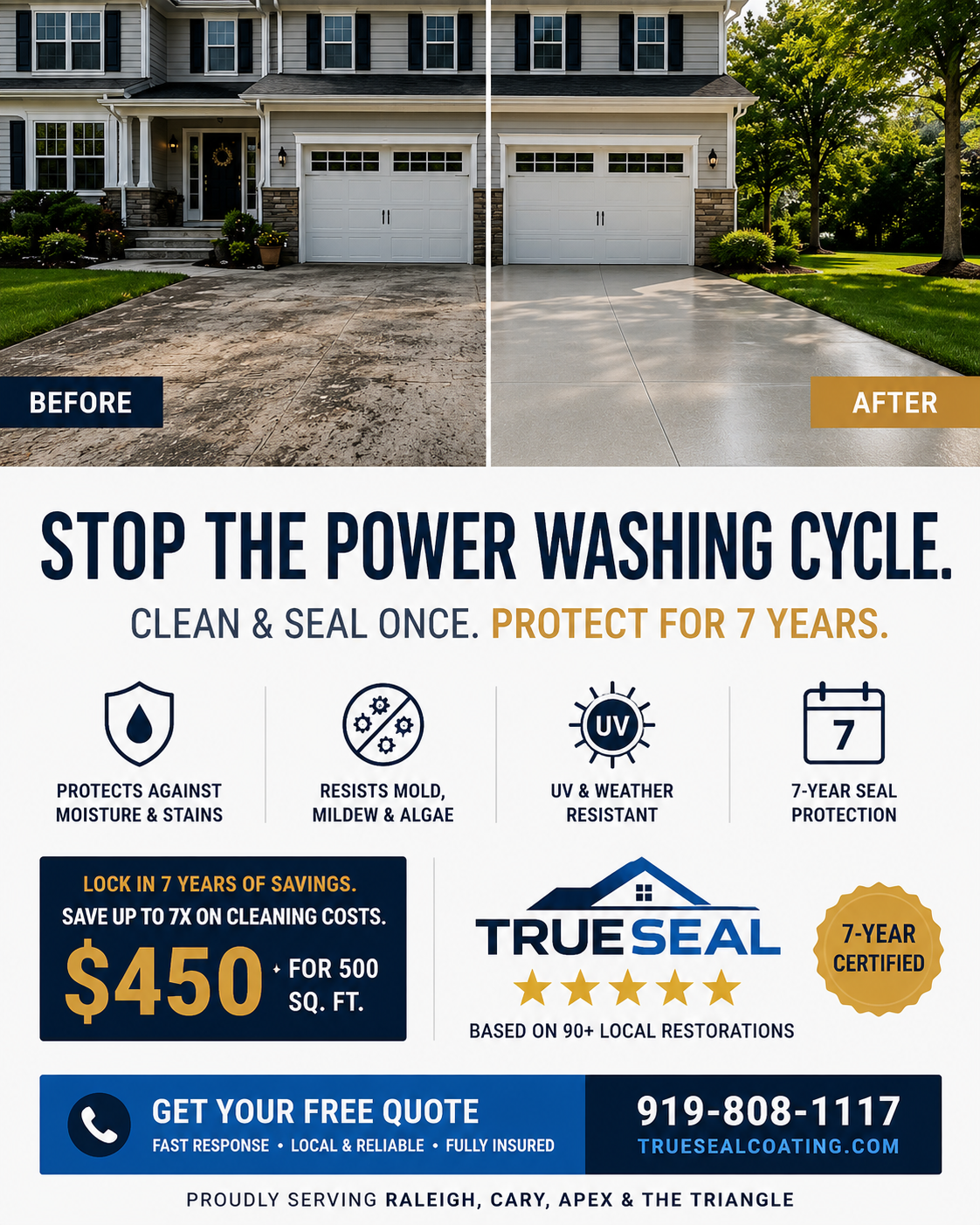
Here’s what that looks like in practice: you submit photos, the surface condition is assessed and the sealer chemistry recommended to fit the specific exposure and use, with scheduling around local weather windows so the application occurs when conditions support a good cure. No site visit required just to get a number. For homeowners specifically, our residential services page breaks down what to expect start to finish, and if your aggregate surfaces sit alongside other hardscape features like pavers or brick walkways, our hardscape enhancement page covers those too.
If your exposed aggregate is showing dullness, absorbing water instead of beading it, or just hasn’t been touched in a few years, request your photo-based quote through TrueSeal’s concrete and pavement service page and get a plan built around what your surface actually needs.

Sources
Technical claims in this article draw on the ASCC sealer selection and application guide, which covers matching sealer chemistry to surface and climate conditions, and ConcreteNetwork’s guidance on exposed aggregate sealing, which details protective benefits and application methods. Pecora’s moisture-testing guidance informs the plastic-sheet dryness check, and ConcreteDecor’s application walkthrough supports the step-by-step process outlined above.
FAQ
How Often Should Exposed Aggregate Be Sealed?
Most exposed aggregate surfaces need resealing every three to five years, though heavy traffic, direct sun, and deicing salts can shorten that interval. A simple water-beading test tells you where your surface currently stands.
Should Exposed Aggregate Concrete Be Sealed?
Yes. Sealing protects against water penetration, freeze-thaw damage, staining, and dusting, while also enhancing the natural color of the aggregate. TrueSeal and industry guides from ConcreteNetwork and the ASCC both treat sealing as standard practice for exterior exposed aggregate.
What Are the Downsides of Exposed Aggregate Concrete?
Unsealed exposed aggregate is more vulnerable to water intrusion, staining, and surface dusting over time. Once sealed, the main risks shift to application mistakes, like moisture blushing from sealing a damp surface or reduced slip resistance from a high-gloss finish on a pool deck or walkway.
How Long Does It Take for Exposed Aggregate Sealer to Dry?
Dry-to-touch time is usually a matter of hours, but full cure and dry-to-traffic timelines vary by product and should always follow the manufacturer’s label instructions. Humidity, temperature, and the number of coats applied all affect how long the surface needs before it can handle foot or vehicle traffic.


Comments