Parking Lot Striping in Raleigh: What Commercial Owners Need

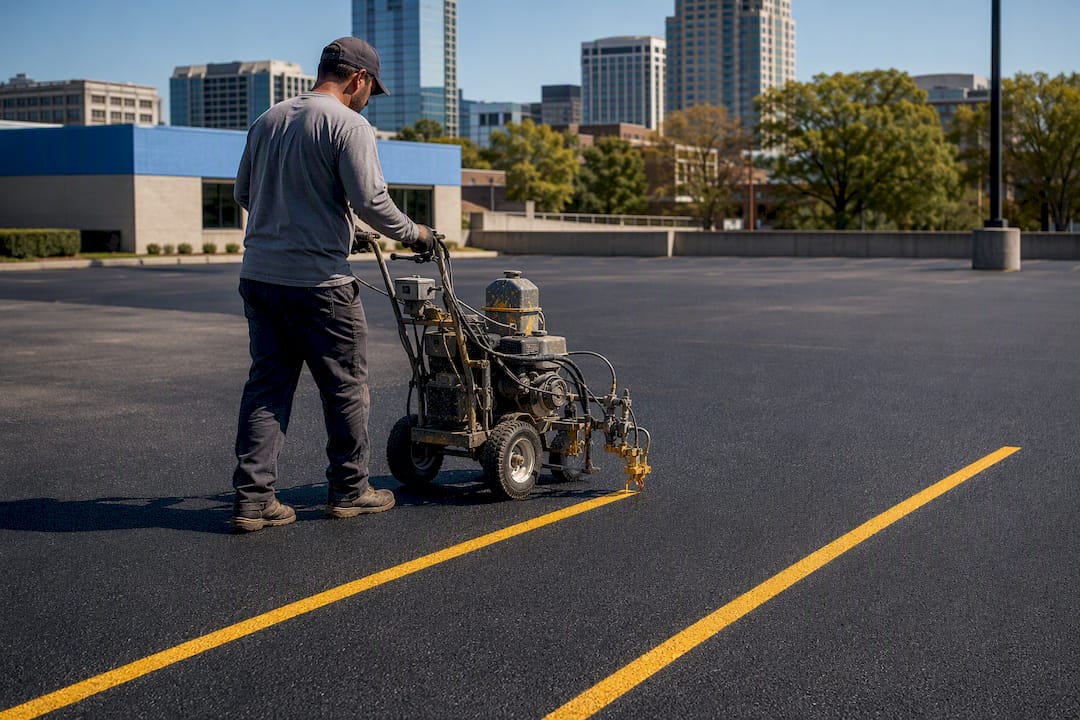
For commercial properties in Raleigh, professional striping paired with commercial-grade sealcoating preserves pavement, restores curb appeal, and keeps your lot ADA compliant. TrueSeal handles both as a local specialist serving Raleigh and Wake County, with an ADA-aware approach to restriping and a remote assessment process that gets you a quote without waiting on a site visit.
What that looks like in practice:
ADA-aware restriping that accounts for stall counts, van-accessible spaces, and access aisles
Commercial-grade sealcoating that protects asphalt from oxidation, water intrusion, and UV wear
Remote assessment so you can get scoped and quoted from photos and a site plan, no on-site walk required
Pro Tip: Schedule striping and sealcoating work during off-peak hours or a slow business day. Tenants and customers barely notice the crew was there, and the surface gets the cure time it needs without cars driving over fresh lines.
Call TrueSeal or request a quote for your commercial pavement to get a scoped assessment started this week.
Key Takeaways
Professional parking lot striping in Raleigh works best when paired with sealcoating and scoped correctly against ADA and UDO requirements from the start.
Point | Details |
ADA stall counts are per lot | Calculate accessible spaces for each parking facility separately, not by total site capacity. |
Alterations trigger new rules | Resurfacing or adding spaces counts as an alteration, unlike routine repainting. |
Non-standard layouts need an engineer | Raleigh’s UDO requires licensed NC engineer sign-off on atypical stall or aisle dimensions. |
Pair striping with sealcoating | Fresh lines on a properly sealed surface last longer than striping alone. |
TrueSeal offers remote assessment | Send photos and a site plan to get a scoped quote for Raleigh and Wake County commercial lots. |
Table of Contents
What Do Professional Striping Services Cover in Raleigh?
Striping is more than repainting faded lines. For commercial lots in Raleigh, it typically covers:
Standard parking stall lines and double striping
ADA-compliant accessible stalls with proper van-accessible dimensions
Fire lane markings and curb painting
Directional arrows and traffic flow indicators
Crosswalks and pedestrian zones
Parking stops, bollards, and wheel stops
Industry practitioners increasingly treat striping as a system-level safety measure. Clearly defined crosswalks, stop bars, and fire lanes reduce pedestrian risk and clarify how traffic moves through a lot, which matters as much in a busy retail center as it does in an office park with a single entrance.
Most Raleigh properties benefit from bundling striping with related pavement maintenance. TrueSeal pairs restriping with commercial-grade sealcoating, crack filling, and surface cleaning, since fresh lines on a deteriorating surface don’t hold up nearly as long.
One clarification worth making up front: TrueSeal does not perform paving, structural asphalt repair, or general contracting work. The focus stays on surface protection, restoration, and marking, which is a different scope than a paving company and a different set of tools and materials entirely.
What ADA and Raleigh UDO Rules Apply to Restriping?
Restriping a commercial lot in Raleigh isn’t just a paint job. Two separate rulebooks apply, and missing either one can mean redoing the work.
Accessible stall counts are calculated per lot, not per site. The ADA Standards for Accessible Design require you to figure the minimum number of accessible spaces for each parking facility separately, even if your property has multiple lots.
The ADA Business Brief lays out a scoping table tying total spaces to minimum accessible stalls: 1 to 25 spaces requires 1 accessible stall, 26 to 50 requires 2, and the ratio continues upward from there, per the ADA Business Brief on restriping.
Alterations trigger new obligations that routine repainting doesn’t. Resurfacing a lot or adding parking spaces counts as an alteration under Access Board guidance, which means you may need to add accessible spaces you didn’t previously have. Simply repainting existing lines generally doesn’t trigger that requirement.
Raleigh’s Unified Development Ordinance governs layout, not just counts. UDO Sec. 716 covers vehicle parking location and layout, and any non-standard stall or aisle dimension needs plans prepared and sealed by a licensed North Carolina engineer.
One number worth remembering: a a lot with a few dozen spaces typically needs multiple accessible stalls under ADA scoping. Get the count wrong on a restripe and you’re looking at a redo, not a minor fix.
If your property has mixed uses or an unusual layout, check required parking calculations under UDO Sec. 7.1.2 before finalizing a striping plan. It’s a five-minute lookup that saves a lot of rework later.
Should You Repaint, Restripe, or Add Sealcoating First?
The line between “just repaint it” and “this needs a full restripe” comes down to one distinction: maintenance versus alteration.
Routine repainting of existing lines in their existing locations is normal maintenance and generally doesn’t trigger new ADA obligations.
Resurfacing, restriping after a sealcoat, or adding spaces counts as an alteration, which can require added accessible stalls you didn’t need before.
Faded or unreadable ADA markings, widespread surface cracking, or any layout that no longer matches your current accessible-space count are all signs you need more than a quick repaint.
Pairing a restripe with sealcoating tends to produce a better long-term result than striping alone. A properly cured sealcoat gives new lines a cleaner, darker surface to bond to, and it protects those fresh markings from the oxidation and UV exposure that fade paint prematurely on bare asphalt.
Pro Tip: If your lot hasn’t been sealcoated in several years, ask about doing it before the restripe rather than after. Striping over a freshly sealed surface generally looks sharper and lasts longer than striping first and sealing around it later.
How Does the Assessment and Striping Process Work?
TrueSeal’s process starts remotely, which cuts out the scheduling back-and-forth most property managers dread.
Send photos and a site plan. Current striping condition, problem areas, and a basic layout let TrueSeal scope the work without a site visit.
Get a scoped assessment back. The remote review identifies what’s maintenance, what’s an alteration under ADA rules, and whether sealcoating or crack filling should happen first.
On-site work begins with surface prep. That means cleaning, crack filling where included, and sealcoating if it’s part of the job, with appropriate cure time before anything gets painted.
Striping and signage go down last. Stall lines, ADA markings, fire lanes, and any required signage get applied once the surface is ready.
You get documentation when it’s done. ADA marking confirmation, before-and-after photos, and maintenance recommendations for the next service window.
Accessible stalls added during a restripe should sit on the shortest accessible route to the entrance, and if a property has multiple entrances, those stalls should be dispersed rather than clustered in one spot. That detail gets documented in the final deliverables, including signage and access aisle dimensions.
That last point matters more than it sounds. A lot with all its accessible stalls crammed near one entrance and none near a secondary entrance can technically have “enough” stalls and still fail the intent of the requirement.
Why Work With TrueSeal for Raleigh Pavement Maintenance?
TrueSeal built its process around the parts of commercial pavement maintenance that usually cause the most friction: scheduling, scope confusion, and durability that doesn’t hold up past one season.
Remote assessment means no waiting on a site visit just to get a scoped quote
Durable, protective finish on sealcoating work designed to hold up against Wake County’s weather swings
Documented process with before-and-after photos and maintenance recommendations, not a handshake and a hope
Local service area covering Raleigh, Cary, Apex, and the rest of Wake County
Pro Tip: Ask any provider, including TrueSeal, for photo documentation of past commercial jobs in Raleigh specifically. Lots here deal with different traffic patterns and weather exposure than suburban office parks elsewhere in the state.
Ready to get scoped? Request a quote for your commercial property and send over your current striping photos to start the assessment.
How Do You Pick a Qualified Striping Provider in Raleigh?
Experience with commercial lots specifically, not just residential driveways, is the first filter. A provider who mostly handles small residential jobs may not have the equipment or the ADA fluency a retail center or office park parking lot demands.
Ask about their track record with accessible-stall layouts. A qualified provider should be able to walk you through how they calculate stall counts, where they place van-accessible spaces, and how they handle access aisle dimensions without hesitating or pulling out a generic template.
Licensing and insurance matter, but so does a provider’s willingness to flag when your project needs outside expertise. Non-standard stall or aisle dimensions in Raleigh require plans sealed by a licensed North Carolina engineer under the city’s UDO. A contractor who never mentions this, and just paints whatever layout you ask for, is skipping a step that can come back on you later.
Look for documentation habits, too. Before-and-after photos, written scope confirmations, and maintenance notes after the job wraps are signs of a provider who treats the work as a system, not a one-off paint job. Ask how they handle scoping: do they need an in-person walk-through for every job, or can they work from photos and a site plan? A remote assessment option can shave days off getting a quote, which matters when you’re trying to schedule around tenant traffic.
What Does Parking Lot Striping Cost in Raleigh?
Cost depends heavily on lot size, current surface condition, how many accessible stalls need to be added or repositioned, and whether the job includes sealcoating or crack filling alongside the striping itself. A straightforward repaint of existing lines on a well-maintained surface is a different scope than a full restripe following a resurfacing project.
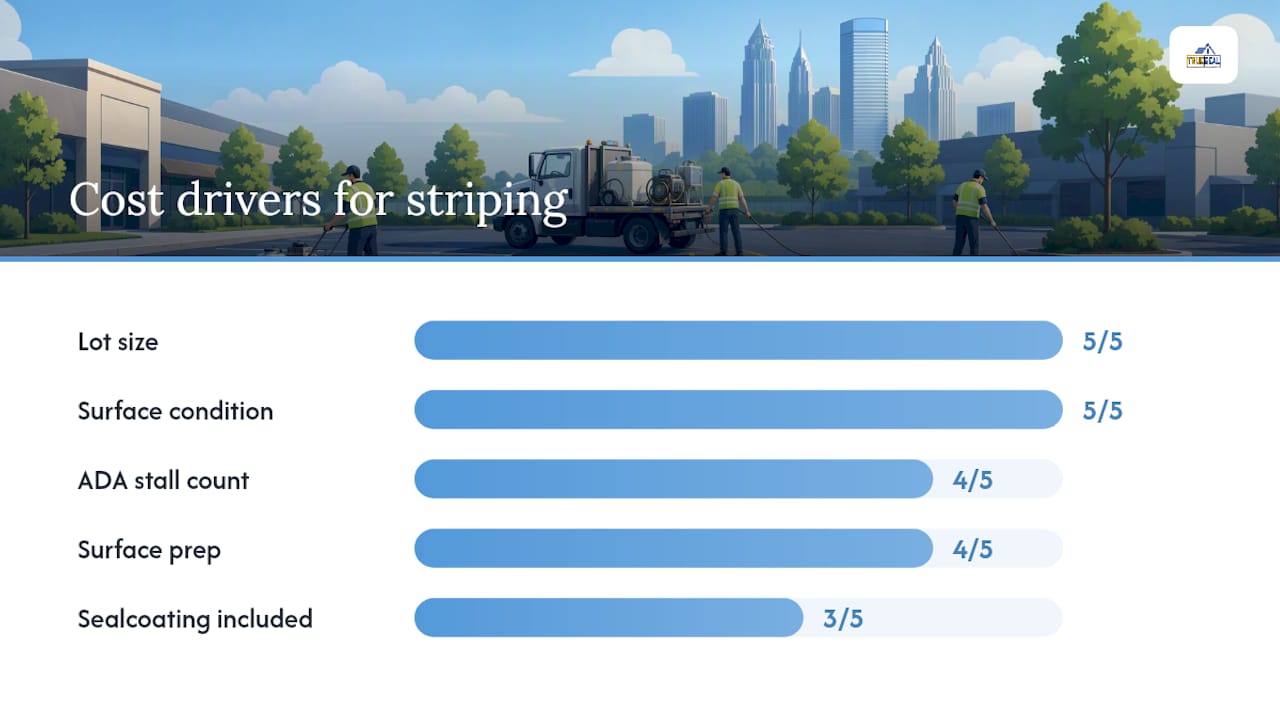
Rather than quote a generic range that won’t reflect your actual lot, TrueSeal scopes each commercial property individually through its remote assessment process. Sending current photos and a basic site plan gets you a quote based on your specific surface condition, stall count, and whether ADA compliance work is part of the job.
What drives the price up or down in practice: the number of accessible stalls required under ADA scoping, whether fire lanes and directional markings need to be added or repositioned, surface prep needs like crack filling, and whether sealcoating is bundled in. A lot that’s been well maintained and just needs faded lines refreshed costs less to address than one that’s dealing with widespread cracking and an outdated accessible-stall layout.
The most reliable way to get an accurate number for your property is to request a quote directly rather than rely on a generic per-space estimate that doesn’t account for your lot’s actual condition.
How Long Does a Striping Project Take?
Timelines vary based on lot size, whether sealcoating is part of the job, and cure time requirements, so there’s no single number that applies to every property. What’s consistent is the sequence: remote assessment first, then scheduling, then on-site work, then documentation.
The remote assessment step is usually the fastest part. Sending photos and a site plan lets TrueSeal scope the work and get a quote back to you without waiting on a site visit to get on the calendar.
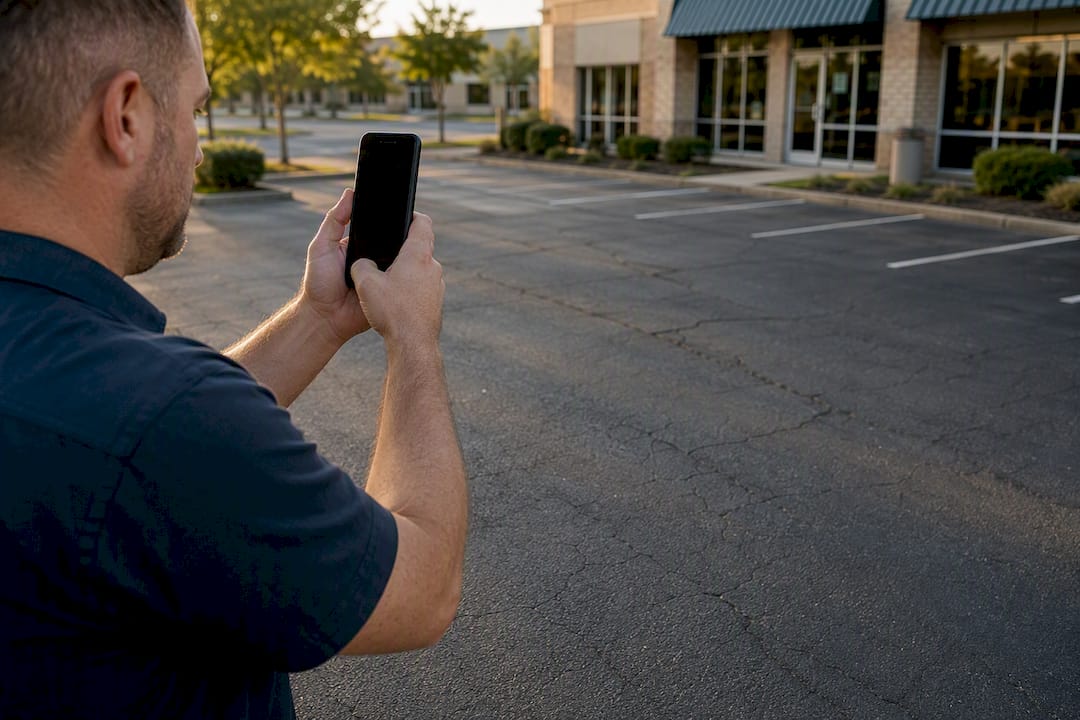
On-site timing depends on what’s included. A straightforward restripe of existing lines takes less time than a project that includes sealcoating, since sealcoat needs adequate cure time before striping goes down on top of it. Crack filling adds its own prep step before either sealcoating or striping can happen.
Weather plays a role too. Sealcoating and striping both need dry conditions and a minimum surface temperature to cure properly, which is common across pavement maintenance work generally and not unique to any one provider. That’s part of why scheduling around a flexible window, rather than a fixed date, tends to produce better results.
If your timeline is tied to a specific event, lease turnover, or inspection deadline, mention that during the assessment. TrueSeal can factor scheduling constraints into the plan rather than treating every job as first-come, first-served with no flexibility for business needs.
What Should You Ask Before Hiring a Striping Contractor?
A few questions separate a contractor who treats striping as a system from one who’s just there to move paint from a can to the pavement.
What equipment do you use for layout and application? Line-laying equipment and paint sprayers vary in precision, and precision matters most on ADA stalls where dimensions are regulated.
What materials go into the striping paint? Traffic paint formulated for durability under vehicle wear performs differently than a generic exterior paint, and that difference shows up within a year, not immediately.
Do you offer any warranty on the work? Ask specifically what’s covered and for how long, rather than accepting a vague verbal assurance.
How do you handle ADA stall counts and access aisle dimensions? A provider who can explain their process clearly, and reference the actual scoping rules, is more trustworthy than one who just says “don’t worry about it.”
Can you provide documentation after the job? Before-and-after photos and a written confirmation of ADA markings protect you if questions come up later.
Getting straight answers to these questions upfront tends to predict how the rest of the project goes.
What Are Red Flags When Choosing a Contractor?
A quote that never mentions ADA compliance at all is worth a second look. Any commercial lot with public parking has accessible-stall obligations, and a contractor who skips that conversation entirely may not be scoping the job correctly.
Watch for vague answers about materials and equipment. If a provider can’t tell you what type of striping paint they use or how they measure stall dimensions, that’s usually a sign they’re not treating the work with the precision ADA compliance actually requires.
Be cautious of anyone offering to paint over non-standard stall or aisle dimensions without mentioning that Raleigh’s UDO requires those layouts to be sealed by a licensed North Carolina engineer. Skipping that step can leave you responsible for a layout that doesn’t meet code.
No documentation after the job is another warning sign. A contractor who disappears without before-and-after photos or written confirmation of what was completed leaves you with no record if a compliance question comes up down the line.
Finally, be wary of a contractor who can’t or won’t explain the difference between routine repainting and an alteration under ADA guidance. That distinction affects whether your project needs additional accessible spaces, and a provider who doesn’t understand it is more likely to leave you out of compliance without realizing it.
A Practical Note From TrueSeal
We’ve seen enough Raleigh commercial lots to know the mistake that costs owners the most: treating striping as a cosmetic touch-up instead of a compliance and protection decision. A faded stall line isn’t just an appearance issue. It’s often the first sign that accessible-stall dimensions, access aisles, or fire lane markings no longer match what the lot actually needs.
Our approach starts with compliance, then layers sealcoating on top for longer-lasting results. One practical scheduling tip: plan restripe work around your slowest traffic hours rather than a fixed calendar date. It cuts disruption without forcing a rushed job.
— TrueSeal
Why TrueSeal Is the Practical Choice for Raleigh Commercial Lots
Property managers juggling multiple maintenance vendors often end up with striping and sealcoating scheduled by two different companies, on two different timelines, with no one accountable for how the finished surface actually looks or performs together. TrueSeal handles both under one process, starting with a remote assessment that scopes your lot’s condition, ADA needs, and sealcoating timing before a crew ever shows up on site.
That matters most for HOAs and retail centers juggling tenant schedules, where getting a quote shouldn’t require coordinating a site visit around business hours. Send photos of your current striping and a basic site plan, and TrueSeal can scope compliance needs, surface condition, and sealcoating timing in one pass rather than three separate conversations with three separate vendors.
If your lot’s lines are fading, your accessible stalls look outdated, or it’s simply been a few years since the surface was sealed, request a quote through TrueSeal’s commercial pavement page and get a scoped plan back before you commit to anything.
Sources
FAQ
What’s the average price for striping a parking lot in Raleigh?
Cost depends on lot size, current surface condition, and how many ADA-compliant stalls need to be added or repositioned. TrueSeal scopes each property individually through a remote assessment rather than quoting a flat rate that ignores your lot’s actual condition.
Is there ongoing demand for parking lot striping services?
Yes. Commercial properties need periodic restriping as paint fades under UV exposure and vehicle traffic, and ADA compliance requirements mean many lots also need accessible-stall layouts reassessed over time.
How do property managers estimate what a striping project needs?
The most reliable method is sending current photos and a site plan for a professional assessment, since factors like accessible-stall counts, surface condition, and whether sealcoating is needed all affect scope. TrueSeal uses this remote assessment approach specifically to avoid guesswork.
Does repainting existing lines require adding new ADA-accessible stalls?
Generally, no. Routine repainting of lines in their existing locations is considered maintenance under ADA guidance, while resurfacing or adding new spaces counts as an alteration that can trigger the requirement for added accessible stalls.
Can TrueSeal handle both sealcoating and striping in one project?
Yes. TrueSeal bundles commercial-grade sealcoating, crack filling, and ADA-aware striping so the surface prep and final markings work together rather than being scheduled as separate, disconnected jobs.
Comments