Paver Sealing in Holly Springs,NC | TrueSeal.

Stop

Professionally applied paver sealer protects color and locks joint sand, repels stains, and extends the life of a patio or driveway when the surface is properly prepared and moisture-verified first. Remote photo assessments can provide homeowners a tailored protection plan without waiting on a site visit. A real sealing job is mostly preparation and moisture control, not a quick spray-and-dry service.
TL;DR:
Proper moisture verification before sealing prevents white haze and ensures a durable, even coating that lasts up to five years.
Using angular or polymeric sand with proper compaction is essential to maintaining joint stability and preventing washout after sealing.
Sealers applied immediately after rain or on damp surfaces will likely develop hazing and compromise long-term protection.
Routine water-bead tests annually can help determine when reapplication is necessary, especially on high-traffic or sun-exposed surfaces.
A comprehensive restoration-first approach, including remote assessments and thorough site preparation, improves sealing success and surface longevity.
Table of Contents
Paver Sealing in Holly Springs, NC: Benefits and Process for Your Outdoor Space
Sealing does two jobs at once: it changes how a paver surface looks, and it changes how that surface holds up over time. A quality sealer enhances color, locks sand into the joints, and creates a barrier against moisture, stains, and UV fading. That combination is why sealed patios keep their look years after the pavers went in, while unsealed ones start to gray out and shed joint sand within a couple of seasons.
There are two finish families, and the choice matters more than most homeowners realize. Film-forming (wet-look) sealers sit on top of the paver and create a glossy, saturated finish. Non-film-forming, or penetrating, sealers soak into the material and leave a more natural matte look. Manufacturers recommend matching the finish to the surface and its use: a wet-look finish reads great on a decorative patio but can get slick fast around a pool, while a penetrating sealer suits driveways and high-traffic walkways where grip matters more than gloss.
The practical benefits show up in day-to-day maintenance:
Stains from grease, tannins, and rust wipe away instead of soaking in.
Locked joint sand resists washout during heavy rain and slows weed growth between pavers.
A sealed surface needs fewer deep cleans; routine rinsing handles most upkeep.
Reseal intervals become predictable, so you can budget for maintenance instead of reacting to damage.
Sealing has real limits, too. It will not fix a drainage problem, a sunken paver, or a failing subbase. Sealing over those issues just locks them in place under a fresh coat, which is why a competent inspection has to come before any product goes down.
What Happens During Professional Paver Sealing?
A professional job follows a sequence, and skipping steps is exactly how DIY sealing jobs go wrong. Here’s what each stage actually does:
Inspection first. A pro checks for existing sealer residue, efflorescence (that white, chalky mineral bloom), loose or sunken pavers, and the condition of the joint sand before touching a hose.
Deep cleaning with controlled equipment. Commercial-grade surface cleaners running at controlled PSI remove dirt and biological growth without etching the paver face or leaving the streaky “zebra stripe” pattern that comes from wand-only cleaning. Efflorescence gets treated with the right chemistry, not just rinsed and hoped away.
Drying and moisture verification. This is the step most DIY jobs skip entirely. A plastic-sheet test or a pin-style moisture meter confirms the surface has dried to an acceptable range. Sealing over damp pavers is the single most common cause of a whitish haze that shows up days later.
Joint rebuild. Failed or washed-out sand gets removed, then replaced with angular or polymeric sand. Plate compaction seats the new sand deep in the joint rather than leaving it loose on top, which is what actually keeps it from washing out again. A final blower pass clears dust and stray grains before any sealer touches the surface.
Application. A low-pressure sprayer applies a flood coat, followed by back-rolling to work the sealer into the surface and joints evenly. When a film-forming product calls for it, a second coat goes down in a perpendicular pass for uniform coverage rather than doubling up in the same direction.
Curing. Foot traffic is usually allowed after several hours; furniture and vehicles require longer waiting periods, with schedules adjusted for weather conditions.
A realistic multi-day schedule looks like: cleaning and drying on day one, moisture verification and joint work on day two once the surface reads dry, then application and cure on day three. Rushing that timeline is where most hazing complaints start.
Pro Tip: If a contractor skips straight from pressure washing to sealing in the same visit, ask how they’re verifying moisture. A same-day turnaround on a humid Carolina afternoon is a red flag, not a convenience.
How Long Does Paver Sealer Last?
Sealer lifespan depends heavily on product type and how much traffic and weather the surface takes. Quality sealers commonly hold up for 2 to 5 years, though cheap solvent-based products can fail well before that, and penetrating sealers on natural stone sometimes stretch longer.
A few factors shorten that window fast:
Heavy vehicle traffic on driveways wears film-forming sealers down quicker than foot traffic on a patio.
Direct sun exposure accelerates UV breakdown, especially on south-facing surfaces.
Sprinkler overspray and standing water keep pavers damp longer, stressing the seal.
Pool chemicals and deicing salts both degrade sealer faster than plain rainwater.
You do not need lab equipment to know when it’s time. A simple water-bead test, run once a year on high-traffic areas, tells you almost everything: water that beads up means the seal is intact; water that soaks in flat means it is time to recoat. Late spring through early fall tends to work best for Holly Springs, once the risk of prolonged rain drops and surfaces dry reliably between cleaning and application.
Why Do Some Paver Sealing Jobs Fail?
Most sealing failures trace back to one of three shortcuts. Trapped moisture is the biggest one: sealing before the surface has fully dried causes a milky haze that shows up under the film and won’t wipe off, which is exactly why moisture meters and plastic tests matter more than a calendar guess.

Leftover joint sand is the second culprit. Sand dust left on the surface after sweeping gets sealed in place, creating a gritty, uneven film. Thorough blower cleanup before application solves this, but it is a step that gets rushed on quick jobs.
The third is sealing over a sealer that’s already failing. A pro checks the existing coating first; if it’s peeling or hazed, the fix is a strip-and-reseal, not another coat on top of a compromised surface. And around pools, coverage control and non-slip additives matter as much as the product itself; too much sealer pooled in one spot can leave a slick, almost jelly-like film underfoot.
Pro Tip: If your existing pavers already feel slippery when wet, that’s usually excess sealer, not the paver material itself. A proper strip-and-reseal, not another topcoat, is the fix.
Our Approach: Restoration-First Paver Sealing
A specialized sealing approach treats sealing as the last step in a restoration sequence, not a standalone spray job. Using remote photo assessments to evaluate paver condition, joint wear, and likely moisture concerns before scheduling a visit cuts down on wasted site trips and allows for a plan built around what a patio or driveway actually needs.
On site, moisture verification is conducted before any product application, and joint work uses angular or polymeric sand with plate compaction to ensure durability. Depending on the surface and its exposure, breathable or film-forming sealers may be applied in two coats. Work concludes with clear guidance on usage timing and maintenance expectations.
— TrueSeal
Book a Professional Paver Sealing Assessment
A remote photo assessment identifies joint condition, staining, and likely moisture issues before any on-site visit, so the plan matches the patio or driveway instead of a generic package.
[
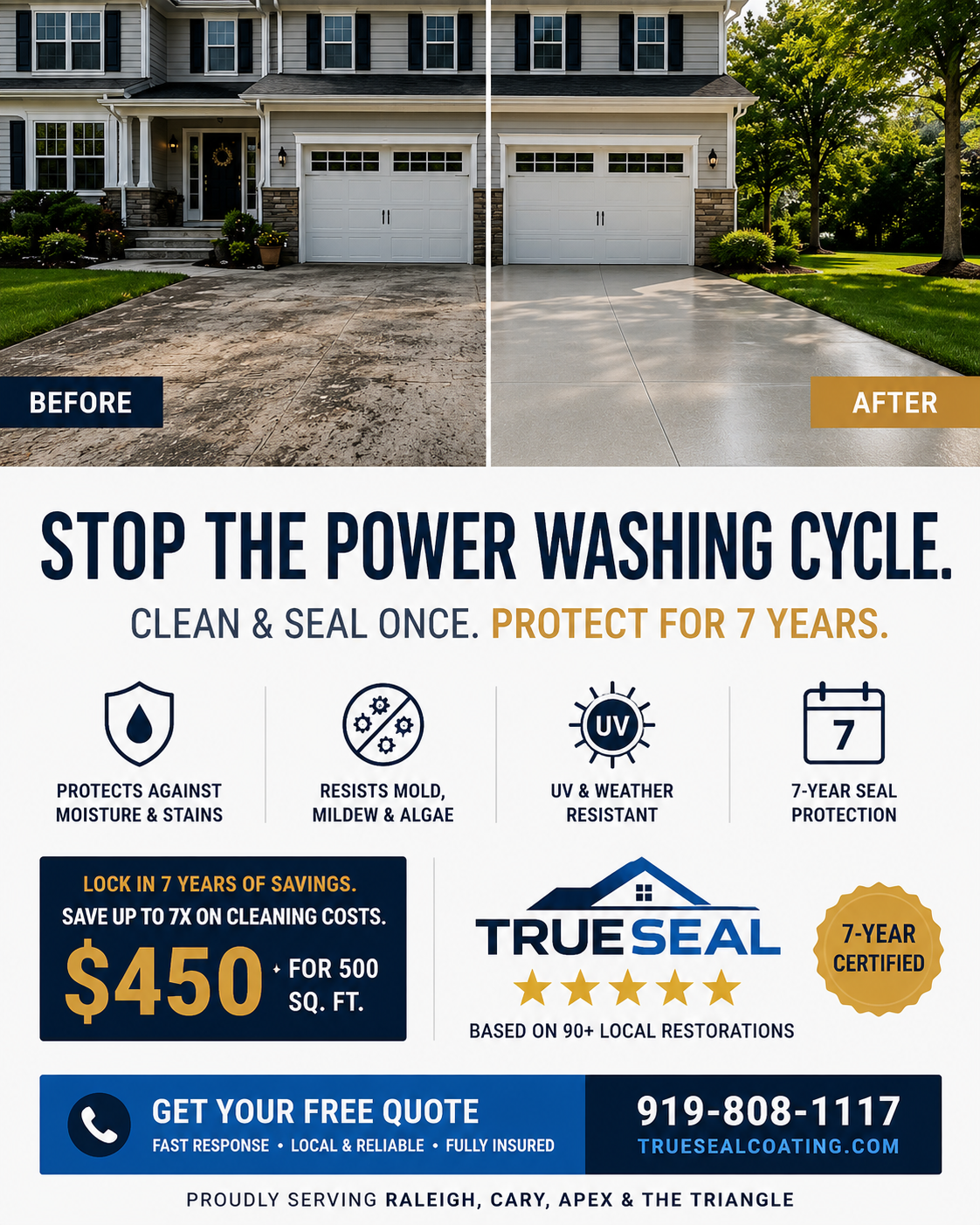
A typical TrueSeal paver job includes the remote assessment report, commercial-grade cleaning, joint sand removal and rebuild with compaction, moisture verification before application, a professional spray-and-back-roll sealing pass, and follow-up guidance on traffic timing and your next maintenance window. On your end, prep is simple: clear furniture and planters off the surface and let us know about any landscaping nearby that needs protecting from overspray. We schedule around weather, since a proper cure needs a dry stretch, not a rushed same-day turnaround.
If your patio, walkway, or driveway pavers are looking dull, losing joint sand, or overdue for a recoat, start with a remote assessment for your paver sealing project or browse TrueSeal’s full hardscape enhancement services to see what a restoration-first plan looks like for your property.
Sources
Technical claims in this article draw on manufacturer and industry guidance, including Unilock’s paver sealing overview, Belgard’s sealant guidance, and First Coast Property Experts’ sealing methodology, among others cited throughout.
FAQ
How Much Should Paver Sealing Cost?
Cost depends on surface size, condition, and the sealer type chosen, so it’s best confirmed through a specific assessment rather than a flat rate. Request a remote assessment to get a plan and pricing matched to your paver surface.
What Are the Main Benefits and Drawbacks of Sealing Pavers?
Sealing enhances color, protects against stains and UV fading, and helps lock joint sand in place, but it can’t fix drainage or subbase problems and may need reapplication every few years. Sealing over damp or already-failing surfaces can also trap moisture and cause hazing.
Is It a Problem if It Rains Right After Sealing?
Yes. Freshly applied sealer needs a dry cure window, and rain before that window closes can wash out the product or trap moisture underneath it, leading to hazing. Professional schedules build in weather buffers so application happens during a reliable dry stretch.
How Long Does Sealing Last on Pavers?
Quality sealers typically last 2 to 5 years, depending on the product, sun exposure, and how much traffic the surface gets. Driveways and pool decks tend to need recoating sooner than lightly used patios.


Comments