Driveway Pressure Washing & Sealing in Raleigh, NC: Why Cleaning Alone Isn’t Enough.

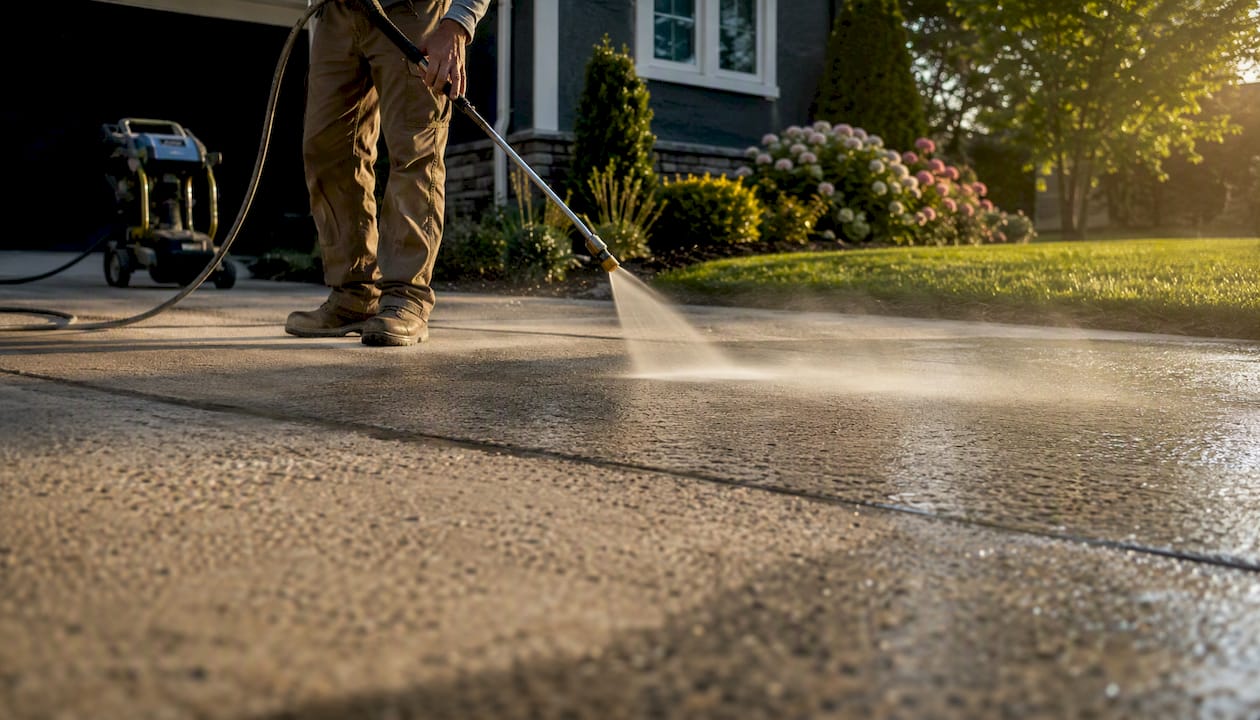
Pressure washing cleans surface grime off a concrete driveway, but it leaves the concrete’s pores wide open, unprotected, and ready to soak up the next round of oil, rust, and moisture. That’s why pressure washing alone is not enough for a concrete driveway that actually stays clean. The fix is a professional cleaning-and-sealing plan, not another rinse next spring. If your driveway in Raleigh, Cary, Apex, or Garner looks tired again within months of a wash, request a quote from TrueSeal for a full assessment.
TrueSeal offers a remote digital evaluation before any crew shows up, so you get a tailored plan for cleaning, spot repair, and sealing without scheduling an on-site visit just to get a number. The typical scope runs three steps: clean the surface, treat or repair problem spots, then seal to lock out water and stains. Skip that third step, and you’re back to square one by next season.
Key Takeaways
Pressure washing removes surface dirt but leaves concrete’s pores open, so sealing is the step that actually stops recontamination and moisture damage long term.
Point | Details |
Washing is temporary | Pressure washing lifts surface grime but leaves pores open to oil, rust, and moisture. |
Sealing locks in results | Penetrating sealers block moisture absorption and slow staining and biological growth. |
PSI and technique matter | Stay in the 2,500 to 3,000 psi range with proper nozzle angle and standoff distance to avoid etching. |
Drying time is non-negotiable | Wait 24 to 48 hours after cleaning before sealing, longer in humid or cool weather. |
TrueSeal handles the full process | TrueSeal offers remote assessments and a complete clean, repair, and seal workflow across Wake County. |
Table of Contents
Why Pressure Washing Alone Is Not Enough for a Concrete Driveway
Which Stains Survive a Pressure Wash, and What Actually Removes Them?
Why Sealing Is the Step That Actually Protects Your Investment
Signs Your Driveway Needs a Professional, Not Another DIY Wash
Request a Quote for Concrete Cleaning and Sealing in Wake County
Why Pressure Washing Alone Is Not Enough for a Concrete Driveway
Concrete looks solid, but under a microscope it’s closer to a sponge. Pressure washing blasts away loose dirt, surface film, and the top layer of grime sitting on the slab, but concrete’s pore structure stays open once that rinse dries. Contaminants that have worked their way below the surface, oil that seeped in last summer, tannins from leaves, minerals leaching up from below, don’t get touched by water pressure alone.
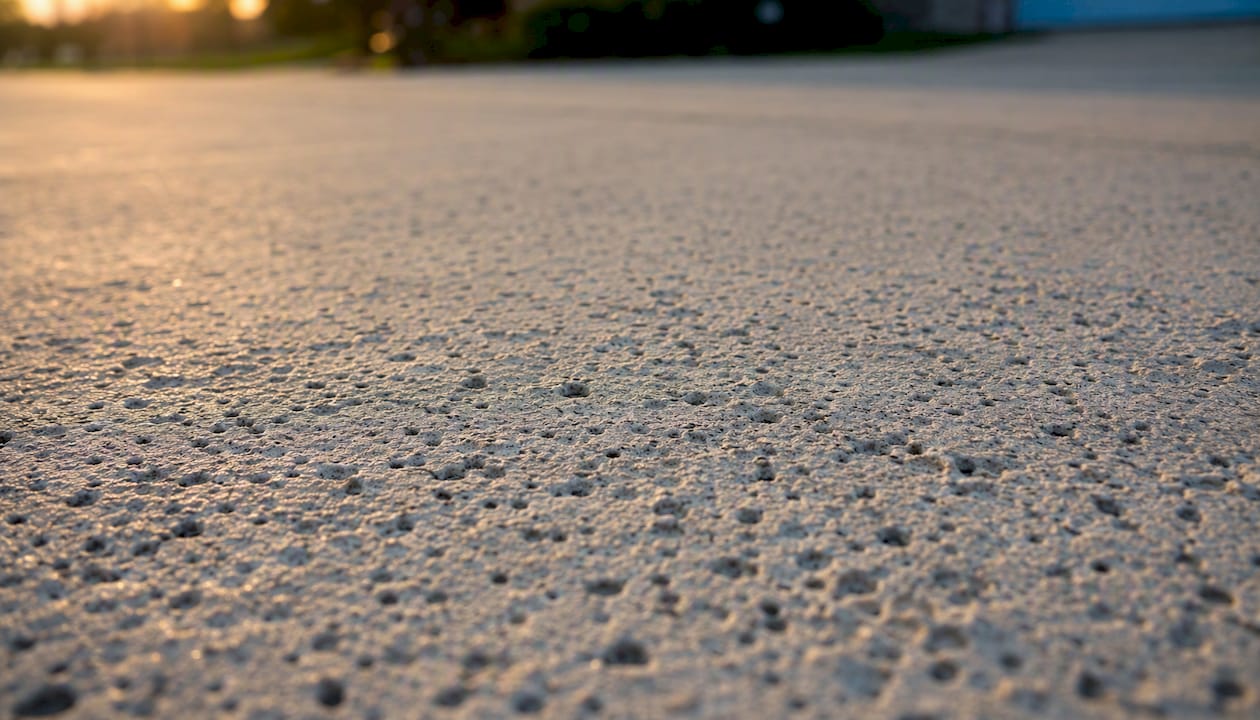
That’s the disconnect homeowners run into. The driveway looks great the day the truck pulls away, then within a few weeks it’s collecting new dirt faster than it used to, or old stains start ghosting back through. Concrete is porous by nature, and pressure washing removes surface grime while leaving those pores exposed, which is exactly why sealing afterward matters so much for reducing moisture absorption and blocking deeper staining.
Here’s a simple breakdown of what a wash actually accomplishes versus what it can’t touch:
What Pressure Washing Removes | What It Leaves Behind or Can’t Fix |
Loose dirt, dust, and surface film | Oil and grease absorbed into pores |
Cobwebs, pollen, and light debris | Rust stains from metal furniture or fertilizer |
Recent, shallow biological growth | Deep-set mold and algae roots |
Efflorescence sitting on the surface | Efflorescence caused by ongoing moisture migration |
Loose paint flakes or peeling coatings | Open, unprotected pores after cleaning |
Picture the slab’s surface as a layer of open straws standing on end. Washing knocks the dust off the tops of the straws, but it does nothing to plug them. Sealing is what caps them off.
Which Stains Survive a Pressure Wash, and What Actually Removes Them?
A rinse handles surface dirt fine. It does not touch the stains and growth that have bonded chemically or biologically with the concrete, and those need a different approach entirely.
Oil and grease: These soak into pores through capillary action, so water pressure just pushes them deeper. Removal usually takes a degreaser with dwell time, sometimes agitation, and in stubborn cases a poultice that pulls the oil back out over several days.
Rust: Rust stains from patio furniture, sprinklers, or fertilizer come from iron oxide bonded to the concrete. A rust converter or specialized acid-based treatment is typically required; pressure alone just spreads the discoloration.
Biological growth (mold, algae, moss): Surface spores rinse away, but roots embedded in the pores regrow within weeks unless treated with a biocide or soft-wash chemical application.
Efflorescence: This white, chalky residue is mineral deposits pushed up by moisture moving through the slab. Washing removes what’s visible, but it returns until the underlying moisture source is addressed and the surface is sealed.
Paint and adhesive residue: These need mechanical removal or solvent-based stripping since pressure alone typically just smears or partially lifts them.
Embedded tire film: Rubber transfer bonds to the surface texture and often needs a degreaser and light abrasion rather than water pressure.
When a stain has been sitting for years, or when it keeps reappearing after repeated cleanings, that’s usually a sign the concrete needs resurfacing or patch repair rather than another treatment. Oil stains in particular tend to fool homeowners into thinking one more scrub will finally do it.
Can Pressure Washing Damage a Concrete Driveway?
Yes, pressure washing can damage concrete, and it happens more often than most homeowners expect. The damage isn’t usually dramatic. It’s a thin layer of the surface stripped away, called etching, or small pits that show up months later once dirt starts settling into the roughened texture.
The top finish layer on a driveway, sometimes called the cream coat, is only about 1/16 to 1/8 inch thick. Once a nozzle held too close, or a zero-degree tip, breaches that layer, the aggregate underneath gets exposed and the surface becomes permanently more porous and more prone to staining. There’s no undoing that without resurfacing.
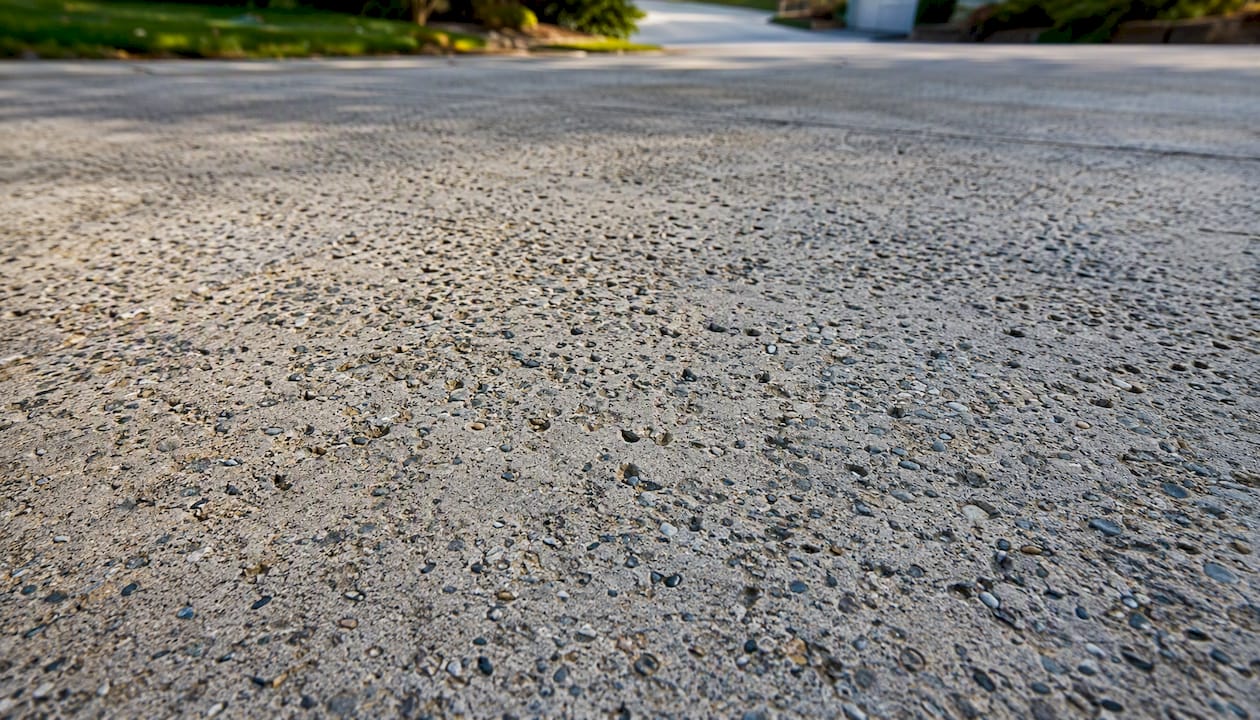
A machine rated at 1,500 psi can technically clean concrete, and most driveways get cleaned in the 2,500 to 3,000 psi range. But the number on the machine matters less than how it’s used. Nozzle angle, tip selection, and standoff distance from the concrete determine the actual force hitting the slab, and a high-PSI machine used correctly with a wide-angle nozzle and proper distance can be safer than a lower-PSI unit run through a narrow turbo tip pressed too close.
Pro Tip: Test any pressure washer on a small, hidden section of the driveway first, like near an edge or under a parked car. If you see white marks, roughened texture, or swirl patterns after one pass, that setting is too aggressive for the rest of the slab.
Surface cleaners spread pressure evenly across a wide swath and cut down on the streaking and accidental etching that a handheld wand produces, which is one reason professionals lean on them for driveways rather than working freehand. New concrete pours need roughly 28 days to fully cure, and anything under 12 months old is still softer than it will eventually be, so pressure washing a fresh driveway carries real risk of stripping the surface before it’s ready. Runoff matters too. Whatever gets stripped off the slab, oil, chemicals, degreaser, ends up in your yard or a storm drain, so contain and direct that water rather than letting it run unchecked into a garden bed or the street.
Why Sealing Is the Step That Actually Protects Your Investment
Cleaning resets the look of a driveway. Sealing is what makes that clean state last. Without a protective finish, every contaminant that touched the surface before the wash has a clear path to get right back into those open pores, along with a whole new season of oil drips, leaf tannins, and rainwater.
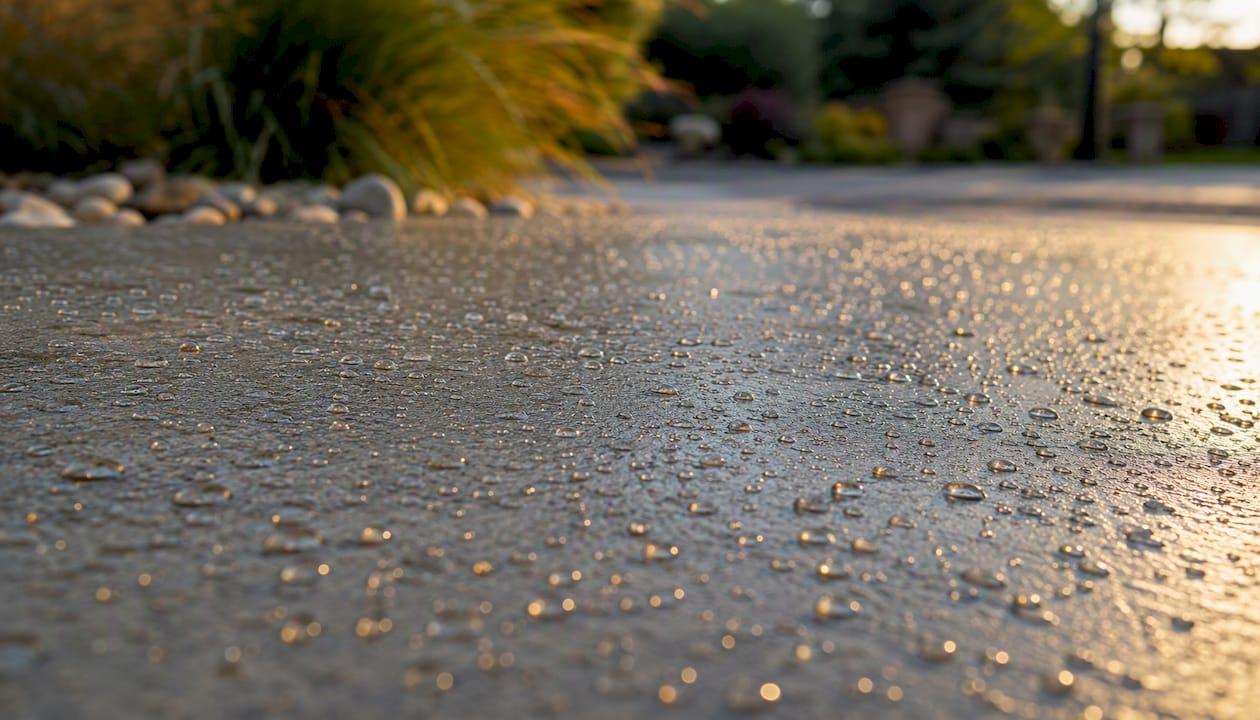
Sealers fall into two broad categories, and they solve different problems:
Sealer Type | Breathability | Sheen | Typical Longevity | Stain Resistance |
Penetrating silane/siloxane | High, allows vapor to escape | Natural, low sheen | Several years before reapplication | Strong against water and salt |
Film-forming acrylic or epoxy | Lower, sits on surface | Glossy to satin | Shorter cycle, more visible wear | Strong but can peel or yellow over time |
Professionals often favor penetrating silane and siloxane sealers for driveways specifically because they guard against moisture and freeze-thaw cycling without leaving a film that eventually needs stripping and redoing.
A real restoration job isn’t just spray-and-seal; sometimes it requires heavy-duty surface preparation like concrete sandblasting to handle severe degradation before sealing. It typically runs through this sequence:
Inspection or remote digital assessment to identify problem areas before work starts
Pre-treatment of stains and biological growth
Pressure-assisted cleaning or a soft-wash approach depending on surface condition
Spot repairs, including crack fill and spall patching
Primer or patch work where the surface has degraded
Sealer application matched to the driveway’s exposure and use
The payoff shows up over time: slower moisture absorption, mold and algae losing the damp environment they need to take hold, easier routine upkeep, and a longer service life for the slab itself. Sealing acts as a sacrificial barrier that takes the UV and chemical exposure instead of the concrete itself.
Not every driveway is a sealing candidate, though. If the surface has widespread spalling, deep structural cracks, or has lost so much of its finish layer that the aggregate is exposed across large areas, sealing won’t fix that. That’s a resurfacing conversation, and it’s worth having with a contractor before spending money on a sealer that has nothing solid to bond to.
How Long After Cleaning Should You Wait to Seal a Driveway?
Wait until the surface is completely dry, not just dry to the touch. That’s the short version, but “completely dry” means something different depending on the week you’re working in.
Most professionals recommend 24 to 48 hours of drying time after a full clean before applying sealer, and that window stretches out in humid conditions or cooler temperatures common in a Wake County fall or early spring. Sealing damp concrete is one of the most common causes of sealer failure. Moisture trapped underneath a fresh coat causes poor bonding, peeling, or a cloudy, hazy finish that shows up within weeks of application. If you’ve read guidance on timing between washing and sealing, you’ve probably seen how much local weather affects that window.
Once sealed, most penetrating sealers hold up for three to five years before they need reapplication, though that range depends heavily on traffic, sun exposure, and the specific product used. Manufacturer guidance should always take precedence over a generic timeline.
Between sealing cycles, a short seasonal checklist keeps a driveway performing:
Inspect each spring and fall for new cracks, discoloration, or pooling water
Spot-clean fresh spills immediately rather than letting oil sit and soak in
Avoid harsh deicing salts in winter, which accelerate surface wear on unsealed or aging sealant
Keep gutters and downspouts directed away from the slab to reduce standing moisture
A sealed driveway needs far fewer deep cleanings than an unsealed one, since the sealer is doing the work of keeping contaminants from settling in permanently.
Signs Your Driveway Needs a Professional, Not Another DIY Wash
If you’re seeing any of the following, it’s time to call a professional rather than reach for another wash.
Exposed aggregate or visible pitting across sections of the slab
Mold or algae that reappears within a few weeks of cleaning
Oil stains that darken or spread despite repeated scrubbing
Long cracks, spalling, or crumbling edges
A driveway poured within the last 12 months
Any of these point to a surface that’s past the point where a wash alone can fix it. Request a remote assessment or on-site quote from TrueSeal before the problem gets more expensive to correct.
What Does a Professional TrueSeal Job Actually Involve?
TrueSeal builds a restoration and sealing plan around your specific driveway, not a one-size treatment. The process usually starts with a remote digital assessment, where you send photos and details of the surface and get a tailored plan back without needing to schedule an on-site visit just to get started.
From there, a typical job moves through cleaning, spot repairs, and sealing, with drying time built in between steps. Depending on the size of the driveway and the extent of repair work needed, most jobs run from a single day for straightforward cleaning and sealing to a few days when crack repair or spall patching is involved. Drying windows before sealing generally run 24 to 48 hours, adjusted for the season.
The crew handles:
Initial inspection and problem identification
Degreasing and pre-treatment of stains
Crack filling and spall or patch repair
Sealer selection based on exposure, traffic, and finish preference
Sealer application and cure-time guidance
If you’re a homeowner in Cary, Raleigh, Apex, or Garner, or a property manager overseeing shared driveways or a commercial lot, contact TrueSeal for a free remote assessment or an on-site quote before scheduling anything else.
Why We Recommend Sealing Every Time We Clean a Driveway
Cleaning a driveway without sealing it afterward is a bit like painting over rust without ever addressing what caused it. It looks fine for a while, then the underlying problem resurfaces, usually faster than homeowners expect. We’ve built the remote assessment process specifically because most driveway problems are visible in photos, and that means homeowners don’t have to wait around for a scheduling window just to find out whether sealing makes sense for their situation.
The pattern we see again and again is straightforward: driveways that get cleaned and sealed together age slowly and predictably, while driveways that only get washed cycle through the same stains and the same buildup year after year. A maintenance program built around inspection and sealing costs less over five years than repeated cleanings that never solve the underlying porosity issue. That’s not a sales pitch. It’s just what porous concrete does when it’s left unprotected.
Request a Quote for Concrete Cleaning and Sealing in Wake County
TrueSeal handles the full workflow, cleaning, repair, and sealing, for driveways, patios, walkways, and pavement across Raleigh, Cary, Apex, Garner, and the rest of Wake County. Instead of a one-time rinse that fades in a season, you get a plan built around your specific slab, starting with a remote digital assessment that skips the wait for an on-site visit just to get a number.
[
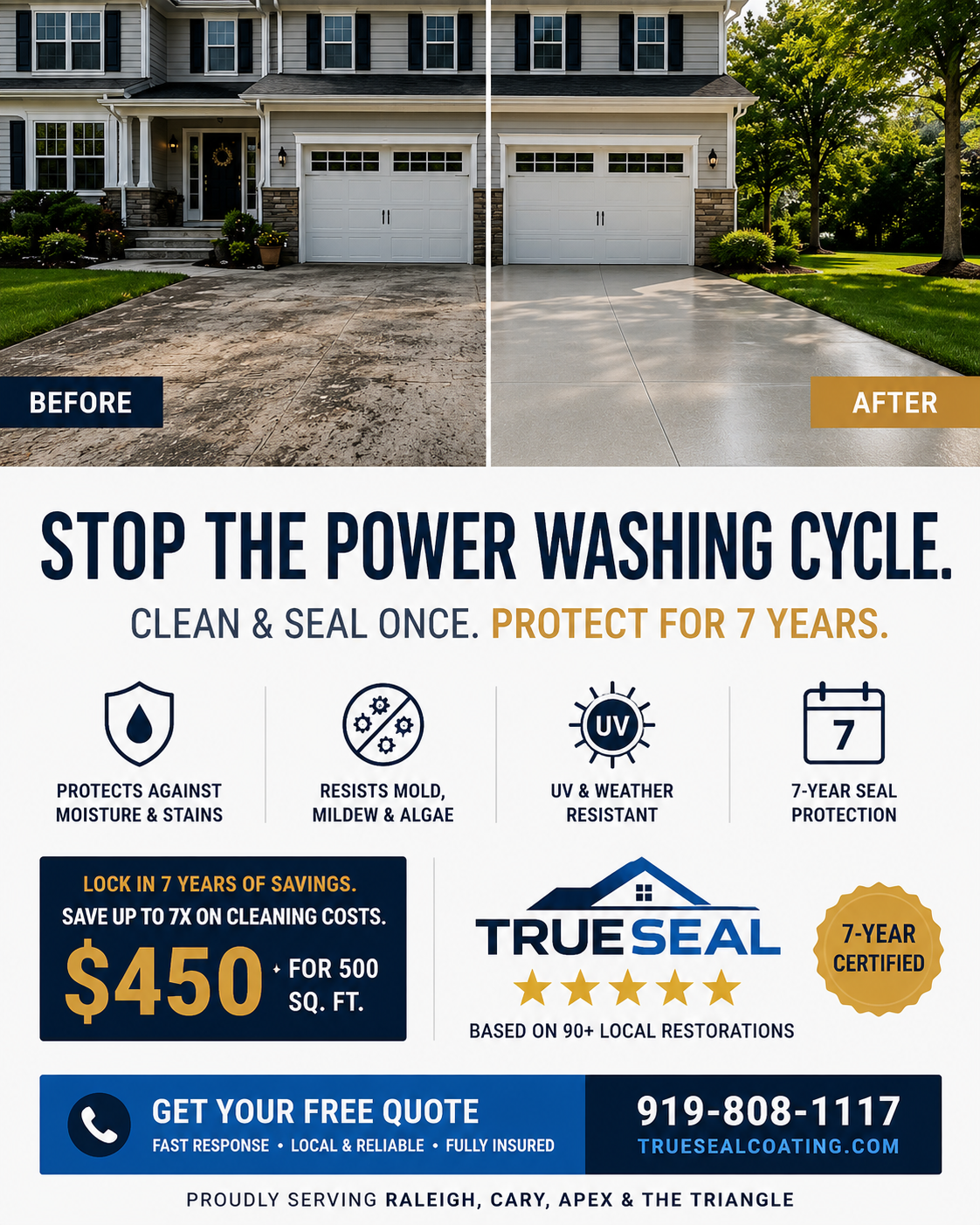
Homeowners and property managers dealing with recurring stains, discoloration, or a driveway that’s never looked right since it was poured can get a tailored protection plan without leaving the house. Request a quote for concrete and pavement services today, or check out the full range of hardscape and sealing services if pavers or patios are part of the project too.
Sources
FAQ
What PSI should you use to pressure wash a concrete driveway?
Most residential driveways clean well at 2,500 to 3,000 psi, though any machine above 1,500 psi can do the job with the right nozzle and proper standoff distance.
Can I clean concrete without a pressure washer?
Yes, a stiff broom, degreaser, and garden hose can handle light dirt and surface grime, though embedded stains like oil or rust typically need chemical treatment regardless of the cleaning method.
How often should you pressure wash your driveway?
Once or twice a year is typical for most driveways, but a properly sealed surface needs deep cleaning far less often since the sealer keeps contaminants from settling into the pores.
Can a pressure washer ruin concrete?
Yes, holding a narrow nozzle too close or dwelling in one spot can strip the thin cream coat finish and permanently expose the aggregate underneath, making the surface rougher and more stain-prone.
Why does TrueSeal recommend sealing after every cleaning?
Because cleaning alone doesn’t close the pores that oil, rust, and moisture use to re-enter the slab, TrueSeal pairs every cleaning job with a sealing plan tailored to the driveway’s condition and exposure.


Comments