Protect Raleigh Parking Lots: Photo Quote, Repairs, Two Thin Coats

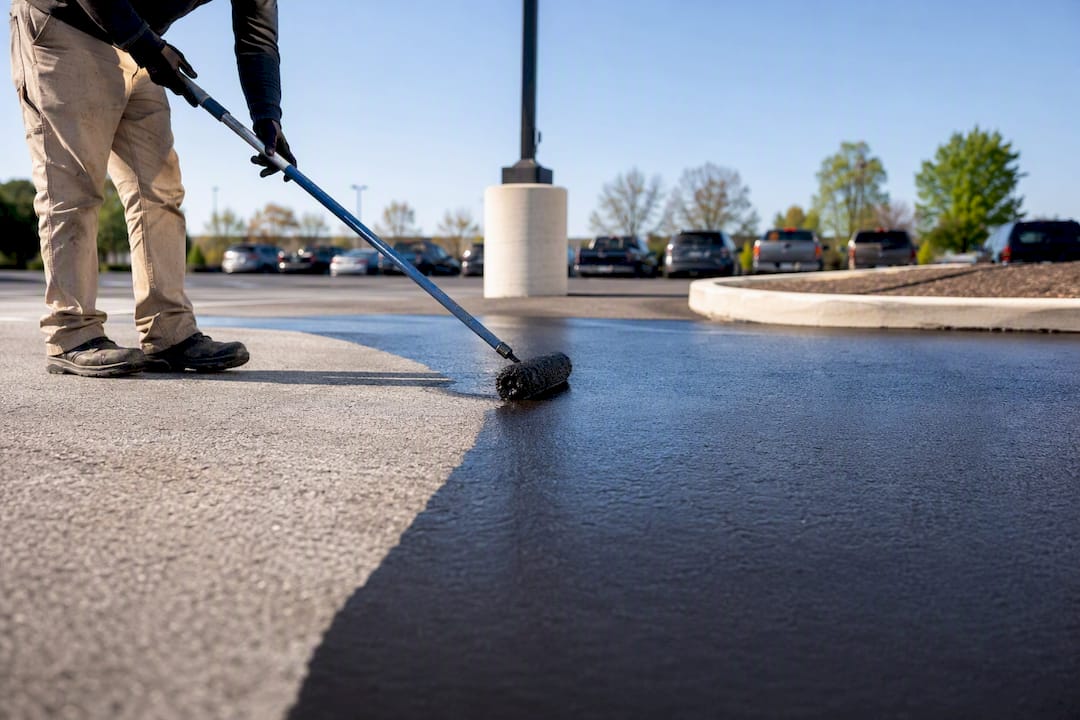
Professional cleaning and commercial-grade sealcoating, backed by crack repair where needed, is the most reliable way to protect asphalt and concrete surfaces in Raleigh from oxidation, water intrusion, and UV breakdown. Skip the guesswork: request a TrueSeal remote assessment and get a scoped plan before your pavement’s next freeze-thaw cycle does more damage.
TL;DR:
Sealcoating is most effective when applied early to sound surfaces showing signs of oxidation and minor cracking, delaying the need for costly repairs.
Proper surface preparation, crack repair, and applying two thin coats within the ideal weather window are crucial to ensure long-lasting protection.
Sealers should be matched to the surface porosity, with penetrating sealers used on porous concrete to prevent moisture entrapment and damage.
The timing of reapplication depends on traffic, UV exposure, oil, and proper surface prep, with regular inspections guiding maintenance schedule.
A remote assessment using photos and surface details can accurately scope the job, avoiding guesswork and unnecessary site visits.
Table of Contents
What Does Professional Sealcoating and Sealing in Raleigh Actually Include?
When Should You Seal Asphalt or Concrete, and When Do You Need Repairs First?
What Should You Expect After Sealing, and How Do You Maintain It?
What Does It Cost to Have Roof Cleaning and Sealing Done in Raleigh?
How Long Does a Sealcoating or Sealing Project Take in Raleigh?
What Should You Ask Before Hiring a Raleigh Sealcoating Provider?
What Does Professional Sealcoating and Sealing in Raleigh Actually Include?
A serious sealcoating job is not a single truck spraying black liquid over a parking lot. It starts with an assessment, because you cannot scope a job correctly without knowing what’s underneath the surface grime. TrueSeal handles this step remotely, reviewing photos and site notes so property managers get a tailored protection plan without scheduling an on-site visit first.
From there, the work breaks into distinct phases, each one protecting a different failure point:
Cleaning: pressure washing removes dirt, algae, and debris; oil spots get pretreated separately because oil prevents sealer from bonding properly.
Repairs: cracks get filled and any localized weak spots get patched before anything else touches the surface.
Sealing: asphalt pavements receive a commercial-grade sealcoat; concrete driveways, walkways, and hardscapes get a penetrating or topical sealer matched to that surface’s porosity.
Finishing touches: ADA-compliant striping gets reapplied where lots need it, and decorative concrete or paver areas can get color restoration as part of the same visit.
That last point matters more than most property owners realize. A penetrating silane or siloxane sealer behaves very differently on porous concrete than a film-forming topical product does, and using the wrong one can trap moisture instead of blocking it. Property managers juggling multiple sites in Raleigh and Wake County benefit from a provider that scopes each surface type correctly rather than applying one product everywhere. TrueSeal’s hardscape enhancement services cover this surface-by-surface matching as standard practice, not an upcharge.
When Should You Seal Asphalt or Concrete, and When Do You Need Repairs First?
Timing determines whether sealcoating protects your investment or just delays a bigger bill. The ideal candidate for sealcoating is a structurally sound surface showing early oxidation signs: graying asphalt, hairline surface cracks, minor fading. Treat pavement at this stage and you get the best return, because you’re preserving good material rather than patching failing material.
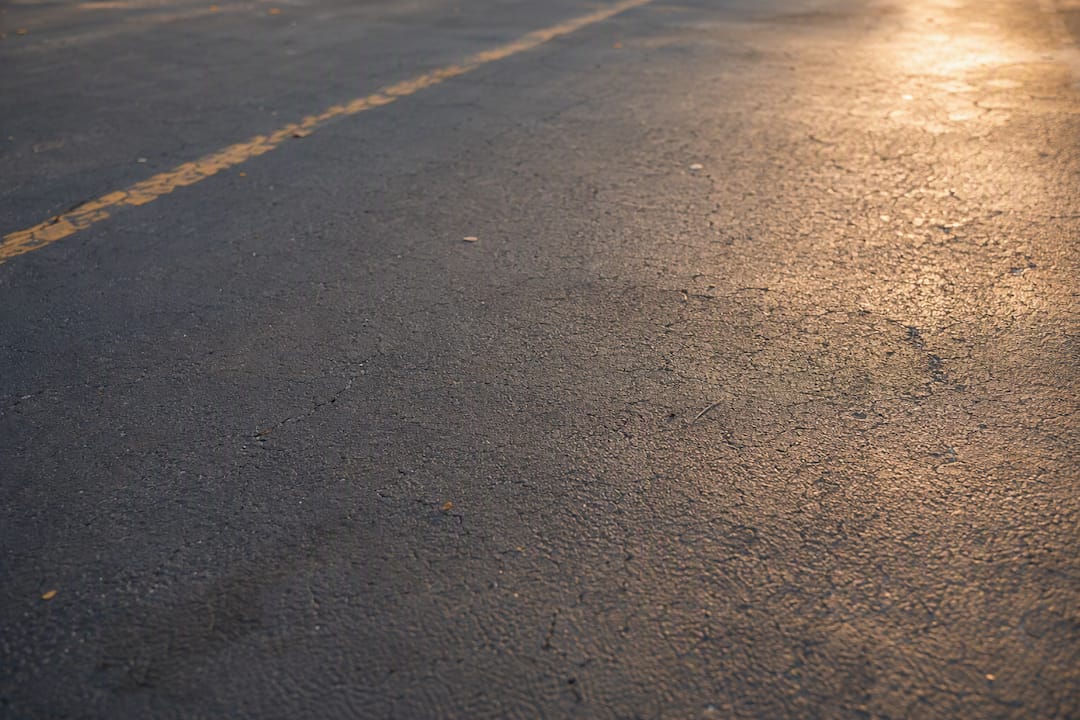
The FHWA’s pavement preservation guidance frames this as “right treatment, right road, right time.” Apply preservation treatments while a surface is still structurally sound, and you extend its life significantly. Wait until it’s compromised, and sealcoating becomes a cosmetic fix over a structural problem.
Some conditions mean sealing alone won’t cut it:
Alligator cracking (a web of interconnected cracks) signals base failure, not surface wear.
Potholes and severe rutting indicate the structural layers beneath the surface have already given out.
Standing water in low spots often points to drainage issues that sealcoat cannot solve.
These conditions need crack sealing or localized repair first, sometimes combined with fog seals or rejuvenators, before sealcoating makes sense. A provider who sealcoats over alligator cracking without addressing the base is selling you a short-term look, not long-term protection. This is also where a GTCRC study on preventive maintenance timing is worth knowing: apply seal coats and rejuvenators at the right stage, and you meaningfully slow oxidation. Apply them too late, and you’re just buying time.
What Happens During a Professional Sealcoating Project?
Here’s the sequence a properly run job follows, start to finish:
Remote assessment. You send photos and describe the surface and your main concerns; TrueSeal reviews the material and confirms scope before anyone shows up.
Cleaning and prep. Pressure washing strips dirt and organic growth; oil spots get primed separately since contaminants block sealer adhesion no matter how good the product is.
Repair stage. Cracks get routed and sealed, and any localized soft spots get patched. Skipping this step is the single most common reason sealcoat fails early, because water finds its way underneath through cracks the sealer never actually closed.
Sealcoat application. Two thin coats, applied within the right weather window, outperform one heavy coat every time. A single thick application looks impressive on day one and traps moisture underneath, which is exactly what causes peeling months later.
Finishing. Striping gets reapplied where the lot needs it, and the crew cleans the site before calling the job done.
Pro Tip: Ask any provider whether they apply sealcoat in one thick pass or two thin coats. Two thin coats cure more evenly and hold up longer against traffic and UV exposure, according to professional sealcoating guidance. If a bidder can’t explain their coat strategy, that’s a scope question worth pressing on before you sign anything.
Before accepting the work, walk the surface. Look for even coverage, no puddling or lap marks, and crisp striping if that was part of the scope.
What Should You Expect After Sealing, and How Do You Maintain It?
Sealcoat and concrete sealers are not permanent. How long they perform depends on a handful of variables you can partly control and partly just manage around: traffic volume, UV exposure, oil drips from parked vehicles, deicing salt in winter, and, more than anything else, how well the surface was prepped before sealing.
That last factor is the one most owners underrate. Concrete sealer research is consistent on this point: sealers reduce water absorption and chloride penetration, but only when applied to clean, properly prepared surfaces. A rushed prep job undercuts even a premium sealer.
Simple maintenance extends the life of the work considerably:
Schedule periodic cleaning to keep grit and organic buildup from grinding into the surface.
Address new oil spots quickly with spot priming rather than letting them soak in.
Walk the lot or driveway seasonally and flag new cracks before they widen.
Repair small cracks promptly rather than waiting for a full resealing cycle.
Watch for three common failure signs: peeling (often a sign of moisture trapped under too-thick an application), mud-cracking (usually poor prep or wrong product for the surface), and tracking (sealer applied too soon before curing, or before traffic was allowed back on). Each one usually traces back to a shortcut taken during application, not a flaw in sealcoating as a strategy.
How Do You Request a TrueSeal Remote Assessment and Quote?
Getting a scoped estimate does not require blocking off half a day for a site visit. TrueSeal’s remote assessment process works from photos and a short description of your surface and main concerns, then returns a tailored protection plan you can act on.
To speed things along, have a few things ready before you reach out:
Photos of the pavement or hardscape, taken in daylight, showing problem areas.
A rough sense of the square footage or lot size.
Your main concern: oxidation, cracking, staining, faded striping, or general wear.
That’s genuinely it. No lengthy intake forms, no waiting on a contractor’s schedule just to get a number. TrueSeal serves Raleigh and the broader Wake County area, so whether you manage a single retail lot or an HOA with multiple properties, the same streamlined process applies. Request a quote through TrueSeal’s concrete and pavement services page and get a plan built around your specific surface, not a generic package.
What Does It Cost to Have Roof Cleaning and Sealing Done in Raleigh?
Every sealcoating or sealing project prices out differently because the variables that drive cost aren’t uniform from lot to lot. Surface area matters, obviously, but so does current condition: a lot with minor oxidation costs less to treat than one needing crack routing and patching first. Surface type matters too, since asphalt sealcoat and concrete sealers use different materials and application methods.
Access and site complexity factor in as well. A straightforward rectangular parking lot with clear edges is a simpler job than a hardscape with decorative pavers, tight walkways, and multiple surface transitions. Striping, when it’s part of the scope, adds its own variable depending on how many spaces and markings need repainting.
Because these factors vary so much property to property, an honest quote has to follow an actual look at your specific surface, whether that’s through photos during a remote assessment or, when needed, an on-site visit. Providers who quote a flat number over the phone without seeing your pavement’s condition are usually guessing, and guesses tend to run either too low (leading to change orders mid-project) or too high (because they’re pricing for worst-case conditions they haven’t confirmed). The remote assessment process exists specifically to remove that guesswork and get you a number tied to your actual scope.
How Long Does a Sealcoating or Sealing Project Take in Raleigh?
Project duration depends heavily on scope, but the general sequence follows a predictable shape. The assessment phase happens fastest, often within a day or two of submitting photos, since it’s a review process rather than a scheduled site visit.
Once a scope is confirmed, scheduling depends on your provider’s current workload and, significantly, weather. Sealcoating and most concrete sealers need dry conditions and a specific temperature window to cure properly, which means Raleigh’s spring and fall tend to offer more reliable scheduling windows than the height of summer humidity or winter cold snaps. A provider who tells you weather doesn’t affect their timeline is not being straight with you.
The on-site work itself, from cleaning through repairs through sealing, typically runs from part of a day for smaller residential driveways to multiple days for larger commercial lots requiring extensive crack repair or striping. Cure time before the surface can handle full traffic again adds to the total timeline, and rushing this step is exactly how tracking damage happens. Ask any provider for a realistic window based on your specific scope and current weather conditions rather than a fixed number that ignores both.
What Should You Ask Before Hiring a Raleigh Sealcoating Provider?
The questions you ask before signing matter as much as the price you’re quoted. Start with scope: does the estimate include crack repair, or is that priced separately if issues turn up mid-job? Vague scopes are where change orders and unpleasant surprises come from.
Ask how they handle surface prep specifically. A provider who can describe their process for pressure washing, oil spot treatment, and joint prep in detail is one who understands why prep drives long-term performance. A vague answer here is a warning sign, since proper concrete sealing depends entirely on starting with a clean, sound surface.
Ask about coat strategy: one thick pass or two thin coats. Ask what weather conditions they require before applying sealer, and whether they’ll reschedule if conditions aren’t right rather than pushing ahead anyway. A provider willing to delay for weather is protecting your investment; one who doesn’t care is protecting their schedule instead.
Finally, ask how they scope the job in the first place. A provider offering a remote assessment process that reviews your specific surface before quoting tends to produce more accurate scopes than one quoting sight-unseen over the phone. For HOAs and commercial property managers juggling multiple properties, that efficiency matters as much as the sealcoating itself.
What Red Flags Should Raleigh Property Owners Watch For?
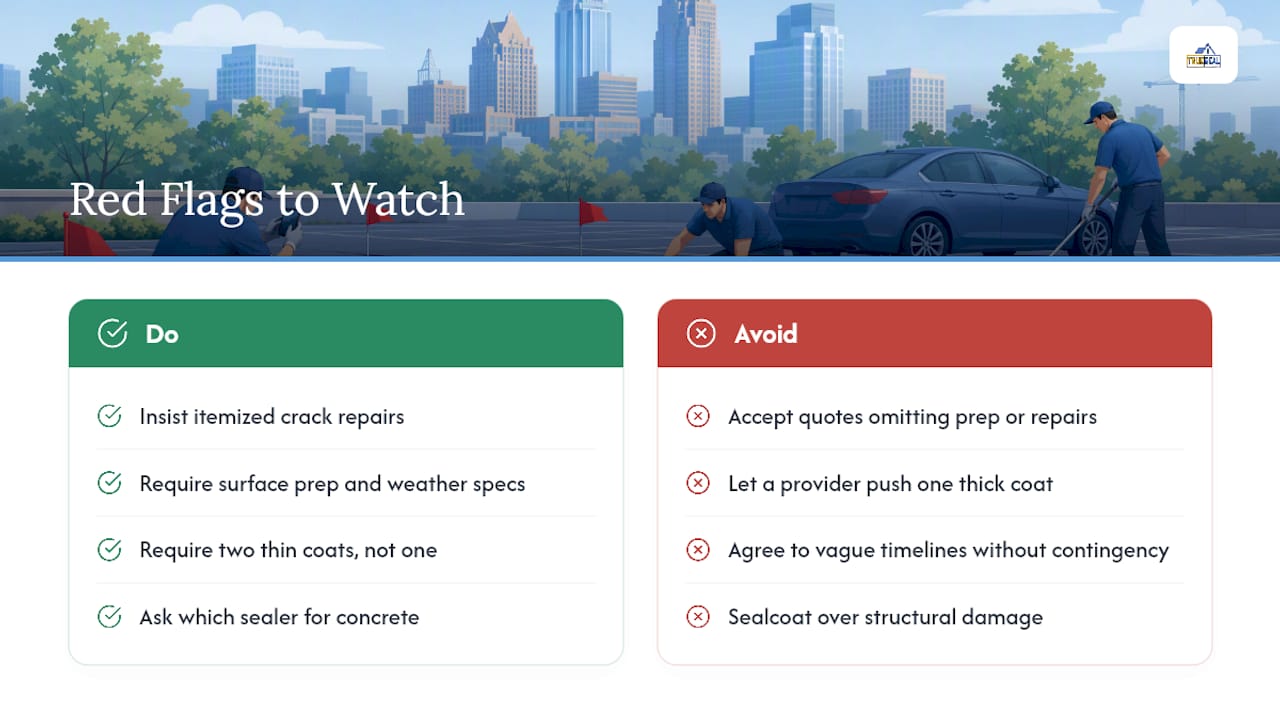
Some warning signs show up before a contract is ever signed. A quote with no mention of surface prep, crack repair, or weather requirements is a quote built to win on price, not to hold up over time. If crack sealing and patching aren’t itemized separately from the sealcoat application, ask why, since skipping that step is the leading cause of early sealcoat failure.
Be cautious of providers pushing a single thick coat as faster and just as good. It is not. Two thin coats consistently outperform one heavy application because a heavy single coat cures unevenly and traps moisture underneath, which shows up later as peeling.
Watch for vague timelines with no weather contingency built in. Sealcoating applied in the wrong temperature or humidity conditions fails faster, and a provider who doesn’t factor that into scheduling is either inexperienced or cutting corners. Similarly, be wary of anyone who won’t explain what sealer they’re using on concrete surfaces specifically, since a mismatch between sealer type and concrete porosity leads to peeling, discoloration, or a shortened lifespan on decorative or structural concrete.
Finally, be skeptical of any provider who can’t articulate why they’re recommending sealcoating now versus repairs first. If a surface shows alligator cracking or potholes and a provider is ready to sealcoat over it without discussing structural repair, that’s a sign they’re selling a quick job rather than a durable one.
Why Preservation Beats Commodity Pressure Washing
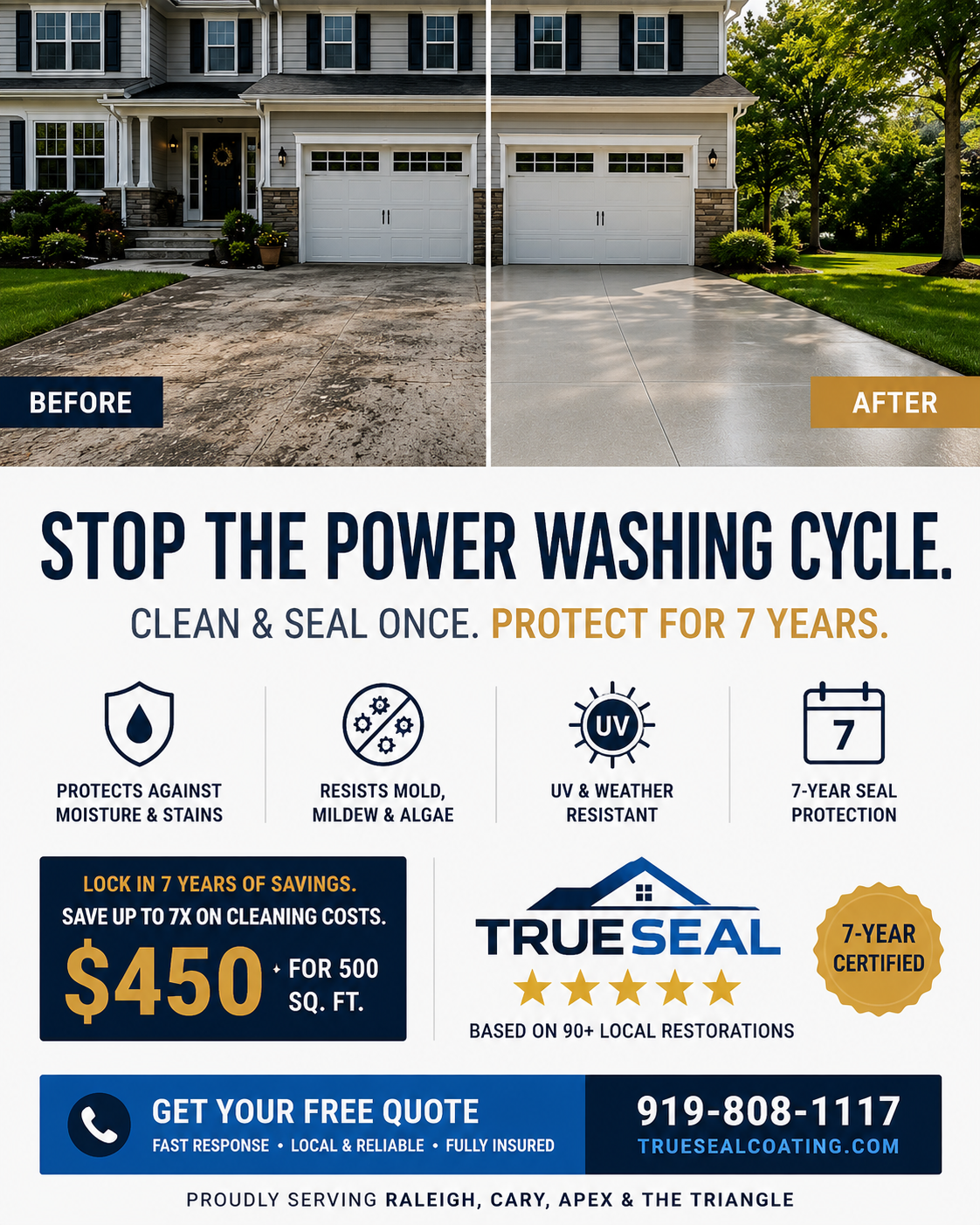
Most companies in this space sell you a wash. We built TrueSeal around a different premise: pressure washing resets the look of a surface, but it does nothing to stop the oxidation, water intrusion, and UV breakdown happening underneath. Stop treating the surface like it only needs to be washed, and you start actually protecting it.
That’s the gap our remote assessment process is built to close. Instead of guessing at scope from a driveway or a parking lot photo taken in passing, we look at the specific surface, condition, and exposure before recommending a plan, then apply water-repellent finishes matched to that surface rather than a one-size product. For property managers weighing multiple bids, that distinction between “cleaned” and “protected” is usually the entire difference in how long the result lasts. Our pavement and concrete services reflect that approach directly, and it’s worth reviewing before comparing us against a generic pressure-washing quote.
— TrueSeal
Ready to Protect Your Raleigh Property Long Term?
TrueSeal is the specialized alternative to hiring a generic pressure-washing outfit and hoping it holds up. Where a standard wash-and-go service leaves your asphalt or concrete just as exposed to oxidation and water intrusion as before, TrueSeal pairs cleaning with commercial-grade sealcoating, crack repair, and sealer selection matched to your actual surface, so the result lasts instead of just looking clean for a few weeks.
[
This fits Raleigh and Wake County property managers, HOAs, and commercial owners who need a real scope, not a guess. The remote assessment process means you get a tailored plan from photos and a short description, no site visit required to get started. Whether you’re maintaining a retail parking lot, a driveway, or decorative hardscape like pavers or stamped concrete, the process starts the same way. Request your quote through TrueSeal’s concrete and pavement page and get a scoped plan built around your property, not a flat rate guessed over the phone.
Sources
FAQ
Does Sealcoating Actually Prevent Long-Term Damage?
Yes. Sealcoating blocks UV oxidation and slows water intrusion into asphalt, which are the two biggest drivers of surface breakdown over time, according to professional sealcoating guidance.
How Often Should Asphalt or Concrete Be Resealed?
There’s no single fixed interval since it depends on traffic, sun exposure, and surface prep quality; a periodic visual inspection is the most reliable way to know when reapplication makes sense.
Can Sealcoating Fix Cracked or Damaged Pavement?
No. Sealcoating protects sound surfaces, but alligator cracking, potholes, and severe rutting need repair first, following the FHWA’s preservation timing principle of treating the right problem at the right stage.
Do I Need to Be On-Site for TrueSeal’s Assessment?
No. TrueSeal’s remote assessment works from photos and a short description of your surface, returning a tailored protection plan without requiring an in-person visit first.
What’s the Difference Between Pressure Washing and Sealcoating?
Pressure washing removes surface dirt and buildup; sealcoating adds a protective layer that blocks UV and water damage, which washing alone cannot do.


Comments