48–72 hours: Seal Your Raleigh Driveway with a Photo Quote


The best window for sealing season in Raleigh runs from late spring through early fall, whenever temperatures hold above roughly 50–55°F and a dry stretch of about 48 to 72 hours is on the forecast. Rain, high humidity, and cool overnight lows are the real deciding factors, not the calendar. If your driveway or lot is structurally sound, request a remote assessment from TrueSeal to get a photo-based quote without waiting on a site visit.
TL;DR:
The optimal sealing window in Raleigh depends on forecasted dry, warm conditions above 50–55°F for at least 48 hours, mainly from late spring to early fall.
Summer weather can be unpredictable with thunderstorms and high humidity, increasing the risk of adhesion failure if weather windows are not scheduled carefully.
Peak demand months often lead to longer lead times of one to three weeks, making early remote assessments advantageous for securing a spot during good weather.
Proper sealing involves surface inspection, cleaning, crack repairs, and two thin coats, with curing affected by humidity, temperature swings, and rain.
Contractors with local experience, clear written scopes, and a weather contingency plan are most reliable, while reseal recommendations typically fall between three and five years.
Table of Contents
What Does Sealing Season Mean in Raleigh?
“Sealing season” isn’t a fixed date range. It’s a description of conditions: warm enough, dry enough, for long enough. Sealer needs air and surface temperatures above roughly 50–55°F for at least 48 hours to cure properly, with a dry forecast on either side of application day. Lower humidity speeds that process along; muggy air slows it down and raises the risk of a soft, tacky finish.
In Raleigh, that combination shows up most reliably from May through October. A few nuances are worth knowing before you pick a date:
Late April and early May can work, but overnight lows still dip into the 40s some years, so contractors watch the ten-day forecast closely.
June through August offer the most consistent heat, though afternoon thunderstorms shrink the usable dry window on any given week.
September and early October often deliver some of the most stable stretches, with lower humidity and fewer pop-up storms than midsummer.
Late fall (after mid-October) becomes a gamble as nighttime temperatures start falling below the cure threshold.
Rather than picking a month and hoping, ask your contractor to check for a genuine multi-day dry gap. One sunny afternoon squeezed between two rainstorms isn’t a scheduling window. It’s a coin flip.
How Raleigh’s Climate Affects the Final Result
Sealcoat is a barrier, and Raleigh’s weather tests that barrier on both ends of the calendar. Summer sun is intense enough to dry out and oxidize asphalt binder over time, which is precisely what a fresh sealcoat is designed to slow down. Applied at the right time, it blocks UV exposure and keeps the surface from turning gray and brittle years before it should.
Rain and humidity are the flip side of the same coin. Moisture that arrives during or shortly after application can cause the coating to lose adhesion or peel in patches, and Raleigh’s summer storm pattern often means the dry window that looked reliable on Monday is gone by Thursday. That’s why experienced crews build in buffer days rather than booking back to back.
Intense sun accelerates binder aging; sealcoat slows that oxidation process.
High humidity and rain during cure raise the risk of adhesion failure or peeling.
Freeze/thaw swings in late fall and early spring are the edge cases worth avoiding altogether.
Statistic to know: manufacturers and experienced contractors generally require a dry forecast for at least 24 to 48 hours after application, which is why a single clear day rarely qualifies as a safe scheduling slot in Raleigh’s humid summers.
What Drives Cost and Availability During Peak Season?
We won’t quote per-square-foot rates here, because local pricing varies with property specifics and should come from an actual quote, not a national average. What we can tell you is what actually moves the number and the timeline.
Surface condition and prep work. A driveway that needs heavy power washing, moss treatment, or crack filling before sealing takes more labor than one that’s already clean and sound.
Area complexity. Odd angles, multiple access points, and tight quarters near landscaping or structures slow the job down compared to an open rectangular slab.
Access and traffic control. Commercial lots that stay open to customers or residents during the work often need phased scheduling, which affects both cost and completion date.
Seasonal demand. Peak months bring longer lead times because good weather windows fill up fast; scheduling during shoulder periods or weekends can open up faster availability.
When you’re comparing estimates, ask each contractor to spell out exactly what’s included in the scope, which materials they use, and how flexible their scheduling window is if weather pushes the date. Vague answers here usually mean vague results later. For a closer look at how cost factors compare to simple pressure washing, it helps to understand what you’re actually paying for.
What Should You Expect From a Professional Sealcoating Job?
A proper sealcoating job is a process, not a single spray-down. Here’s what a professional scope typically includes:
Inspection of the surface for cracking, ponding, or soft spots before any work begins.
Power cleaning to strip dirt, oil residue, and organic growth that would block adhesion.
Crack filling or spot repair on any damaged areas.
Two thin coats of sealer, applied in separate passes rather than one heavy layer.
Optional striping or polymer additives for commercial lots that need lane markings or extra durability.
On your end, plan for vehicle access restrictions, since fresh sealcoat needs time to cure before it can handle foot or tire traffic. Keep pets and children off the surface during that window, and cover nearby plants if the crew requests it.
Pro Tip: If a driveway or lot shows alligator cracking (a web of interconnected cracks) or feels spongy underfoot, sealing it will only hide the problem temporarily. That kind of damage points to structural failure in the base, and sealing over it doesn’t add strength, it just delays the repair conversation.
How Do You Choose a Sealcoating Contractor in Raleigh?
Comparing quotes gets easier once you know what actually separates a careful contractor from one who’s just filling a calendar slot. Use this checklist on your next call:
Ask about local experience. A contractor who works regularly in Raleigh and Wake County understands the region’s storm patterns and won’t guess at scheduling.
Request a written scope, not a verbal estimate. It should list prep steps, number of coats, and materials by name.
Ask for before-and-after photos from recent local jobs, not stock images.
Confirm whether they offer remote or photo-based assessments, which speeds up the quote process without a site visit.
Ask directly what happens if it rains on the scheduled day. A contractor with a real weather-contingency plan will answer without hesitation.
Ask about maintenance recommendations after the job, including the expected reseal timeline.
Red flags are just as telling as good answers. Walk away from anyone who offers a vague scope with no material names, promises to seal over cracking or spongy pavement without mentioning repair first, or can’t produce a single photo or reference from past Raleigh work. For property managers juggling multiple sites, a dedicated guide to scheduling and maintenance can make comparing contractors faster.
TrueSeal’s Approach to Raleigh’s Sealing Season
TrueSeal built its process around the exact problem Raleigh’s climate creates: short, unpredictable dry windows during peak demand. Instead of requiring an in-person visit just to generate a quote, TrueSeal uses a remote photo assessment that lets homeowners and property managers get a tailored plan without waiting for a scheduling slot to open up.
That approach pays off most during the busiest months:
Faster booking, since photos replace the initial site visit.
Fewer delays waiting for an estimator to be available.
Clear upfront answers about what prep the surface will need before sealing.
Every project applies two thin coats for durability rather than one heavy pass, using water-repellent finishes designed to hold up against Raleigh’s summer humidity and UV exposure across seasons and not just one.
Where to Find Trusted Sealcoating Professionals in Raleigh
Finding a trustworthy sealcoating contractor in Raleigh comes down to verifying local track record, not just picking the first search result. Look for a company that names its actual service area (Raleigh, Cary, Apex, and the rest of Wake County) rather than a vague “we serve the Triangle” claim, since that specificity usually reflects real local job history.
Check for a contractor who publishes real project photos from the neighborhoods you recognize, not generic stock imagery that could belong to any city. Ask whether they handle both residential driveways and commercial pavement, since a company that only does one or the other may lack experience with the traffic control, striping, or access issues that come with parking lots and HOA properties.
A dedicated commercial property guide is a good sign the contractor understands the difference between a homeowner’s driveway and a retail lot with customer traffic. Property managers overseeing several sites should also look for a provider offering parking lot scheduling built around commercial pavement needs, since coordinating multiple properties around Raleigh’s weather windows takes more planning than a single residential job.
Finally, ask about the reseal interval they recommend. Reputable Raleigh contractors typically suggest resealing every three to five years, and if someone tries to sell you a shorter cycle without explaining why your specific surface needs it, treat that as a reason to ask more questions.
What’s the Timeline From Booking to a Finished Driveway?
The process from first contact to a cured, ready-to-use surface breaks down into a few predictable stages, though the length of each stage shifts with the season.

During off-peak months (late fall through early spring), scheduling tends to move faster: a remote assessment can turn into a booked date within days, since fewer homeowners are competing for the same weather windows. The job itself, from prep through the final coat, usually spans one to two days depending on surface size and condition, plus curing time before vehicles return.
Peak season (June through September) works differently. Lead times stretch out because everyone wants the same dry stretches, and a contractor juggling multiple Raleigh jobs may need one to three weeks of notice before your preferred date opens up. Weather delays are common here too. A single unexpected storm can push a job back several days if the surface hasn’t fully cured.
The practical takeaway: if you’re aiming for a summer completion, reach out well before the season gets busy. Requesting a remote assessment early, even a month or two ahead, secures your spot in the queue before contractors fill their calendars with jobs that already have confirmed dry windows locked in.
Why Raleigh’s Sealing Season Rules Get Oversimplified
Most seasonal guidance treats sealing season like a light switch: flip it on in May, flip it off in October. That’s not wrong, exactly, but it skips the part that actually determines whether your driveway holds up. Raleigh’s weather doesn’t move in clean monthly blocks. It moves in short, unpredictable dry windows tucked inside a humid, storm-prone stretch of the year.

The conventional advice tells you which months are “good.” What it doesn’t tell you is that a bad week in a good month beats a good week in a marginal one. That distinction gets lost in most driveway sealing checklists, and it’s exactly why remote, forecast-aware scheduling matters more than picking a date off a calendar in April and hoping.
If you take one thing from this, prioritize the forecast over the season name. A contractor who checks the ten-day outlook before locking a date is doing more for your driveway’s longevity than one who just tells you “summer is best” and moves on. Sealing right once beats resealing twice because the timing was rushed.
— TrueSeal
Get a Season-Ready Assessment Before the Next Dry Window Closes
TrueSeal skips the scheduling bottleneck that slows down most sealcoating companies during Raleigh’s busy months. Instead of waiting for an in-person estimate visit, you send photos and get a tailored protection plan back, often in far less time than a traditional site-visit quote takes to arrange.
[
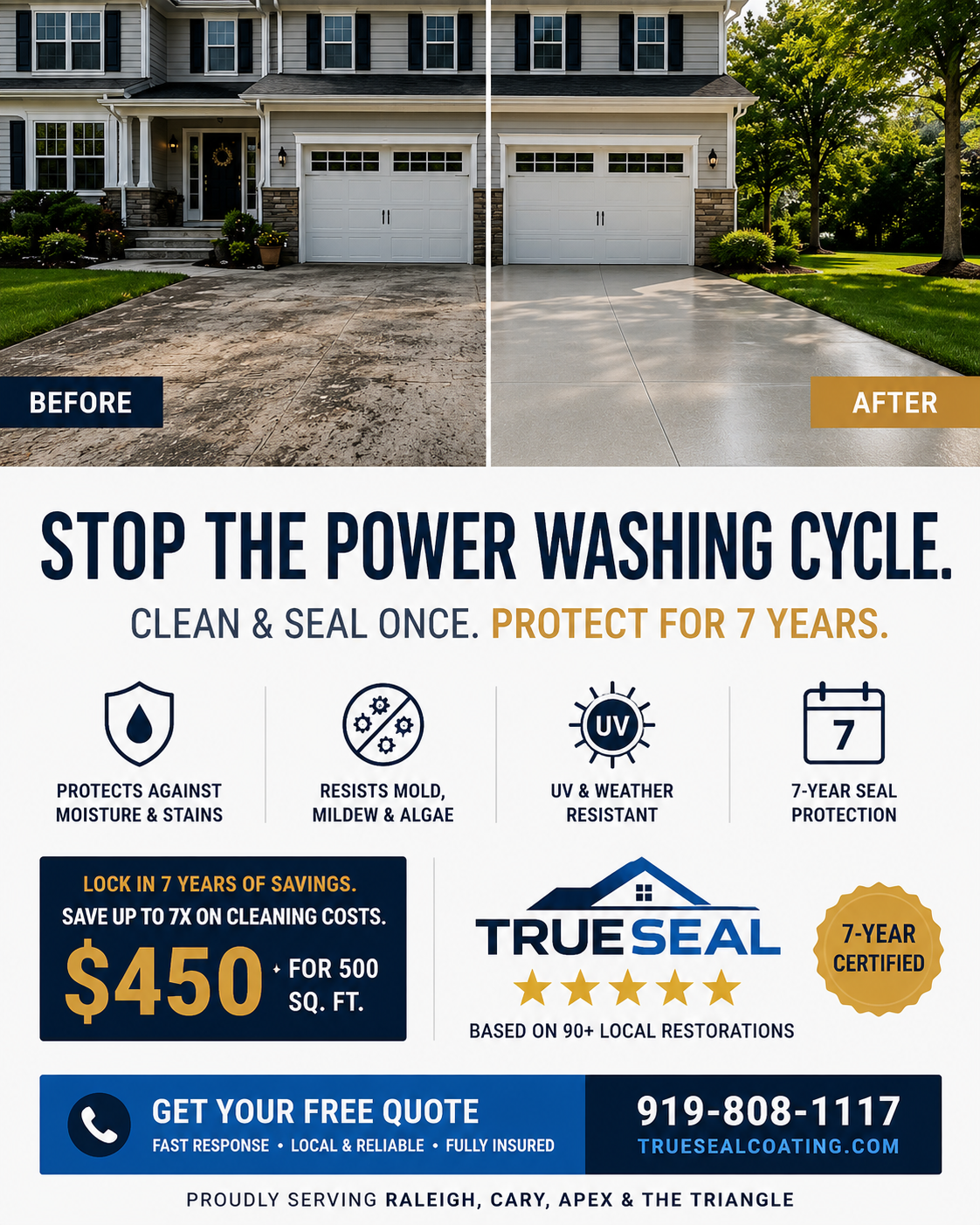
Two things set this apart for Raleigh and Wake County property owners. First, the remote assessment process means you can lock in your spot on the schedule before a good dry window fills up, without rearranging your day for a contractor visit. Second, TrueSeal’s service area covers Cary, Apex, Raleigh, and the surrounding Wake County communities, so the same local weather knowledge applies whether you’re sealing a driveway or a small commercial lot. If your home or property could use a durable, water-repellent finish before the next reliable stretch of dry weather, start with a free photo quote and get a plan built around your actual surface and timeline.
Sources
FAQ
What time of year is best for sealcoating in Raleigh?
Late spring through early fall, roughly May through October, works best, provided temperatures stay above 50–55°F and a 48 to 72 hour dry window is on the forecast.
Can you seal a driveway in winter?
Sealing in winter is generally not recommended, since cold temperatures and freeze/thaw swings prevent the sealer from curing properly and can cause it to fail early.
How often should a Raleigh driveway be resealed?
Most professionals recommend resealing every few years depending on traffic, sun exposure, and surface condition, though sealing never repairs structural damage.
What time of year is best to visit Raleigh, and does that affect scheduling demand?
Spring and fall bring pleasant weather and more visitors to Raleigh, which overlaps with peak sealcoating demand and can mean longer contractor lead times during those same months.
Can sealing fix cracked or crumbling pavement?
No. Sealcoating protects sound pavement from moisture and UV damage, but alligator cracking or spongy areas signal structural failure that sealing alone cannot repair.


Comments