Soft Washing vs Pressure Washing: 2026 North Carolina Guide

Updated: Aug 12
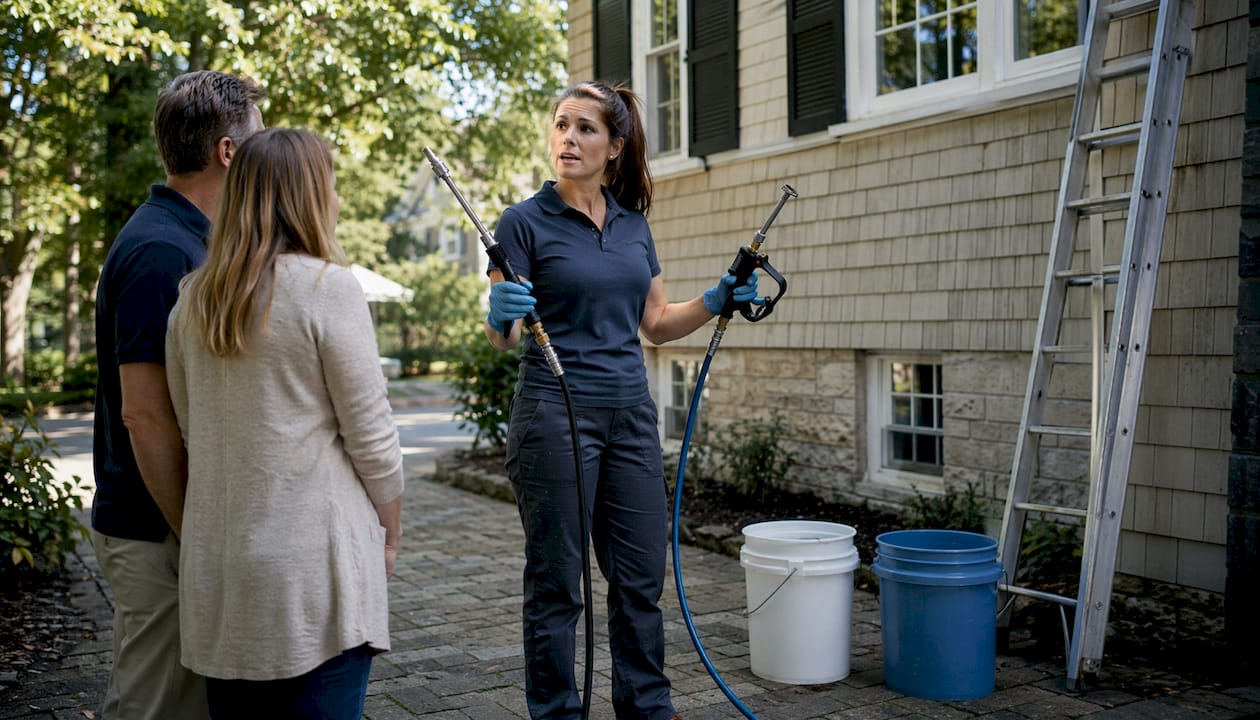
What’s the real difference between soft washing and pressure washing?
Soft washing and pressure washing are not the same technique at different intensities. They are fundamentally different cleaning methods designed for different surfaces, and using the wrong one causes real damage.
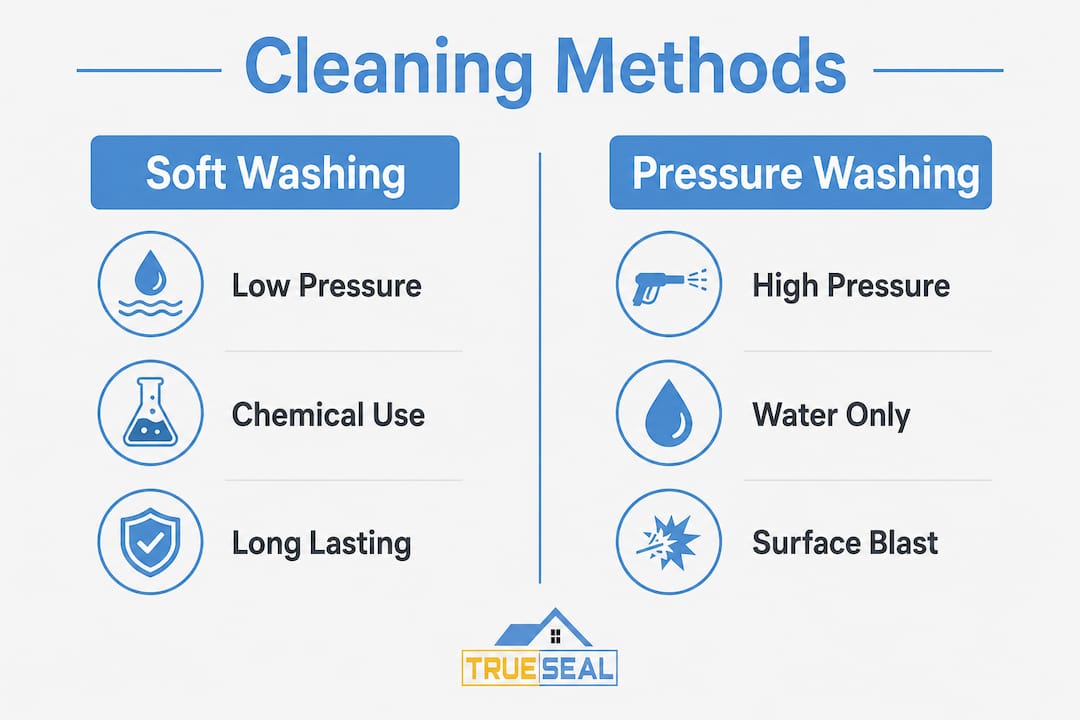
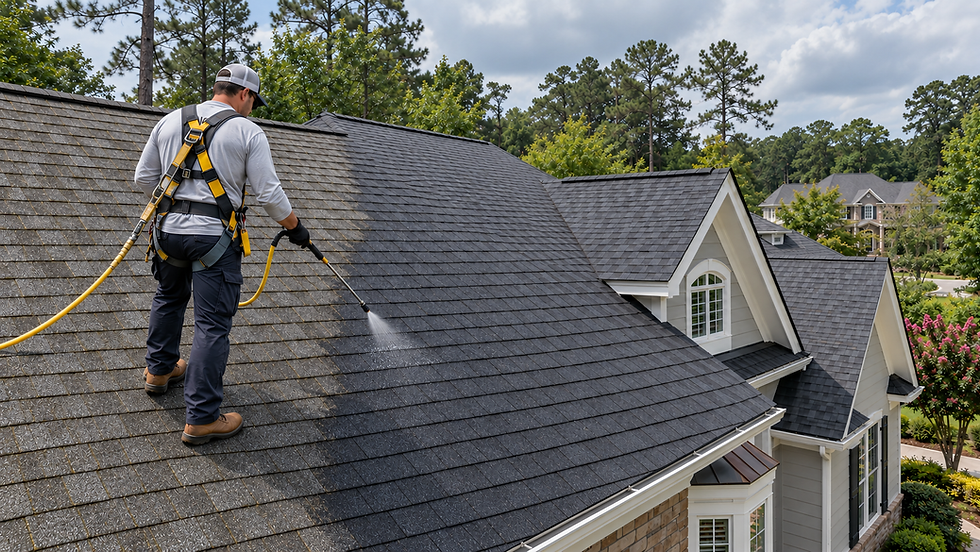
Pressure washing uses high-pressure water, typically between 2,500 and 4,000 PSI, to mechanically blast dirt, oil, and grime off hard surfaces like concrete and brick. Soft washing typically operates below 500 PSI and relies on biodegradable chemical solutions, primarily sodium hypochlorite plus surfactants, to kill organic growth at the root rather than scrub it off the surface.
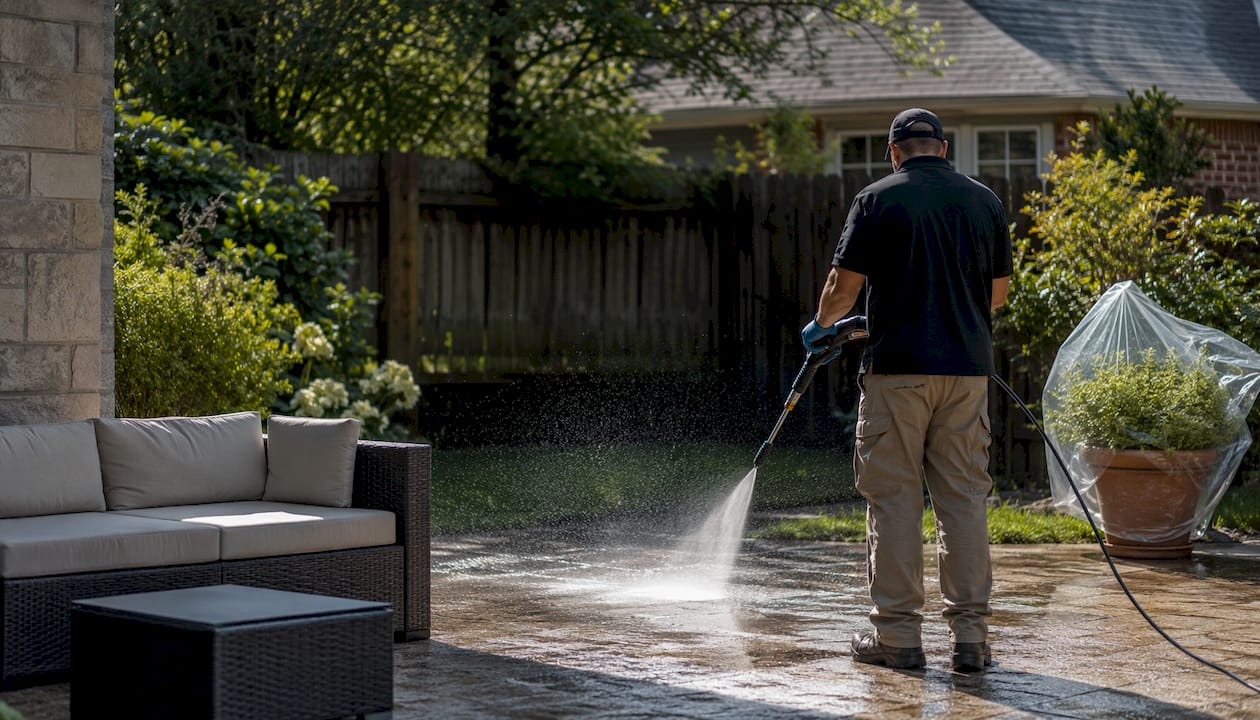
Here is where each method belongs:
Soft washing is the right choice for:
Roof shingles (asphalt, tile, or slate)
Vinyl, wood, stucco, and painted siding
Wood and composite decks and fences
Window screens and pool enclosures
Any surface where high pressure would force water behind panels or strip coatings
Pressure washing is the right choice for:
Concrete driveways, sidewalks, and patios
Brick and natural stone hardscapes
Paver walkways and pool decks
Parking lots and garage floors
The longevity gap between the two methods is significant. Soft washing results on siding last 18–30 months because the chemicals kill organisms at the root. Pressure washing only removes visible surface growth, so regrowth returns faster. On roofs, soft washing can deliver results lasting well beyond two years, while pressure washing should never be used on shingles at all since high pressure strips the protective granules that defend asphalt against UV damage.
The biggest risk with pressure washing is hidden moisture damage. When high-pressure water hits vinyl siding, it can force water behind the panels and into wall cavities where it breeds mold that is expensive and difficult to detect. Soft washing carries its own risks if chemicals are mixed incorrectly or rinsed carelessly around plants and metals, but surface damage is far less likely when the technique is applied correctly.
On the environmental side, professional soft wash solutions use biodegradable formulas that break down after application. Pressure washing generates high-volume runoff that can carry contaminants into storm drains, so responsible operators manage runoff carefully on both methods.
Pricing for both services varies by surface area, condition, and provider. Soft wash chemistry costs more than plain water, and the labor requires careful mixing and dwell time management, which is why soft washing is typically priced comparably to pressure washing despite using lower pressure equipment.
Which North Carolina providers should you hire?
Three Triangle-area companies stand out for soft washing and pressure washing services in North Carolina. Each is licensed and insured, carries a 5-star Google rating, and offers free estimates.
Provider | Services Offered | Specializations | Certifications & Rating | Service Area | Pricing Notes |
Residential & commercial soft/pressure washing, house washing, roof & gutter cleaning, window cleaning, parking lot & garage cleaning, multi-unit communities | Large-scale exterior cleaning, roof cleaning, concrete, decks | Licensed & insured; 5-star Google rating with over 100 reviews | Raleigh, Durham, Chapel Hill, Apex, Triangle area | Free estimates | |
Soft washing, pressure washing, rust removal, window cleaning, apartment complex & HOA cleaning, roof & concrete cleaning | Residential & commercial exterior cleaning, rust removal, HOA properties | Licensed & insured; 5-star Google rating with over 100 reviews | Clayton, NC and surrounding areas | Free estimates | |
Exterior cleaning, pressure washing, soft washing, roof cleaning, window cleaning, patio & concrete slab washing | Residential & commercial exterior cleaning | 5-star Google rating with over 50 reviews; Veteran, First Responder & Doctor discounts | Raleigh and surrounding areas | Free estimates; competitive pricing |
Carolina Sky Softwash covers the broadest geographic footprint in the Triangle, with a service menu that extends to commercial parking lots, restaurant exteriors, and multi-unit communities. If your property is a larger commercial site or you need a single provider to handle multiple building types, their range of specializations makes them a practical fit.
Patriot Softwash in Clayton focuses on knowledgeable, professional technique and specifically calls out innovative equipment and methods. Their inclusion of rust removal and HOA power washing sets them apart for properties dealing with mineral staining or community-wide maintenance contracts.
Carolina Shine Soft Wash keeps its focus on residential and commercial exterior cleaning in the Raleigh area, with veteran and first responder discounts that reflect a community-oriented approach. For homeowners who want straightforward exterior cleaning at competitive pricing with a free estimate, they are a solid option.
How do you choose the right cleaning method and provider?
The surface material is the first decision point, not the level of dirt. Concrete can handle 3,000+ PSI without etching if the operator uses the right nozzle and distance. Vinyl siding cannot. Start there before evaluating anything else.
Key factors to weigh before booking a service:
Surface type: Hard, dense materials (concrete, brick, stone) suit pressure washing. Soft, coated, or porous materials (siding, roofs, wood) require soft washing.
Type of contamination: Organic growth like algae, mildew, lichen, and moss calls for soft washing because chemistry kills the spores. Inorganic dirt, oil, and rust on hard surfaces call for pressure washing.
Risk of water intrusion: Any surface with gaps, seams, or panels behind which water can pool should be soft washed. Vinyl siding is the most common example.
Post-cleaning plans: If you intend to seal concrete, pavers, or a driveway after cleaning, the cleaning method directly affects how well the sealer bonds. Proper surface preparation before sealing is covered in detail in this driveway sealing guide.
Provider credentials: Verify that any company you hire is licensed and insured. Ask specifically whether they carry general liability coverage and whether their technicians are trained on chemical mixing ratios and runoff control.
Preparation steps matter. Before soft washing, pre-rinse all landscaping and cover any metals that could react with sodium hypochlorite. Before pressure washing concrete, clear loose debris and pre-treat oil stains with a degreaser for better results. For natural stone surfaces, residential stone cleaning tips offer useful guidance on protecting porous materials during and after washing.
Pro Tip: For heavily stained hardscapes like paver patios or pool decks, a dual-method approach works best: apply a soft wash solution first to kill biological roots, let it dwell for 10–20 minutes, then follow with pressure washing to remove loosened debris. You get a deeper clean and longer time between services.
After cleaning, post-maintenance matters as much as the cleaning itself. Sealing concrete and pavers after washing locks out moisture, resists staining, and extends the life of the surface. Skipping that step means the surface re-soils faster and organic growth returns sooner.
Schedule your concrete sealing service in North Carolina
Cleaning your exterior surfaces is only half the job. Once the surface is clean, protecting it is what makes the results last.
Truesealcoating serves homeowners and property managers throughout Cary, Apex, Raleigh, Morrisville, and greater Wake County with professional surface cleaning, restoration, and long-term protection. Our signature Clean & 7-Year Seal system is built specifically for North Carolina’s humidity, UV exposure, and seasonal temperature swings. If your driveway, patio, walkway, or pavers no longer bead water after rain, the surface is absorbing moisture and staining faster than it should.
We specialize in residential concrete and paver sealing as well as commercial pavement protection for HOAs, retail centers, and multifamily communities. Request your free quote today and get a surface assessment from a team that treats protection as the goal, not just a clean rinse.
Key Takeaways
Soft washing kills organic growth at the root using chemical dwell time, while pressure washing removes inorganic dirt from hard surfaces through mechanical force, and choosing the wrong method for the surface causes damage that costs more to repair than the cleaning itself.
Point | Details |
Pressure ranges differ sharply | Pressure washing runs 2,500–4,000 PSI; soft washing stays under 500 PSI. |
Soft washing lasts longer on siding | Results on siding last 18–30 months because chemicals kill organisms at the root. |
Wrong method causes real damage | High pressure on vinyl siding forces water behind panels, creating hidden mold. |
Dual method works best on hardscapes | Pre-treat with soft wash to kill biological roots, then pressure wash to remove debris. |
Truesealcoating seals after cleaning | The Clean & 7-Year Seal system protects North Carolina driveways, patios, and pavers long-term. |
FAQ
What PSI is considered soft washing?
Soft washing operates below 500 PSI. The cleaning work is done by the chemical solution, not the water pressure.
Can you pressure wash a roof?
No. High pressure strips the granules from asphalt shingles and can crack tile or slate. Roofs should always be soft washed using a low-pressure chemical application.
How long do soft washing results last compared to pressure washing?
Soft washing results on siding last 18–30 months. Pressure washing on concrete typically requires repeat cleaning every 12–18 months as dirt accumulates again.
Should I seal my concrete after pressure washing?
Yes. Sealing after cleaning locks out moisture, reduces staining, and extends the surface life. Truesealcoating’s Clean & 7-Year Seal system is designed for exactly this step in North Carolina conditions.
How do I verify a soft washing provider is qualified?
Confirm the company is licensed and insured, ask about their chemical mixing process and dwell time protocol, and verify they use dedicated soft wash equipment rather than just a pressure washer turned to low.
Recommended


Comments