Stamped Concrete Sealing Guide for Raleigh, NC Homeowners

Updated: Aug 12
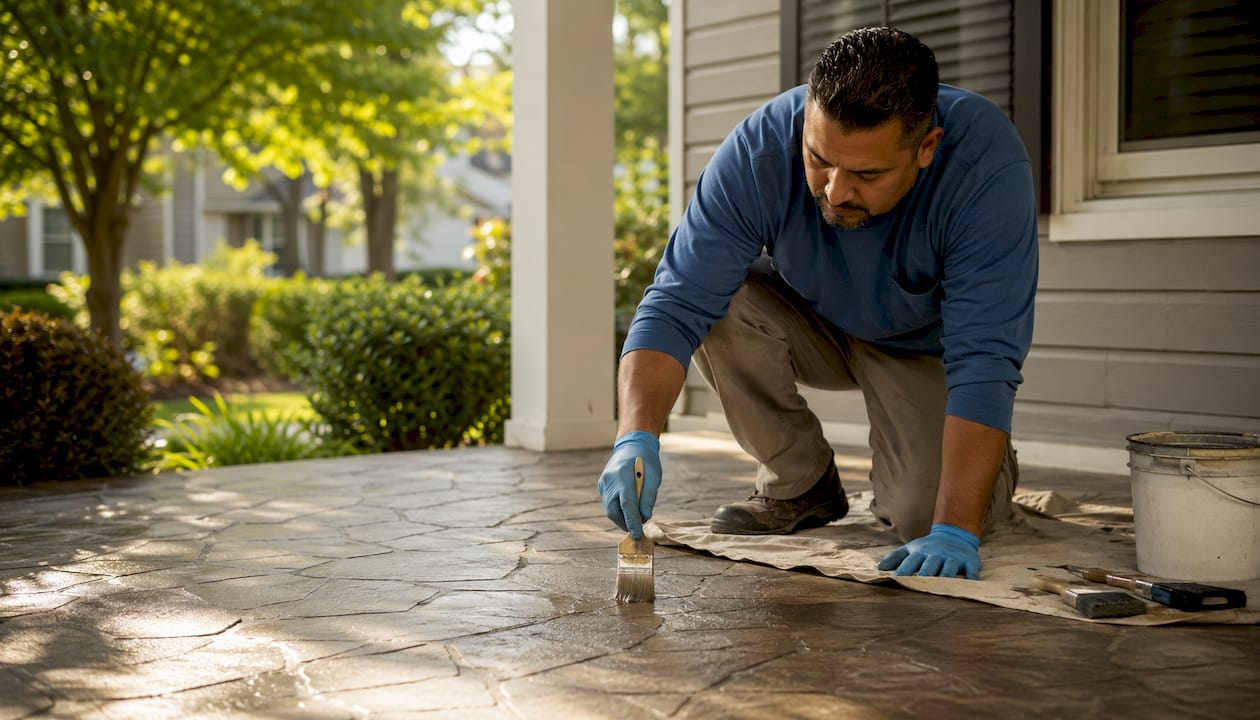
Sealing stamped concrete is the single most effective step you can take to protect your patio, driveway, or walkway from North Carolina’s heat, humidity, and freeze-thaw cycles. A quality sealer forms a protective film over the surface, blocking moisture, UV rays, stains, and abrasion before they can degrade the color and texture you paid for. For Raleigh-Durham homeowners evaluating local contractors, four providers stand out: TrulyHome Concrete, Concrete Transformations, Inc, RGPACK CONCRETE, and Parral Concrete LLC. Each brings a different mix of specialization, credentials, and pricing transparency.
Need professional concrete sealing in Cary, Apex, or Raleigh? Explore our Clean & 7-Year Seal service.
Provider | Services Offered | Specialization | Reviews / Credentials | Pricing Transparency |
TrulyHome Concrete | Stamped concrete, driveways, patios, walkways | Custom stamped concrete, residential and commercial | Strong local reputation | Transparent quotes, no hidden fees |
Concrete Transformations, Inc | Stamped concrete, overlays, hardscapes, pavers, pergolas | Decorative overlays, 20 years of regional experience | Premier Raleigh hardscape company | Not publicly listed |
RGPACK CONCRETE | Driveways, patios, walkways, stamped and decorative concrete | Residential concrete, driveway specialists | Licensed and insured | Not publicly listed |
Parral Concrete LLC | Driveways, stamped concrete, patios | Concrete pumping, masonry, stamping, stucco | Fully insured, top-rated family operation | Not publicly listed |
Table of Contents
What does sealing stamped concrete actually protect against?
Stamped concrete looks finished on day one, but the surface is porous and vulnerable without a sealer. Moisture absorption causes freeze-thaw cracking and spalling, a real concern in the Triangle where winter temperatures swing unpredictably. A sealer addresses that and much more.
Key benefits of sealing your stamped concrete:
Moisture barrier. Sealing prevents water from penetrating the surface, reducing the risk of cracking and spalling during cold snaps.
UV protection. Acrylic sealers are UV resistant and non-yellowing, keeping stamped colors vibrant through long North Carolina summers.
Stain resistance. A sealed surface resists oil, leaf stains, organic debris, and deicing chemicals far better than bare concrete.
Enhanced appearance. Film-forming sealers deepen color and add sheen, from satin to high gloss, bringing out the contrast in stamped patterns.
Easier maintenance. Sealed concrete cleans up with soap and water instead of aggressive scrubbing or chemical treatments.
Abrasion resistance. The sealer acts as a sacrificial coat, absorbing wear from foot and vehicle traffic so the decorative layer underneath stays intact.
How does the stamped concrete repair and sealing process work?
Professional sealing follows a defined sequence. Skipping any step, especially surface preparation, is the most common reason sealers fail early.
Surface cleaning. A power washer with sufficient pressure is used to remove dirt, release agents, and contaminants effectively. A phosphoric or muriatic acid wash may follow to open concrete pores, then a neutralizer rinse restores pH.
Drying time. The slab needs 12–24 hours to dry completely after washing. Any residual moisture under a film-forming sealer causes bubbling and poor adhesion.
Crack and spall repair. Loose or damaged areas are patched before sealing. Applying sealer over active cracks only traps the problem.
Sealer selection. For exterior stamped concrete, solvent-based acrylic sealers generally outperform water-based products outdoors because they penetrate well and resist turning milky. Penetrating sealers work for commercial projects where appearance enhancement is secondary.
Application method. The preferred technique is spray-and-back-roll: spray the sealer on, then roll it back to distribute it evenly across the textured surface and prevent pooling in low spots.
Coat thickness. Two thin coats at 1–2 mils dry thickness outperform one heavy coat every time. Over-application causes delamination, bubbling, and a milky white appearance that is difficult to reverse.
How often should you reseal stamped concrete?
Reseal on an as-needed basis, not on a fixed calendar. The American Society of Concrete Contractors (ASCC) recommends visual inspection over rigid schedules, because sealer life varies widely based on traffic, sun exposure, and the original product used.
Watch for these signs your sealer is wearing out:
The surface looks gray or matte instead of rich and slightly glossy.
Water no longer beads on the surface. It soaks in instead.
Color appears faded or blotchy, especially when wet.
Pro Tip: Pour a small amount of water on your patio or driveway. If it absorbs within a few seconds rather than beading up, your sealer has worn through and the surface needs attention.
If your concrete absorbs water, it may be time for professional protection. Request your free quote from Truesealcoating today.
For typical residential exterior stamped concrete, acrylic sealers last roughly 2–3 years in high-traffic or sun-exposed areas, and 4–5 years in lighter-traffic or shaded spots. Resealing too often builds up unnecessary layers that can themselves cause delamination. When resealing, always match the original sealer’s resin family: solvent-based on solvent-based, water-based on water-based. Learn more about concrete sealer longevity before scheduling your next application.
How do Raleigh-Durham stamped concrete providers compare?
Choosing a local contractor comes down to five factors: services offered, specialization, customer reviews, pricing transparency, and whether they carry proper credentials. Licensed and insured status protects you if something goes wrong on your property. BBB accreditation signals a contractor who stands behind their work.
Provider | Services | Specialization | Credentials | Pricing | Notes |
TrulyHome Concrete | Stamped concrete, driveways, patios, walkways, excavation | Custom stamped concrete, residential and commercial | Not publicly listed | Transparent, no hidden fees | Strong residential focus |
Concrete Transformations, Inc | Stamped concrete, overlays, hardscapes, pavers, water features | Decorative overlays, hardscape design | 20 years local experience | Not publicly listed | Broad hardscape scope |
RGPACK CONCRETE | Driveways, patios, walkways, stamped and decorative concrete | Residential driveways | Licensed and insured | Not publicly listed | Family-owned, local |
Parral Concrete LLC | Driveways, stamped concrete, patios | Concrete pumping, masonry, stucco | Fully insured | Not publicly listed | Top-rated family operation |
Before hiring any contractor, ask these questions: Are you licensed and insured in North Carolina? Can you provide references for stamped concrete sealing specifically? What sealer product do you use, and why? How do you handle surface preparation? What is your warranty or callback policy if the sealer fails early?
Red flags to watch for: contractors who skip surface cleaning before sealing, who apply sealer in direct midday sun, who cannot name the specific product they plan to use, or who quote unusually low prices without explaining their process. For a broader look at trusted local home service providers in the Raleigh area, One Day Doors & Closets of Raleigh is one example of a vetted local operator worth referencing when vetting contractors in your area.
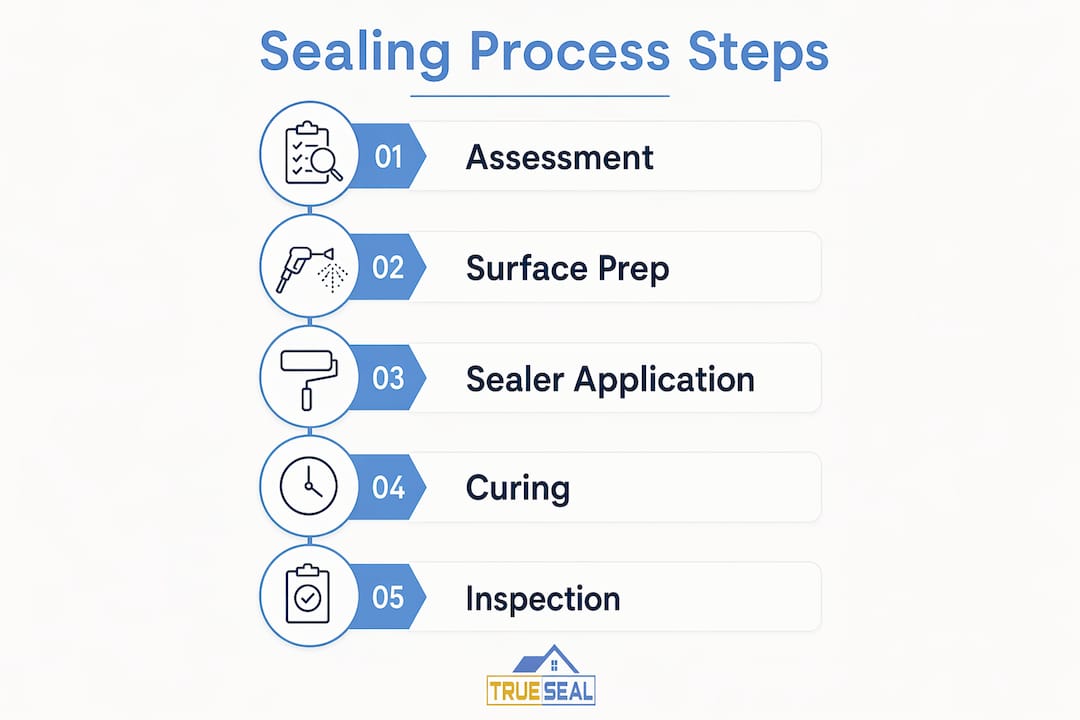
What does the sealing process look like from start to finish?
A professional stamped concrete sealing job typically runs two to three days from first contact to final cure. Here is what that timeline looks like in practice.
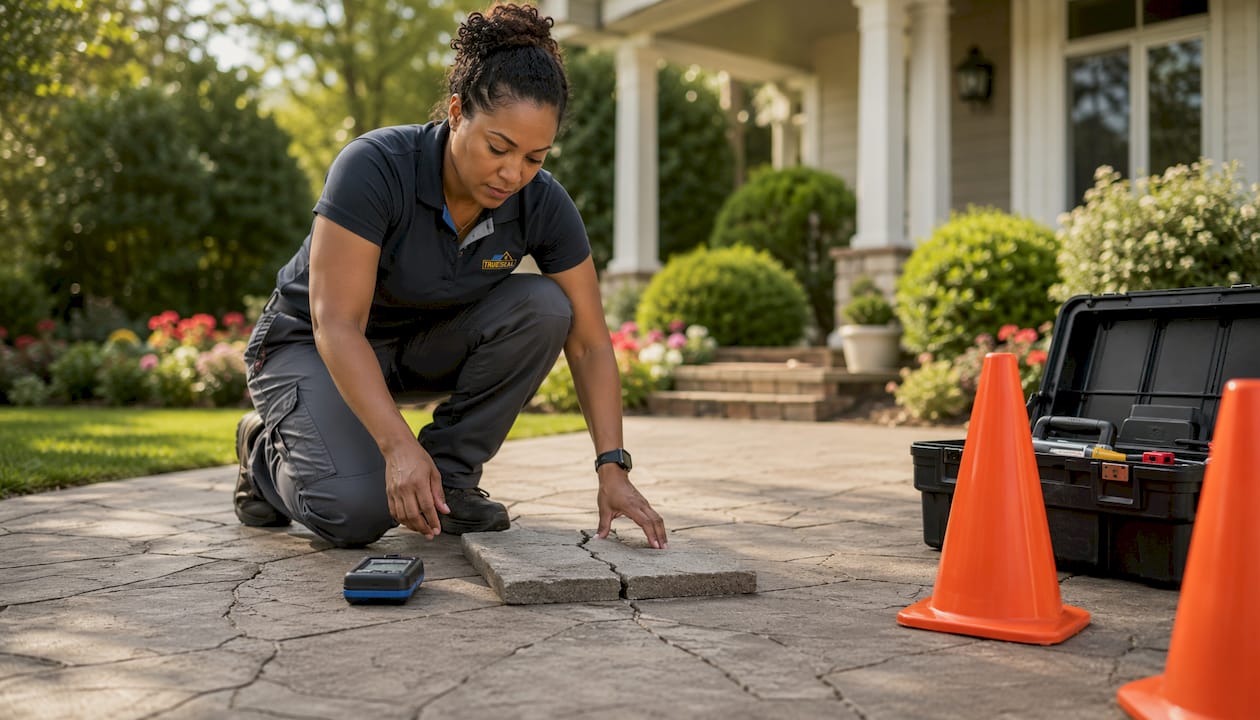
Day 1: Assessment and surface preparation. The contractor inspects the slab for cracks, spalling, and existing sealer condition. Power washing at 3,500 psi or higher removes contaminants. If release powder residue remains from the original stamping, an acid wash follows. The slab then dries thoroughly for an adequate period to ensure proper adhesion of the sealer.
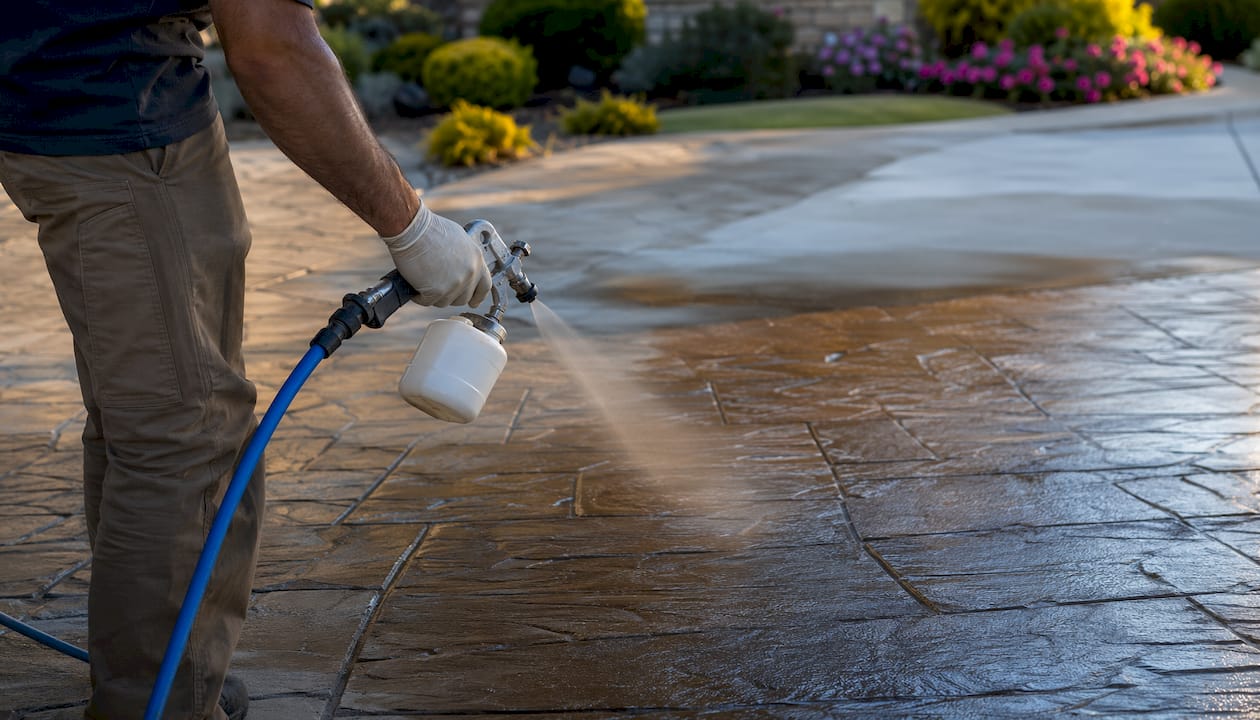
Day 2: Sealer application. With the surface clean and dry, the crew applies the first thin coat using a spray-and-back-roll method. Timing matters here: sealer applied while slab temperatures are falling, typically in the evening, dries more slowly and bonds more reliably than sealer applied in afternoon heat. The second thin coat follows once the first has dried per the manufacturer’s specified window.
Day 3: Cure and inspection. Most acrylic sealers reach light foot traffic readiness within 24 hours, though full cure takes longer. The contractor does a final walkthrough to check for bubbles, uneven sheen, or missed spots. You should stay off the surface and keep vehicles away until the contractor confirms full cure.
For local sealing cost comparisons in the Raleigh market, typical professional cleaning and sealing runs $2–$7 per square foot, depending on surface condition and scope of work.
Schedule your concrete sealing service with Truesealcoating
If your driveway, patio, walkway, or pavers no longer bead water, it is time for professional protection. Truesealcoating’s Clean & 7-Year Seal system is built specifically for North Carolina conditions: the humidity, the UV load, and the freeze-thaw swings that wear through budget sealers in a single season. We clean the surface properly, apply commercial-grade sealer in two controlled coats, and back the work with a seven-year protection commitment.
[
Truesealcoating serves homeowners and property managers across Cary, Apex, Raleigh, Morrisville, Holly Springs, and greater Wake County. Our residential concrete sealing service covers patios, driveways, and walkways. Property managers and HOAs can explore our commercial surface protection options for parking lots, common areas, and multifamily communities.
Request Your Free Quote Today. Send us a photo of your surface and we will assess its condition and recommend the right protection plan for your property.
FAQ
How much does it cost to have stamped concrete sealed?
Professional cleaning and sealing typically runs $2–$7 per square foot in the Raleigh-Durham area, depending on surface condition, size, and the scope of preparation work required.
How often should stamped concrete be resealed?
Reseal based on visual inspection rather than a fixed schedule. High-traffic or sun-exposed surfaces typically need attention every 2–3 years, while shaded or lightly used areas can go 4–5 years between applications.
Should stamped concrete be sealed?
Yes. Without a sealer, stamped concrete absorbs moisture, fades from UV exposure, and becomes vulnerable to freeze-thaw cracking. Sealing preserves both the color and the structural integrity of the surface.
What is the best sealer for stamped concrete?
For exterior stamped concrete, solvent-based acrylic sealers are the most widely recommended choice because they penetrate well, enhance color, resist UV damage, and are less likely to turn milky than water-based alternatives. Always match the new sealer to the resin family of the original product.
Key Takeaways
Sealing stamped concrete with the right product, applied in two thin coats at the correct temperature, is the most reliable way to protect color, prevent moisture damage, and reduce long-term maintenance costs.
Point | Details |
Reseal by inspection, not schedule | Watch for water absorption, matte appearance, or faded color rather than waiting for a fixed date. |
Two thin coats beat one thick coat | Apply sealer at 1–2 mils dry thickness per coat to prevent delamination and bubbling. |
Timing affects bond quality | Apply sealer during falling slab temperatures, typically evenings, to slow drying and improve adhesion. |
Local costs range $2–$7 per sq ft | Professional cleaning and sealing in Raleigh-Durham falls in this range depending on surface condition. |
Truesealcoating’s Clean & 7-Year Seal | Purpose-built for North Carolina conditions, covering residential and commercial surfaces across Wake County. |
Recommended


Comments