Concrete Sealing Near Me: When to Hire a Raleigh Pro
- John M
- 2 days ago
- 7 min read

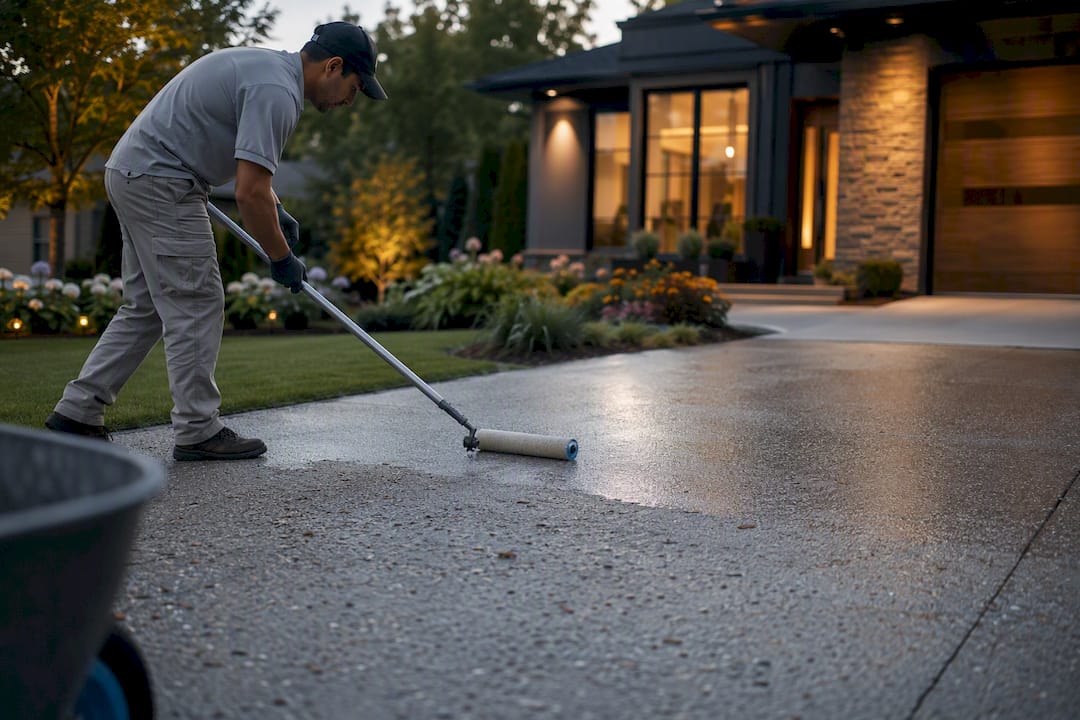
If you’re searching for concrete sealing near me, the short answer is this: hire a professional for any driveway larger than a small residential slab, any commercial parking lot, or any surface with cracks, stains, or a history of failed coatings. Two things drive that recommendation. First, proper surface preparation is the single biggest factor in whether a sealer bonds and lasts, and most DIY jobs skip it. Second, a professional matches the product to your actual use case, balancing durability against appearance instead of grabbing whatever gallon jug is on the shelf at the hardware store.
TrueSeal serves homeowners, property managers, and HOAs across Raleigh and Wake County, and starts every job with a remote assessment so you get a tailored plan before anyone shows up on-site.
Request a quote through TrueSeal’s concrete and pavement services page
Service area covers Raleigh, Cary, Apex, and the surrounding Wake County region
Remote assessment means no obligation just to get a straight answer
Pro Tip: Send photos of your worst-looking section, not your best. A contractor who quotes off your cleanest patch of concrete is guessing, not assessing.
Key Takeaways
Professional concrete sealing succeeds or fails based on surface preparation, not the sealer brand, and matching product type to use case is what a specialist does differently.
Point | Details |
Prep decides the outcome | Mechanical grinding and degreasing prevent the bond failures that ruin most DIY seal jobs. |
Match sealer to surface | Penetrating sealers suit driveways and freeze-thaw zones; film-forming acrylics suit decorative patios. |
Timing affects results | Schedule sealing when temperatures stay above roughly 50°F with a dry window ahead. |
Vet contractors on prep, not price | Ask what grinding, testing, and crack repair is included before comparing quotes. |
TrueSeal offers remote assessment | TrueSeal serves Raleigh and Wake County with a tailored plan built before any on-site visit. |
Table of Contents
Do You Need Concrete Sealing Near Me, or Can You DIY?
Not every slab needs a contractor. Here’s how to sort your situation quickly.
Call a professional if: the surface exceeds a few hundred square feet, it’s a commercial parking lot or shared HOA drive, you see structural cracking, there’s oil or chemical staining, or a previous DIY seal job peeled or discolored.
DIY is reasonable if: you have a small, clean residential patio or walkway, no active cracking, and you’re applying a basic acrylic topcoat rather than a specialty system.
Wait if: temperatures aren’t reliably staying above roughly 50°F with a dry window of at least a day ahead, or the concrete is newly poured. New pours need a curing period before any sealer goes down, which TrueSeal’s timing guide for new concrete covers in more detail.
The risk with DIY isn’t usually the sealer itself. It’s technique. Industry guidance on driveway sealing points to trapped moisture, uneven gloss, and poor adhesion as the most common self-application failures, and those problems tend to show up months later, not the day you apply the coat. That delay is exactly why so many homeowners assume the product failed when the real issue was preparation or timing.
For anything beyond a small, straightforward slab, the labor you’d save doing it yourself rarely offsets the risk of redoing the whole job a year later.
What Types of Sealers Do Professionals Actually Use?
Sealers fall into two broad families, and picking the wrong one is the fastest way to get a finish that looks wrong or fails early.
Penetrating sealers, including silane and siloxane formulas, soak into the concrete rather than sitting on top of it. They repel water and resist freeze-thaw cracking without changing the surface’s appearance much, which makes them a common choice where a low-sheen, natural look matters, or where winter moisture cycling is a real threat.
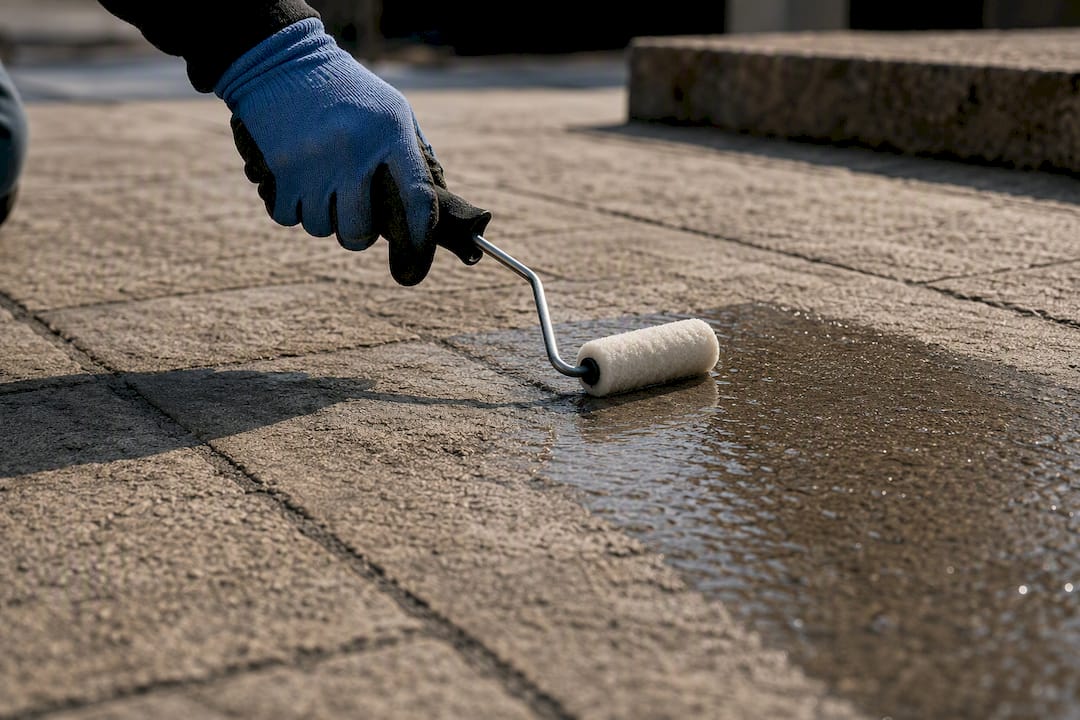
Film-forming sealers, like acrylics, epoxies, and polyurethanes, create a topical layer that adds gloss and enhances color. They look sharper on patios and decorative concrete but come with trade-offs: The Spruce notes that these systems generally need more frequent recoating and can add slip risk if a non-slip additive isn’t worked into the finish.
Water-based versions of either family tend to have less odor and a more moderate sheen. Solvent-based versions often penetrate slightly better and can darken the surface more noticeably; both come with application windows that matter for scheduling.
Driveways and garages: usually penetrating systems or moderate-gloss acrylics
Patios and decorative concrete: film-forming acrylics for color enhancement
Commercial lots and warehouse floors: often a grind-and-seal approach for durability and dust control
Reseal frequency depends heavily on which family you chose. Film-forming coatings commonly need attention every one to three years under regular traffic, while penetrating systems typically go longer between applications.
How Professionals Get a Sealer to Actually Bond and Last
The product matters less than what happens before it’s applied. That’s the part most homeowners never see and most DIY guides gloss over.
A professional job typically starts with degreasing and a thorough pressure wash, then moves into mechanical prep: grinding or shot-blasting to remove laitance, the weak, powdery layer that forms on the concrete’s surface as it cures. Brickform’s guidance on surface preparation is blunt about this: skipping mechanical prep is the most common reason sealers fail, because the coating never actually bonds to sound concrete underneath. Cracks and joints get filled before sealing, not after, since sealing over an open crack just traps moisture and accelerates the damage.
Degreasing to strip oil and residue that block adhesion
Pressure washing to lift loose debris and biological growth
Mechanical grinding to open the surface pores
Crack and joint repair before any sealer touches the slab
Adhesion testing on larger or commercial jobs to confirm the product will hold
That gap between a rinsed surface and a properly ground one is where most sealer failures start, whether it shows up as bond failure, trapped moisture blisters, or a blotchy, uneven sheen, highlighting the importance of avoiding common pitfalls in DIY sealing projects. Facility managers overseeing larger commercial floors often favor a grind-and-seal approach specifically because it controls dust while giving a predictable, low-maintenance finish across a large footprint.
TrueSeal’s process starts before a truck ever arrives: a remote assessment reviews your surface, use case, and traffic level to specify the right product, then the crew handles prep and application on-site. Details on how that plays out for driveways, patios, and pavement live on TrueSeal’s concrete and pavement page.
Pro Tip: Ask any contractor to explain, in plain terms, how they’re preparing the surface before sealing. A vague answer is a bigger red flag than a high quote.
How Do You Choose a Reputable Concrete Sealing Contractor?
A little vetting up front saves you from a redo in twelve months. Ask these questions on your first call:
What surface prep is included, specifically, and does it include mechanical grinding for problem areas?
What product are you specifying, and why that one for my surface and traffic level?
Can you show past projects in the Raleigh or Wake County area?
Do you offer an inspection or adhesion test before committing to a product?
Beyond the questions, verify what they tell you. Request photos or case studies of comparable jobs, ask for local references, and confirm the contractor actually services your part of Raleigh or Wake County rather than subcontracting the work out. Getting quotes from a local provider also tends to produce more accurate estimates than a national online calculator, since local crews know how regional weather and traffic patterns affect the job.
Watch for these red flags:
Vague or evasive answers about what prep is included
Willingness to seal freshly poured concrete without checking cure time
No before-and-after evidence of past work
High-pressure sales tactics or same-day-signature discounts
For a small residential walkway, a general handyman might be fine. For a driveway, a commercial lot, or anything with prior coating failures, a specialist focused on long-term protection, like TrueSeal’s remote-assessment model, is built specifically for getting the prep and product match right the first time.
What Most Homeowners Get Wrong About Sealing
The conventional advice treats sealing like a coat of paint: pick a product, apply it, done. That framing undersells the part that actually determines success. Preparation isn’t a preliminary step tacked onto the real work. It is the real work. The sealer itself is almost incidental once the surface is properly ground, cleaned, and free of trapped moisture.
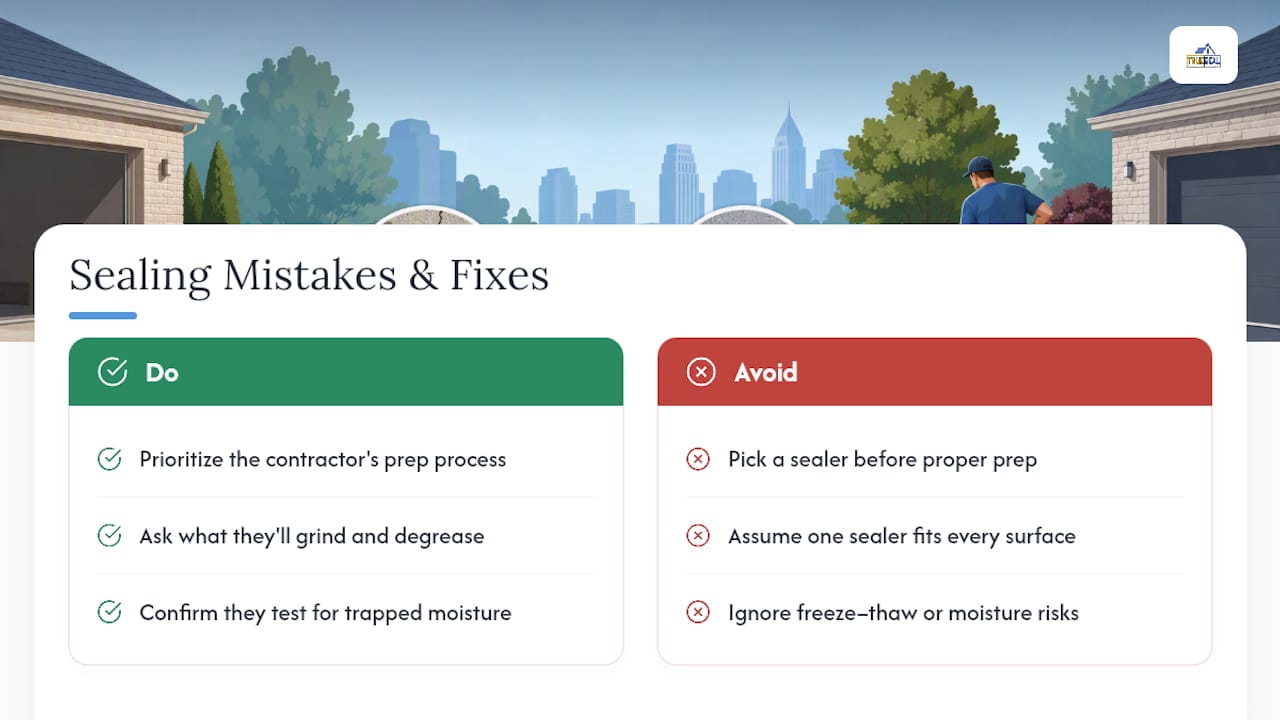
Where the standard advice really falls short is the assumption that one sealer fits every surface. A film-forming acrylic that looks great on a decorative patio can be the wrong call entirely for a driveway that deals with winter freeze-thaw cycles, and a penetrating sealer that’s ideal for that same driveway would look flat and unremarkable on a stamped patio meant to show off color.
If you take one thing from this, prioritize the contractor’s prep process over their sales pitch on the product. Ask what they’re grinding, degreasing, and testing before you ask what brand of sealer is in the bucket. Get that part right and the rest tends to follow.
— TrueSeal
Get a Concrete Sealing Quote From TrueSeal in Raleigh
TrueSeal is the specialist route to durable, good-looking concrete when the standard options are a generalist handyman or a DIY weekend that risks trapped moisture and an uneven finish. TrueSeal focuses exclusively on cleaning, restoring, and sealing hard surfaces, meaning every remote assessment and every prep plan is built around getting concrete and pavement right, not squeezed between paving jobs or gutter cleanings.
[
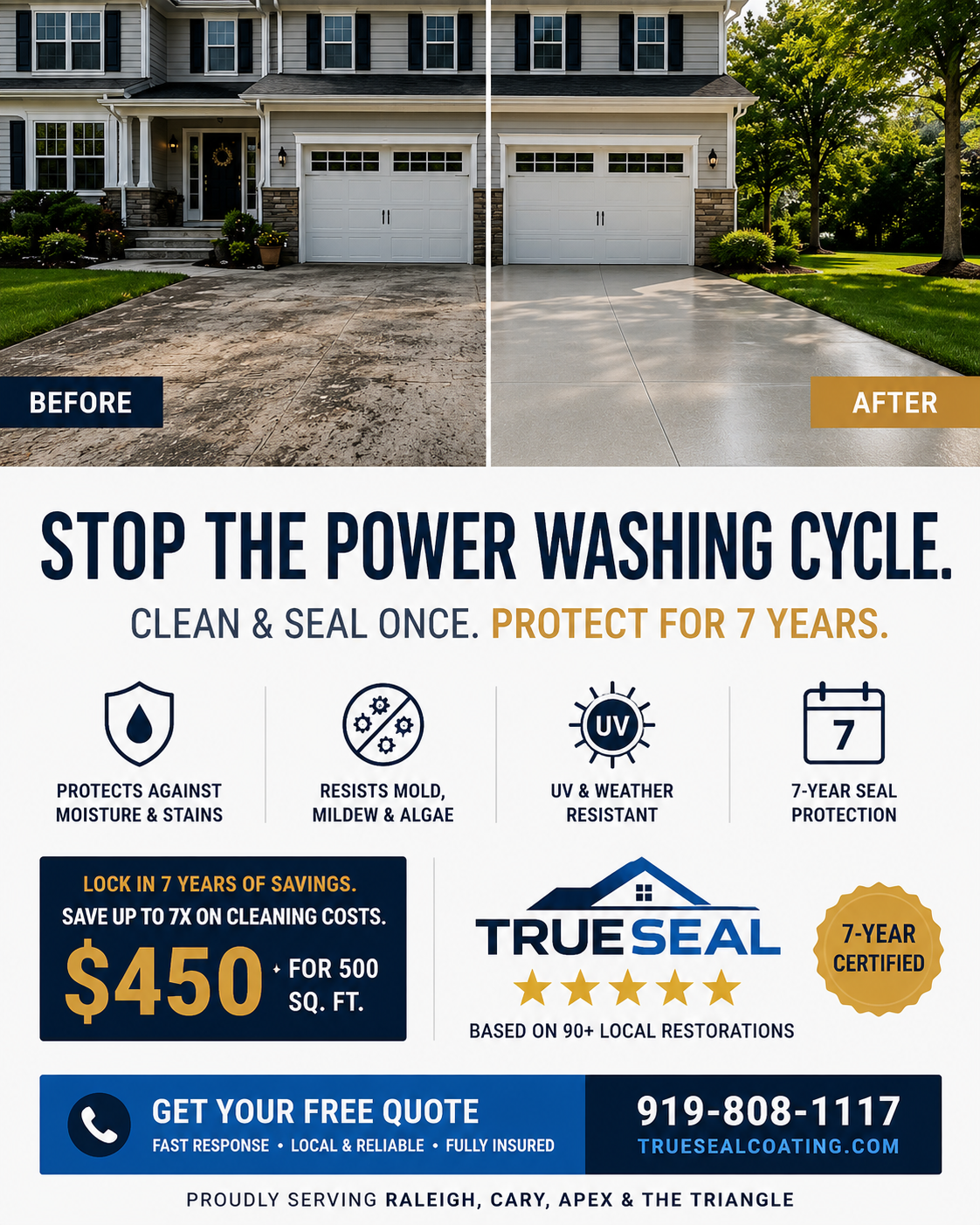
Services cover residential driveways and patios, decorative hardscapes, and commercial pavement, including crack filling and surface preparation before any sealer goes down. The remote assessment process means TrueSeal reviews your property digitally and puts together a tailored protection plan before scheduling anyone on-site, saving you the back-and-forth of multiple in-person estimates. That approach works whether you’re a homeowner in Cary with a stained driveway or a property manager overseeing a commercial lot across Wake County.
If your concrete or pavement needs attention, start with TrueSeal’s residential services page or head straight to the concrete and pavement page to request your remote assessment and quote today.
Sources
FAQ
Is concrete sealing worth it?
Yes, for most driveways and high-traffic surfaces. Sealing protects against water absorption and freeze-thaw damage that can lead to far costlier replacement work down the line.
What time of year is best to seal concrete?
Aim for a stretch when temperatures stay reliably above roughly 50°F with a dry window of at least 24 hours ahead, rather than a fixed calendar date.
Can you seal concrete yourself?
Small, clean residential surfaces with a basic acrylic topcoat are reasonable DIY projects, but DIY application often leads to trapped moisture or uneven gloss on larger or more complex jobs.
How do I find reliable concrete sealing near me?
Ask contractors what surface prep they include, request local project photos, and confirm they actually service your area. TrueSeal’s remote assessment process covers Raleigh and Wake County and builds a tailored plan before scheduling on-site work.
Comments