Pressure Washing Cary Homeowners Can Trust to Actually Last
- John M
- 1 day ago
- 12 min read

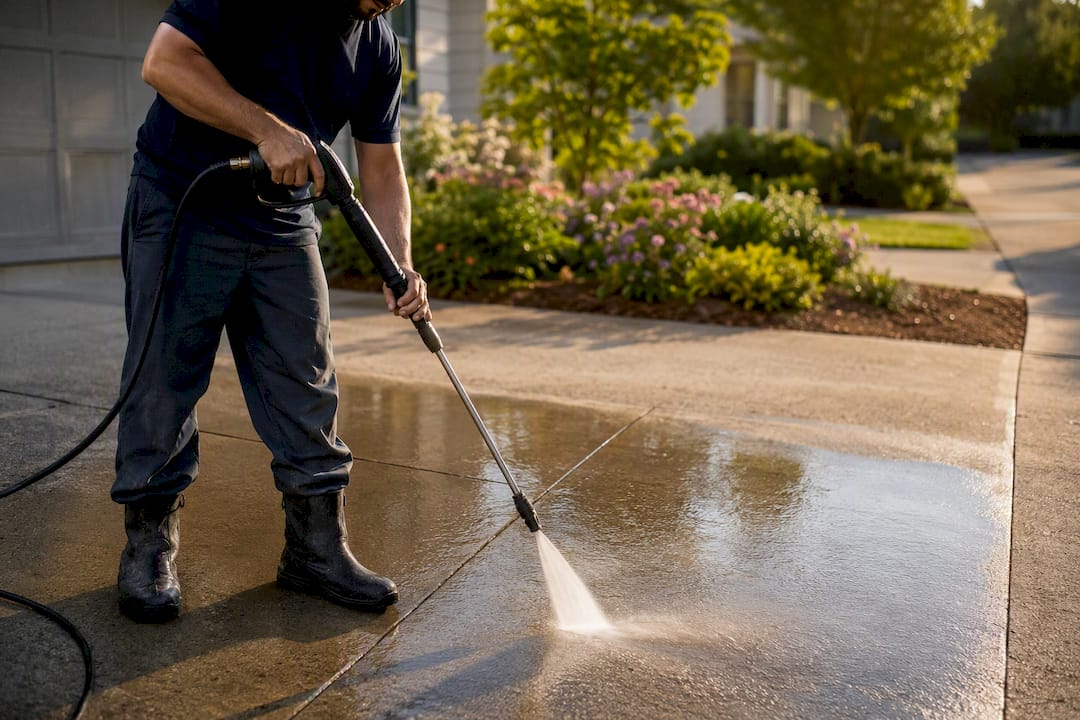
The best long-term move for Cary driveways, patios, and commercial pavement isn’t a one-time pressure wash. It’s a professional clean paired with a penetrating seal, like TrueSeal’s Clean + 7-Year Seal, that keeps algae and staining from creeping back within weeks. Request a quote or remote assessment today and skip the guesswork on what your concrete actually needs.
Here’s why the clean-plus-seal approach wins for most Cary properties:
Longer-lasting results: sealing blocks the water absorption that feeds algae and mildew regrowth.
Fewer repeat cleanings: less moisture in the pores means fewer service calls down the road.
Better curb appeal that sticks: a sealed surface resists staining from pollen, tannins, and tire marks.
Pro Tip: If your driveway or patio turns green again within a few months of cleaning, that’s not bad luck. It’s a sign the surface was never protected in the first place.
Key Takeaways
A professional clean paired with a penetrating seal, not a one-time pressure wash, is what actually stops algae and staining from returning on Cary concrete.
Point | Details |
Pressure alone is temporary | Algae spores often survive in concrete pores even after a hard wash removes visible growth. |
Irrigation overspray drives regrowth | Sprinkler heads hitting hard surfaces keep them damp, feeding rapid algae return. |
Pretreatment protects the surface | Chemical dwell time kills biological roots and avoids etching from excessive pressure. |
Sealing timing matters | Penetrating sealer applied during the clean window bonds best and blocks water absorption longer. |
TrueSeal’s Clean + 7-Year Seal | Combines remote digital assessment, eco-friendly pretreatment, and penetrating sealing for longer-lasting protection on Cary NC properties. |
Table of Contents
How Do You Choose the Right Cleaning and Sealing Specialist?
Typical Pricing Range for Commercial Pressure Washing in Cary
How Long Does the Commercial Process Take From Booking to Completion?
What Do Cary Customers Say About Commercial Cleaning and Sealing Results?
Environmental Rules and Runoff Considerations for Pressure Washing in Cary
Pressure Washing Cary Services: What’s Usually on Offer
Most companies advertising pressure washing in Cary work across a predictable set of surfaces, and knowing which category your project falls into helps you get a faster, more accurate quote.
Driveways: typically the highest-traffic surface, prone to oil residue, tire marks, and organic staining near tree lines.
Patios and walkways: often shaded, which means more moisture retention and faster algae growth.
Pavers and decorative concrete: need gentler methods to protect joint sand and surface texture.
Commercial pavement and parking lots: larger scope, often tied to appearance standards for tenants or customers.
The method matters as much as the surface. Soft washing uses a cleaning solution at low pressure to lift dirt and kill biological growth, while high-pressure washing relies on force alone. Residential jobs tend to favor soft washing on patios and pavers to avoid damage, while driveways and commercial lots can often handle a hybrid approach. Property managers overseeing shared walkways or lot striping usually fall into the commercial category, where consistency across a larger area is the priority. Understanding soft washing versus high-pressure methods helps you ask the right questions before booking anyone.
Why Does Algae Come Back So Fast After Pressure Washing?
Concrete is porous. That single fact explains most of the frustration homeowners feel when a driveway looks clean for a month and then turns green again. High pressure alone knocks visible growth off the surface, but algae and mold spores often survive down in the pores, ready to regrow the moment humidity returns.
Pretreating the surface with a cleaning solution before washing kills biological roots at the source rather than just blasting away what’s visible on top. Skip that step, and you’re really just resetting the look temporarily.
One of the most common and correctable causes of fast regrowth in Cary NC has nothing to do with the cleaning method at all.
Irrigation heads that spray directly onto driveways, walkways, and patios keep those surfaces constantly damp, which is exactly the environment algae needs to reestablish itself within weeks of a cleaning.
That single irrigation adjustment can extend a clean surface’s life more than an extra round of washing ever will.
There’s also a risk on the other end of the spectrum: cranking up pressure to compensate for skipped pretreatment. Excessive pressure can etch concrete or leave uneven “tiger striping,” permanent cosmetic damage that no amount of future cleaning will fix.
How Does Clean Plus Seal Work Better Than Cleaning Alone?
Stop treating the surface like it only needs to be washed. The reason a single pressure wash fades in effectiveness is that it addresses the symptom, not the exposure. A clean-plus-seal approach treats both.
The sequence matters:
Pretreat: a cleaning solution with dwell time breaks down algae and mildew at the root.
Controlled clean: lower, appropriate pressure lifts loosened grime without damaging the surface.
Drying window: the concrete needs to dry before anything else happens.
Penetrating seal: applied during that clean window, while the surface is at its most receptive.
Penetrating silane and siloxane-style sealers work differently than a topical coating. They soak into the concrete’s pores and block water absorption from the inside, which is the actual mechanism behind reduced algae and staining over time. Less absorbed water means less freeze-thaw stress and less of the constant dampness that feeds regrowth, extending the usable life of the slab itself.
Pro Tip: Sealing right after cleaning isn’t just convenient scheduling. A freshly cleaned surface accepts penetrating sealer far better than one with weeks of new grime sitting in the pores.
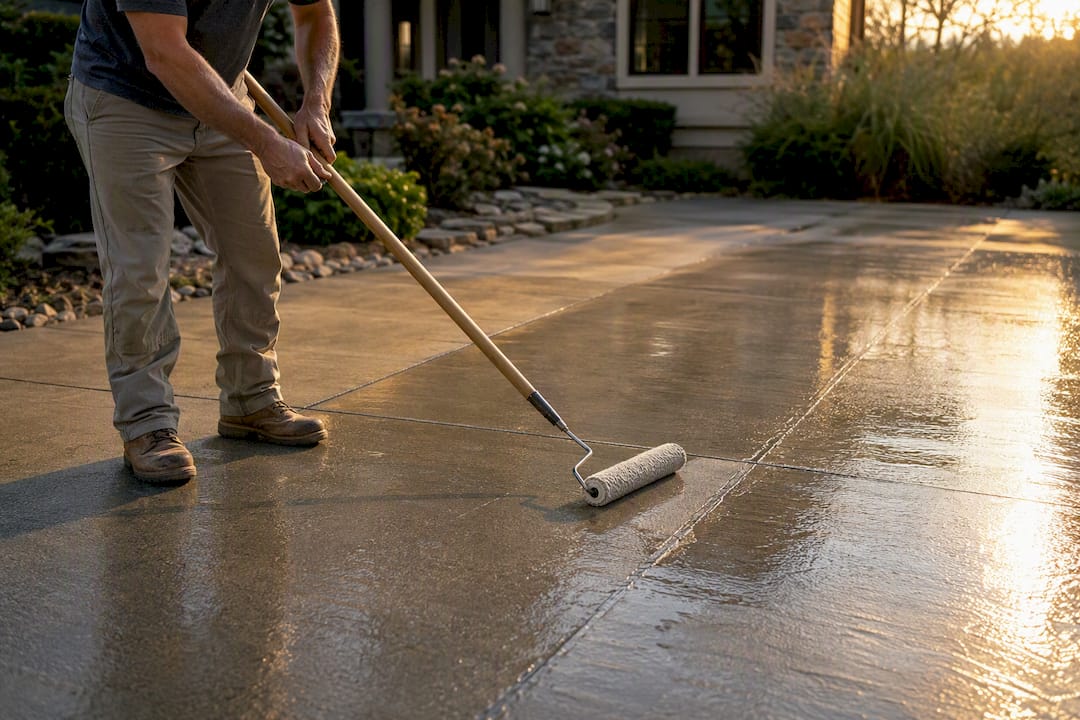
What Happens When You Book a Clean and Seal Service?
TrueSeal starts before anyone shows up at your property. Our remote digital assessment lets you send photos and basic property details so we can evaluate your driveway, patio, or pavement and build a tailored protection plan without scheduling an on-site visit just to get a quote. It’s faster for you and it means the crew arrives already knowing the scope.
Once you book, here’s the general flow:
Inspection: the crew confirms surface condition, drainage patterns, and any problem areas identified during the remote assessment.
Pretreatment: an eco-friendly cleaning solution is applied and given dwell time to break down algae and mildew.
Controlled cleaning: appropriate pressure removes loosened residue without damaging the concrete.
Drying period: the surface needs to dry fully before sealing.
Sealer application: penetrating sealer goes on during the clean window for maximum absorption.
Final inspection: a walkthrough confirms coverage and finish.
Homeowner prep is minimal: move vehicles, potted plants, and outdoor furniture off the treatment area. That’s about it.
Pro Tip: Ask whether the eco-friendly cleaning products being used are safe for nearby landscaping. It’s a fair question and a good one to have answered before treatment day.
How Do You Choose the Right Cleaning and Sealing Specialist?
A quick screening call can save you from a disappointing result. Confirm whether the company uses pretreatment (soft washing) or relies on pressure alone, since pressure-only promises for biological staining rarely hold up. Ask directly whether sealing is offered, what type of sealer is used, and its expected lifespan.
Watch for red flags: vague claims about “long-lasting” results with no explanation of method, pressure-only pitches for algae or mold problems, or no photo evidence of comparable local jobs in Cary NC.
To get a faster, more accurate quote, send along photos of the affected areas, an approximate square footage, and notes on which sections sit in shade versus full sun. Mentioning irrigation head placement near hard surfaces helps too, since that detail often explains recurring stains before anyone sets foot on the property.
Ask about | Why it matters |
Pretreatment method | Confirms whether algae is killed at the root or just rinsed off the surface |
Sealer type and lifespan | Penetrating sealers protect longer than surface-only cleaning |
Drying and follow-up timing | Sealing too early or too late reduces adhesion and protection |
Typical Pricing Range for Commercial Pressure Washing in Cary
Commercial pavement jobs, think parking lots, retail walkways, and shared HOA surfaces, generally cost more than residential driveways because of the scale involved and the coordination required to work around business hours or tenant traffic. Larger square footage, more complex surface conditions (oil staining, heavy tire marks, extended algae coverage), and access logistics all factor into what a property manager should expect to pay.
Rather than quoting a flat number that rarely applies evenly across different lot sizes and conditions, TrueSeal’s remote digital assessment builds a tailored estimate based on your property’s actual scope. Sending photos and approximate square footage through that process gets you a realistic figure faster than waiting on an in-person walkthrough. Property managers overseeing multiple locations across Wake County often find this especially useful, since it lets them compare scope across sites without scheduling separate site visits for each one.
If your commercial property also needs pavement striping or polymeric sand work alongside cleaning, mention that during the assessment. Bundling those needs into one quote request tends to produce a more accurate overall estimate than piecing services together separately. The goal of the remote assessment is to remove the friction of a traditional bid process, where you’d otherwise wait days for someone to show up just to tell you what you already suspected: that a bigger lot with more staining costs more to treat properly.
How Long Does the Commercial Process Take From Booking to Completion?
Commercial jobs move through the same core sequence as residential work, inspection, pretreatment, cleaning, drying, and sealing, but the timeline stretches based on square footage and site complexity. A small retail lot might move from booking to finished seal within a matter of days once scheduled. A larger shared parking lot or multi-building commercial property typically takes longer, particularly if the work needs to happen in phases to keep sections open for tenants or customers.
The remote digital assessment shortens the front end of that timeline considerably. Because TrueSeal evaluates your property digitally before a crew is ever dispatched, you’re not waiting on a separate scheduling visit just to get a start date. That assessment also flags site-specific factors, like shaded areas that dry slower or heavy irrigation overspray, that affect how long the drying window before sealing needs to be.
Weather plays a role too. Sealing requires a fully dry surface, and Cary’s humidity means the drying window can run longer during warmer, wetter stretches of the year than during cooler, drier months. Property managers planning around tenant schedules or seasonal foot traffic should build in a buffer for weather-dependent drying rather than assuming a fixed number of days will apply regardless of season. Coordinating the project during a lower-humidity stretch, similar to the seasonal timing recommended for broader concrete maintenance planning, tends to produce the smoothest results.
What Licensing and Insurance Should a Cary Company Have?
Property managers vetting a commercial cleaning and sealing provider should confirm the business is properly established and insured before signing off on a contract, particularly for larger shared properties like HOA common areas or retail centers where liability exposure is higher. A legitimate operator should be able to speak clearly to their business standing when asked directly.
Checking a company’s standing through a public business directory or accrediting body is a reasonable first step. Local listings, such as Better Business Bureau profiles for pressure washing companies, show basic business verification and consumer feedback history, which gives property managers a documented reference point beyond a company’s own marketing claims.
Beyond checking a company’s standing, ask how they handle site safety around landscaping, parked vehicles, and pedestrian areas during commercial jobs, since larger properties often have more moving parts to coordinate than a single residential driveway. A company confident in its process should walk you through those details without hesitation.
What Do Cary Customers Say About Commercial Cleaning and Sealing Results?
Property managers and business owners tend to judge a commercial cleaning and sealing job on one thing above all else: whether the results actually hold up months later, not just on the day the crew leaves. That’s the recurring theme in how satisfied customers talk about this kind of work across Cary and Wake County. A parking lot that looks sharp for a photo but shows algae streaks again within a season isn’t a win, no matter how good the initial reveal looked.
The properties that stay looking clean the longest are almost always the ones where sealing was part of the original scope, not an afterthought added later. That distinction shows up repeatedly in how commercial clients describe their experience: less time spent scheduling repeat cleanings, fewer complaints from tenants or customers about faded curb appeal, and a noticeably longer stretch between service calls compared to properties that were pressure washed without any protective step afterward.
For property managers weighing multiple bids, asking a company directly how their past commercial clients’ surfaces have held up over the following year is a fair and telling question, one that separates a one-time appearance fix from a durable result.
Environmental Rules and Runoff Considerations for Pressure Washing in Cary
Wastewater from pressure washing, especially runoff carrying cleaning chemicals, oil residue, or loosened sediment, can’t simply flow into storm drains untreated in most municipalities, and Cary property owners should expect any reputable service provider to manage that runoff responsibly rather than letting it wash straight into the street.
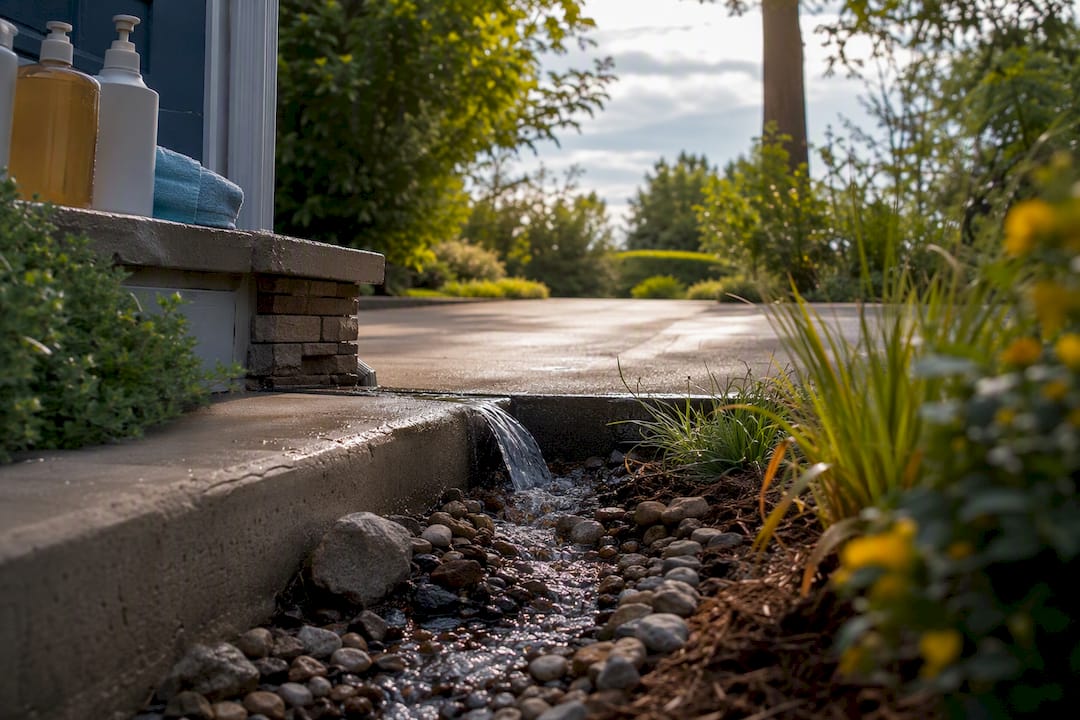
Using eco-friendly cleaning solutions during pretreatment reduces the environmental impact of the runoff itself, which matters both for compliance and for protecting nearby landscaping, gardens, and grass from chemical burn. This is particularly relevant for commercial properties near retention ponds, wetlands, or shared drainage systems common throughout Wake County developments.
Property managers overseeing HOA common areas or retail centers should ask providers how they contain and direct wastewater during the cleaning phase, since improper runoff handling can create liability beyond just an environmental concern. A provider that plans for containment and uses lower-impact cleaning agents is generally signaling a more careful overall process, not just an environmentally conscious one.
Why the “Just Pressure Wash It” Advice Misses the Point
Most advice about pressure washing in Cary NC stops at the surface, literally. It tells you how to get a driveway looking clean again, but almost nothing about why that clean fades so fast in this climate. Humidity, shade, and irrigation overspray aren’t footnotes here. They’re the actual reason so many homeowners feel like they’re stuck on a cleaning treadmill, paying for the same fix every six months.
What gets underestimated is how much of that cycle is preventable with one additional step. Sealing isn’t an upsell tacked onto a cleaning job. It’s the part of the process that actually addresses why the algae came back in the first place. Skipping it is a bit like repainting a room with a leaky roof: the fix looks good until the same problem reappears.
If there’s one thing Cary homeowners should prioritize, it’s asking upfront whether a quoted service includes protection, not just cleaning. That single question separates a temporary reset from a genuine long-term investment in the surface itself.
— TrueSeal
Ready for a Cleaning That Actually Lasts?
TrueSeal is the alternative to the repeat-cleaning cycle that traditional pressure washing in Cary NC often creates. Instead of paying for the same driveway or patio wash every few months, our Clean + 7-Year Seal treats the underlying problem, porous concrete left exposed to water, algae, and staining, so the results actually hold.
[
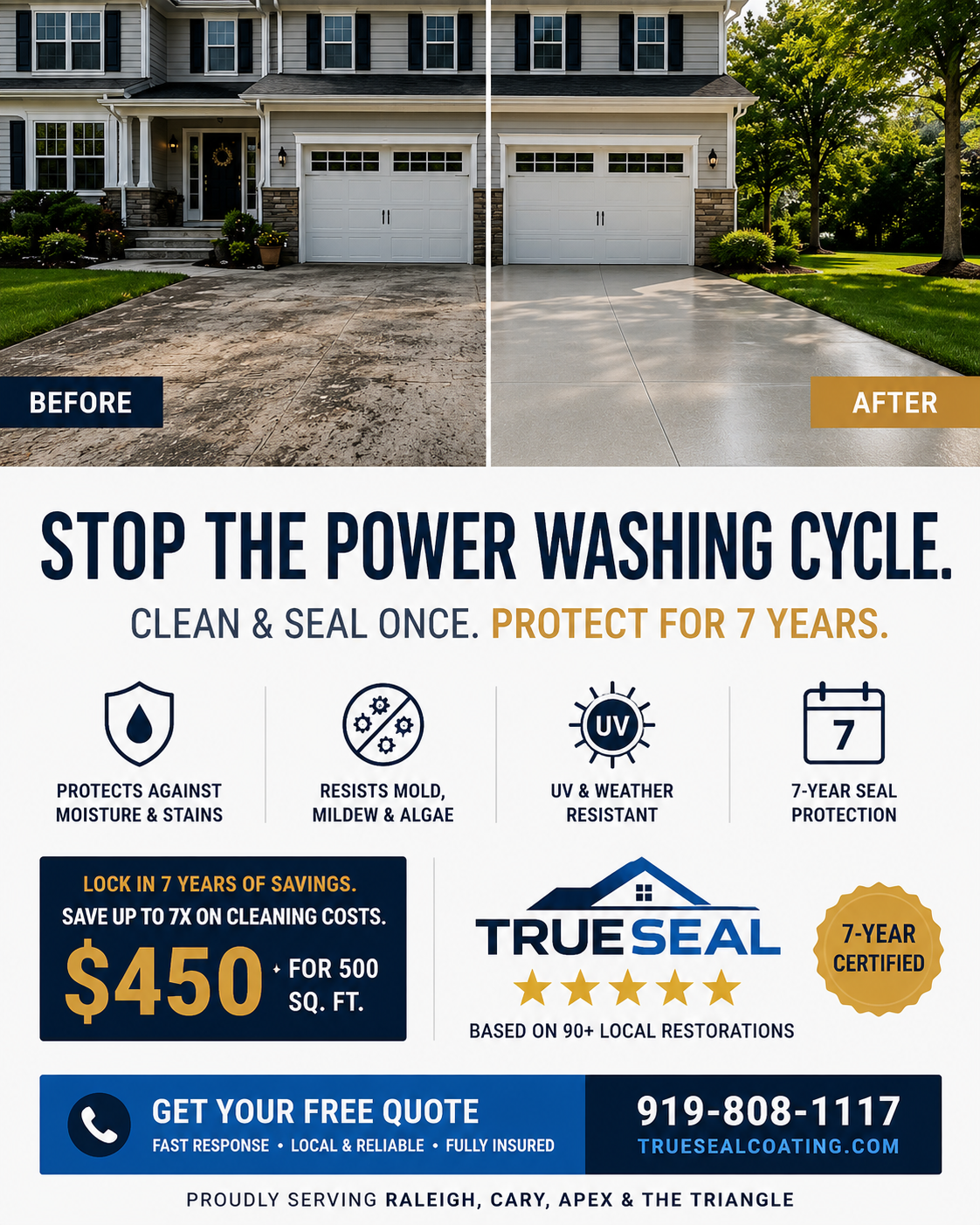
It starts with our remote digital assessment: send photos and basic details about your driveway, patio, or commercial pavement, and we build a tailored protection plan without needing an on-site visit just to scope the job. That means faster quotes and less back-and-forth scheduling. Our eco-friendly cleaning methods handle the pretreatment step properly, killing algae at the root, while the penetrating seal locks in protection during the ideal clean window.
Whether you’re a homeowner tired of the green creeping back onto your driveway or a property manager overseeing shared pavement across Wake County, the fix is the same: clean it right, then protect it. Explore concrete and pavement services or reach out to request your remote assessment and get a tailored quote started today.
Sources
FAQ
What is a fair price for pressure washing in Cary?
Pricing depends on surface type, square footage, and whether sealing is included, since a clean-only job and a clean-plus-seal job represent different scopes of work. Requesting a remote assessment with photos and approximate square footage is the most reliable way to get an accurate figure for your specific property.
How much does it cost to pressure wash a 1,000 square foot house exterior?
Cost varies based on siding material, staining severity, and whether pretreatment is needed for mold or algae. A remote digital assessment can account for these specifics rather than relying on a generic estimate.
How much does it cost to pressure wash a 2,000 square foot roof?
TrueSeal doesn’t perform roof pressure washing as a general service outside its cleaning and sealing scope for hard surfaces, so pricing specifics for roof work fall outside what this guide can speak to accurately.
How much does it cost to power wash a 20x20 deck?
Deck pricing depends heavily on material (wood versus composite) and current condition, factors that affect both cleaning method and any follow-up protection. Since TrueSeal focuses on concrete, pavers, and hardscape surfaces rather than wood decking, a tailored quote for deck-specific work should come from a provider specializing in that material.
Does sealing really stop algae from coming back?
Sealing alone won’t fix an irrigation head spraying directly onto your driveway, but a penetrating seal significantly reduces the water absorption that lets algae take hold in concrete pores. Pairing sealing with a fix to any overspray issue gives the longest-lasting result.
Comments